Chronic myeloid leukemia (CML), a malignant cancer of the white blood cells, has long been a focal point of hematological research due to its distinct genetic origin. A groundbreaking study published in the journal Nature on April 9 has provided unprecedented insights into the life cycle of this disease, tracing its origins back years before a clinical diagnosis is ever made. Researchers from the Wellcome Sanger Institute and their international collaborators have utilized advanced whole-genome sequencing to map the "phylogenetic trees" of cancer cells, revealing that CML is characterized by an explosive growth rate that sets it apart from almost all other known forms of cancer.
The study provides a high-resolution view of how a single genetic accident—the fusion of two specific genes—can trigger a biological chain reaction resulting in a rapid surge of cancerous cells. By analyzing the DNA of individual blood cells, the research team was able to pinpoint exactly when the disease-causing mutation first occurred and how quickly the resulting "clones" multiplied. These findings not only reshape the scientific understanding of CML’s pathogenesis but also offer critical clues as to why some patients fail to respond to standard life-saving therapies.
The Genetic Catalyst: Understanding the Philadelphia Chromosome
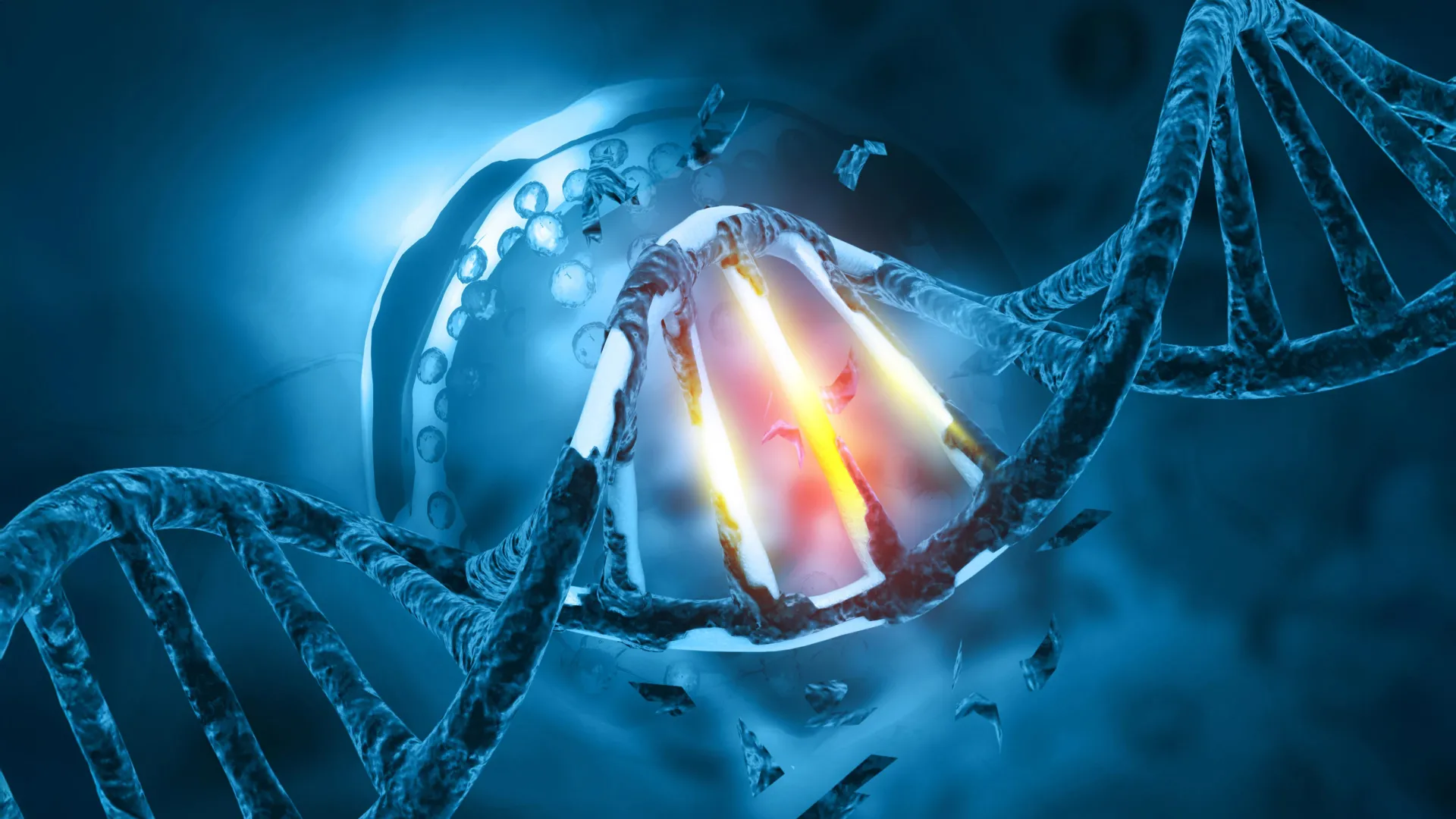
To appreciate the significance of the new findings, one must understand the unique genetic architecture of chronic myeloid leukemia. CML is fundamentally a disease of chromosomal translocation. In a healthy individual, the ABL1 gene resides on chromosome 9, and the BCR gene resides on chromosome 22. In patients with CML, a portion of chromosome 9 breaks off and attaches to chromosome 22, while a piece of chromosome 22 moves to chromosome 9.
This reciprocal translocation creates an abnormally short chromosome 22, famously known as the "Philadelphia chromosome." More importantly, this process fuses the BCR and ABL1 genes together to create the BCR::ABL1 fusion gene. This new, "rogue" gene acts as a constitutive tyrosine kinase, essentially functioning as a biological switch that is permanently stuck in the "on" position. This signals the bone marrow to produce an uncontrolled number of white blood cells (granulocytes), which eventually crowd out healthy blood components.
While the existence of the Philadelphia chromosome has been known since 1960, the new study by the Sanger Institute is the first to quantify the sheer speed at which this single mutation drives the expansion of the disease. Unlike many solid tumors—such as lung or colorectal cancers—which typically require the accumulation of five to ten different genetic mutations over several decades to become invasive, CML appears to be an "outlier" that achieves malignancy through a singular, highly potent genetic event.
Mapping the Evolutionary Timeline: 3 to 14 Years Before Diagnosis
The research team, led by Dr. Jyoti Nangalia and Dr. Aleksandra Kamizela, employed a sophisticated technique known as single-cell whole-genome sequencing. They analyzed over 1,000 individual blood cells from nine patients, whose ages ranged from 22 to 81. By examining the subtle, naturally occurring mutations that accumulate in cells over a lifetime, the scientists were able to reconstruct the "ancestry" of the cancer cells, much like a genealogist creates a family tree.
The results revealed a surprising timeline. The BCR::ABL1 fusion gene typically appeared in a single blood stem cell between 3 and 14 years before the patient exhibited any symptoms or received a diagnosis. This "latency period" is significantly shorter than the decades-long development cycles observed in most other cancers.
Once the BCR::ABL1 fusion occurred, the growth was nothing short of explosive. The study found that tumor clones—populations of cells that are genetically identical—grew at rates sometimes exceeding 100,000 percent annually. This level of proliferation is virtually unheard of in the early stages of other malignancies, where growth rates are often measured in single or double digits per year. This data suggests that the BCR::ABL1 fusion is one of the most powerful single-driver mutations ever identified in human oncology.
Age Dynamics and the "All of Us" Cohort Validation
A significant finding of the study involves the correlation between a patient’s age and the aggressiveness of the cancer’s growth. The researchers observed that younger patients tended to exhibit much higher rates of cancerous cell multiplication than older patients. This suggests that the internal environment of a younger person’s bone marrow may be more conducive to the rapid expansion of BCR::ABL1 clones, or perhaps that the regenerative capacity of younger stem cells provides a more fertile ground for the mutation to take hold.
To determine if the BCR::ABL1 fusion could exist harmlessly in the general population without ever progressing to leukemia, the team turned to the "All of Us" Research Program. This NIH-led initiative in the United States provides a massive repository of health records and genomic data from diverse populations. Analyzing data from over 200,000 participants, the researchers found that individuals carrying the BCR::ABL1 fusion were almost inevitably diagnosed with a blood disorder later in life.
This finding is crucial because it differentiates CML from other blood conditions like Clonal Hematopoiesis of Indeterminate Potential (CHIP). In CHIP, individuals may carry mutations associated with leukemia but never actually develop the disease. For CML, however, the presence of the Philadelphia chromosome appears to be a definitive "point of no return," making the development of symptoms nearly certain unless medical intervention occurs.
Clinical Implications: Predicting Treatment Resistance
The study’s findings have immediate and profound implications for the clinical management of CML. Since the early 2000s, the standard treatment for CML has been Tyrosine Kinase Inhibitors (TKIs), such as Imatinib (Gleevec). These drugs were hailed as a miracle of modern medicine, turning a once-fatal leukemia into a manageable chronic condition for the majority of patients.
However, approximately 20 percent of patients do not respond well to TKIs or eventually develop resistance. Until now, clinicians have struggled to predict which patients fall into this category. The Sanger Institute study found a direct link between the pre-diagnostic growth rate of the cancer and the patient’s response to treatment. Patients who exhibited the fastest-growing CML clones were significantly less likely to respond effectively to TKI therapy.
Dr. Aleksandra Kamizela, co-first author of the study, noted that while current clinical practice relies on RT-PCR tests to monitor a patient’s response to treatment, these tests do not look at the historical growth rate encoded in the DNA. "Our findings provide a rationale to look at the rate of cancer growth more closely in future studies in order to understand if we can use such information in a clinical setting," Kamizela stated. If clinicians could determine the growth rate of a patient’s CML at the time of diagnosis, they might be able to fast-track high-risk patients to more aggressive or alternative therapies.
A New Framework for Cancer Research
The discovery that CML is an "outlier" in the cancer world challenges several long-standing dogmas in oncology. For decades, the prevailing theory has been the "multi-hit hypothesis," which posits that cancer is the result of a slow, incremental accumulation of genetic errors. While this remains true for the vast majority of solid tumors, CML demonstrates that a single, highly "fit" mutation can bypass this slow process, leading to a rapid takeover of an entire organ system—in this case, the blood and bone marrow.
Dr. Jyoti Nangalia, the study’s senior author and a hematologist at the University of Cambridge, emphasized that this research paves the way for a more nuanced approach to cancer. "We have shown that chronic myeloid leukemia cells undergo incredibly rapid growth within a few years to a decade before diagnosis, whereas for most cancers, the timeline from start to clinical presentation is several decades," Nangalia said. This compressed timeline provides a unique window for scientists to study the mechanics of "pure" oncogenesis, unclouded by the hundreds of secondary mutations often found in late-stage solid tumors.
Looking Forward: Future Directions in Hematology
The implications of this study extend beyond CML. The methodology used—combining single-cell sequencing with phylogenetic reconstruction—sets a new gold standard for studying the evolution of other blood cancers, such as acute myeloid leukemia (AML) or myelofibrosis.
Furthermore, the study raises the possibility of early detection. If the BCR::ABL1 fusion is detectable up to 14 years before diagnosis, and if its presence almost always leads to disease, there is a theoretical argument for screening high-risk populations. However, the researchers caution that such a move would require much larger clinical trials and a cost-benefit analysis of screening for a relatively rare cancer.
For now, the focus remains on optimization. By understanding that CML is a race against an incredibly fast-moving clock, the medical community can begin to refine its tools. The goal is to move toward a model of "precision hematology," where the genetic history of a patient’s cancer—not just its current state—dictates the course of treatment. This study is a major step toward that future, providing a detailed map of a journey that begins in a single cell and, within a few short years, transforms the very nature of a patient’s blood.