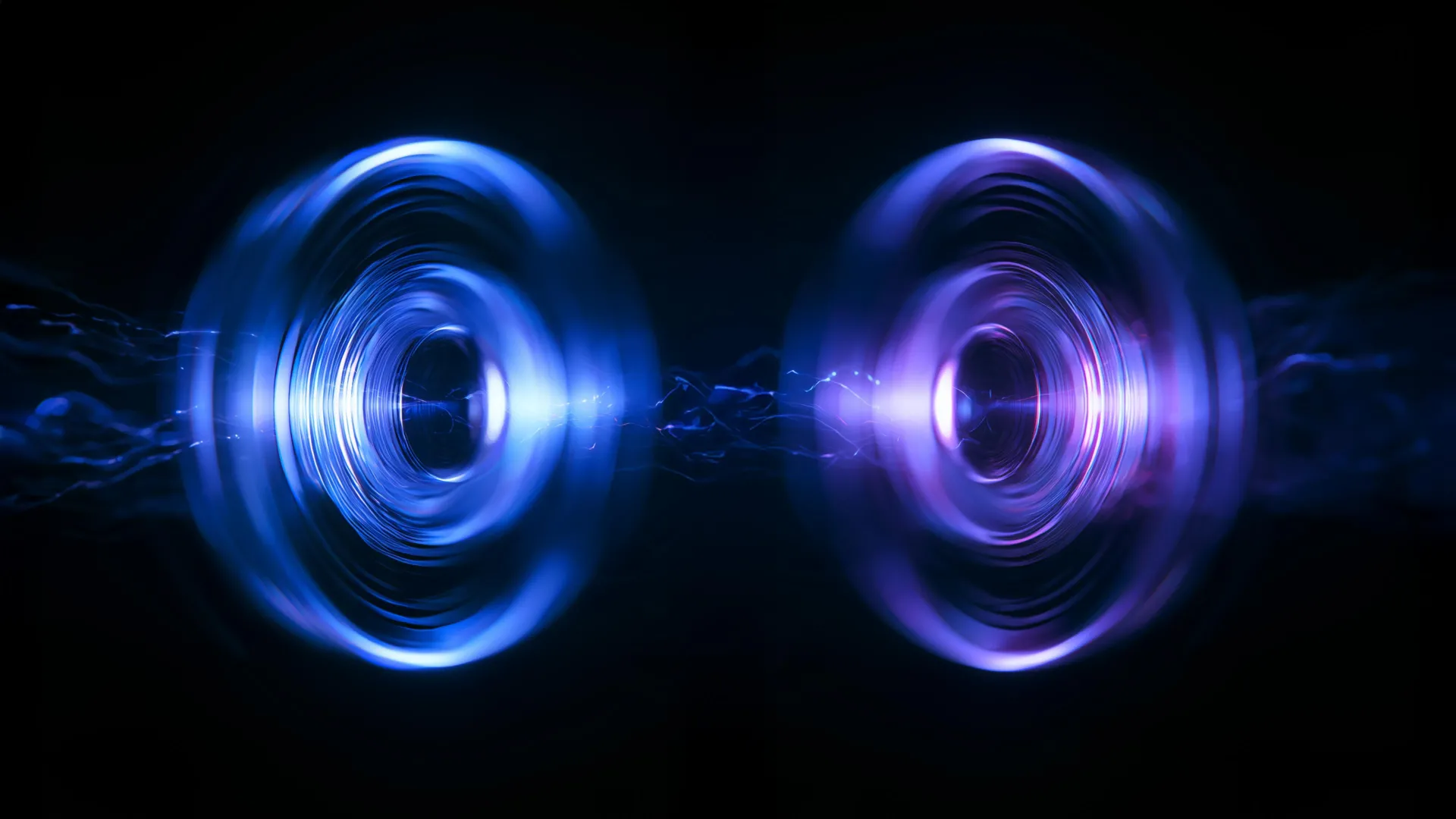
In a significant advance for quantum physics and condensed matter research, a team of researchers at TU Dortmund University has successfully demonstrated that multiple continuous time crystals can emerge within a single semiconductor material and spontaneously synchronize their internal oscillations. Building upon a breakthrough achieved earlier in the year where a single continuous time crystal was stabilized inside a semiconductor for hours, this latest study reveals a higher level of quantum organization. Published in the journal Nature Communications and led by Professor Alex Greilich, the new findings provide empirical evidence of non-local coupling across macroscopic distances within a solid-state platform. This development not only deepens the fundamental understanding of non-equilibrium quantum states of matter but also opens pathways toward the development of advanced spin-based technologies, synchronized quantum networks, and novel information-processing architectures.
To understand the magnitude of this achievement, it is necessary to examine the foundational nature of time crystals. First conceptualized theoretically by Nobel laureate Frank Wilczek in 2012, time crystals represent a radical departure from conventional phases of matter. While ordinary spatial crystals—such as diamond, salt, or quartz—exhibit atomic arrangements that repeat periodically in space, time crystals display a structure that repeats periodically in time. Crucially, they do this without needing an external periodic driving force. While many early demonstrations of discrete time crystals relied on a periodic "tick" from an external laser or magnetic field to prompt the rhythm, continuous time crystals maintain their internal rhythmic oscillations indefinitely and autonomously, essentially breaking time-translation symmetry in a closed or steady-state open system.
The chronological trajectory that led to the current Nature Communications publication highlights a rapid acceleration in experimental condensed matter physics. In January 2024, the research team at TU Dortmund University captured headlines by proving that a continuous time crystal could persist inside a specialized semiconductor, with its self-sustaining oscillations remaining stable for hours—a dramatic improvement over the microsecond or millisecond lifetimes observed in earlier experiments involving trapped ions or atomic gases. Following that milestone, Professor Greilich and his colleagues shifted their focus from stabilization to interaction. They sought to answer a fundamental question: if a single time crystal could operate stably within a semiconductor matrix, what would happen if multiple such crystals were allowed to form in close proximity within the same crystalline lattice?
The experimental setup required a highly engineered material environment. The time crystals are formed inside an alloyed semiconductor composed primarily of gallium arsenide, infused with carefully controlled micro-concentrations of indium and silicon. These foreign elemental additions introduce random structural variations, creating localized potential wells that trap electrons within specific regions of the material. Placed inside a specialized cryostat cooling system operating at extreme temperatures close to absolute zero—approximately -270 degrees Celsius—each localized electron interacts dynamically with roughly one million surrounding atomic nuclei through hyperfine interactions.
Initiating this intricate quantum state requires precise optical manipulation. The researchers employ a specialized pump laser to initially polarize and align the electron spins within the semiconductor. Once aligned, these electrons systematically transfer their polarization to the surrounding nuclear spin bath. Upon the application of a weak external magnetic field, the collective polarization of these nuclear spins begins a continuous, rhythmic rotation. A continuous feedback loop is established between the electron spins and the nuclear spins, which constantly reinforces the system and prevents the oscillations from damping out. A secondary, probing laser allows the experimental team to monitor the subtle evolution of these oscillations in real-time with high spatial and temporal resolution.
However, moving from a single localized time crystal to a multi-crystal system introduced a significant physical hurdle. Because the semiconductor material is not microscopically uniform—due to unavoidable, microscopic fluctuations in the distribution of indium and silicon atoms—different regions of the crystal possess slightly different local environments. Consequently, time crystals forming independently in separate spatial zones would naturally oscillate at slightly different, uncoordinated frequencies. In a typical physical system, these frequency mismatches would prevent any coherent collective behavior, resulting in fragmented, out-of-step fluctuations.
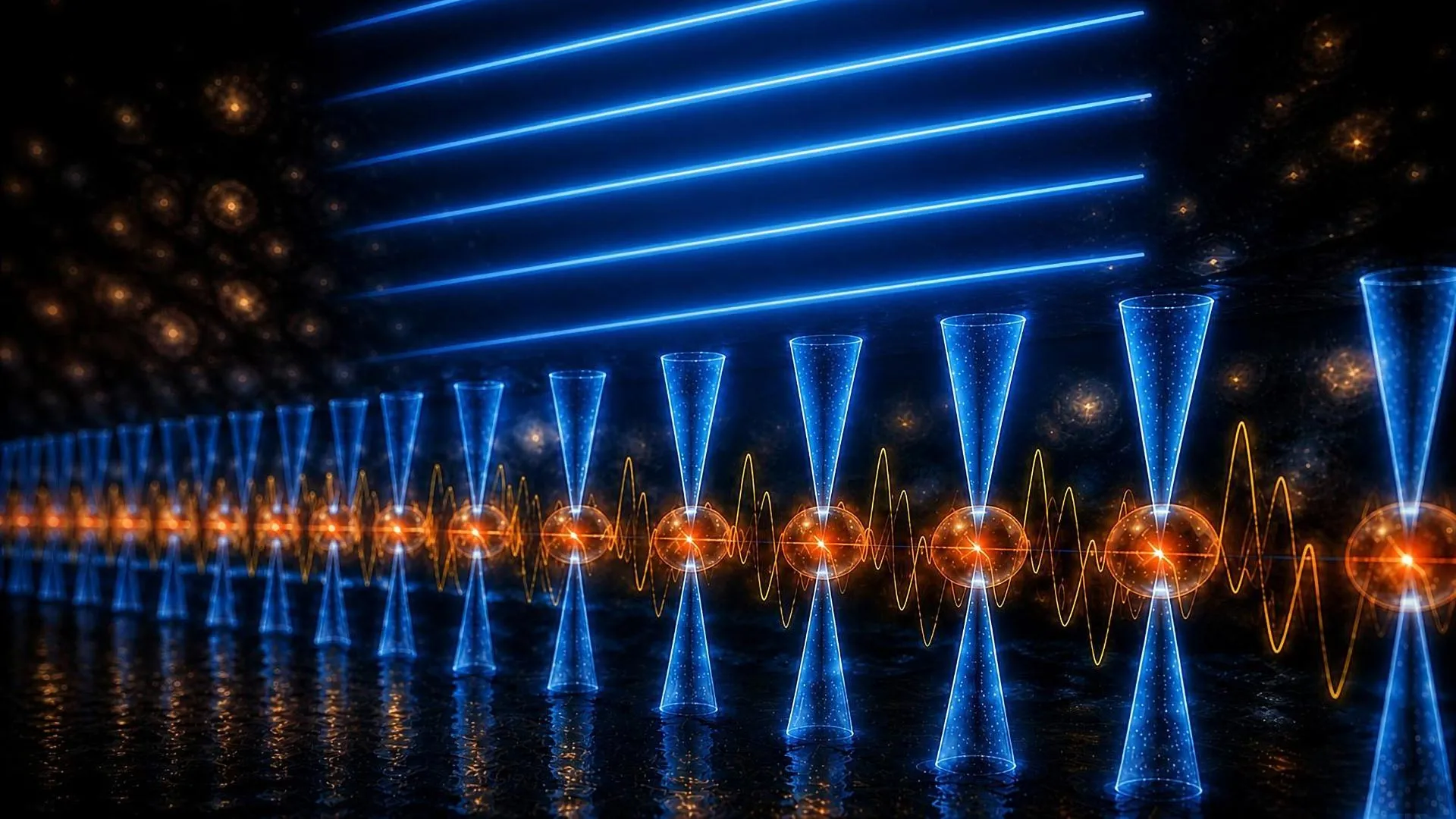
The turning point in the recent study occurred when the researchers altered their illumination strategy. Instead of focusing the laser on a single microscopic point, they illuminated a broad area of the semiconductor simultaneously with a wide laser beam. Under these expanded optical conditions, a remarkable transformation was observed: the disparate regional oscillations abruptly locked together, falling into precise frequency synchronization and operating as a unified macroscopic quantum system.
This phenomenon immediately drew historical parallels to a classic observation in classical mechanics. In 1665, the Dutch physicist and astronomer Christiaan Huygens noticed that two pendulum clocks mounted on the same wooden support beam would eventually swing in perfect synchrony, a phenomenon he referred to as "sympathy of the clocks." Huygens correctly deduced that this synchronization was mediated by weak mechanical vibrations transmitted through the shared support structure.
In the TU Dortmund semiconductor experiments, the underlying mechanism of synchronization is vastly different, operating at the quantum rather than the mechanical level. Rather than exchanging kinetic energy through physical vibrations, the distinct time crystals are coupled through the mediated movement and diffusion of spin-polarized electrons across the semiconductor lattice. These mobile electrons act as a dynamic information highway, transmitting phase and frequency data between separate localized spin systems and forcing them into a harmonized rhythm.
Further analysis of the synchronized state revealed unexpected spatial boundaries. The research team discovered that time crystals separated by distances of up to 40 micrometers could successfully achieve and maintain synchronization. To contextualize this metric, 40 micrometers is more than one thousand times greater than the characteristic spatial size of a single localized oscillator within the material. This demonstrates a remarkably long-range, non-local coupling effect across a solid-state matrix.
Nevertheless, this long-range synchronization has strict physical limits. Once the spatial separation between the individual time crystals exceeded the 40-micrometer threshold, the coupling mechanism weakened beyond the critical point required for phase locking. At these greater distances, the individual time crystals abandoned their collective behavior and reverted to independent, unsynchronized oscillations, highlighting a distinct spatial boundary for quantum coherence in this setup.
The successful demonstration of non-local coupling and mass synchronization among spatially separated spin systems has drawn strong reactions from the broader theoretical and experimental physics communities. While the research is fundamentally exploratory, peering deeply into the thermodynamics of non-equilibrium quantum matter, external specialists have noted its potential long-term utility. By establishing reliable methods to synchronize multiple quantum oscillators over measurable distances, the TU Dortmund findings provide a foundational framework for engineering complex, controllable networks of spin-based oscillators.
From a practical standpoint, the implications stretch toward future information processing and sensing technologies. Traditional computing architectures rely on rigid electronic clocks and hardwired logic gates to maintain synchronization. In contrast, spin-based technologies leverage the intrinsic angular momentum of electrons and nuclei to store and process data with minimal energy dissipation. By harnessing the synchronization principles observed in these time crystals, engineers may eventually conceptualize novel hardware architectures where computation, timing, and signal routing emerge naturally from collective quantum dynamics rather than being imposed by external circuitry.
As the research team moves forward, the primary scientific objectives will likely focus on scaling the system, exploring higher densities of time crystals, and investigating how environmental noise and temperature fluctuations influence the stability of larger synchronized arrays. While commercial applications remain distant, the transition from observing a single isolated time crystal to orchestrating an interacting ensemble marks a vital evolutionary step in modern quantum materials science. The findings firmly establish that the peculiar, time-breaking rhythms of time crystals are not merely isolated laboratory curiosities, but robust quantum phenomena capable of cooperative, large-scale organization.