The pharmaceutical industry is bracing for significant disruption following the US administration’s recent decision to implement a 100% tariff on branded drugs imported into the country. This sweeping measure, announced by President Donald Trump on April 2, has ignited a vigorous debate among trade bodies, analysts, and policymakers regarding its economic ramifications and underlying geopolitical motivations. The tariffs, levied under Section 232 of the Trade Expansion Act of 1962, are set to take effect in stages, with a 120-day implementation period for certain large companies and a 180-day period for smaller entities. The stated rationale behind this aggressive trade action is the administration’s assertion that the United States faces a national security threat due to its over-reliance on imported pharmaceuticals, a concern articulated by Secretary of Commerce Howard Lutnick.
A Swift Policy Shift: Timeline and Rationale
The imposition of these tariffs marks a dramatic escalation in the administration’s approach to pharmaceutical trade. The announcement on April 2, 2026, followed months of increasing rhetoric from the White House concerning the global supply chain and its implications for domestic industries. The core argument posits that a substantial portion of life-saving medications are manufactured abroad, leaving the U.S. vulnerable to disruptions stemming from geopolitical tensions or economic instability. This concern has been amplified by recent events, such as the ongoing conflict in the Middle East, which has already impacted global trade routes and highlighted the fragility of international supply chains.
The administration’s strategy appears to be a multi-pronged effort to incentivize domestic production and reduce reliance on foreign manufacturing, particularly from countries identified as strategic competitors. The broad application of Section 232, typically reserved for national security threats related to trade, underscores the administration’s framing of pharmaceutical imports as a critical vulnerability.
Industry Repercussions and Exemptions: A Complex Landscape
The pharmaceutical sector has been vocal in its criticism, with major trade organizations warning of widespread negative consequences. John Crowley, CEO of the Biotechnology Innovation Organization (BIO), expressed strong opposition, stating, "The reality is that any tariffs on America’s medicines will raise costs, impede domestic manufacturing, and delay the development of new treatments – all while doing nothing to enhance our national security." This sentiment is echoed by The Pharmaceutical Research and Manufacturers of America (PhRMA), whose CEO, Stephen Ubl, emphasized the need for policies that foster innovation and affordability, asserting that "Tariffs will undermine this important goal."
However, the tariff structure includes several nuances and exemptions that create a complex tiered system. Companies that commit to re-shoring a portion of their product manufacturing will face a reduced tariff rate of 20%. They will be granted a four-year grace period to implement these changes before the tariff escalates to the full 100%. This provision appears designed to encourage a repatriation of pharmaceutical production capabilities.
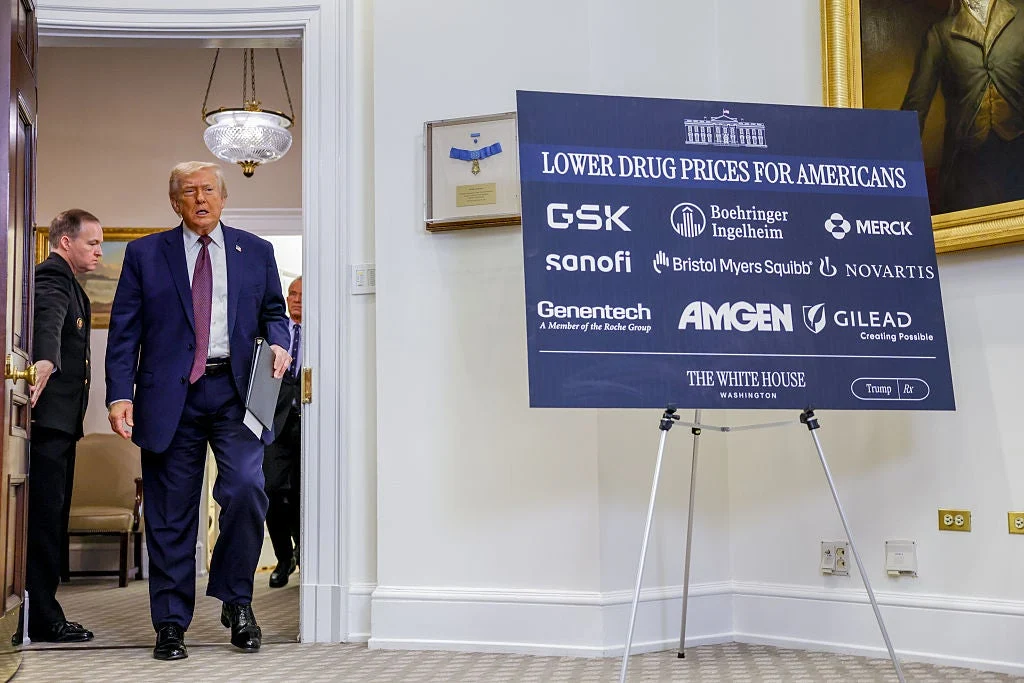
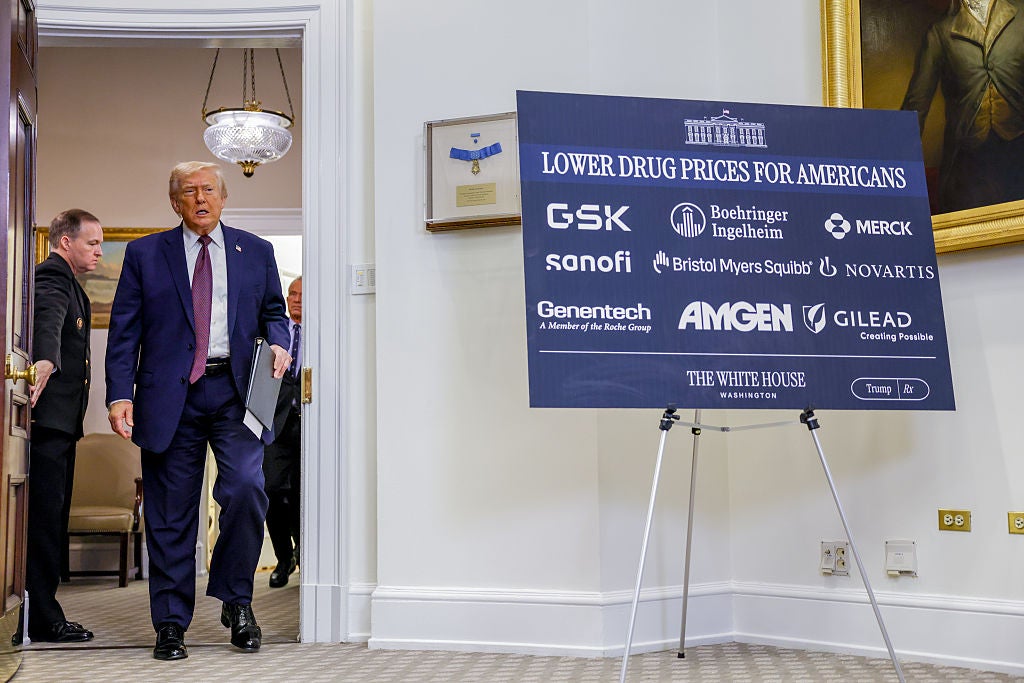
Furthermore, a significant bloc of major pharmaceutical companies is exempt from the tariffs until 2029. These companies have entered into pricing agreements with the White House under the Most Favored Nation (MFN) framework. This exemption currently applies to 16 companies, including prominent players like Pfizer, Eli Lilly, and MSD, suggesting a strategic differentiation in policy application based on prior engagement and commitments to the administration’s pricing initiatives. The image accompanying this report, showing a pharmaceutical manufacturing facility, underscores the focus on domestic production as a key policy driver.
Crucially, generics and biosimilars, which collectively account for approximately 90% of prescriptions filled in the United States, are not currently included in the tariff framework. This exclusion is significant, as these products are generally more affordable and represent a substantial portion of the U.S. pharmaceutical market.
Geopolitical Undercurrents: The China Factor
Beyond the immediate economic impacts, analysts suggest that the tariffs are deeply rooted in geopolitical considerations, particularly concerning China’s growing influence in the global pharmaceutical landscape. Diederik Stadig, a senior economist at ING, commented, "The key countries involved include Singapore, India, and China – none of which currently export a substantial volume of branded pharmaceuticals to the US. The economic impact will therefore be negligible. Rather, the tariff is geopolitical in nature and should be seen as a shot across the bow for more intense competition between the US and China in biotech and pharma."
This interpretation aligns with recent trends in drug development and investment. In October 2025, GlobalData reported that China was responsible for one-fifth of global drug development. More recently, ING estimated that one-third of all new molecules currently in global development pipelines originate from China. This burgeoning research and development capacity has led Western pharmaceutical giants to invest heavily in licensing deals with Chinese biotechs, recognizing the region’s potential for innovative early-stage drugs.
The administration has demonstrably been attuned to this shift. In January 2026, following congressional approval the previous month, President Trump signed into law the BIOSECURE Act. This legislation specifically targets certain Chinese biotechs and manufacturers, restricting their access to U.S. funding and prohibiting collaborations with domestic pharmaceutical companies utilizing federal funds. Stadig further elaborated on this strategic concern: "We believe that the next Pfizer will be Chinese rather than American or European. US policymakers on both sides of the aisle have realized that China is a real threat to US dominance in biopharmaceutical innovation."
The sheer volume of pharmaceutical products manufactured outside the U.S. – with the U.S. Food and Drug Administration (FDA) reporting that approximately 53% of patented pharmaceutical products distributed domestically are produced abroad – further fuels the administration’s narrative of supply chain vulnerability. The potential for disruption, as highlighted by President Trump in his statement, could indeed lead to shortages of life-saving medications during periods of global upheaval.
Broader Trade Implications and Regional Agreements
The newly imposed tariffs do not apply uniformly across all import sources. Branded products originating from the European Union (EU), Japan, South Korea, Switzerland, and Liechtenstein are exempt, as these nations maintain separate, established trade agreements with the United States. Similarly, the United Kingdom benefits from its landmark zero-tariff pharmaceutical deal, struck in December 2025, which shields its pharmaceutical exports from these new levies. These exemptions suggest a targeted approach, aiming to exert pressure on specific nations while maintaining existing trade relationships with key allies.
The focus on China, alongside countries like Singapore and India, as potential targets of these tariffs, points towards a broader strategy of economic competition. While these nations may not currently be major exporters of branded pharmaceuticals to the U.S., the tariffs could serve as a deterrent and a signal of future trade policy direction.
Expert Analysis: Economic vs. Geopolitical Drivers
The debate surrounding the tariffs hinges on whether their primary impact will be economic or geopolitical. While trade bodies lament the potential for increased costs, reduced R&D investment, and weakened U.S. competitiveness, analysts like Stadig argue that the direct economic impact on the U.S. pharmaceutical market might be minimal due to the limited volume of branded drug imports from the primary target countries. Instead, they posit that the tariffs are a strategic tool in a larger geopolitical game, designed to counter China’s rising influence in the biopharmaceutical sector and to bolster U.S. technological and manufacturing dominance.
Crowley’s assertion that tariffs "divert scarce resources away from research and development, weaken American biotech against China’s rising industry, and ultimately, harm the health and economic well-being of Americans" encapsulates the industry’s primary concerns. They argue that punitive measures, rather than collaborative strategies or targeted investments in domestic innovation, could prove counterproductive.
The implementation of these 100% tariffs represents a significant policy shift with potentially far-reaching consequences. While the administration frames it as a necessary measure to safeguard national security and bolster domestic industry, the pharmaceutical sector remains deeply skeptical, warning of adverse effects on innovation, affordability, and patient access to medicines. As the implementation dates approach, the true impact of these tariffs on the global pharmaceutical landscape will become increasingly evident, with geopolitical tensions likely to remain a central theme in the unfolding narrative.