


A landmark study from the University of Toronto Scarborough has revealed that a person’s perceived level of mental sharpness is a primary driver of daily productivity, potentially adding or subtracting the equivalent of 40 minutes of high-intensity work from a standard day. The research, which challenges traditional views that productivity is primarily a result of fixed personality traits like "grit" or self-discipline, suggests that internal cognitive fluctuations play a far more decisive role in whether individuals meet their daily objectives. By tracking the cognitive performance and goal-setting behaviors of participants over an extended period, researchers have provided a quantitative look at how the "mental fog" many experience is not merely a subjective feeling but a measurable metric with significant economic and personal implications.
The study, published in the peer-reviewed journal Science Advances, provides a comprehensive analysis of why individuals often fail to follow through on their intentions. Led by Cendri Hutcherson, an associate professor in the Department of Psychology at U of T Scarborough, the research team sought to bridge the gap between cognitive capacity and real-world execution. The findings indicate that on days when participants felt mentally alert, they were not only more likely to complete their planned tasks but were also more ambitious in the goals they set for themselves. Conversely, on days characterized by lower mental clarity, even routine chores and basic professional responsibilities felt disproportionately taxing.
Methodology and the Within-Person Approach
The research design utilized a longitudinal tracking method that followed university students over the course of 12 weeks. Unlike many psychological studies that compare different groups of people—such as comparing "high-achievers" to "low-achievers"—this study focused on "within-person" variations. This approach allowed researchers to control for stable personality traits and focus exclusively on how a single individual’s performance changed from one day to the next.
Participants were required to complete brief daily cognitive assessments designed to measure processing speed, accuracy, and executive function. These tests were paired with self-reported data regarding their daily goals, actual productivity levels, mood, sleep quality, and total workload. By synthesizing objective test results with subjective daily logs, the researchers were able to create a high-resolution map of the relationship between cognitive "readiness" and actual output.
The data revealed that mental sharpness is not a static quality. Instead, it is a dynamic state that fluctuates based on a variety of physiological and environmental factors. This discovery shifts the focus of productivity research from "who you are" to "how you are functioning today," providing a more nuanced understanding of human performance.
The Quantifiable Impact of Mental Sharpness
One of the most significant contributions of the U of T Scarborough study is the quantification of mental sharpness in terms of time. By analyzing the data, researchers estimated that being "sharper than usual" provides a productivity boost equivalent to approximately 30 to 40 minutes of additional work in a single day. When comparing an individual’s most alert day to their most sluggish day, the productivity gap can widen to as much as 80 minutes.
In a professional context, an 80-minute swing in daily output represents nearly 17% of an eight-hour workday. Across a large workforce, these fluctuations represent a massive variable in organizational efficiency. The study suggests that "working harder" is often less effective than "working sharper," as the cognitive effort required to overcome mental fog consumes a significant portion of an individual’s energy reserves, leaving less for the task at hand.
Furthermore, the study found that mental sharpness directly influences the complexity of goals. On high-sharpness days, students were more likely to tackle "stretch goals" or difficult academic projects. On low-sharpness days, they defaulted to maintenance tasks or failed to initiate work altogether. This suggests that mental clarity is a prerequisite for innovation and high-level problem solving.
Chronology of Influencing Factors: Sleep, Time, and Mood
The researchers identified several key drivers that influence where an individual falls on the sharpness spectrum on any given day. The chronology of a typical productive day, according to the data, begins with the previous night’s rest.
- The Sleep Factor: There was a direct correlation between getting more sleep than one’s personal average and improved cognitive performance the following day. It was not just about the total hours of sleep, but the deviation from the norm. A student who typically slept six hours saw a significant boost when they managed seven, highlighting the restorative power of incremental rest.
- The Circadian Rhythm: Mental sharpness generally peaked earlier in the day for the majority of participants. As the day progressed, cognitive efficiency tended to decline, a phenomenon often referred to as "decision fatigue" or "cognitive depletion."
- Mood and Motivation: The study found a strong link between depressive moods and lower mental sharpness. Emotional well-being acted as a filter for cognitive processing; when participants felt motivated and positive, their brains functioned with higher efficiency. Conversely, "depressive traps"—periods of low mood and rumination—were associated with significant drops in mental clarity.
- The Workload Paradox: The relationship between workload and sharpness was found to be complex. In the short term, a heavy workload actually increased mental sharpness, as the brain "ramped up" to meet immediate demands. However, this effect was unsustainable. Prolonged periods of high-intensity work without adequate recovery led to a "burnout" phase, where sharpness plummeted and stayed low for several days.
Scientific Analysis of the "Mental Fog"
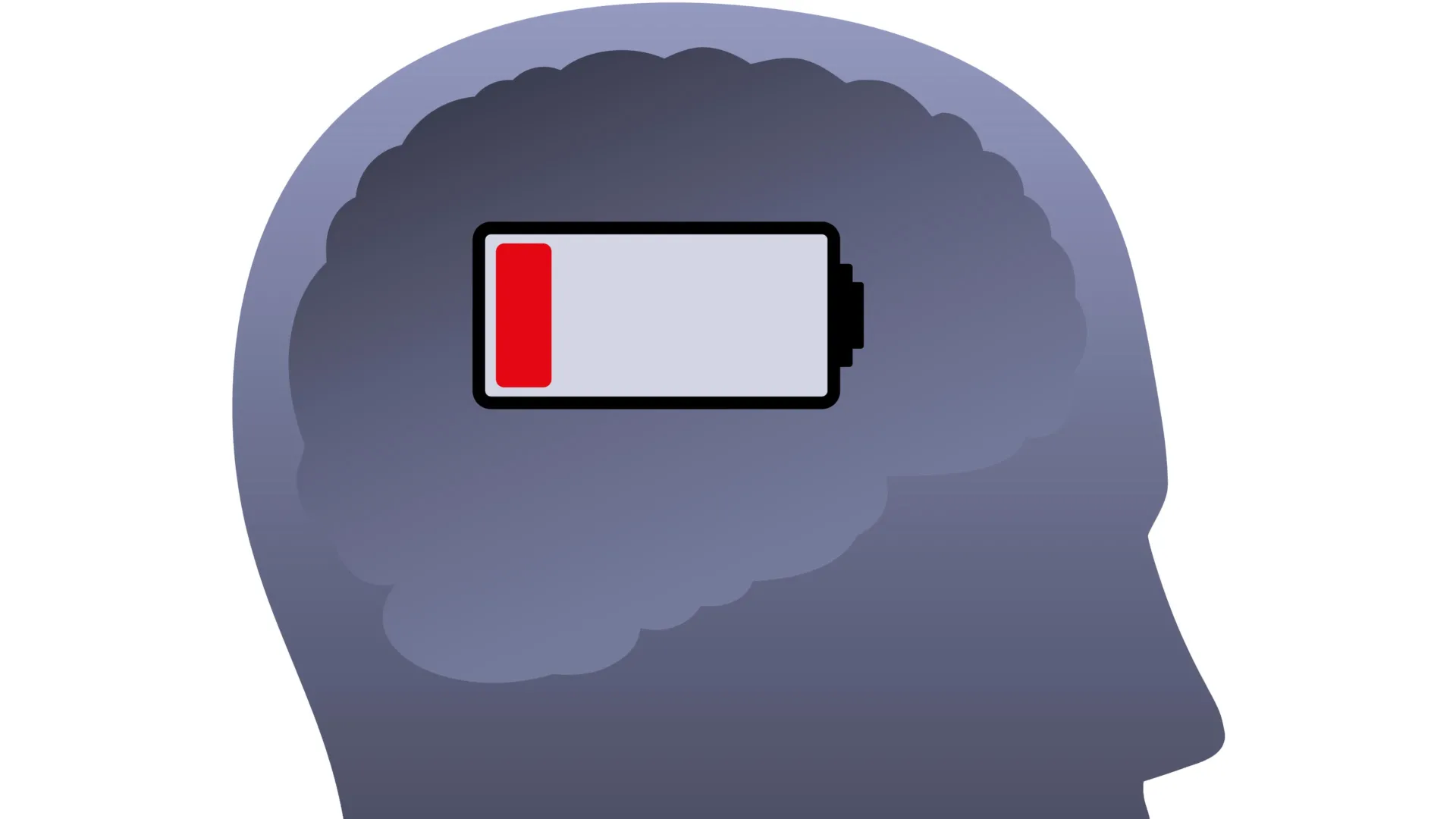
The term "mental fog" is often used colloquially, but the U of T Scarborough study provides a scientific basis for the sensation. From a neurological perspective, mental sharpness relates to the efficiency of the prefrontal cortex—the area of the brain responsible for executive functions such as planning, focus, and impulse control.
When sharpness is low, the neural pathways required to maintain focus become less efficient, requiring more glucose and oxygen to perform the same tasks. This increased "cognitive load" explains why simple tasks feel difficult during periods of low sharpness. The study’s findings align with the Yerkes-Dodson Law, which suggests there is an optimal level of arousal (or sharpness) for performance. Too little arousal leads to inactivity, while too much (in the form of stress or overwork) leads to a breakdown in cognitive function.
Professor Hutcherson’s observation that "some days everything just clicks" refers to this state of neural efficiency. On these days, the brain can filter out distractions and process information with minimal friction. The study proves that these "good days" are not random occurrences but are the result of a specific set of biological and environmental conditions.
Implications for the Modern Workplace and Education
The findings of this research have profound implications for how schools and businesses structure their environments. Traditionally, the "9-to-5" model assumes that human productivity is linear and consistent. However, the U of T Scarborough study suggests that a one-size-fits-all schedule may be counterproductive.
Flexible Scheduling: Organizations that allow for flexible start times or "core hours" may see higher productivity by allowing employees to work when their mental sharpness is at its peak. For "night owls," this might mean starting later, while "early birds" can tackle their most complex tasks at dawn.
Burnout Prevention: The discovery that short-term pushes increase sharpness but long-term overwork destroys it provides a clear mandate for mandatory downtime. Managers who encourage "grinding" without breaks may inadvertently be lowering the total cognitive output of their teams over the long term.
Mental Health Integration: Since mood and depressive states were so closely linked to cognitive performance, the study reinforces the idea that mental health support is not just a fringe benefit but a core component of a productive environment. Reducing "depressive traps" in the workplace—such as isolation or lack of recognition—can have a direct impact on the bottom line.
Reactions and Future Directions
While the study focused on university students, psychology experts suggest the results are likely applicable to the broader adult population. Academic peers have noted that the 12-week duration of the study adds significant weight to the findings, as it captures the natural ebbs and flows of a full academic quarter, including periods of high stress (exams) and relative calm.
Inferred reactions from the professional development community suggest a shift away from "hustle culture," which prioritizes hours worked, toward "energy management," which prioritizes the quality of those hours. The 40-minute productivity "bonus" identified by Hutcherson and her team provides a tangible goal for those looking to optimize their daily routines.
Future research is expected to delve deeper into the specific types of tasks most affected by sharpness. While this study looked at general goal completion, subsequent investigations may explore whether creative tasks are more sensitive to mental fog than repetitive, administrative tasks.
Conclusion: A New Paradigm for Productivity
The University of Toronto Scarborough study serves as a vital reminder of the biological limits of the human brain. By demonstrating that mental sharpness can fluctuate enough to impact productivity by over an hour a day, the research advocates for a more compassionate and scientifically grounded approach to work and study.
As Cendri Hutcherson noted, the key to long-term success may lie in recognizing when the brain is not functioning at its peak and allowing for "slack." Rather than pushing through the fog at a diminished capacity—which often leads to errors and further exhaustion—the data suggests that prioritizing sleep, managing mood, and respecting the limits of one’s cognitive energy are the most effective strategies for achieving one’s goals.
In an era of constant connectivity and increasing demands on attention, understanding the mechanics of mental sharpness is no longer just a matter of personal interest; it is a necessity for navigating the complexities of modern life. The 40-minute advantage is available to those who can master the art of maintaining their mental clarity.
















Leave a Reply