The realm of quantum physics has long held up superconductors as one of its most fascinating and transformative phenomena. When certain metallic alloys, compounds, and ceramic materials are cooled below their specific material-dependent transition temperatures, their electrical DC resistance vanishes entirely. In this zero-resistance state, electrical current can circulate indefinitely without losing energy in the form of heat. This unique behavior opens the door to numerous high-impact technological applications, ranging from powerful particle-accelerator magnets and magnetic resonance imaging (MRI) machines to ultra-sensitive magnetic detectors and complex quantum computing circuits.
However, the practical utility of superconductors has historically been constrained by a fundamental physical limitation: they cannot sustain an infinite amount of electrical current. Once a specific threshold is crossed, the material abruptly loses its superconducting properties and reverts to a normal resistive state. For decades, researchers measured this threshold via conventional direct-current (DC) transport experiments, defining it as the critical current. Yet, a persistent discrepancy has puzzled physicists: the experimentally observed critical current in type-II superconductors is typically far lower than the theoretical microscopic limit dictated by quantum mechanics.
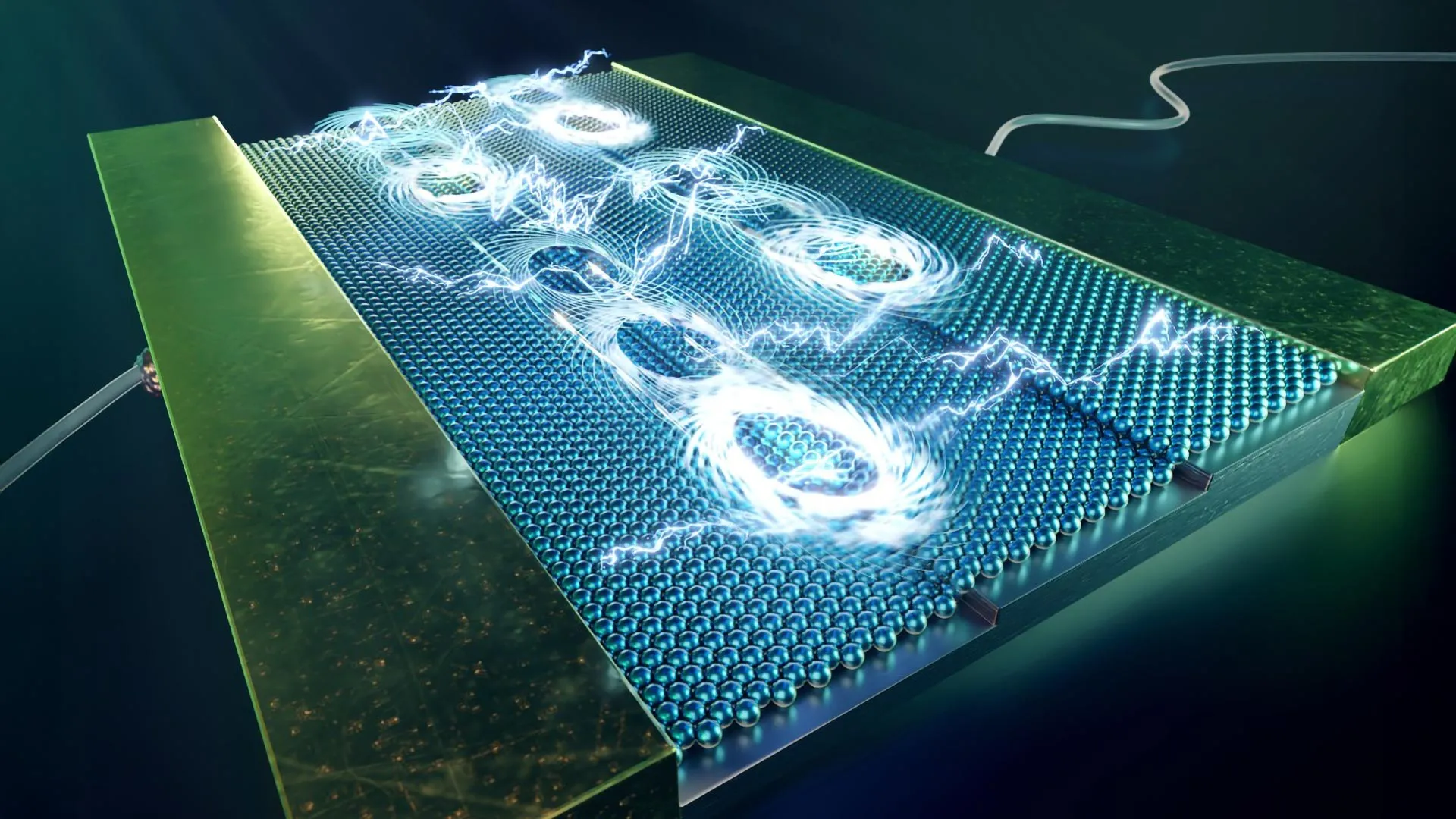
This premature failure is rarely caused by the breakdown of superconductivity itself. Instead, it is usually triggered by the movement of magnetic vortices—tiny microscopic channels through which magnetic flux penetrates type-II superconductors. As electric current increases, these vortices experience a Lorentz force that causes them to drift across the material. The motion of these magnetic whirlwinds generates localized electrical resistance and Joule heating, which rapidly cascades and destroys the macroscopic superconducting state long before the material reaches its true fundamental capacity.
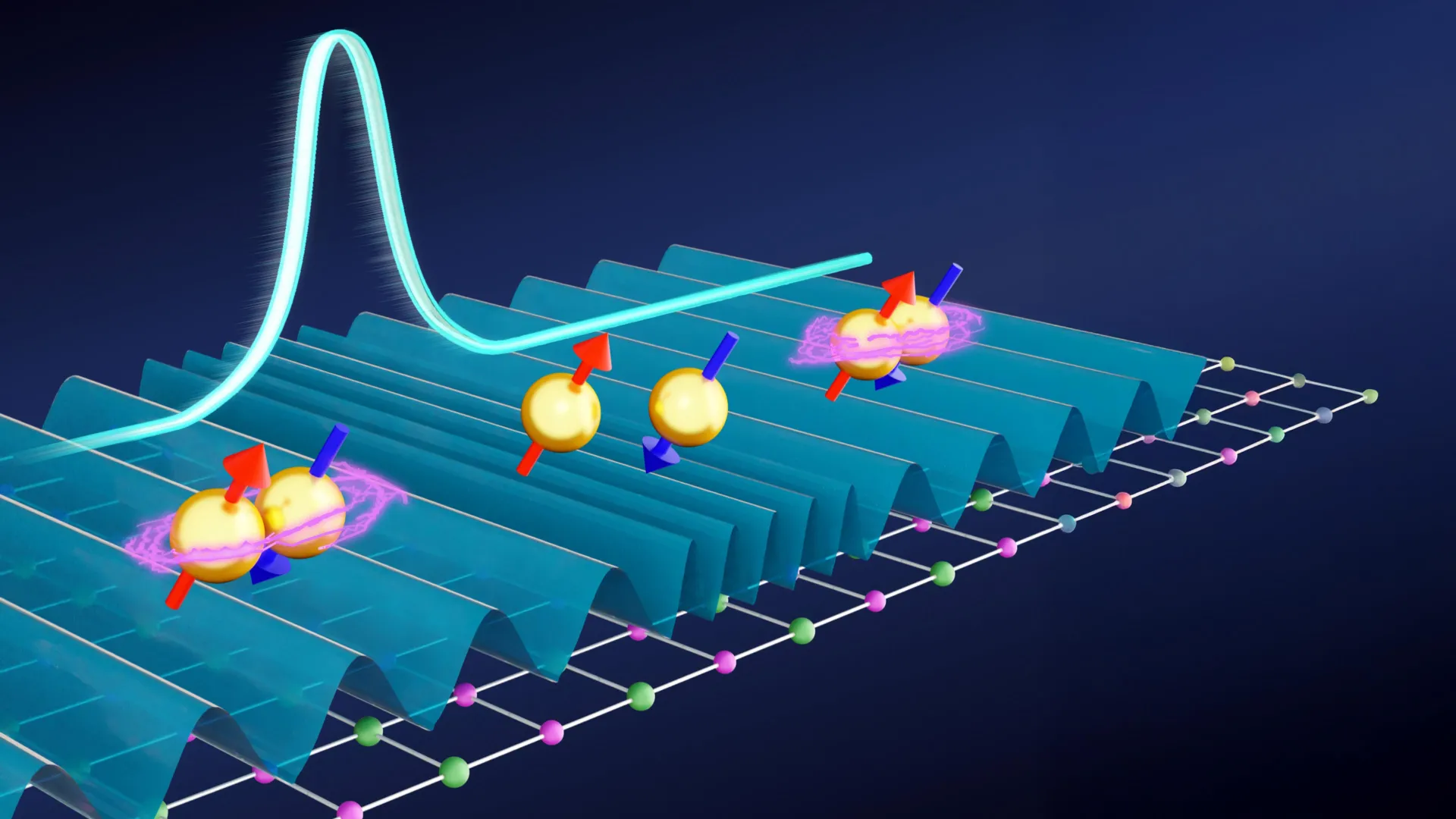
To bypass this experimental roadblock, an international research team has engineered a groundbreaking methodology utilizing picosecond-duration electrical pulses. By outrunning the physical dynamics of magnetic vortices, the scientists have successfully driven superconducting materials to their absolute quantum limits—the depairing current—where the fundamental Cooper pairs themselves are torn apart by extreme electrical stress. This breakthrough not only exposes hidden quantum mechanics in superconductors but also establishes a new paradigm for characterizing quantum materials at ultrafast timescales.
The Quest to Outrun Quantum Dissipation: A Chronology of Discovery
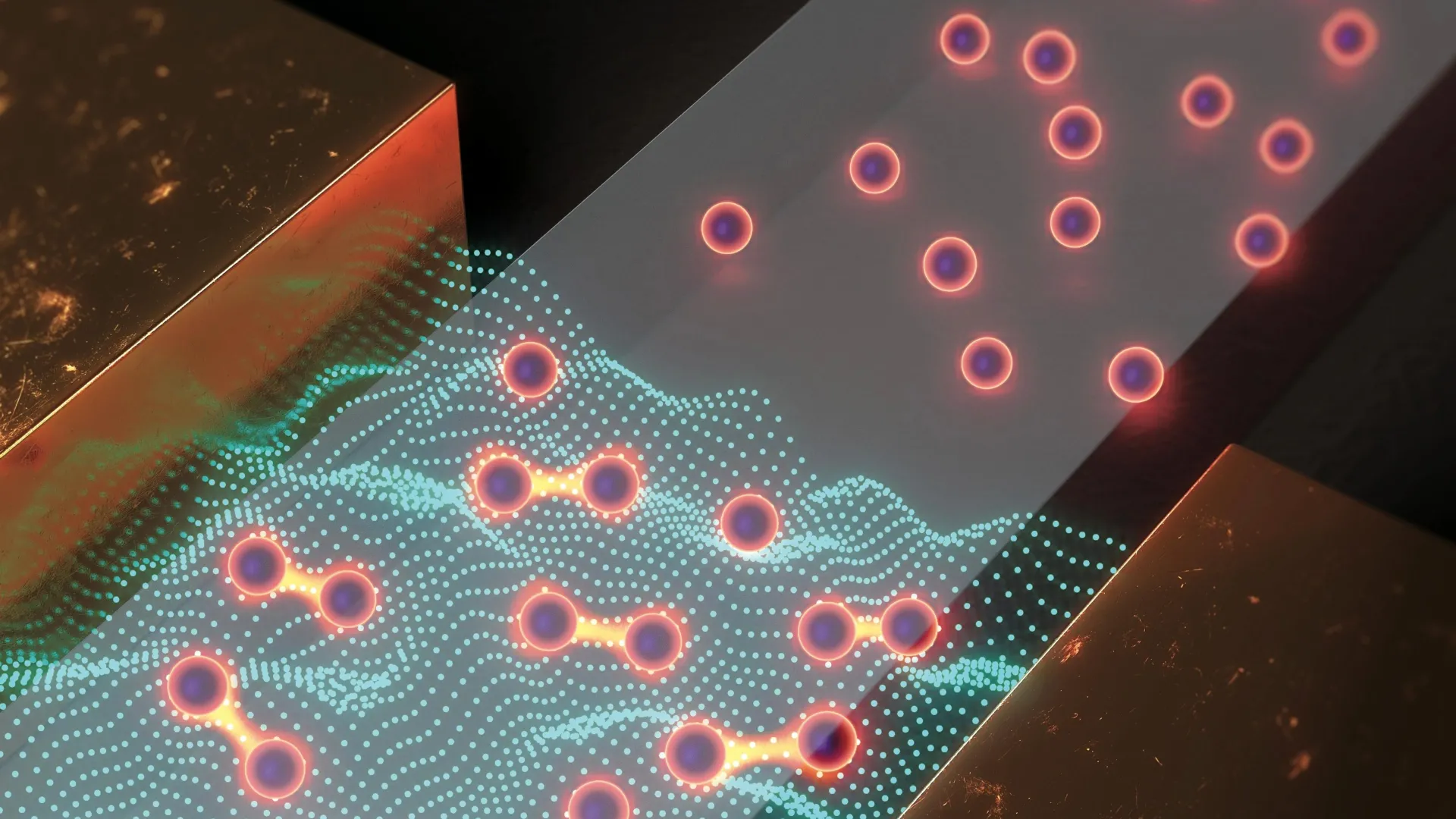
The journey toward measuring the intrinsic limits of superconductivity spans decades of theoretical predictions and experimental frustrations. Ever since the formulation of the microscopic theory of superconductivity by John Bardeen, Leon Cooper, and John Robert Schrieffer (BCS theory) in 1957, physicists have understood that electrons bind together into correlated pairs known as Cooper pairs. These pairs move collectively through the crystal lattice like a single, coherent quantum wave, insulating them from ordinary scattering events that cause electrical resistance.
Theoretical physicists subsequently calculated that the ultimate ceiling for this state is the depairing current—the current density at which the drift velocity of the Cooper pairs exceeds their binding energy, causing them to dissociate. As Eryin Wang, lead author of the study, vividly explains, the process can be visualized by imagining a mechanical spring: "One way to picture it is that the current ‘twists’ the phase of the coherent quantum state of the superconductor, rather like winding a spring. If this quantum state is twisted too far, it becomes unstable, and the Cooper pairs begin to break apart."
For years, however, observing this phenomenon directly remained experimentally elusive. Conventional DC measurements apply electrical current over relatively long periods—milliseconds to seconds—giving ample time for thermal fluctuations and vortex motion to destabilize the material. Type-II superconductors, which constitute the vast majority of high-field and high-temperature superconducting applications, are especially plagued by vortex pinning and depinning events.
To overcome this, researchers at leading European and international research institutions turned to ultrafast science. The breakthrough materialized through the development of an advanced ultrafast electrical-transport platform, spearheaded by the Max Planck Institute for the Structure and Dynamics of Matter (MPSD). By shrinking the temporal window of applied current to mere picoseconds—trillionths of a second—the team devised a way to deliver massive current densities before vortices could mobilize or generate disruptive thermal gradients.
Unprecedented Experimental Architecture: Picosecond Pulses and Photoconductive Switches
To execute this high-speed measurement, the research team engineered a sophisticated optical and electronic testbed. The cornerstone of this system relies on photoconductive switches activated by exceptionally short laser pulses.
According to Guido Meier, a co-author of the research, the implementation requires extreme precision. "To apply current to superconductors for only a few picoseconds, we used the ultrafast electrical-transport platform that we have been developing at our institute," Meier notes. The setup is triggered by intense green laser pulses lasting a mere 300 femtoseconds with a central wavelength of 515 nanometers.
Upon optical activation, the photoconductive switches launch sharp electrical pulses that propagate along a specialized coplanar waveguide. These ultra-short pulses are then directed into microscopic superconducting samples meticulously patterned down to dimensions of just a few micrometers.
Because magnetic vortices typically travel at velocities reaching tens of kilometers per second, they can cover vast macroscopic distances over long timescales. However, on a picosecond timescale, these vortices are essentially frozen in place, moving merely tens of nanometers. By compressing the electrical stimulation into this narrow temporal window, the researchers effectively outran the vortex dynamics. This strategy successfully suppressed energy loss and allowed the current density to climb to unprecedented levels, pushing the superconducting materials directly to their intrinsic depairing limits.
Contrasting Responses: Probing s-Wave and d-Wave Superconductivity
With their ultrafast platform operational, the researchers set out to investigate how different classes of superconducting materials respond to extreme, non-equilibrium currents. They selected two distinct compounds: Niobium Nitride (NbN) and Yttrium Barium Copper Oxide (YBCO). These materials were chosen because they embody fundamentally contrasting microscopic structures of superconductivity.
NbN is classified as a conventional or near-conventional superconductor featuring a relatively uniform superconducting energy gap, commonly referred to as an s-wave symmetry. In contrast, YBCO is a high-temperature cuprate superconductor characterized by a d-wave gap symmetry, meaning its energy gap varies dramatically depending on the crystallographic direction, eventually dropping to zero along specific nodal lines.
Subjecting these two materials to picosecond electrical pulses yielded remarkably different behavioral profiles, illuminating how internal quantum architecture dictates high-current limits.
When subjected to the ultrafast current pulses, NbN remained exceptionally stable and strongly superconducting, maintaining its zero-resistance state until the current density reached a distinct, sharply defined threshold. Once the current surpassed this precise limit, the material’s electrical response changed abruptly—a clear signature that the kinetic energy of the driving current had finally exceeded the binding energy of the s-wave Cooper pairs, causing them to break apart uniformly.
YBCO, however, exhibited a starkly different trajectory. Rather than holding firm up to a single cliff-edge threshold and failing abruptly, its superconducting state weakened in a progressive, gradual manner as the ultrafast current increased. The research team attributes this divergence to the internal anisotropy of the d-wave energy gap. Because the pairing strength in YBCO is highly directional and vanishes along nodal directions, the Cooper pairs do not all dissociate simultaneously. Instead, portions of the Fermi surface lose their superconducting coherence progressively, smoothing out the transition.
Implications for Fundamental Physics and Advanced Technologies
The successful deployment of picosecond electrical transport opens an entirely new observational window into quantum materials. By operating on timescales that match the natural internal dynamics of the superconducting state, scientists can now probe microscopic properties—such as gap symmetry and quasiparticle relaxation rates—that remain completely obscured during standard DC transport measurements.
Andrea Cavalleri, head of the research group at MPSD, emphasizes the broader significance of the findings: "Our results suggest that picosecond transport can provide access to microscopic properties of superconductors, including their gap symmetry, that are not directly available from conventional DC transport."
Looking forward, the scientific community recognizes that these findings must be tested across a broader spectrum of unconventional superconductors, including iron-based superconductors and heavy-fermion compounds, to determine the universal applicability of the technique.
Beyond fundamental condensed matter physics, this newly accessible regime of ultra-high current superconductivity carries promising technological implications. The ability to manipulate and drive superconducting circuits at picosecond speeds could pave the way for novel optoelectronic devices, ultra-fast superconducting switches, and advanced magnetic sensors. As researchers continue to refine ultrafast electronic platforms, the boundary between fundamental quantum research and practical high-speed device engineering continues to narrow, offering exciting prospects for the future of quantum technology.