Restoring the Lost Chord: Breakthroughs in BCI Technology
The recent success of brain-computer interfaces represents a landmark achievement in neuroscience. By decoding the electrical signals generated by the brain’s motor cortex—the region responsible for controlling the muscles required for speech—researchers are bypassing damaged neurological pathways to produce synthetic, yet authentic, communication.
Casey Harrell, a patient living with ALS, has become a focal point of this research. ALS is a progressive neurodegenerative disease that affects nerve cells in the brain and spinal cord, leading to a loss of muscle control. In the United States, approximately 30,000 people live with ALS, with about 5,000 new cases diagnosed annually. For patients like Harrell, the ability to communicate often diminishes as the disease advances. Through a BCI implant, Harrell has regained the ability to speak, providing a lifeline to his family. In accounts documented by neuroscience writer Laura Sanders, Harrell described the immediate impact of the technology, noting that the ability to engage in real-time conversation with his daughter fundamentally restored a facet of his life he had previously considered lost forever.
The Chronology of Speech Restoration
The evolution of this technology has been rapid. Over the past decade, researchers shifted from basic cursor control on computer screens to the complex decoding of phonetic sounds.
- 2010–2015: Initial trials focused on "locked-in" patients using BCIs to spell out words letter-by-letter on a screen. While functional, the process was painstakingly slow, often producing only a few words per minute.
- 2019–2021: Researchers began mapping the neural activity associated with the physical movements of the tongue, lips, and jaw. By decoding these signals, scientists successfully synthesized spoken words rather than just text.
- 2023–2024: The current generation of implants, such as those utilized by Harrell, employs high-density electrode arrays that capture signal data with unprecedented resolution. This allows for near-natural conversational speed, marking the transition from lab-based experiments to real-world application.
The Dual-Edged Sword: AI Voice Cloning and Ethical Risks
As the technology to restore voices matures, the integration of artificial intelligence has introduced new complexities. AI voice cloning—a process that uses snippets of a person’s past recordings to recreate their unique vocal timbre and cadence—can provide a sense of continuity for patients. However, this capability is not without risk.
Experts in bioethics, including those featured in the latest issue of The Deep End, emphasize that the same algorithms designed to restore autonomy could be weaponized. The potential for "voice hijacking," wherein malicious actors utilize deepfake technology to impersonate individuals for fraudulent or coercive purposes, has spurred calls for regulatory oversight. The security of the data collected by these neural implants is currently a subject of intense debate. If a patient’s unique "neural signature" for speech is compromised, the implications for personal privacy and security are significant.
Progress in Stiff Person Syndrome Therapeutics
Beyond speech restoration, the medical community is witnessing significant progress in the treatment of rare autoimmune disorders, specifically Stiff Person Syndrome (SPS). This rare condition, affecting approximately 2 in 100,000 individuals, is characterized by fluctuating muscle rigidity and extreme sensitivity to stimuli, which can trigger painful spasms.
Historically, treatment options have been limited to symptomatic management using benzodiazepines or muscle relaxants, which offer limited efficacy and significant side effects. Current research is shifting toward immunotherapy, particularly the use of chimeric antigen receptor (CAR) T cell therapy. This method, originally developed for oncology, involves the extraction and genetic modification of a patient’s own white blood cells. Once reinfused, these "reprogrammed" cells are designed to identify and eliminate the specific immune cells responsible for attacking the body’s nervous system.
While the U.S. Food and Drug Administration (FDA) has yet to grant formal approval for a curative treatment for SPS, early clinical data suggests that CAR T cell therapy could potentially halt the progression of the disease. If these trials prove successful, it would represent a paradigm shift in the treatment of autoimmune diseases, moving from chronic management to long-term remission or potential cure.
AI and the Mathematics of the Future
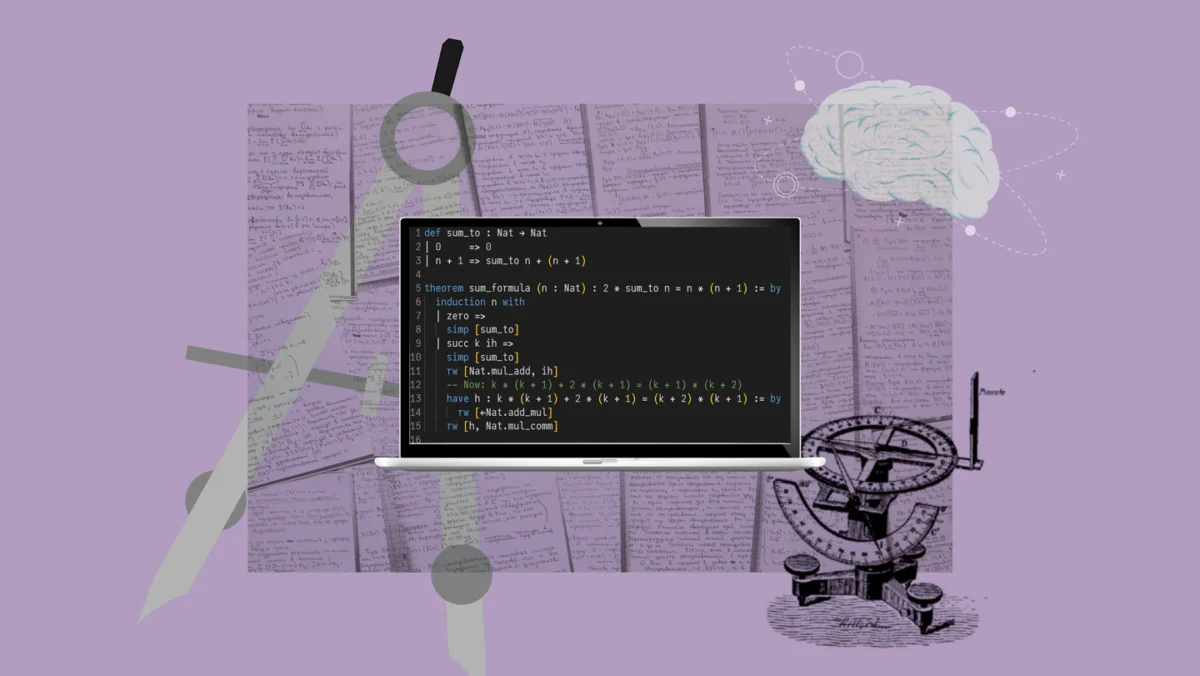
The rapid integration of AI into scientific discovery is also provoking significant institutional discourse. A recent incident involving OpenAI and the Navier-Stokes equations—a set of partial differential equations that describe the motion of fluid substances—highlights the growing tension between traditional academic research and high-speed algorithmic computation.
When OpenAI announced a breakthrough in solving a complex mathematical puzzle, it occurred just 24 hours after a team of human mathematicians reported a similar advancement. This sequence of events has ignited a debate within the scientific community regarding credit, transparency, and the role of the human researcher in an AI-dominated landscape.
The primary concern is not merely who deserves the credit, but how the scientific community validates results produced by "black box" algorithms. In mathematics, a solution is only as valuable as the proof that supports it. If an algorithm generates a correct result without providing a logical, human-verifiable path to that solution, the utility of the discovery remains a subject of contention. As AI-fueled achievements continue to emerge at an unprecedented rate, the scientific community is being forced to reconcile its traditional peer-review processes with the velocity of machine-led inquiry.
Analysis: The Future of Neural and Algorithmic Integration
The convergence of these advancements—BCI restoration of speech, immunotherapeutic breakthroughs for rare diseases, and AI-driven mathematical discovery—signals a broader trend toward the technologization of human biological function.
- Patient Autonomy: The success of BCI implants demonstrates that technology is finally beginning to prioritize the restoration of individual autonomy, rather than mere symptom management. This shift is likely to drive further investment in neuro-technological interfaces.
- Regulatory Challenges: As AI voice cloning and neural data collection become more prevalent, the legal frameworks governing "cognitive liberty" and digital privacy will need to evolve. Protecting the neural data of patients is becoming as critical as protecting their physical health.
- Collaborative Intelligence: The friction between AI and traditional research methods in fields like mathematics suggests that the future of science will not be defined by a replacement of human expertise, but by a struggle to define the boundaries of collaboration.
In conclusion, while the ability to restore a voice to the silent or treat previously incurable autoimmune conditions offers hope to millions, these advancements require a vigilant, ethical approach. The challenge for the coming decade will be to ensure that the tools designed to empower human life do not simultaneously erode the fundamental rights and intellectual credit of those they are intended to serve. As we stand on the precipice of these technological frontiers, the primary goal remains clear: to harness the power of innovation to restore the human experience without compromising its integrity.