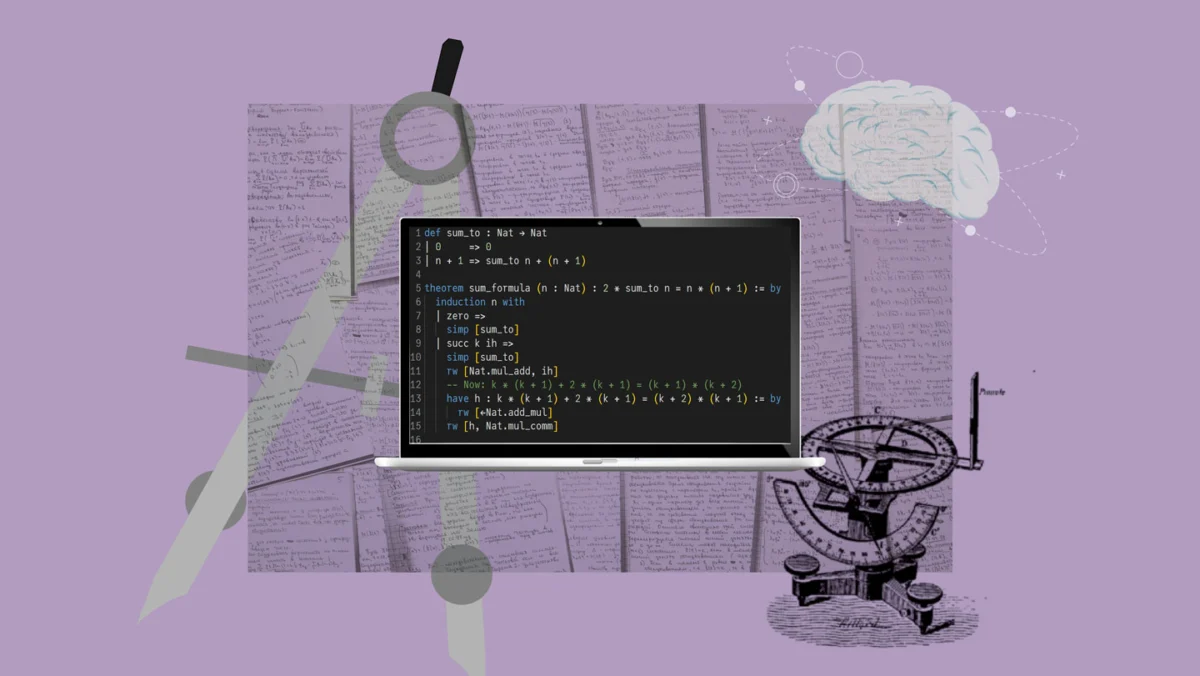
As mathematician Thomas Bloom recently remarked, the field is witnessing an "exponentially exploding" volume of new results. This surge is not merely a quantitative increase in output; it represents a qualitative transformation in the role of the mathematician. However, as private entities race to capture the "gold standard" of automated reasoning, the underlying mechanisms of these models remain shrouded in black-box architectures, creating a disconnect between the "what" of a solution and the "why" of the reasoning.
The Chronology of Automated Mathematical Reasoning
The journey toward AI-assisted mathematics has been punctuated by significant milestones that have redefined the boundaries of computation. For decades, the field relied on formal verification systems such as Lean, Coq, and Isabelle—tools that required human guidance to construct rigorous proofs.
In the early 2020s, the landscape shifted. The integration of transformers into formal proof assistants allowed for the semi-automation of complex tasks. By 2023, models began to approach the 50th-percentile mark on competitive math benchmarks. The watershed moment arrived in 2024 and 2025, when AI systems, such as Google DeepMind’s AlphaProof and AlphaGeometry 2, began consistently achieving scores equivalent to silver and gold medalists at the International Mathematical Olympiad.
This chronology reflects a rapid compression of development cycles. Whereas previous breakthroughs in mathematics often took decades of collaborative effort, current AI systems can iterate through thousands of potential logical paths in a matter of hours. The transition from human-led verification to machine-led exploration has been swift, leaving academic institutions scrambling to establish guidelines for the provenance and interpretability of computer-generated results.
Data and Performance: The Metric Trap
The current obsession with benchmarking AI performance on standardized math problems has inadvertently fostered a culture of competition that prioritizes correct outputs over transparent methodology. Recent data from the 2026 academic cycle indicates that while AI success rates on high-level mathematical problems have surged by over 40% compared to 2023 figures, the "interpretability gap" has widened.
In a traditional academic setting, a proof is a communicative act. It is designed to be read, scrutinized, and understood by peers. The current generation of generative AI models, however, functions through probabilistic token prediction. While they can chain logical steps together to reach a correct conclusion, the internal logic is often fragmented. When a model provides a solution, it may arrive at the correct result through a "hallucinated" or non-rigorous sequence of steps that happens to balance out.
Supporting data from independent research audits suggests that nearly 15% of AI-generated proofs, while numerically correct, rely on circular reasoning or unsubstantiated leaps that would fail a standard peer-review process. This reliance on statistical probability rather than logical deduction creates a precarious foundation for future mathematical development.
The Conflict of Proprietary Interests
The tension between open scientific inquiry and corporate competition is perhaps nowhere more visible than in the development of proprietary "reasoning engines." Major AI labs, including OpenAI, Anthropic, and Google, are engaged in a race to claim ownership of the most robust mathematical reasoning model.
This environment has discouraged the cross-pollination of techniques. When research is siloed behind non-disclosure agreements and protected by trade secret laws, the global mathematical community loses the ability to stress-test these models. The "black-box" nature of these systems means that mathematicians cannot verify the underlying heuristics, effectively turning the process of mathematical discovery into a faith-based exercise in checking final results.
Leading figures in the mathematical community have expressed concern regarding this trend. "If we cannot audit the process, we cannot trust the proof," notes a senior researcher at the Institute for Advanced Study. The implications for fields like cryptography, engineering, and theoretical physics are profound. If a foundational theorem is verified by a proprietary model that cannot be inspected, the structural integrity of the entire domain becomes dependent on the reliability of the corporation that produced the code, rather than the universality of the math itself.
Implications for the Future of Mathematics
The shift toward AI-driven mathematics carries both transformative potential and existential risk. On one hand, AI acts as an "accelerant," allowing mathematicians to explore dimensions of complexity previously thought inaccessible. On the other, the loss of human-centric understanding—the visceral "aha!" moment of grasping a proof—risks alienating the next generation of mathematicians.
1. The Erosion of Pedagogy
Mathematics is not merely a collection of solved problems; it is a pedagogical discipline. If students are trained to rely on machines to provide the "answer," the cognitive capacity for abstract problem-solving may atrophy. Education systems must now pivot toward teaching "AI literacy" in mathematics, focusing on how to prompt, audit, and critique machine-generated logic.
2. The Verification Crisis
The mathematical community faces a looming crisis of verification. As AI generates thousands of potential theorems per day, the human capacity for peer review will be overwhelmed. We may soon see the emergence of "automated peer review" systems, which would further remove the human element from the process, potentially cementing errors into the bedrock of modern scientific literature.
3. Institutional Responses
Professional mathematical societies are beginning to draft guidelines for the publication of AI-assisted results. These guidelines emphasize the necessity of "human-in-the-loop" verification, requiring that any AI-generated result be accompanied by a human-readable, formal proof that can be checked by standard computer algebra systems. However, enforcing these standards across disparate international journals remains a significant logistical hurdle.
Toward a Collaborative Future
To mitigate the risks associated with the competitive race for AI supremacy, a move toward "open-science AI" is required. If the goal of these companies is truly to advance the frontiers of human knowledge, they must prioritize the development of "interpretable AI"—models that provide step-by-step logical traces that are transparent and reproducible.
The value of a proof has never been limited to its final answer. It is found in the reasoning, the intuition, and the elegance of the logic. By prioritizing speed and competition, the current AI industry risks stripping mathematics of its most essential quality: the ability to be understood.
As we look toward the remainder of the decade, the integration of AI into mathematics must be guided by a commitment to transparency. Only through collaborative frameworks—where code, weights, and reasoning processes are shared openly—can the scientific community ensure that the "exponential explosion" of results serves to expand, rather than obscure, our understanding of the universe. The future of the field depends not on who solves the problem first, but on whether the solution can be owned and understood by the collective intellect of the scientific community.