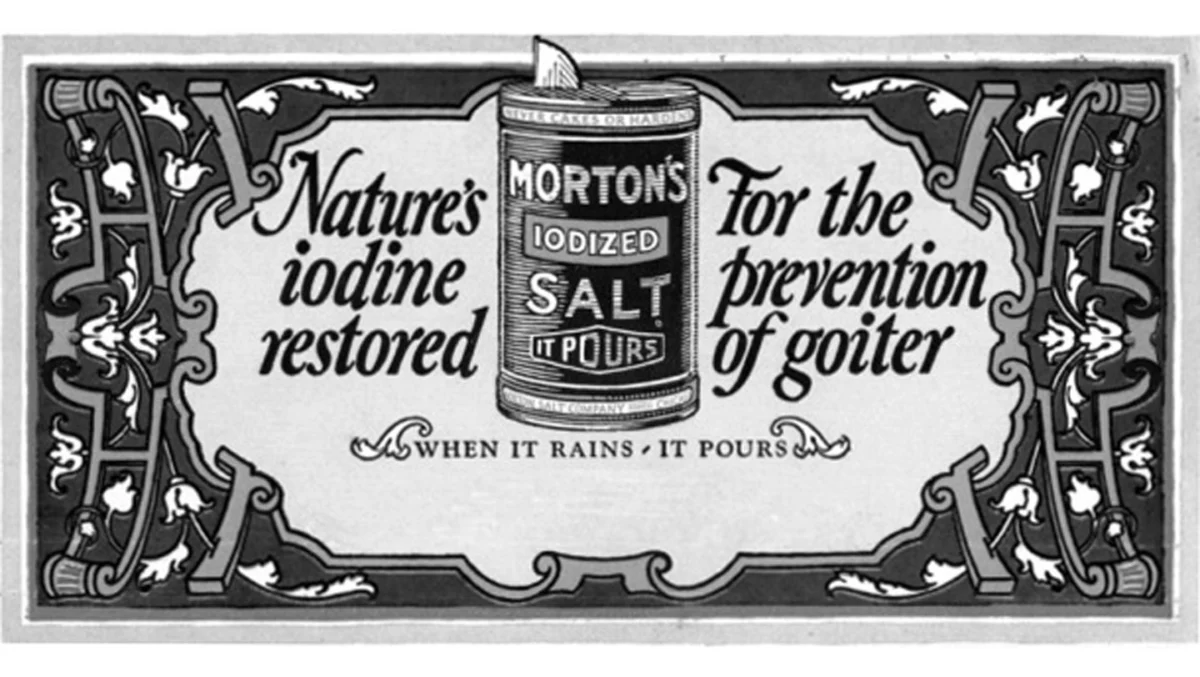
The Historical Genesis of Iodine Deficiency
Before the widespread adoption of iodized salt, iodine deficiency was endemic in many inland regions where soil levels of the mineral had been depleted by glaciers or leaching. Iodine is an essential trace element required for the synthesis of thyroid hormones—thyroxine and triiodothyronine—which regulate metabolism, brain development, and bone health. Without sufficient iodine, the thyroid gland compensates by enlarging, leading to goiter.
The severity of this issue reached a tipping point in the early 1900s. Studies conducted in Michigan and other northern states revealed that a staggering percentage of school-aged children suffered from visible goiters. The medical community realized that the deficiency was not limited to thyroid swelling; it was also linked to cognitive impairments, cretinism in newborns, and developmental delays. This realization prompted a coalition of public health officials and medical researchers to advocate for a simple, low-cost solution: the fortification of table salt.
A Chronology of the Iodization Movement
The path to universal salt iodization was marked by critical scientific milestones and industrial cooperation:
- 1896: Eugen Baumann, a German chemist, discovered that the thyroid gland is rich in iodine, confirming its physiological necessity.
- 1917: Dr. David Marine and O.P. Kimball conducted a landmark study in Akron, Ohio, providing iodine supplements to schoolgirls, which demonstrated a drastic reduction in the incidence of goiter.
- 1922: After intense lobbying and collaboration with the Michigan State Medical Society, the decision was made to introduce iodized salt to the commercial market.
- 1924: The Morton Salt Company officially launched the first iodized table salt for national distribution in the United States.
- 1924–1930: The "Goiter Belt" began to shrink as public acceptance of the product grew, supported by widespread medical endorsement and education campaigns.
- 1990s: The World Health Organization (WHO) and UNICEF pushed for Universal Salt Iodization (USI) globally, recognizing that while the U.S. had conquered the deficiency, billions remained at risk worldwide.
The Science of the "Goiter Belt" and Data Trends
Data from the early 20th century provides a clear picture of the epidemic’s scale. In the 1920s, some surveys estimated that in certain regions of the Great Lakes, up to 70% of the population exhibited some level of thyroid enlargement. The introduction of salt containing potassium iodide—at a concentration of one part in 10,000—served as a highly effective vehicle for public health.
However, current data from the National Health and Nutrition Examination Survey (NHANES) paints a more nuanced picture. While the United States is no longer considered iodine-deficient, there has been a documented decline in urinary iodine concentrations among the U.S. population over the last several decades. Between 1971 and 1994, NHANES data indicated a decrease in the median urinary iodine level by nearly 50%. While levels have since stabilized, they remain lower than the historical highs of the mid-20th century. Public health experts attribute this to a combination of factors, including reduced salt intake due to cardiovascular health concerns and the shift toward processed foods that do not use iodized salt.
The Modern Culinary Paradox
The modern grocery aisle presents a paradox: while consumers have unprecedented access to a global array of artisanal salts, these "fancy" salts—Himalayan pink salt, sea salt, fleur de sel, and kosher salt—are rarely iodized.
Many consumers operate under the misconception that "natural" or "unrefined" salts are nutritionally superior to standard table salt. However, from a strictly nutritional standpoint, sea salt and mineral-rich salts often lack the standardized iodine fortification that made table salt a public health miracle. As specialty salts gain market share, the primary delivery mechanism for this essential micronutrient is effectively being bypassed.
"We are seeing a trend where the marketing of ‘natural’ products is inadvertently leading to a reduction in the intake of essential micronutrients," says Dr. Elena Vance, a nutritionist specializing in endocrine health. "When people switch from iodized table salt to a sea salt that hasn’t been fortified, they are removing a critical safety net from their diet without realizing it."
Official Responses and Public Health Implications
The American Thyroid Association (ATA) and other health organizations have consistently emphasized the importance of maintaining adequate iodine levels, particularly for pregnant and breastfeeding women. Severe iodine deficiency during pregnancy can lead to permanent neurological damage in the fetus, a reality that global health agencies continue to battle in developing nations.
In the United States, the response has been one of monitoring rather than mandates. Because iodization of salt is voluntary, food manufacturers are not legally required to use iodized salt in their products. As the food industry continues to reformulate products to reduce sodium content—a necessary move to combat hypertension—the amount of iodine provided through processed food sources has also become less predictable.
Broader Implications: The Cost of Complacency
The success of salt iodization was predicated on the assumption that it would be a "set it and forget it" public health strategy. The historical data proves that when the fortification is consistent, the prevalence of thyroid-related issues drops to near zero. Conversely, the contemporary shift toward "clean label" and artisanal salts suggests that the public has largely forgotten why salt was iodized in the first place.
The broader implications are significant. Iodine deficiency is a subtle condition; it does not cause immediate, acute illness in adults, but rather manifests as a slow decline in metabolic efficiency and, in severe cases, thyroid disease. If the population’s iodine status continues to drift downward, public health officials warn that we may see a resurgence in preventable thyroid disorders.
Furthermore, the issue is not merely one of personal choice but of public infrastructure. The lesson of the 1920s was that nutrition can be managed effectively at the population level through industrial fortification. As we look toward the future, the challenge lies in balancing the modern demand for artisanal food products with the necessity of ensuring that the baseline nutritional requirements of the public are met.
Moving Forward: Education and Policy
The path forward requires a two-pronged approach: education and, potentially, updated food labeling standards. Consumers need to understand that the "nature" in sea salt does not equate to nutritional completeness. If a consumer chooses to utilize artisanal salts in their home cooking, they should be aware of the need to supplement their iodine intake through other dietary sources, such as dairy, seafood, or eggs.
Moreover, regulatory bodies might consider encouraging food processors to prioritize the use of iodized salt in their supply chains, even as they work to reduce total sodium content. Ensuring that the salt that is consumed contains the necessary micronutrients is a pragmatic solution to a growing nutritional gap.
As we move further into the 21st century, the story of salt iodization remains a testament to the power of science-backed public policy. It reminds us that progress is not permanent. Without constant vigilance and a clear understanding of the history that shaped our current health standards, we risk losing the very protections that allowed the "Goiter Belt" to disappear from the map. The challenge is to maintain the health benefits of the past while navigating the evolving culinary landscape of the future.