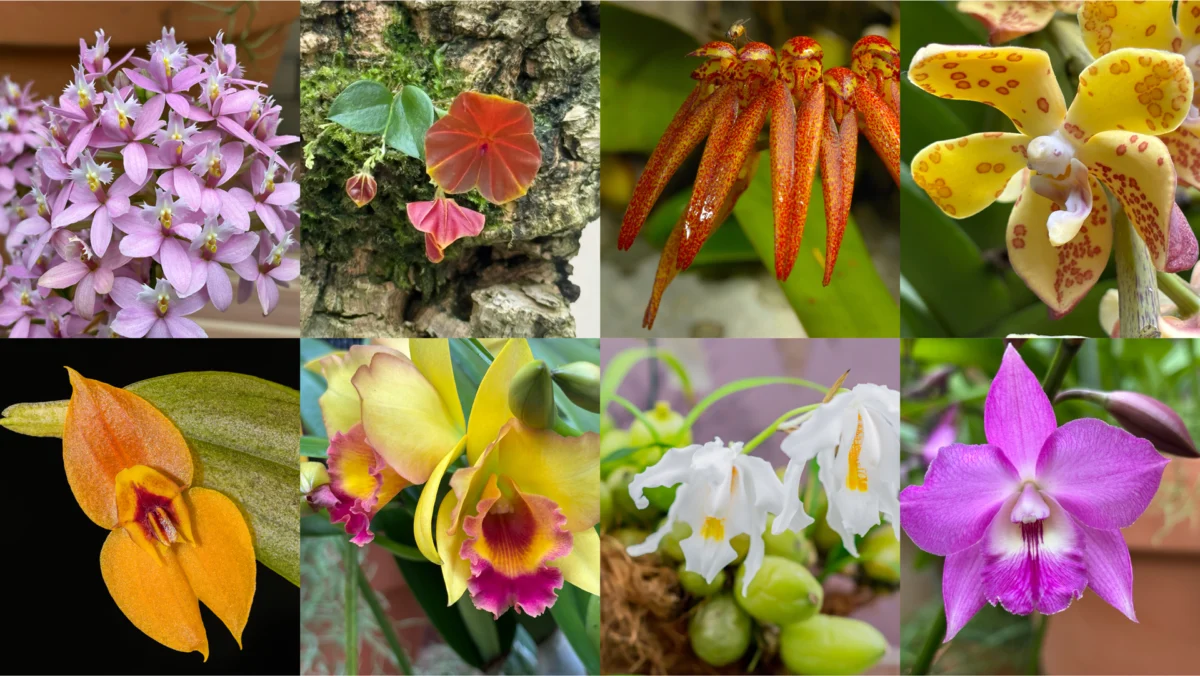
Orchids, renowned for their exquisite beauty and astonishing diversity, employ a captivating array of evolutionary strategies to ensure their reproductive success, often through elaborate deceptions that lure unsuspecting pollinators. These botanical marvels, which number in the tens of thousands of species globally, have developed sophisticated mechanisms ranging from the olfactory allure of decay to visual mimicry that perfectly imitates insect mates. Experts at the U.S. Botanic Garden in Washington, D.C., have shed light on these remarkable tactics, explaining how these plant species have evolved such intricate relationships with their insect partners. However, despite their impressive arsenal of evolutionary tricks, a significant number of orchid species are currently facing severe threats, leading to their classification as endangered.
The Deceptive Allure of Orchid Pollination
The world of orchid pollination is a testament to the power of natural selection, where flowers have evolved to exploit the sensory perceptions and behavioral patterns of insects. Unlike many plants that offer a direct reward of nectar or pollen, a substantial portion of orchid species employ a strategy of deception. This involves mimicking resources or mates that pollinators seek, thereby tricking them into inadvertently facilitating pollination.
One of the most striking examples of this deceptive strategy is olfactory mimicry. Many orchids release complex scent profiles that closely resemble those of rotting flesh, dung, or even the pheromones of specific insect species. For instance, the Bulbophyllum phalaenopsis, native to Borneo, emits a potent aroma reminiscent of decaying flesh, a powerful attractant for carrion flies, which are its primary pollinators. These flies, drawn by the promise of a meal, land on the flower, expecting to find a carcass. Instead, they encounter the flower’s reproductive structures, and as they attempt to probe or feed, pollen attaches to their bodies. When they visit another flower of the same species, this pollen is transferred, leading to cross-pollination.
Similarly, some orchids mimic the scent of dung to attract flies and beetles. The intricate chemical compositions of these floral fragrances are often specific to particular pollinator groups, demonstrating a highly evolved co-evolutionary relationship. These scents can be so convincing that even experienced entomologists might find it challenging to distinguish them from the real thing without careful analysis.
Visual mimicry is another potent tool in the orchid’s deceptive arsenal. Some species have evolved floral structures and coloration that bear a striking resemblance to female insects, particularly bees and wasps. This is famously observed in the Ophrys genus, commonly known as bee orchids. The labellum, or lip petal, of these orchids often mimics the shape, size, and even the texture of a female bee or wasp. Furthermore, some Ophrys species produce scents that replicate the sex pheromones of these insects. Male insects, driven by their instinct to mate, attempt to copulate with the flower. During this pseudocopulation, the orchid’s pollinia (packets of pollen) become attached to the insect’s body. As the insect moves to another Ophrys flower, it inadvertently transfers the pollinia, facilitating pollination.
The evolutionary journey leading to such intricate mimicry is a slow and gradual process. Over countless generations, orchids with traits that even slightly resembled a desired resource or mate would have had a reproductive advantage. These advantageous traits, passed down through generations, would have become more pronounced, leading to the highly specialized and often bizarre pollination strategies observed today. The development of these complex mimicry systems suggests a long-standing and intimate relationship between orchids and their specific pollinators, often spanning millions of years.
The U.S. Botanic Garden’s Role in Orchid Conservation and Education
The U.S. Botanic Garden (USBG) plays a crucial role in both educating the public about the fascinating world of orchids and contributing to their conservation efforts. The institution houses an extensive collection of orchid species, many of which are rare and endangered, providing a living laboratory for research and public display. Through its exhibitions and educational programs, the USBG aims to foster a greater appreciation for these complex plants and highlight the threats they face.
Dr. Susan Widmer, a botanist specializing in orchid conservation at the U.S. Botanic Garden, explained the significance of these deceptive pollination strategies. "Orchids have truly mastered the art of persuasion," Dr. Widmer stated in a recent interview. "Their ability to mimic such a diverse range of attractants is a testament to their evolutionary ingenuity. It’s a fascinating glimpse into the intricate web of life and how species have adapted to depend on each other, sometimes in rather unexpected ways."
The USBG’s current exhibition, "Orchids: A Splendid Deception," showcases a variety of orchid species and their unique pollination mechanisms. The exhibition features detailed displays explaining the olfactory and visual cues that orchids use, alongside specimens that highlight these remarkable adaptations. This initiative is part of a broader effort by botanical gardens and conservation organizations worldwide to raise awareness about the plight of orchids.
Threats to Orchid Survival: A Growing Crisis
Despite their evolutionary prowess, many orchid species are teetering on the brink of extinction. The primary drivers of this decline are habitat loss and degradation, largely due to deforestation, agriculture, and urban development. As their natural habitats shrink, so do the populations of the specific pollinators on which many orchids depend.
A report by the International Union for Conservation of Nature (IUCN) in 2019 identified over 26,000 orchid species globally, with a significant percentage facing extinction. Data from the report indicated that approximately one-third of all known orchid species are threatened with extinction, a figure that has been steadily rising in recent decades. This alarming statistic underscores the urgency of conservation efforts.
Furthermore, the illegal collection of rare orchid species for the horticultural trade poses a severe threat. The allure of owning these exotic and beautiful plants has led to unsustainable harvesting from the wild, further decimating already vulnerable populations. Climate change also plays a role, altering temperature and rainfall patterns, which can disrupt the delicate ecological balances necessary for orchid survival and reproduction.
The interconnectedness of orchid species and their pollinators means that the decline of one can have a cascading effect on the other. If a specific pollinator species is driven to extinction due to habitat loss, the orchids that rely exclusively on it for pollination are also likely to disappear. This highlights the importance of conserving entire ecosystems, not just individual species.
Conservation Strategies and the Path Forward
Addressing the endangered status of many orchid species requires a multi-faceted approach involving scientific research, habitat protection, captive breeding programs, and public education. Botanical gardens like the U.S. Botanic Garden are at the forefront of these efforts, not only through exhibition and education but also through active participation in conservation initiatives.
Habitat Restoration and Protection: One of the most critical strategies is the protection and restoration of natural orchid habitats. This involves working with local communities, governments, and conservation organizations to establish protected areas, combat illegal logging, and promote sustainable land-use practices. For example, efforts are underway in Southeast Asia to protect the remaining rainforests that are home to a vast array of orchid diversity.
Ex Situ Conservation Programs: Captive breeding programs, or ex situ conservation, play a vital role in safeguarding orchid species from extinction. These programs involve cultivating orchids in controlled environments, such as botanical gardens and specialized nurseries, to ensure their survival and provide material for potential reintroduction into the wild. The Millennium Seed Bank Partnership, a global initiative, also stores seeds of many orchid species as a long-term safeguard against extinction.
Scientific Research and Monitoring: Continued research into orchid biology, ecology, and reproductive strategies is essential for effective conservation. This includes studying their pollination mechanisms, genetic diversity, and habitat requirements. Monitoring wild populations helps to track their status and identify areas in need of urgent intervention. Advances in genetic sequencing are providing new insights into orchid evolution and diversity, aiding in the development of targeted conservation plans.
Public Awareness and Education: Initiatives like the U.S. Botanic Garden’s exhibitions are crucial for raising public awareness about the importance of orchids and the threats they face. Educating the public about the ecological value of these plants and the impact of their disappearance can foster a sense of responsibility and encourage support for conservation efforts. Many organizations now utilize social media and online platforms to disseminate information and engage a wider audience.
Policy and Legislation: Stronger policies and legislation are needed to combat illegal wildlife trade and protect critical orchid habitats. International agreements, such as CITES (Convention on International Trade in Endangered Species of Wild Fauna and Flora), play a role in regulating the trade of endangered species, but enforcement remains a significant challenge.
The U.S. Botanic Garden, in collaboration with other institutions, is actively involved in several research projects aimed at understanding and conserving orchid populations. These projects often involve field expeditions, laboratory analysis, and the development of propagation techniques. The ongoing commitment of such institutions underscores the global recognition of the critical state of orchid biodiversity.
The Broader Implications: A Barometer for Ecosystem Health
The plight of orchids serves as a potent indicator of the overall health of ecosystems. Their specialized requirements for specific pollinators, soil conditions, and microclimates make them particularly vulnerable to environmental changes. When orchid populations decline, it often signals broader ecological imbalances that can affect numerous other species.
The intricate relationships between orchids and their pollinators, honed over millennia, are a marvel of co-evolution. The loss of even a single orchid species can disrupt these delicate chains, with potential ripple effects throughout the food web. The decline of these vibrant flowers, therefore, is not just a loss of botanical beauty but a warning sign of a deteriorating natural world.
The ongoing efforts to conserve orchids are thus intrinsically linked to broader conservation goals, aiming to protect entire ecosystems and the biodiversity they support. The success of these endeavors will not only ensure the survival of these extraordinary plants but also contribute to the resilience and health of the planet’s natural heritage for future generations. The deceptive beauty of orchids, while a testament to nature’s ingenuity, also carries a profound message about our responsibility to protect the fragile balance of life on Earth.