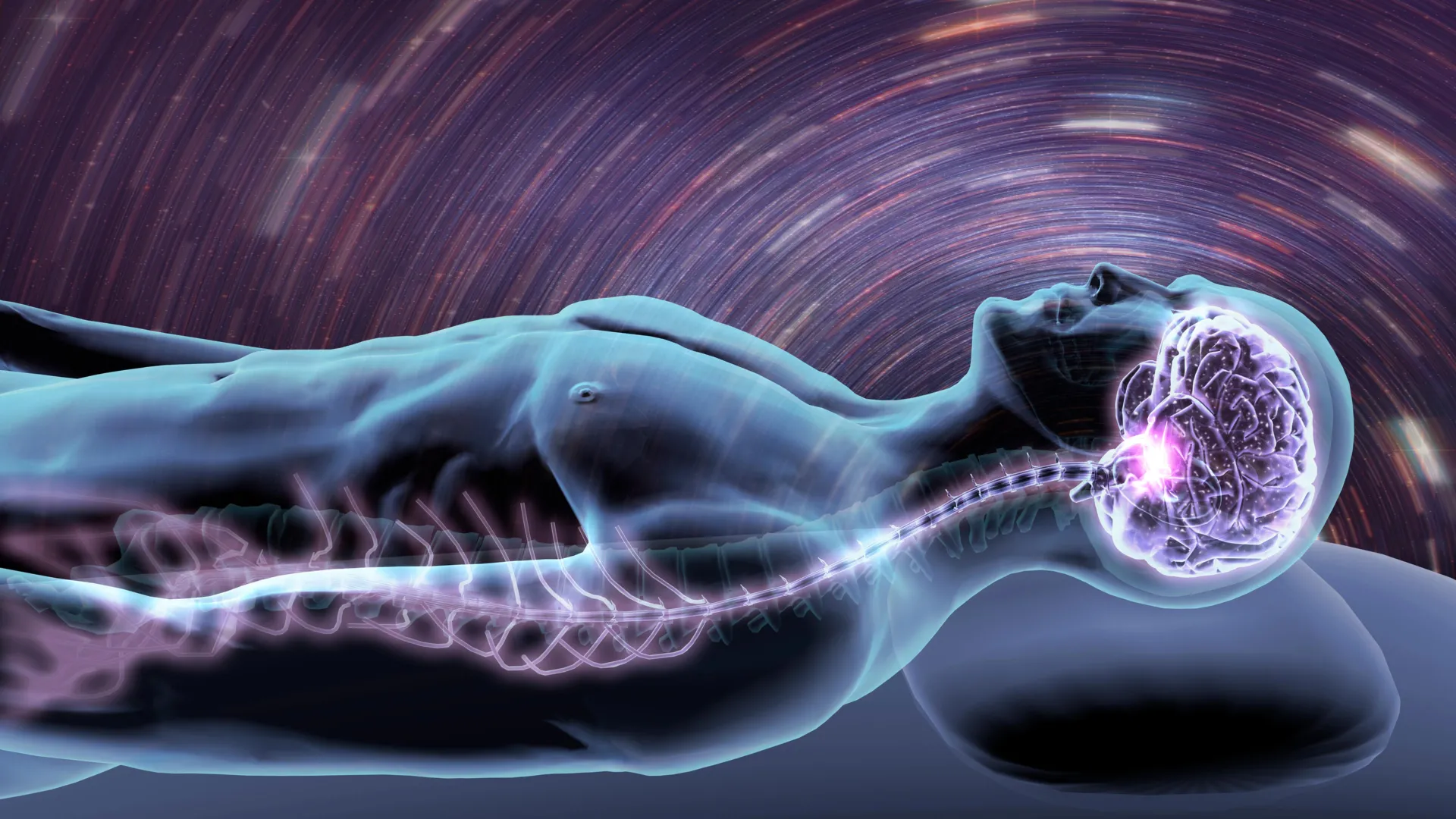
The subjective quality of a night’s sleep—the elusive feeling of being "well-rested"—has long been a mystery to neuroscientists. While clinical metrics often focus on the duration and physiological stages of sleep, a groundbreaking study from the IMT School for Advanced Studies Lucca suggests that the richness of our internal dream world plays a far more significant role in sleep quality than previously understood. Published in the prestigious journal PLOS Biology, the research indicates that vivid, immersive dreams may actually serve as "guardians of sleep," fostering a sense of deep, restorative rest even when brain activity remains high.
For decades, the scientific community operated under a binary understanding of sleep. Deep sleep, or slow-wave sleep, was characterized by low-frequency brain waves and a perceived lack of consciousness, essentially viewing the brain as "switched off." Conversely, dreaming was primarily associated with Rapid Eye Movement (REM) sleep, a state often regarded as a bridge toward wakefulness. This new data, however, suggests that the intensity and narrative depth of dreams are not interruptions to rest but are instead essential components of the subjective experience of deep sleep.
Challenging the Traditional Paradigm of Brain Activity
The traditional view of sleep depth is rooted in the early 20th-century development of electroencephalography (EEG). In this model, "deep sleep" is defined by high-amplitude, slow-moving waves (delta waves) that indicate a synchronization of neuronal firing and a disconnection from the external environment. Under this framework, any sign of mental activity, such as dreaming, was categorized as "shallow" sleep because it required higher-frequency brain activity resembling a waking state.
This traditional framework created a persistent paradox in sleep medicine: many individuals report feeling deeply rested after nights filled with intense dreaming, while others, whose EEG readings show "perfect" slow-wave sleep, report feeling exhausted and unrefreshed. The IMT School study addresses this discrepancy by focusing on the subjective experience of the sleeper rather than relying solely on objective wave patterns.
The researchers hypothesized that the feeling of "depth" in sleep is not merely a reflection of slow brain waves but is tied to the degree of "disconnection" from the outside world. Immersive dreams, by creating a self-contained internal reality, may facilitate this disconnection more effectively than a state of total mental void.
Methodology: The Serial Awakening Paradigm
To investigate this phenomenon, the research team, led by Professor Giulio Bernardi, a specialist in neuroscience at the IMT School, utilized an exhaustive data collection method known as the serial awakening paradigm. The study analyzed 196 overnight recordings from 44 healthy adult participants.
The participants slept in a controlled laboratory environment equipped with high-density electroencephalography (hd-EEG). Unlike standard clinical EEG, which uses a limited number of sensors, hd-EEG utilizes a vast array of electrodes across the scalp, allowing for a high-resolution map of brain activity. This technology is critical for identifying localized changes in brain function that might be missed by traditional equipment.
Over the course of four nights, participants were awakened more than 1,000 times at various intervals across all stages of sleep. Upon being woken, they were immediately asked to describe their mental state: whether they were dreaming, the content of those dreams, and how "deep" they felt their sleep was at the moment of interruption. They also provided ratings on their level of sleepiness and the vividness of their experiences.
This massive dataset allowed the researchers to correlate specific brain activity patterns with the subjective "feeling" of sleep, providing a bridge between the physical state of the brain and the psychological state of the sleeper.
The Immersion Factor: Why Vivid Dreams Matter
The findings revealed a striking correlation: the deepest reported sleep did not always correspond with a total lack of consciousness. While participants did report deep sleep when they had no conscious experience, they reported equally high levels of sleep depth following vivid, immersive dreams.
In contrast, "shallow" sleep was most frequently associated with fragmented or vague mental activity—a sense of being "half-awake" or having a "thought-like" experience without a narrative structure. The data suggests that it is not the presence of mental activity that determines sleep depth, but the quality of that activity.
"In other words, not all mental activity during sleep feels the same: the quality of the experience, especially how immersive it is, appears to be crucial," explains Professor Bernardi. "This suggests that dreaming may reshape how brain activity is interpreted by the sleeper: the more immersive the dream, the deeper the sleep feels."
This discovery challenges the notion that the brain must be "quiet" to be resting. Instead, it suggests that when the brain is fully engaged in a dream narrative, it is more insulated from external sensory input, such as noise or light, thereby preserving the continuity of sleep.
The "Guardians of Sleep" and the Evolution of Rest
One of the most surprising findings emerged from the analysis of sleep throughout the night. Biologically, the "need" for sleep—referred to as sleep pressure—is highest at the beginning of the night and gradually dissipates until morning. Under the traditional model, sleep should feel "shallower" as the night progresses and the body’s homeostatic drive for rest is satisfied.
However, the study participants reported the opposite: their sleep felt progressively deeper as the night went on. This trend mirrored the increasing complexity and immersion of their dreams. As the night progresses, dreams typically become longer, more emotional, and more vivid. The researchers found that this increase in dream immersion compensated for the biological decline in sleep pressure, maintaining the subjective feeling of deep rest.
This observation breathes new life into a theory proposed by Sigmund Freud and later expanded upon by 20th-century sleep researchers: the idea of dreams as the "guardians of sleep." This hypothesis suggests that the brain creates dreams to process internal or external stimuli that might otherwise wake the sleeper. By weaving a barking dog into a dream narrative rather than allowing the sound to trigger a full awakening, the brain protects the state of rest. The IMT School study provides modern neuroscientific evidence for this concept, suggesting that immersive dreams buffer the sleeper against fluctuations in brain activity that could lead to arousal.
Clinical Implications for Sleep Disorders and Mental Health
The implications of this research extend far beyond academic curiosity, offering potential breakthroughs for the treatment of sleep disorders. One of the most challenging conditions for sleep specialists is "paradoxical insomnia" (also known as sleep state misperception). Patients with this condition report that they haven’t slept at all, despite clinical EEG data showing several hours of normal sleep.
"Understanding how dreams contribute to the feeling of deep sleep opens new perspectives on sleep health and mental well-being," Bernardi noted. "If dreams help sustain the feeling of deep sleep, then alterations in dreaming could partly explain why some people feel they sleep poorly even when standard objective sleep indices appear normal."
By shifting the focus from wave patterns to dream quality, clinicians may develop new therapeutic interventions. For example, if a patient’s sleep feels shallow because their dreams are fragmented or absent, therapies aimed at improving dream recall or narrative continuity—such as certain cognitive-behavioral techniques—might improve their subjective sleep quality where traditional sedatives fail.
Furthermore, the study highlights the importance of the "dream-wake" cycle in mental health. If immersive dreaming is a marker of restorative rest, then the suppression of dreaming (a common side effect of certain medications or chronic stress) could be a primary driver of the daytime fatigue and cognitive fog often reported by patients.
A New Multidisciplinary Approach to Sleep Science
The study was a collaborative effort involving the IMT School, the Scuola Superiore Sant’Anna in Pisa, and the Fondazione Gabriele Monasterio. This partnership highlights a growing trend in European research toward multidisciplinary approaches that combine clinical medicine, neuroscience, and psychological analysis.
The establishment of a new sleep laboratory through this collaboration provides a specialized facility where researchers can integrate neuroscientific data with broader bodily processes. This holistic approach is essential for understanding how the "brain-body" dynamic shapes the experience of sleep.
The research was supported by a European Research Council (ERC) Starting Grant, emphasizing the high priority placed on sleep science within the international scientific community. As the global "sleep crisis" continues to impact productivity and public health, studies that clarify the subjective nature of rest are increasingly vital.
Conclusion and Future Directions
The findings from the IMT School for Advanced Studies Lucca represent a pivotal shift in our understanding of the sleeping mind. By demonstrating that immersive dreams are a hallmark of deep rest rather than an interruption to it, the study validates the subjective experiences of millions who find solace in their nightly narratives.
Future research will likely focus on the specific neural circuits that govern dream immersion and how these can be modulated. If scientists can identify the precise mechanisms that allow the brain to "lose itself" in a dream, they may unlock new ways to enhance the restorative power of sleep for those suffering from chronic insomnia or sleep-related anxiety.
Ultimately, the study reminds us that sleep is not merely a biological necessity—it is a complex psychological experience. As we continue to map the landscapes of our dreams, we may find that the stories we tell ourselves in the dark are the very things that keep us soundly asleep.