The landscape of artificial intelligence is undergoing a profound transformation, with agentic AI rapidly transitioning from theoretical concept to practical implementation in production systems across industries. Just a year ago, development teams were primarily focused on optimizing retrieval-augmented generation (RAG) pipelines and crafting basic wrappers for large language models (LLMs). Today, the vanguard of AI engineering is deploying sophisticated multi-agent orchestration, advanced tool-calling mechanisms, robust memory management, and truly autonomous task execution. This swift evolution underscores a critical need for comprehensive, authoritative resources, a need often unmet by the fragmented, rapidly obsolescing online content that struggles to keep pace with innovation. In this environment, well-researched and coherently structured books remain invaluable for practitioners aiming to build systems where AI models do not merely respond, but proactively act.
The Rise of Agentic AI: A Paradigm Shift in Autonomy
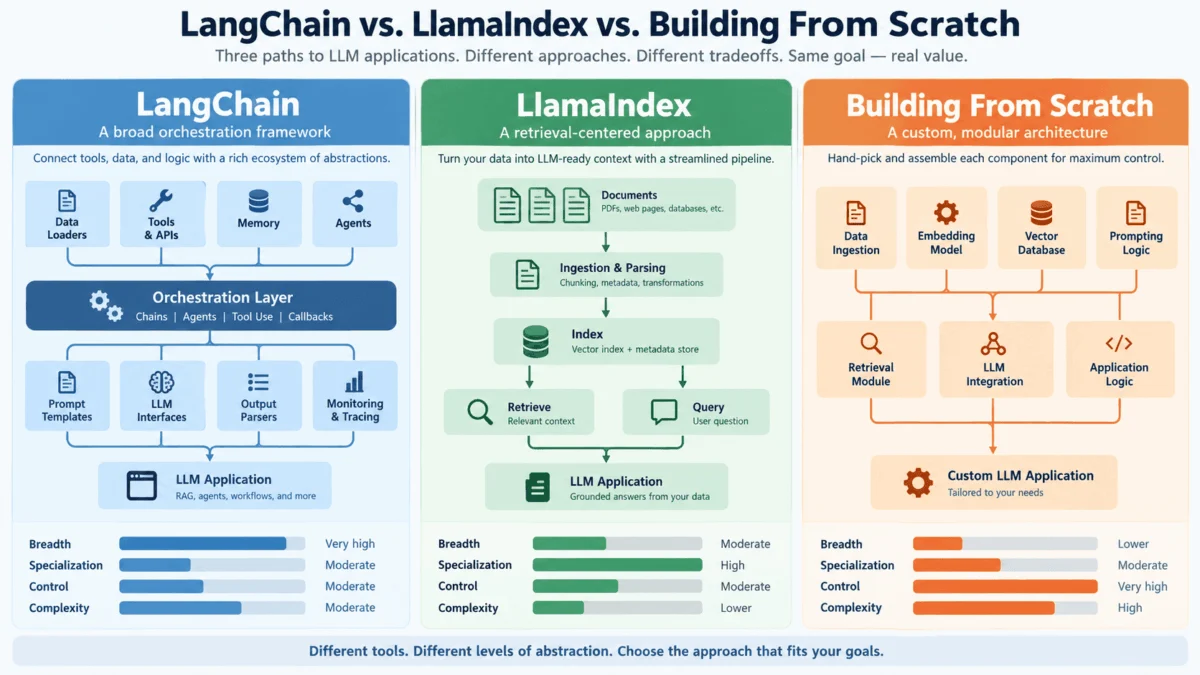
Agentic AI represents a significant leap beyond conventional LLM applications, characterized by its ability to perceive environments, formulate plans, execute actions, and adapt based on feedback, often over extended periods and across multiple steps. This paradigm shift addresses fundamental limitations of earlier LLM implementations, which typically operated in a single-turn, reactive mode. The journey from basic conversational agents to autonomous systems has been remarkably swift. In late 2022 and early 2023, the focus was largely on improving LLM output quality through better prompting and basic RAG for grounding responses in specific data. By mid-2023, the concept of LLMs utilizing external tools gained traction, enabling models to interact with APIs, databases, and other software, extending their capabilities far beyond text generation. The latter half of 2023 and into 2024 saw the rapid maturation of frameworks like LangChain and LlamaIndex, which provided the scaffolding for more complex agentic architectures, including memory components, planning modules, and multi-agent coordination.
The market reflects this acceleration. Projections indicate that the global AI market, heavily influenced by advancements in generative AI and agentic systems, is expected to reach hundreds of billions of dollars by the mid-2020s, with agentic capabilities driving new applications in areas like personalized automation, scientific discovery, and complex decision support. Venture capital investment in AI startups, particularly those focused on intelligent automation and agentic frameworks, has surged, highlighting the industry’s confidence in this trajectory. However, with this rapid growth comes an equally rapid obsolescence of information. Online tutorials and articles, while useful for initial exploration, often lack the depth, coherence, and longevity required for building robust, production-grade systems. This is where the curated knowledge found in specialized books proves indispensable.
The Imperative for Deep Learning: Why Books Still Matter
In a field as dynamic as agentic AI, the demand for foundational knowledge coupled with practical, deployment-centric strategies is paramount. Books, by their very nature, offer a structured and comprehensive approach to learning that online snippets rarely provide. They allow authors to delve into the nuances of complex topics, explain underlying principles, and present coherent frameworks for understanding and implementation. For engineers, researchers, and product developers tasked with designing, building, and maintaining agentic systems, a deep, systematic understanding is crucial. This includes mastering evaluation methodologies for non-deterministic systems, architecting scalable LLMOps pipelines, cultivating an intuitive grasp of model behavior, and designing robust agent memory and tool integration. The following five books stand out as essential reading for anyone serious about building effective agentic AI systems in 2026, each offering a distinct yet complementary perspective on this evolving domain.
Navigating the Landscape: Essential Reads for 2026
1. AI Engineering by Chip Huyen: Mastering the Production Stack
Chip Huyen has consistently been a leading voice in the practical application of machine learning, and her forthcoming work, AI Engineering (O’Reilly, 2025), solidifies her reputation as a pragmatic guide for the industry. This book is distinguished by its comprehensive coverage of the entire lifecycle of production-grade LLM applications, ranging from sophisticated evaluation frameworks and intricate prompt design to advanced agent architectures and the real-world trade-offs inherent in deployment. It maintains a technical rigor without succumbing to academic abstraction, ensuring that every page offers actionable insights relevant to immediate engineering challenges.
A particular strength of AI Engineering for agentic work lies in Huyen’s meticulous approach to the evaluation problem. Agentic systems, with their non-deterministic, multi-step operations, present formidable testing challenges where the "correct" answer is often ambiguous. The book dedicates a substantial section to constructing robust evaluation metrics and methodologies for these complex systems, an area frequently overlooked in less comprehensive resources. For practitioners grappling with tool-calling agents or intricate reasoning pipelines, this guidance offers consistent dividends. Beyond agents, Huyen’s work provides an invaluable lens for analyzing trade-offs in any AI-powered system—latency versus accuracy, cost versus capability, and automation versus human oversight. Her unwavering engineering-first perspective sets this book apart, offering a practicality that many research-oriented texts in this category often miss. Industry experts widely agree that robust evaluation is the linchpin of reliable AI deployment, a sentiment AI Engineering thoroughly addresses.
2. LLM Engineer’s Handbook by Paul Iusztin and Maxime Labonne: Building Scalable & Observable Systems
Published by Packt in late 2024, the LLM Engineer’s Handbook reads like a masterclass forged in the crucible of real-world development challenges. It is a testament to the authors’ experience, directly addressing the practical hurdles engineers encounter when scaling LLM solutions. The book meticulously guides readers through the entire LLMOps pipeline, encompassing everything from feature engineering and fine-tuning strategies to advanced RAG architectures and the critical task of building systems that maintain reliability under significant operational load. Its pages are dense with practical code examples and detailed architectural diagrams, providing precisely the kind of granular detail required for successful deployment.
The sections most pertinent to agentic AI focus on implementing RAG at scale and designing modular components capable of being seamlessly integrated into larger, more autonomous workflows. A significant emphasis is placed on observability and ensuring systems are inherently debuggable—a factor that becomes exponentially more crucial when agents are empowered to make decisions without constant human confirmation. Furthermore, the Handbook includes a highly practical chapter on cost optimization and batching strategies for production agents. These are vital considerations that are often superficially treated in tutorials but become pressing concerns the moment meaningful operational volumes are processed. For teams committed to deploying production-grade agentic systems, this book stands as one of the most complete and practical engineering references available.
3. Hands-On Large Language Models by Jay Alammar and Maarten Grootendorst: Cultivating Foundational Understanding
Jay Alammar has earned a distinguished reputation for his unparalleled ability to distill complex machine learning concepts into intuitive, visually accessible explanations. Hands-On Large Language Models (O’Reilly, 2024), co-authored with Maarten Grootendorst, extends this clarity to the domain of applied LLM work. This book is widely regarded as one of the most effective resources for developing a genuine mental model of how language models behave under diverse conditions—an understanding that is absolutely critical when designing agents that must consistently reason, plan, and utilize tools effectively.
The book comprehensively covers embeddings, semantic search, text classification, and generation, all presented in a manner that directly informs the design and construction of components within an agent system. While more foundational than some other titles on this list, this deep understanding of core LLM mechanics proves invaluable when agents exhibit unexpected behaviors, allowing engineers to diagnose issues at a fundamental level. The visual methodology employed to explain intricate concepts such as attention mechanisms, tokenization, and embedding spaces is particularly beneficial, not only for technical practitioners but also for effectively communicating these complex ideas to non-technical stakeholders—a surprisingly frequent requirement in teams building serious agentic products. Even seasoned professionals will find new insights and clearer perspectives within its pages.
4. Building LLM-Powered Applications by Valentina Alto: From Concept to Collaborative Agents
Valentina Alto’s Building LLM-Powered Applications (Packt, 2024) is precisely targeted at practitioners dedicated to building tangible products. Alto adopts a hands-on approach from the very first chapter, covering essential tools and concepts such as LangChain, prompt engineering, memory management, chaining, and agents. The code examples provided are current and directly applicable, while the architectural patterns presented offer immediate utility, enabling readers to progress from initial concept to a functional prototype more rapidly than most other resources permit.
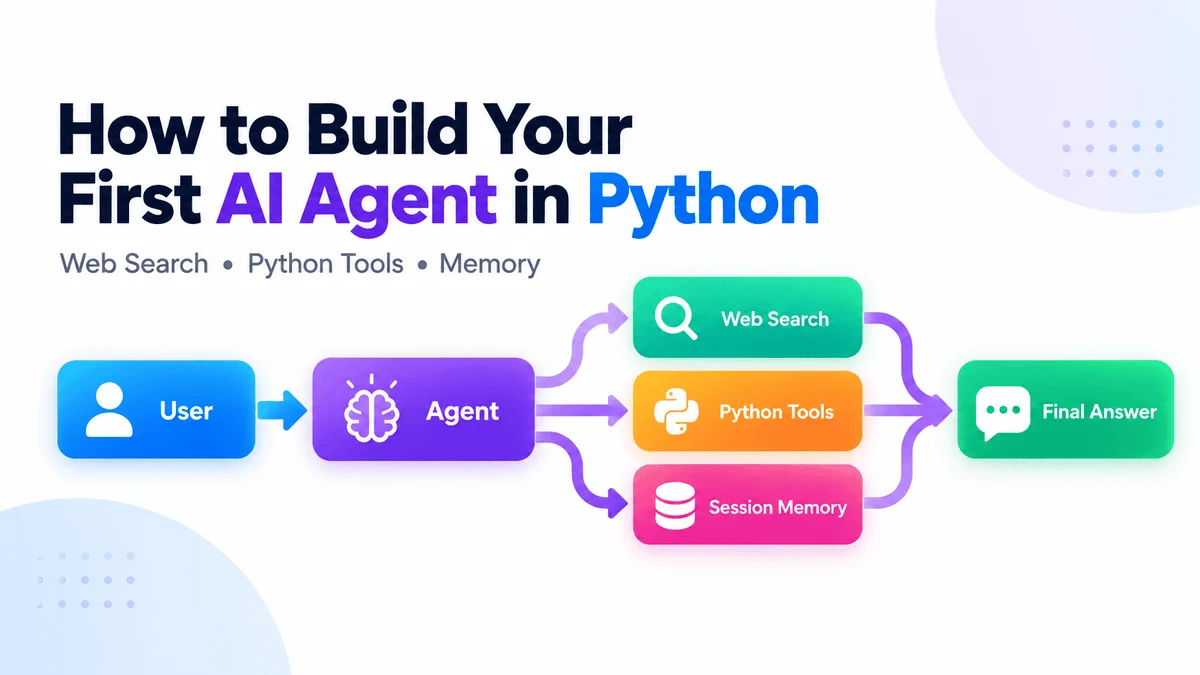
This book particularly excels in its coverage of agent memory and tool integration, making it exceptionally relevant for agentic AI development. It offers a focused, practical examination of structuring agent loops, implementing graceful failure handling, and robustly chaining models or tools together to prevent brittleness. Alto also delves into multi-agent architectures, providing insights into designing systems where multiple specialized agents can collaborate seamlessly on a single, overarching task—a pattern that has become a cornerstone of more ambitious and complex agentic applications. For teams embarking on the journey of shipping their first agentic features into a real product, this guide serves as a reliable and practical companion.
5. Prompt Engineering for Generative AI by James Phoenix and Mike Taylor: Architecting Intelligent Agent Behavior
Despite its seemingly focused title, Prompt Engineering for Generative AI (O’Reilly, 2024) by James Phoenix and Mike Taylor delves far deeper than mere prompt optimization. It provides an exhaustive exploration of advanced reasoning techniques such as chain-of-thought, ReAct patterns, sophisticated planning loops, and the intricate behavioral architecture that empowers agents to exceed expectations in 2026. This book stands out as a remarkably strong resource for comprehending the common reasons agents fail in practice and, crucially, for designing prompts and workflows that enhance their predictability and reliability.
The sections dedicated to tool use and multi-step agent behavior are especially valuable for anyone constructing systems that extend beyond simple, single-turn interactions. The writing is commendably clear and genuinely engaging, which greatly aids in assimilating a large volume of new concepts efficiently. One often-underestimated aspect of this book is its systematic approach to prompt debugging. When an agent misbehaves, having a structured framework for diagnosing whether the root cause lies within the prompt, the underlying model, or the tool integration can save countless hours of troubleshooting. This systematic methodology for problem identification and resolution is a significant differentiator. When paired with a more infrastructure-focused text from this list, it forms a highly complementary learning combination.
Broader Implications and Future Outlook
The strategic deployment of agentic AI systems is poised to revolutionize numerous sectors, from enterprise automation and customer service to scientific research and creative industries. Well-engineered agentic solutions promise not only increased efficiency and cost savings but also the capacity for innovation previously unattainable. For instance, in healthcare, agentic systems could accelerate drug discovery by autonomously sifting through vast datasets and proposing experimental pathways. In finance, they could provide dynamic, personalized investment advice and sophisticated fraud detection. The implications for the job market are also significant, necessitating a workforce skilled in designing, overseeing, and collaborating with these advanced AI entities. The demand for "AI Engineers" and "LLM Architects" is skyrocketing, reflecting the need for professionals who can bridge the gap between theoretical AI capabilities and robust, production-ready applications.
Conclusion
While the digital realm offers a torrent of information on agentic AI, much of it possesses a fleeting shelf life, becoming outdated within weeks or months. The five books highlighted here stand apart due to their foundational depth, comprehensive scope, and enduring relevance, each addressing different critical layers of the agentic AI stack without significant overlap. Ultimately, the choice of which book to prioritize should be guided by an individual’s specific learning gaps—be they in architectural design, robust engineering practices, advanced evaluation methodologies, or the intricate design of agent behavior. For those genuinely committed to building agentic systems that function reliably in production environments, rather than merely performing in isolated demonstrations, engaging with more than one of these authoritative texts is not just recommended, but an essential strategic investment in future success.