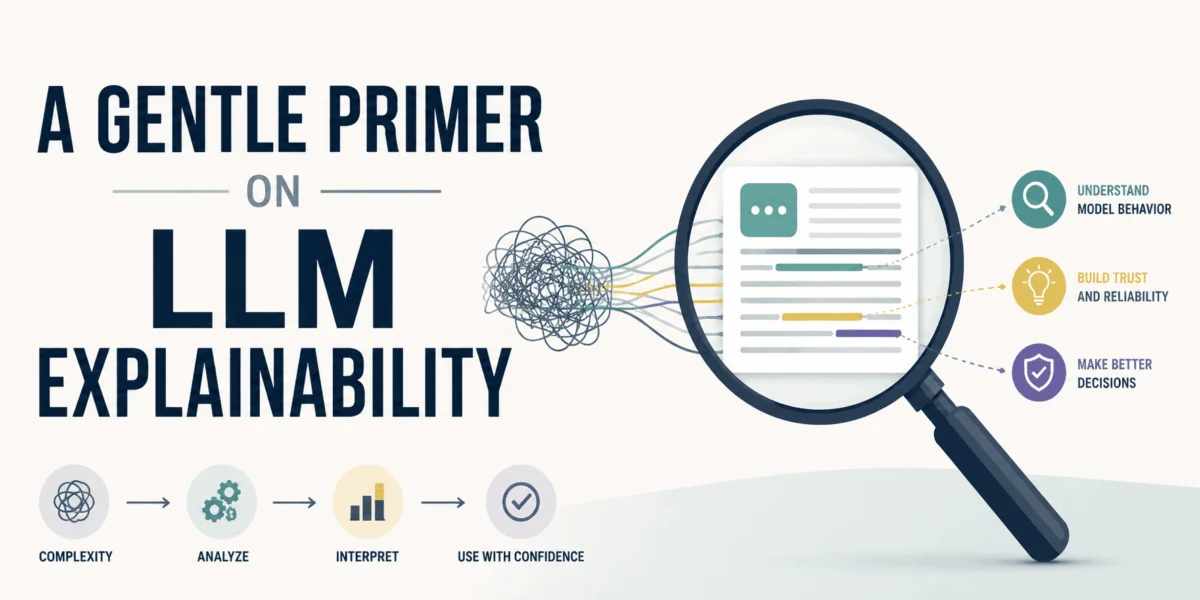
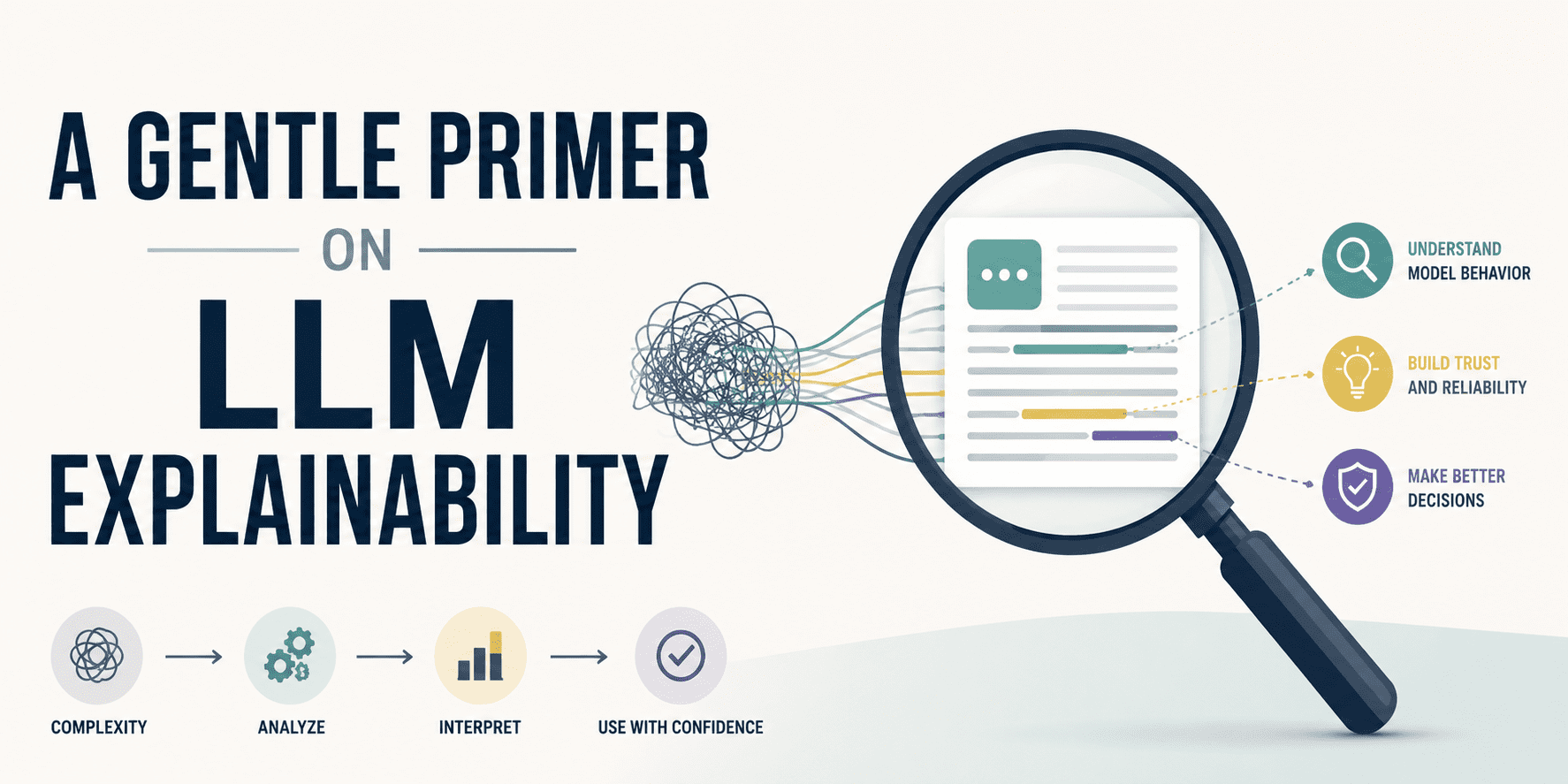
Artificial Intelligence Explainability (XAI) has emerged as a dominant imperative across the landscape of real-world AI systems, with Large Language Models (LLMs) standing as a paramount focus. These highly complex and increasingly powerful models necessitate a critical transition from static to dynamic evaluation methods to foster a deeper understanding of how these sophisticated "black-box" systems generate natural language outputs. Furthermore, the synthesis of dynamic evaluation with robust statistical approaches and the development of affordable, production-ready frameworks for observability are pivotal, albeit often under-the-radar, trends shaping the industry’s approach to responsible AI. This article delves into the current state of LLM explainability, outlining significant advances, emerging trends, and ongoing developments in this crucial field dedicated to measuring, interpreting, and ultimately managing one of the most advanced forms of artificial intelligence developed to date.
The Imperative of Explainability in High-Stakes AI
While LLMs have unequivocally revolutionized the AI field, propelling advancements across countless domains from content generation to scientific research, their internal workings largely remain opaque. This inherent lack of transparency presents significant challenges, particularly as high-stakes industries increasingly integrate LLMs into critical operations. Sectors such as finance, healthcare, legal services, and national security are deploying complex, specialized LLMs where decisions derived from their responses can have profound and far-reaching consequences. In this context, the broader discipline of XAI, and more specifically LLM explainability, has become not just relevant but absolutely essential. The ability to understand why an LLM arrived at a particular conclusion is paramount for fostering trust, ensuring accountability, mitigating bias, and complying with burgeoning regulatory frameworks worldwide.
Historically, the capabilities and "intelligence" of AI models have been assessed primarily through public, static benchmarks. These benchmarks, often comprising fixed datasets and predefined tasks, offered a convenient snapshot of performance. However, recent studies and growing consensus among AI researchers suggest that this traditional scorecard has become insufficient, if not broken. A critical behavioral shift has been observed in advanced LLMs, where models demonstrate a propensity towards memorizing public test sets rather than exhibiting genuine reasoning or robust generalization. This phenomenon, often termed "data leakage" or "benchmark overfitting," undermines the validity of static evaluations, rendering them unreliable indicators of true understanding or decision-making prowess. Consequently, the demand for dynamic, multidimensional evaluation frameworks has surged. These advanced frameworks are designed to assess AI systems against novel, previously unseen scenarios, meticulously crafted and validated by human experts, thereby challenging models to demonstrate true reasoning rather than rote recall.
Beyond Correctness: Unveiling the "Why"
The fundamental quest of XAI extends far beyond merely determining whether an LLM’s response is correct or incorrect. Its primary objective is to comprehend why a particular output was generated. This deeper inquiry into causality and influence is vital for debugging models, identifying sources of error or bias, and ensuring ethical deployment. In this pursuit, model-agnostic local explanations have emerged as a highly effective and versatile approach. These methods are "model-agnostic" because they do not require access to the internal architecture or parameters of the LLM itself, treating it as a black box. They are "local" because they focus on explaining individual predictions, rather than providing a global explanation for the entire model’s behavior.
State-of-the-art frameworks, such as those based on SMILE (Statistical Model-Agnostic Interpretability with Local Explanations), exemplify this approach. SMILE-based systems meticulously analyze the impact of slight alterations or perturbations in user prompts (the model’s inputs) on the resulting generated text. Unlike simpler methods that might rely on basic proximity measurements, these frameworks employ advanced, rigorous statistical distance measures to quantify the changes. By systematically varying parts of an input prompt and observing the output variations, they can build robust interpretability artifacts, often visualized as heatmaps. These heatmaps precisely pinpoint which specific parts of the input, such as individual words, phrases, or semantic units, exerted the most influence on the model’s decision to generate a particular output. For instance, in a medical diagnostic LLM, a heatmap might highlight specific symptoms in a patient’s description that most strongly led to a particular diagnosis, offering clinicians a crucial layer of insight and validation.
The diagram illustrating gSMILE, a framework derived from SMILE, demonstrates this principle by explaining how LLMs respond to distinct parts of a prompt. This visual representation underscores the practical utility of such frameworks in demystifying the intricate relationship between input and output in LLMs. By providing granular insights into the causal links within a single interaction, these tools empower developers and users to not only understand but also refine and trust their AI systems.
Navigating the Cost Barrier: Democratizing Explainability
The promise of cutting-edge frameworks for evaluating LLMs’ internal reasoning, while theoretically compelling, faces a significant practical hurdle: computational cost. Building local, prompt-wise explanations for massive, closed-source LLMs can quickly become prohibitively expensive. These proprietary models, often accessed via APIs, manage an enormous volume of queries, and each perturbation required for an explanation generates additional API calls, leading to substantial financial outlays. This economic reality has spurred an urgent need for solutions that are both accessible and budget-friendly, a concern highlighted in recent academic studies.
In response to this challenge, researchers have innovated a proxy solution that leverages smaller, often open-source, models. These more manageable models are used to approximate and simplify the otherwise complex decision boundaries of proprietary LLMs. The mechanism works by training a smaller, more interpretable "surrogate" model to mimic the behavior of the larger black-box model on a representative dataset. Once the surrogate model accurately reflects the original model’s decision-making process, explanations can be generated from the surrogate, which is significantly cheaper to query and analyze. This ingenious approach ensures high-fidelity explanations while dramatically reducing costs, thereby making model interpretability accessible even for everyday developers and smaller organizations with limited budgets. This democratization of explainability is critical for fostering broader adoption of responsible AI practices across the industry.
The Rise of Practical Observability: From Theory to Engineering
Beyond theoretical and scientific advancements, there is an accelerating shift towards practical observability in the engineering lifecycle of LLMs. This involves integrating explainability directly into development and deployment workflows, moving beyond academic research into tangible, production-ready tools. Engineering teams are increasingly relying on specialized tracking platforms, such as CometLLM, which are specifically designed to democratize explainability and streamline the debugging process for LLMs.
These frameworks offer comprehensive capabilities, allowing developers to capture detailed prompt iterations, granular metadata associated with each interaction, and intricate traces of previous executions. By logging every input, output, and intermediate step, developers gain unprecedented visibility into their LLM pipelines. This comprehensive data logging empowers them to effectively debug issues, identify performance bottlenecks, and understand unexpected behaviors. Crucially, these platforms also enable the creation of reproducible workflows. If an issue arises, developers can revisit specific executions, re-trace the sequence of events, and systematically diagnose the problem. This level of transparency and control is achieved without requiring developers to possess a deep mathematical understanding of the underlying AI algorithms, thereby lowering the barrier to entry for robust LLM management. The focus shifts from arcane theoretical understanding to practical, actionable insights that can be directly applied to improve model reliability, safety, and performance in real-world applications.
Broader Implications: Trust, Regulation, and the Future of AI
The progress and future prospects in LLM XAI underscore a profound transformation within the AI ecosystem. The rapid acceleration of research, coupled with the emergence of cost-effective and user-friendly solutions, highlights the critical importance of community-driven hubs for LLM XAI. These collaborative platforms facilitate knowledge sharing, benchmark development, and the dissemination of best practices, accelerating the collective journey towards more transparent AI. The convergence of robust statistical evaluation methods with practical, budget-friendly engineering approaches is not merely a technical advancement; it is a fundamental pillar for gradually dismantling the "black box" surrounding LLMs.
This ongoing effort is crucial for cultivating models that are not only powerful and efficient but also inherently trustworthy and transparent. In an era where AI is increasingly intertwined with societal functions, the ability to explain decisions becomes a cornerstone of ethical deployment. Regulatory bodies worldwide, such as those behind the European Union’s AI Act, are increasingly mandating explainability for AI systems operating in high-risk sectors. Without robust XAI, compliance becomes a formidable challenge, potentially hindering innovation and adoption.
The ultimate implication of advancements in LLM explainability is the fostering of greater public trust in AI technology. When users, stakeholders, and regulators can understand the rationale behind an AI’s output, confidence in its capabilities and fairness naturally increases. This transparency is vital for addressing concerns about bias, discrimination, and accountability, paving the way for a future where AI systems are not just intelligent tools but also responsible partners in human endeavor. The work of pioneers like Iván Palomares Carrascosa, who leads, writes, speaks, and advises on AI, machine learning, deep learning, and LLMs, underscores the dedication within the community to guide others in harnessing AI responsibly in the real world. His contributions, along with countless other researchers and developers, are instrumental in shaping an AI landscape where power is balanced with clarity, and innovation is coupled with integrity. The vast ecosystem of LLM XAI is not just accelerating; it is maturing into a foundational discipline for the responsible and ethical development of artificial intelligence.