In an unprecedented display of developer interest and engagement, a free online course focused on building AI agents, jointly offered by Google and Kaggle, recorded over 1.5 million sign-ups in November 2025. This massive registration figure, far exceeding typical online course enrollments, was further validated by an extraordinary level of active participation: the same cohort submitted more than 11,000 capstone projects, indicating a high conversion rate from registration to meaningful completion. This intensive program, titled the "5-Day AI Agents Intensive," has, by attendance and demonstrable output, established itself as one of the largest technical education initiatives ever conducted globally.
A New Benchmark in AI Education
The sheer scale of participation in the AI Agents Intensive underscores a critical inflection point in the artificial intelligence landscape: the rapid ascent of agentic AI as a pivotal area of development. Unlike traditional generative AI models that primarily respond to prompts, AI agents are designed to understand complex goals, plan multi-step actions, utilize external tools, and learn from their interactions to achieve objectives autonomously. This paradigm shift necessitates a new set of skills for developers, and the overwhelming response to Google and Kaggle’s offering highlights a significant global demand for practical, hands-on training in this emerging field.
The course’s success is particularly noteworthy when viewed against the backdrop of typical massive open online courses (MOOCs), which often struggle with low completion rates despite high registration numbers. The submission of over 11,000 capstone projects by the November 2025 cohort demonstrates an exceptional level of commitment and active learning, transforming what could have been a mere vanity metric into a concrete indicator of widespread skill development. This engagement metric speaks volumes about the quality and practical relevance of the curriculum, as well as the perceived value of mastering agentic AI technologies.
Chronology of Google and Kaggle’s AI Intensives
The 2025 AI Agents Intensive was not an isolated event but rather a strategic progression in Google and Kaggle’s efforts to democratize AI education and foster a robust developer ecosystem around their AI technologies. Its success builds upon the foundation laid by previous highly popular programs:
- 2024 GenAI Intensive: Preceding the agent-focused course, Google and Kaggle launched their inaugural Generative AI Intensive in 2024. This broader course, focusing on the fundamentals of generative AI, attracted over 140,000 developers. The immense popularity of this program led to a rerun, which subsequently set a Guinness World Record for the largest virtual AI conference, signaling the burgeoning global appetite for AI-centric education.
- November 2025 AI Agents Intensive (Live Run): This marked the introduction of the specialized agentic AI curriculum. The live, five-day format provided structured learning with daily technical whitepapers and hands-on codelabs, fostering a sense of community and real-time problem-solving among participants. The record-breaking registration and capstone submissions cemented its status as a landmark educational event.
- Post-Live Availability (Self-Paced): Recognizing the global demand and the practicalities of diverse schedules, Google and Kaggle swiftly transformed the entire intensive into a self-paced Kaggle Learn Guide. This strategic move ensures that the valuable content remains accessible to a much broader audience beyond the initial live cohort, allowing developers to engage with the material at their own convenience.
- June 2026 Refreshed Run (Vibe Coding Themed): To cater to those who prefer a live, cohort-based learning experience and to introduce updated content, a refreshed version of the intensive, themed around "vibe coding," was offered in June 2026. This iterative approach demonstrates Google and Kaggle’s commitment to continuous improvement and responsiveness to the developer community’s preferences.
This well-orchestrated timeline illustrates a deliberate strategy by Google and Kaggle to progressively educate the global developer community on the latest advancements in AI, starting with foundational generative AI and then specializing in more advanced concepts like agentic systems.
The Strategic Imperative of Agentic AI
The shift in focus from general generative AI to specifically agentic AI in the 2025 intensive reflects a critical industry trend. While large language models (LLMs) have captivated the public imagination, the practical application of AI in enterprise and complex problem-solving often requires more than just text generation. This is where AI agents come into play, offering capabilities such as:
- Autonomy: Agents can execute tasks independently based on high-level goals.
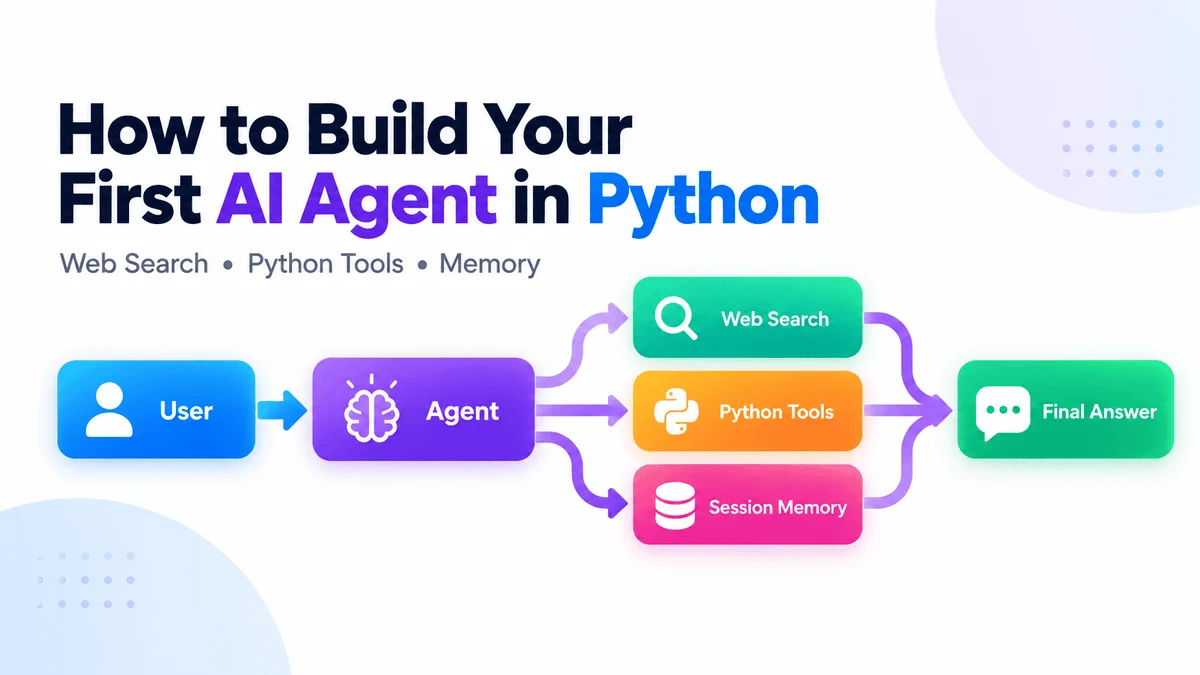
- Tool Use: They can interact with external systems, APIs, and databases to gather information or perform actions.
- Memory and Statefulness: Agents can maintain context and remember past interactions, enabling more coherent and long-running operations.
- Planning and Reasoning: They can break down complex problems into smaller steps and strategize their approach.
Despite the growing recognition of their potential, significant confusion persists regarding the precise definition and practical implementation of AI agents. The course directly addresses this knowledge gap by providing a structured framework for understanding agent architectures, development kits, and deployment strategies. This clarity is crucial for accelerating the adoption of agentic AI across various sectors, from automating business processes to powering more sophisticated interactive applications.
Curriculum Deep Dive: The Five Days to Agent Mastery
The intensive’s curriculum is meticulously structured to combine theoretical understanding with immediate practical application, a methodology highly valued by developers. Each of the five days pairs a comprehensive technical whitepaper with two hands-on codelabs, utilizing Google’s Gemini models and their Agent Development Kit (ADK). This "read-build-learn" approach ensures that participants not only grasp the concepts but also gain direct experience in implementing them.
- Day 1: Introduction to Agents: This foundational day tackles the core question of when an AI agent is truly necessary versus a simpler workflow. Participants are introduced to various agent architectures and immediately engage in building their first standalone agent and then integrating it into a multi-agent system. This demystifies the basic structure and utility of agents.
- Day 2: Tools and Interoperability with MCP: This module explores how AI agents extend their capabilities by using external tools and how they communicate with external systems via the Model Context Protocol (MCP). A critical element introduced here is the concept of "human-in-the-loop" approval for long-running or sensitive operations. This is presented as a fundamental differentiator between a merely functional agent and a safe, reliable, and useful one, emphasizing ethical and practical considerations in agent design.
- Day 3: Context Engineering: Sessions and Memory: Acknowledging that many nascent agent implementations falter due to a lack of robust memory, this day is dedicated to building stateful agents that can remember past interactions and maintain long-term memory across sessions. This deep dive into context management is crucial for developing agents that can handle complex, multi-turn conversations and sustained tasks, moving beyond simple, single-query interactions.
- Day 4: Agent Quality: Often overlooked in initial development, the principles of agent quality are paramount for production-ready systems. This day covers logging, tracing, metrics, and comprehensive evaluation techniques for both an agent’s responses and its tool usage. The course emphasizes that the ability to measure and evaluate an agent’s performance is a non-negotiable skill for anyone deploying AI systems, making this module particularly valuable for practical application.
- Day 5: Prototype to Production: The final day bridges the gap between a functional prototype and a deployable, scalable solution. It covers the agent-to-agent protocol for seamless communication between different agents and delves into deployment strategies, specifically leveraging managed runtimes like Vertex AI Agent Engine. This module addresses the practical challenges of operationalizing AI agents, guiding developers through the "last mile" of taking a project from a development notebook to a system accessible by real users.
Who Should Take It and Maximizing the Learning Experience
The course is designed for a broad audience of developers. A foundational understanding of Python programming and prior experience calling an LLM API are the primary prerequisites. This inclusive approach targets the vast majority of practitioners who possess programming literacy but may lack specialized expertise in agentic AI, positioning the course as an ideal entry point into this advanced domain.
Crucial advice offered by the course creators emphasizes the importance of thoroughly engaging with the technical whitepapers, not just rushing to the codelabs. The "durable understanding," particularly in areas like evaluation and context engineering (covered on Days 3 and 4), is gained from the conceptual depth provided in the papers. While codelabs teach the mechanics of building an agent, the theoretical underpinnings explain why agents might fail and how to build resilient systems. This holistic approach ensures that participants develop a comprehensive skill set rather than just rote implementation knowledge.
Statements and Reactions (Inferred)
While direct quotes from Google or Kaggle officials are not provided in the original text, the success of the intensive allows for logical inferences regarding their perspectives and strategic motivations:
- Democratization of AI: The consistent offering of free, high-quality technical courses underscores Google and Kaggle’s commitment to democratizing access to cutting-edge AI knowledge and tools. This aligns with broader industry goals of fostering innovation and ensuring that AI development is not limited to a select few.
- Ecosystem Building: By training a massive cohort of developers on their Gemini models and Agent Development Kit, Google is strategically building an ecosystem around its AI platform. This ensures a steady supply of skilled professionals who can leverage Google’s technologies, thereby accelerating the adoption and deployment of Gemini-powered agents across various applications and industries.
- Addressing the Skills Gap: The overwhelming enrollment numbers serve as a clear signal of a significant skills gap in the burgeoning field of agentic AI. Google and Kaggle’s initiative directly addresses this by providing structured, practical training, helping to equip the workforce with the capabilities needed for the next wave of AI innovation.
- Validation of the Intensive Model: The high capstone submission rate validates the effectiveness of the "intensive" learning model, which combines structured daily content with hands-on application, fostering deep engagement and tangible outcomes. This success will likely influence future educational offerings from both organizations.
Broader Impact and Implications
The Google and Kaggle 5-Day AI Agents Intensive carries significant implications across several dimensions:
- Accelerating AI Agent Adoption: By equipping over a million developers with practical skills in building AI agents, the course is poised to significantly accelerate the adoption of these sophisticated systems across industries. This will lead to more innovative applications, improved automation, and potentially a new wave of AI-driven products and services.
- Shaping the Future of Work: The widespread understanding and deployment of AI agents will inevitably transform job roles and workflows. Developers who complete this course will be at the forefront of this change, capable of designing and implementing systems that augment human capabilities, automate repetitive tasks, and tackle complex problems more efficiently. This also highlights the growing importance of human-AI collaboration skills.
- Elevating Responsible AI Development: The course’s emphasis on critical topics like "human-in-the-loop" approval and agent quality (logging, tracing, metrics) is crucial for fostering responsible AI development. By embedding these principles early in the learning process for a massive developer base, Google and Kaggle are contributing to the creation of more robust, transparent, and ethically sound AI systems. This proactively addresses potential risks associated with autonomous AI.
- Setting a New Standard for Online Technical Education: The intensive’s unparalleled engagement metrics set a new benchmark for what is achievable in large-scale online technical education. Its success demonstrates that free, high-quality, hands-on content, combined with a well-structured learning path and a focus on practical application, can drive extraordinary developer participation and skill acquisition.
- Strategic Advantage for Google’s AI Platform: From a business perspective, the initiative provides a substantial strategic advantage for Google. By training a vast developer base on its Gemini models and Agent Development Kit, Google ensures that its platform remains a preferred choice for building the next generation of AI applications. This fosters platform loyalty and encourages innovation within its ecosystem.
The Google and Kaggle AI Agents Intensive represents more than just another online course; it is a pivotal moment in global AI education, demonstrating the immense demand for specialized AI skills and the potential for large-scale, impactful learning initiatives. With the entire curriculum now freely available on Kaggle, developers worldwide have an unprecedented opportunity to acquire the skills necessary to navigate and shape the future of artificial intelligence. The success story of 1.5 million sign-ups and 11,000 capstone submissions serves as a powerful testament to the value and urgency of this educational endeavor in an increasingly AI-driven world.