

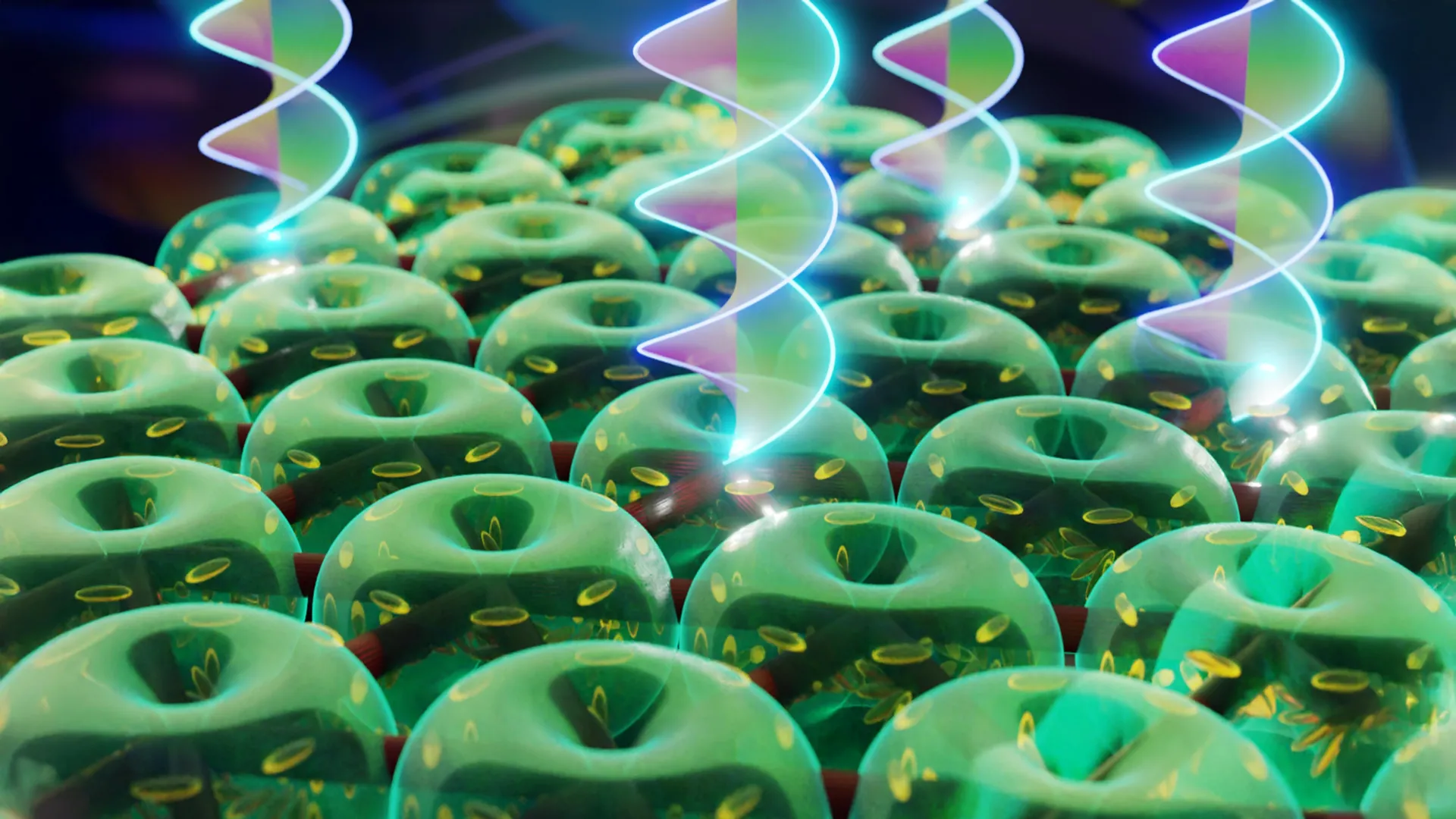
In a landmark development for the field of photonics, an international team of researchers has successfully demonstrated the creation of "optical tornadoes"—swirling vortices of light—within a microscopic environment using self-organizing liquid crystals. This achievement, a collaborative effort involving the Faculty of Physics at the University of Warsaw, the Military University of Technology in Poland, and the Institut Pascal CNRS at Université Clermont Auvergne in France, represents a significant leap forward in the manipulation of structured light. By confining light within an extremely small structure and inducing it to spin, the researchers have unlocked a new method for generating complex light states that are more stable and easier to produce than previously thought possible. This discovery holds profound implications for the future of optical communication, quantum computing, and the development of miniature, scalable photonic devices.
The Evolution and Challenge of Structured Light
To understand the significance of this breakthrough, one must first consider the nature of structured light. Traditionally, light is conceptualized as a wave traveling in a straight line with a specific frequency and polarization. However, light can also possess "orbital angular momentum," a property where the wavefront twists around the axis of propagation, much like a spiral staircase or a whirlwind. These states are known as optical vortices. In such a state, the phase of the light wave changes in a spiral manner, and the center of the vortex remains dark because the light waves cancel each other out at the axis.
Engineered light states have long been a focal point of modern physics due to their potential applications. Because these vortices can carry information in their "twist," they offer a way to increase the bandwidth of optical communications. Furthermore, the mechanical force exerted by these swirling photons can be used in "optical tweezers" to manipulate microscopic objects, such as biological cells or nanoparticles. Despite their potential, the production of these states has historically been a complex and cumbersome process. Until now, generating optical vortices typically required large-scale experimental setups or the fabrication of intricate, expensive nanostructures using electron-beam lithography. These methods are difficult to scale and often result in light states that are unstable or exist only at high energy levels, making them inefficient for practical technological integration.
A Multidisciplinary Approach to Light Confinement
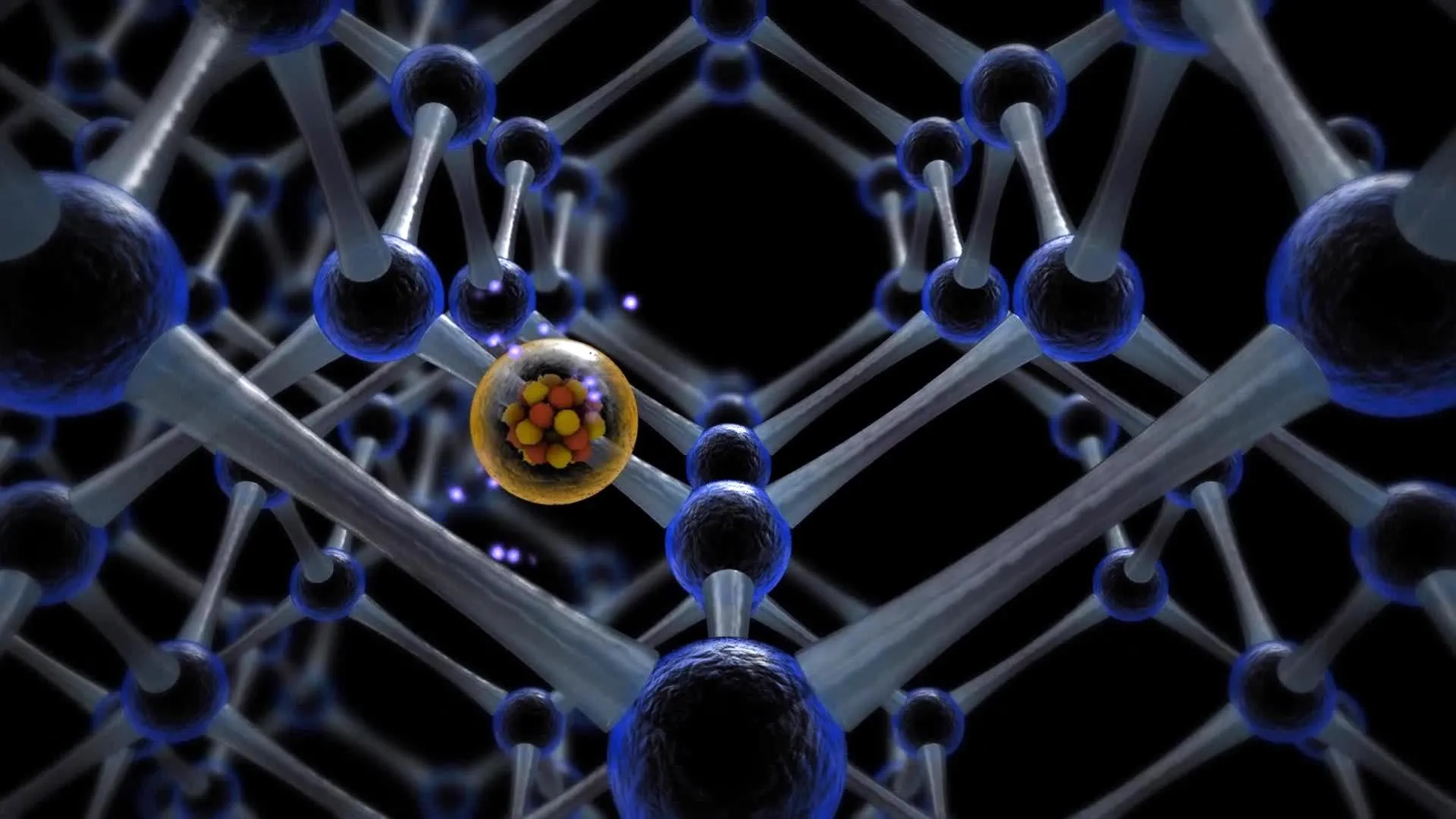
The research team, led by Professor Jacek Szczytko of the University of Warsaw, sought a more elegant and scalable solution. Their approach was inherently multidisciplinary, bridging the gaps between quantum mechanics, materials engineering, optics, and solid-state physics. The fundamental inspiration for the project came from atomic physics. In an atom, electrons are confined by the nucleus and occupy specific energy states. The researchers aimed to create a "trap" for light that would function similarly to the way an atom traps electrons.
"In photonics, a similar role is played by optical traps, which confine light instead of electrons," Professor Szczytko explained. To create these traps at a microscopic scale, the team turned to the unique properties of liquid crystals. Liquid crystals represent a state of matter that occupies the middle ground between a conventional liquid and a solid crystal. While they possess the ability to flow like a fluid, their constituent molecules maintain a high degree of spatial orientation and order, similar to a solid lattice. This dual nature allows liquid crystals to be manipulated by external stimuli, such as electric fields, while providing a structured medium through which light can propagate.
The Role of Torons and Synthetic Magnetic Fields
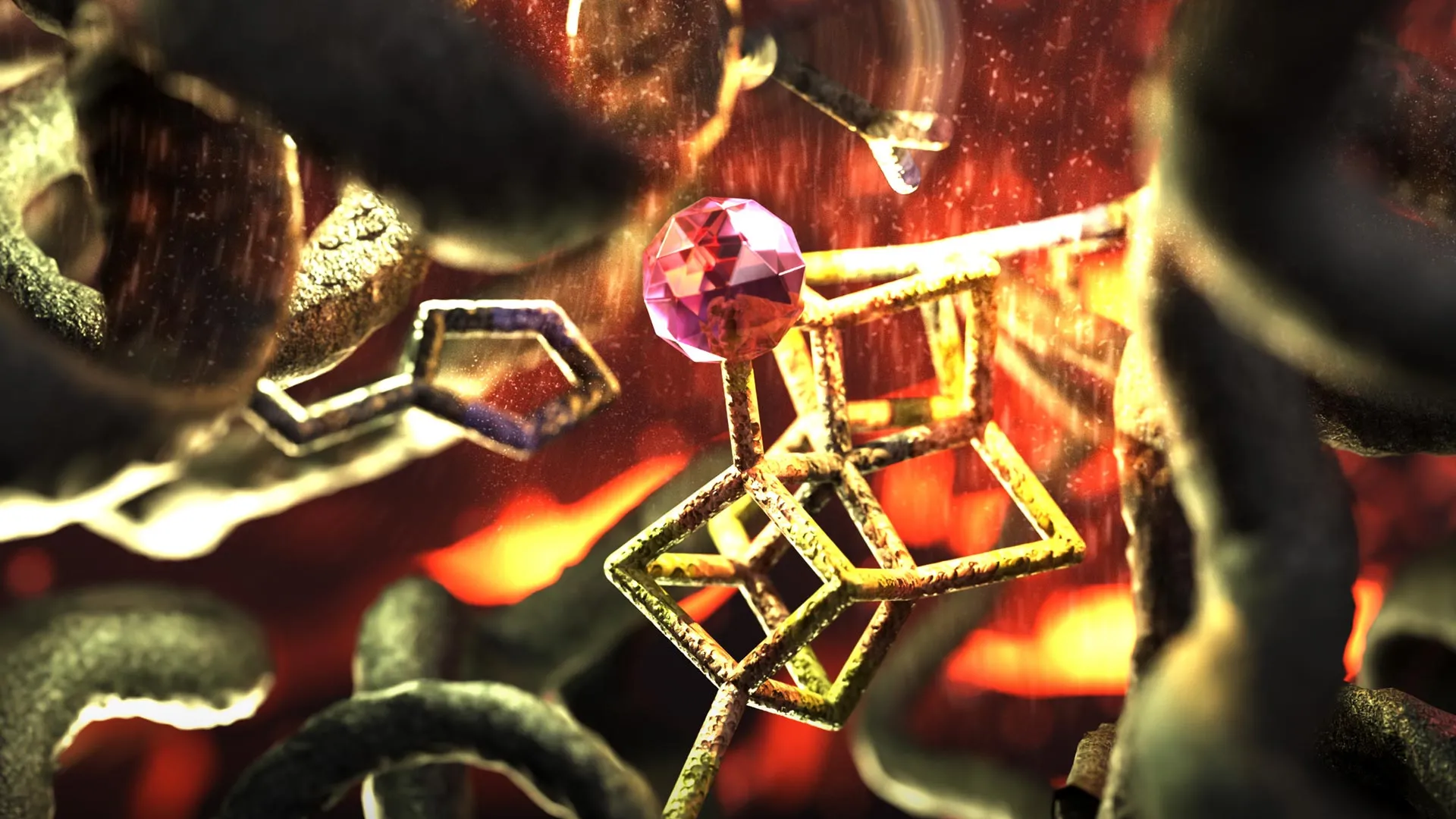
The core of the experimental setup involved the formation of "torons" within the liquid crystal medium. Torons are topological defects—stable, self-organized structures where the liquid crystal molecules arrange themselves in tightly twisted spirals. Joanna Mędrzycka, a nanotechnology student at the University of Warsaw, and Dr. Eva Oton from the Military University of Technology, were responsible for preparing these specialized samples.
Mędrzycka described these structures as being akin to DNA spirals closed into a ring, resembling a doughnut. These torons act as natural, microscopic traps for light. However, simply trapping the light was not enough to create a vortex; the light needed to be forced into a rotational motion. In electronics, a magnetic field can force an electron into a circular "cyclotron" orbit. Because photons carry no charge, they do not respond to conventional magnetic fields. To circumvent this, the researchers engineered a "synthetic magnetic field."
This was achieved through spatially variable birefringence. Birefringence is a property where a material has a different refractive index for different polarizations of light. By carefully controlling the orientation of the liquid crystal molecules within the toron, the researchers created an environment where the light’s propagation depended on its position and polarization in a way that mathematically mimicked the effects of a magnetic field. Dr. Piotr Kapuściński of the University of Warsaw noted that this "synthetic" field causes the light to bend and rotate as if it were a charged particle in a physical magnetic field.
Achieving Stability in the Ground State
The most technically significant aspect of the study, published in the context of advanced photonic research, is the observation of these vortices in the "ground state." In most physical systems, complex states like vortices only appear when the system is "excited" or given extra energy. These excited states are inherently unstable and tend to decay quickly to the lowest-energy state, or ground state.
Through the use of an optical microcavity—a structure consisting of two highly reflective mirrors placed mere micrometers apart—the researchers were able to confine the light for extended periods, allowing it to interact strongly with the synthetic magnetic field created by the toron. Under these conditions, the light naturally settled into a vortex state at its lowest energy level.
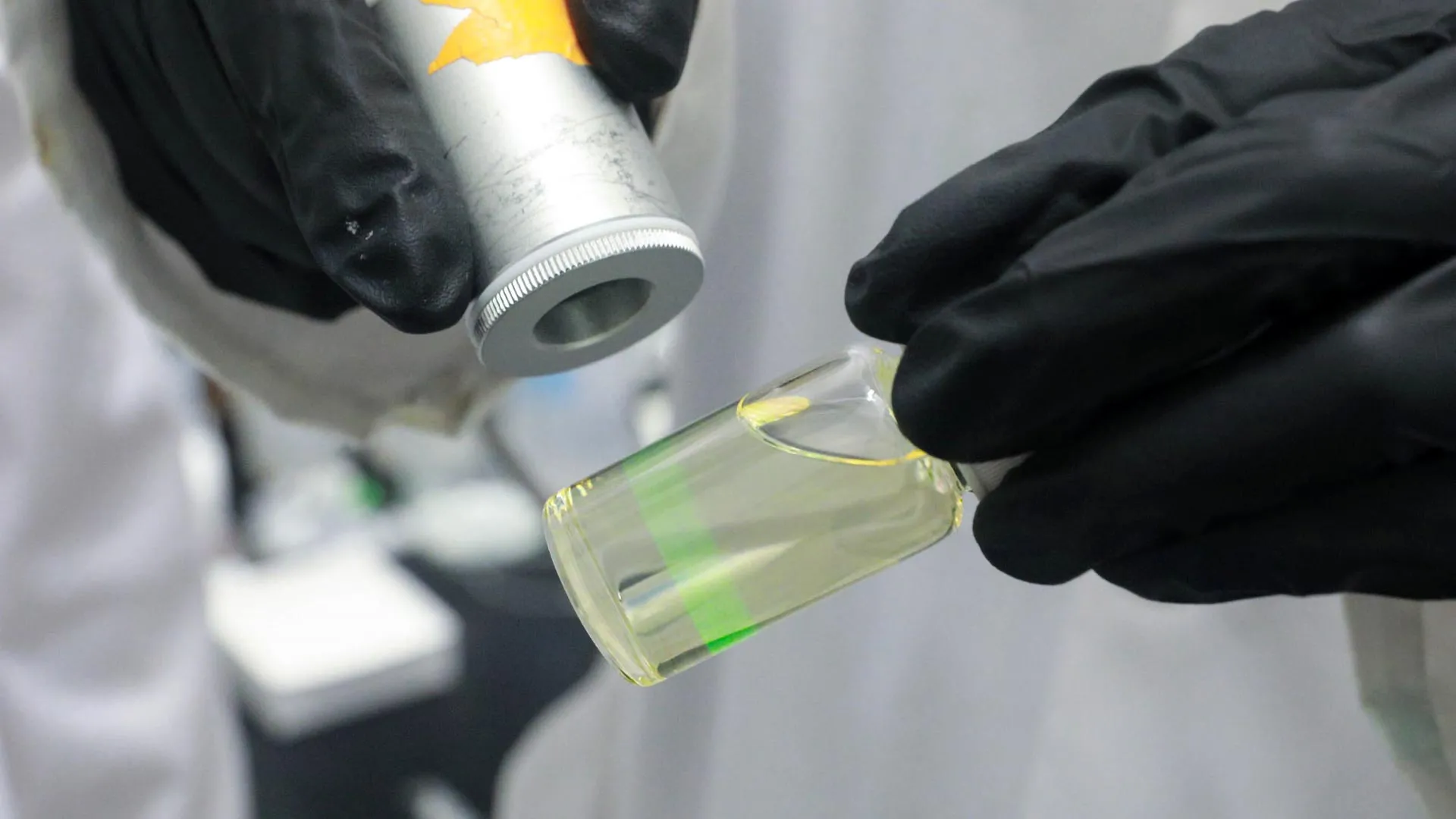
Professor Guillaume Malpuech and Professor Dmitry Solnyshkov from Université Clermont Auvergne, who developed the theoretical framework for the experiment, emphasized the importance of this stability. Because the ground state is the most stable configuration, it is the easiest state in which to accumulate energy. This leads to a phenomenon known as "lasing," where the light becomes coherent and concentrated. By introducing a laser dye into the system, the team confirmed that the "optical tornado" was not just a fleeting observation but a stable, coherent laser emission.
Theoretical Implications: Photons as Quarks
Beyond the immediate practical applications, the research touches upon profound theoretical concepts. Professor Solnyshkov pointed out that the approach draws on the theory of "vectorial charge." In this framework, the photons in the liquid crystal trap behave in a manner that mirrors the behavior of quarks—the fundamental particles that make up protons and neutrons. This high-level simulation of subatomic physics using light and liquid crystals provides a new platform for studying complex quantum field theories in a controlled, tabletop laboratory setting.
Impact on Future Technology and Industry
The implications of this discovery for the technology sector are extensive. As the demand for faster and more secure data transmission grows, the limitations of current electronic and simple fiber-optic systems become more apparent. The ability to create stable, miniature sources of structured light could revolutionize several fields:
- Optical Communication: By using different vortex states as "channels," engineers could significantly multiply the amount of data transmitted through a single optical fiber, a technique known as space-division multiplexing.
- Quantum Computing: Stable vortices can serve as "qubits" in quantum information processing. The ground-state stability achieved by the Polish-French team makes these states more resilient to environmental "noise," a major hurdle in quantum development.
- Scalable Manufacturing: Because the liquid crystals are self-organizing, the need for expensive and slow nanolithography is reduced. This suggests a future where complex photonic chips can be "grown" or self-assembled, drastically lowering production costs.
- Miniature Sensors: The sensitivity of these light traps to external voltages—as noted by Dr. Marcin Muszyński—means they could be used to create ultra-sensitive sensors for biological or chemical detection at the micro-scale.
Chronology of the Discovery
The path to this discovery followed a rigorous scientific timeline:
- Theoretical Phase: Researchers at Université Clermont Auvergne developed mathematical models predicting that topological defects in birefringent media could simulate magnetic fields for photons.
- Material Synthesis: The Military University of Technology in Warsaw spent months perfecting the liquid crystal mixtures and identifying the precise conditions under which stable torons form.
- Experimental Integration: The University of Warsaw team integrated these liquid crystals into microcavities and applied external electric fields to fine-tune the "synthetic" forces.
- Verification: Using laser dye infusion and high-resolution spectroscopy, the team confirmed the ground-state vortex and its coherent laser properties, culminating in the recent announcement of their findings.
Professor Wiktor Piecek of the Military University of Technology concluded that this research demonstrates the untapped potential of self-organizing materials. As the scientific community continues to move away from bulky hardware toward integrated, "smart" materials, the optical tornado stands as a testament to the power of interdisciplinary collaboration in solving the most complex challenges of modern physics.












Leave a Reply