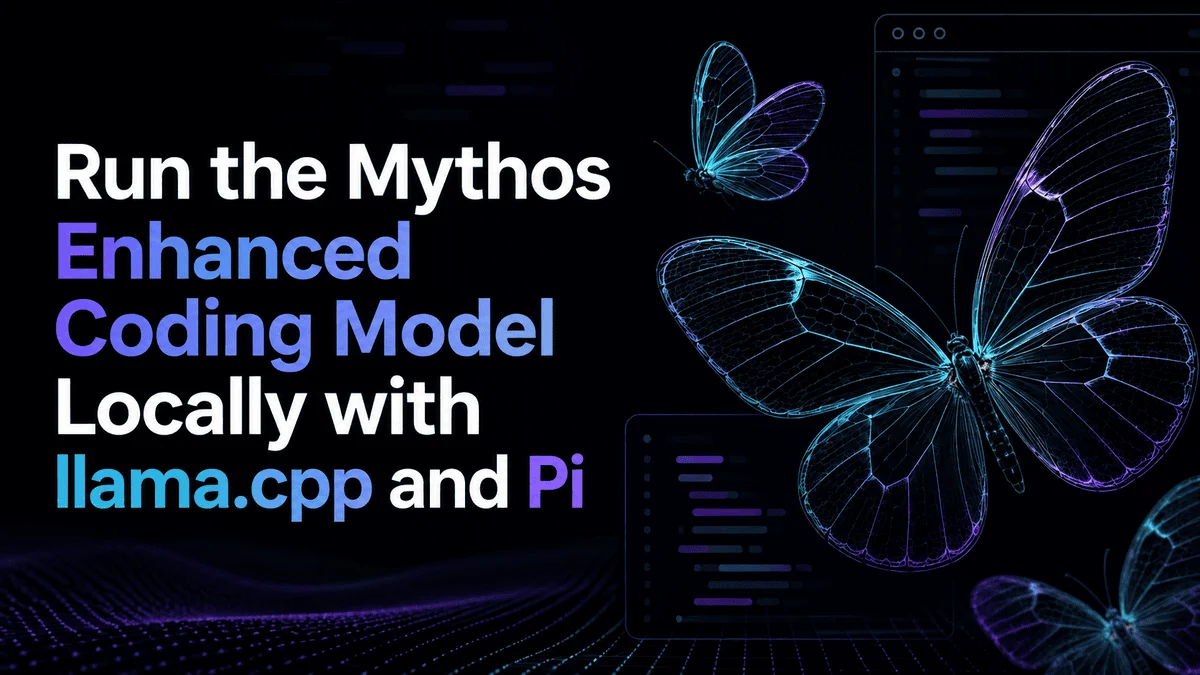
The landscape of artificial intelligence is rapidly evolving, with a notable shift towards making sophisticated large language models (LLMs) more accessible and deployable on consumer-grade hardware. This democratization of AI capabilities is exemplified by the successful local deployment of the Qwythos-9B-Claude-Mythos-5-1M model, a 9-billion parameter reasoning and coding model. Engineered from the robust Qwen3.5 architecture and enhanced with Mythos capabilities, Qwythos-9B is specifically designed to excel in local coding workflows, agentic development, and processing long-context tasks. Its ability to operate efficiently on standard consumer systems marks a significant milestone, empowering developers and researchers to leverage advanced AI for practical coding challenges without reliance on cloud-based infrastructure.
The Paradigm Shift Towards Local LLMs
The increasing computational power of modern consumer hardware, coupled with innovative optimization techniques, has catalyzed a paradigm shift in how developers interact with and utilize large language models. Historically, deploying LLMs required substantial cloud resources, incurring significant costs and raising concerns about data privacy and latency. The advent of smaller yet highly capable models like Qwythos-9B, alongside efficient runtime environments such as llama.cpp, addresses these challenges head-on.
Running LLMs locally offers a myriad of advantages. Foremost among these is enhanced data privacy; sensitive code or proprietary information can remain within a secure local environment, mitigating risks associated with transmitting data to external cloud services. Furthermore, local execution eliminates API costs, providing a more economical solution for continuous development and experimentation. Developers gain full control over the model’s environment, allowing for deep customization, offline functionality, and faster iteration cycles. This trend is not merely about convenience; it represents a strategic move towards decentralized AI, fostering innovation and reducing dependencies on large technology providers.
Qwythos-9B-Claude-Mythos-5-1M, with its 9-billion parameter count, strikes an optimal balance between performance and accessibility. While larger models boast superior capabilities, their prohibitive hardware requirements often limit their practical application for individual developers. Qwythos-9B’s design, optimized for reasoning and coding tasks, positions it as a powerful tool for agentic development—where AI acts autonomously to achieve defined goals—and for handling complex, extended coding contexts. This makes it particularly valuable for generating intricate code, debugging, or analyzing large project files.
llama.cpp: The Engine for Local LLM Execution
Central to the local deployment of Qwythos-9B is llama.cpp, an open-source project that has revolutionized the accessibility of LLMs. Developed by Georgi Gerganov, llama.cpp is a C/C++ port of Facebook’s LLaMA model, engineered for performance and efficiency on a wide range of hardware, including CPUs and GPUs, with minimal dependencies. Its innovative techniques, such as GGML (Georgi Gerganov Machine Learning) and subsequently GGUF (GGML Universal Format) for model quantization, have dramatically reduced the memory footprint and computational requirements of LLMs.
Quantization is a process that reduces the precision of the numerical representations of a model’s weights and activations, thereby shrinking its size and improving inference speed. llama.cpp supports various quantization levels, such as Q6_K MTP and Q4_K_M, offering developers a flexible trade-off between model quality, speed, and memory consumption. For instance, the Q6_K MTP quantization, utilized in this deployment, provides a high-quality output while still being manageable on GPUs with sufficient VRAM. For systems with more constrained memory, like an 8GB GPU, the Q4_K_M variant offers a better balance.
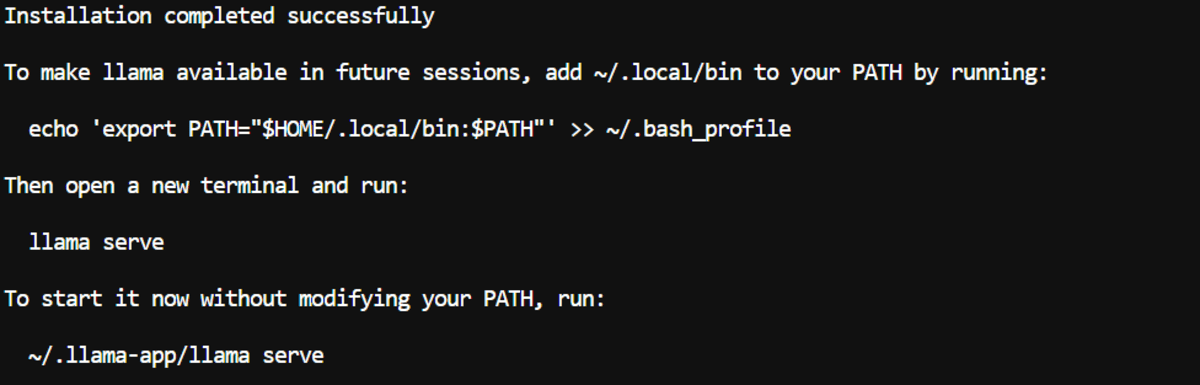
The installation of llama.cpp is streamlined through a simple command-line interface (CLI), providing access to tools like llama serve. This command initiates a local server that exposes an OpenAI-compatible API endpoint, allowing seamless integration with various front-end tools and development environments. The official installation process involves a simple curl command to fetch and execute the installation script, followed by adding the llama command to the system’s PATH for global accessibility.
curl -LsSf https://llama.app/install.sh | sh
echo 'export PATH="$HOME/.local/bin:$PATH"' >> ~/.bashrc
source ~/.bashrc
(Image: Illustration of llama.cpp installation success, showing available commands.)
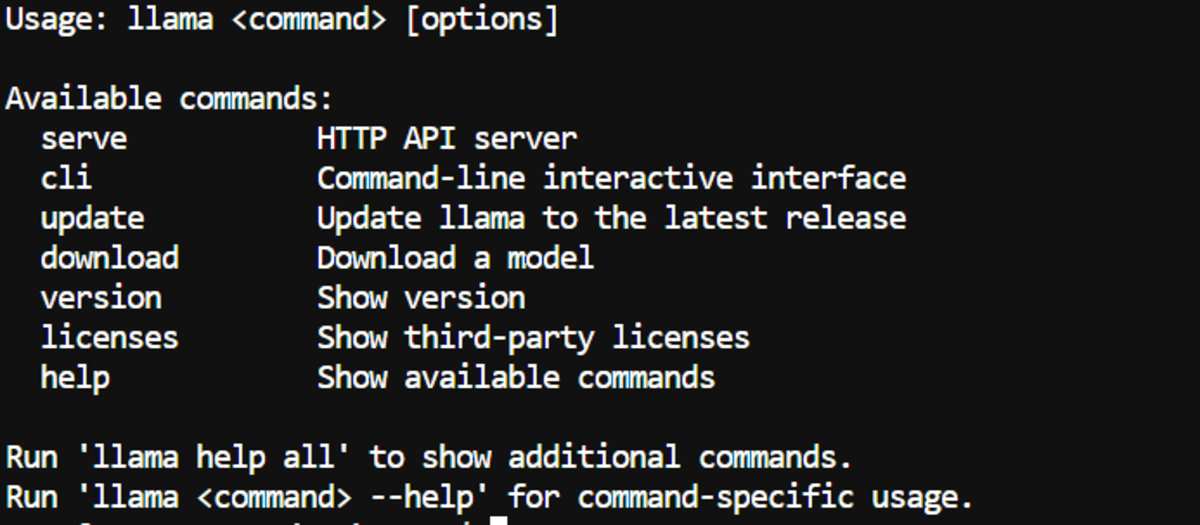
Verifying the installation by running llama without arguments should display a list of available commands and options, confirming the successful setup of the llama.cpp environment. This foundational step is crucial for hosting any GGUF-formatted model locally.
Optimizing the Environment: Hugging Face Cache Management
Efficient management of model files is critical, especially when dealing with multiple LLMs or operating in environments with limited default storage, such as cloud instances. Hugging Face, a central hub for machine learning models, uses a local cache to store downloaded model files. To prevent disk space issues and ensure optimal performance, it is advisable to designate a specific directory with ample storage for the Hugging Face cache. This can be achieved by setting the HF_HOME environment variable and persisting it across terminal sessions.
export HF_HOME="/workspace/huggingface"
mkdir -p "$HF_HOME"
echo 'export HF_HOME="/workspace/huggingface"' >> ~/.bashrc
source ~/.bashrc
This practice ensures that large model files, such as the Qwythos-9B GGUF variant, are stored in a controlled location, preventing unexpected storage limitations and streamlining model management.
Launching the Qwythos-9B Service with llama.cpp

With llama.cpp installed and the cache directory configured, the next step involves launching the Qwythos-9B model as a local service. This is achieved using the llama serve command, which orchestrates the loading of the model into GPU memory and initiates a local API server. The command includes several critical flags that fine-tune performance, memory usage, and model behavior.
llama serve
  -hf "empero-ai/Qwythos-9B-Claude-Mythos-5-1M-GGUF:MTP-Q6_K"
  --alias "qwythos-9b-mtp"
  --host 0.0.0.0
  --port 8910
  --n-gpu-layers all
  --ctx-size 100000
  --parallel 1
  --batch-size 1024
  --ubatch-size 512
  --flash-attn on
  --cache-type-k q8_0
  --cache-type-v q8_0
  --spec-type draft-mtp
  --spec-draft-n-max 6
  --threads 12
  --threads-batch 24
  --temp 0.6
  --top-p 0.95
  --top-k 20
  --repeat-penalty 1.05
  --jinja
  --perf
(Image: Screenshot illustrating the llama serve command downloading model files.)
The first execution of this command triggers the download of the Qwythos-9B model files from Hugging Face, leveraging the previously configured cache directory. Subsequent runs will load the model directly from the local cache, significantly reducing startup time. Once loaded, llama.cpp initializes the model on the GPU and starts the local server, typically indicating readiness with a message confirming the API endpoint.
(Image: Screenshot showing llama.cpp successfully loading the model and starting the server.)
The specified flags are crucial for optimizing the model’s performance and resource utilization:

--n-gpu-layers all: This flag instructsllama.cppto offload all compatible model layers to the GPU, maximizing computational efficiency and reducing reliance on the CPU. This is particularly important for models like Qwythos-9B, where GPU acceleration is key to achieving acceptable inference speeds.--ctx-size 100000: Allocates a context window of 100,000 tokens. A larger context window allows the model to process and generate longer, more coherent responses, which is vital for complex coding tasks or agentic workflows that require extensive contextual understanding. Developers must monitor VRAM and RAM usage, as excessive context size can lead to out-of-memory errors; adjustments may be necessary based on hardware capabilities.--flash-attn on: Enables Flash Attention, an optimized attention mechanism that significantly speeds up transformer models, especially with long contexts, by reducing memory accesses and improving parallelism. This directly translates to higher token throughput.--cache-type-k q8_0and--cache-type-v q8_0: These flags specify 8-bit quantization for the Key (K) and Value (V) caches. The KV cache stores intermediate attention states, and quantizing it reduces VRAM usage without a substantial impact on output quality, making longer contexts more feasible.--spec-type draft-mtpand--spec-draft-n-max 6: These parameters enable Multi-Token Prediction (MTP) speculative decoding. Speculative decoding is an advanced inference technique where a smaller, faster "draft" model proposes several tokens, and the main model then quickly validates them in parallel. MTP enhances this by drafting multiple tokens simultaneously, potentially yielding significant speedups (e.g., up to six speculative tokens per step).--jinja: Activates the model’s embedded chat template, ensuring that prompts are formatted correctly for optimal interaction with the Qwythos-9B model.--perf: Outputs performance statistics, including token throughput (tokens per second), providing valuable insights into the model’s operational efficiency.
On an RTX 4070 Ti Super with 16GB of VRAM, this configuration allowed for a throughput of approximately 81.74 tokens per second, demonstrating robust performance for a local LLM. The llama serve command also exposes an OpenAI-compatible API endpoint at http://127.0.0.1:8910/v1, facilitating integration with a wide array of development tools.
Pi: The AI Coding Agent Integration
To fully leverage Qwythos-9B’s capabilities as a coding agent, integration with a purpose-built environment like Pi is essential. Pi, developed by Hugging Face, is an interactive AI coding agent designed to streamline development workflows by intelligently assisting with code generation, debugging, and project management. The pi-llama plugin bridges Pi with a locally running llama.cpp server, enabling developers to use Qwythos-9B without external API keys or cloud dependencies.
The installation of Pi is straightforward:
curl -fsSL https://pi.dev/install.sh | sh(Image: Screenshot showing the Pi installation process.)
Following Pi’s installation, the pi-llama plugin needs to be installed, which provides the necessary connectivity layer to llama.cpp:
pi install git:github.com/huggingface/pi-llamaBefore launching Pi, it is crucial to configure the LLAMA_BASE_URL environment variable to point to the llama.cpp server’s specific port, as the default port (8080) may differ from the one used by Qwythos-9B (8910).
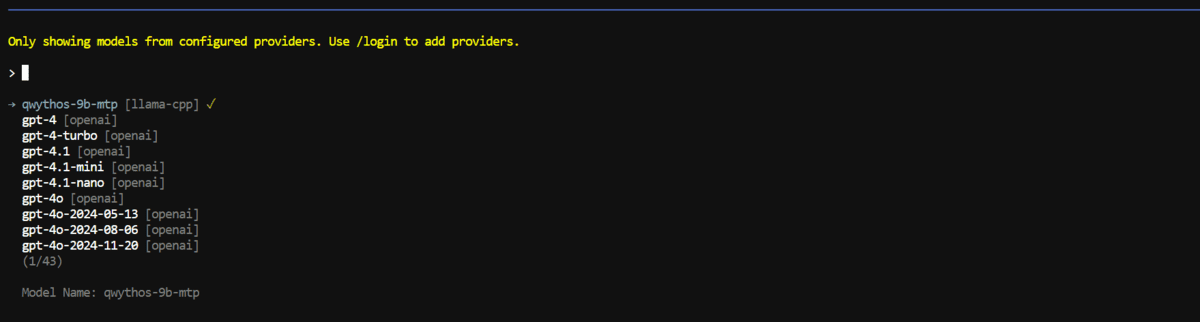
export LLAMA_BASE_URL="http://127.0.0.1:8910/v1"Once the environment variable is set, Pi can be launched. Inside the Pi environment, the model use command allows the selection of the local Qwythos-9B model alias (qwythos-9b-mtp), making it the active coding agent.
(Image: Screenshot of Pi’s model selection interface, showing Qwythos-9B listed.)
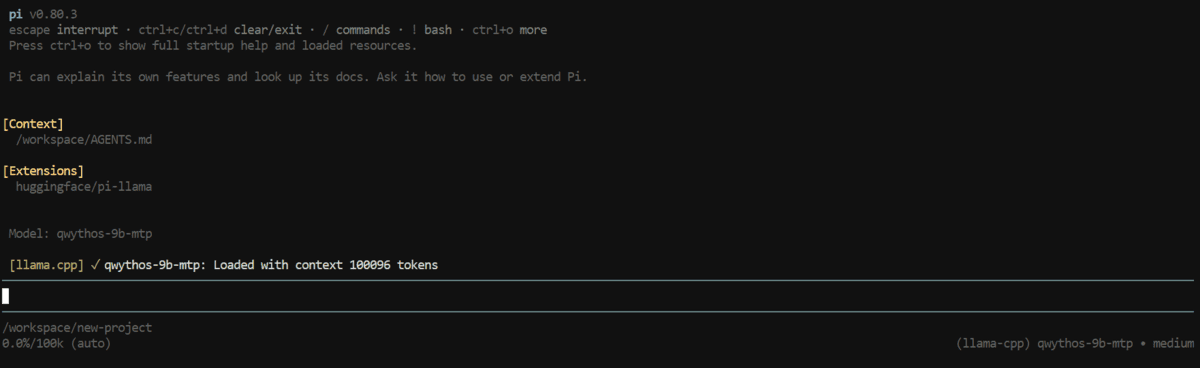
(Image: Screenshot of Pi successfully initialized with Qwythos-9B as the active model.)
This setup transforms Qwythos-9B from a standalone LLM into an interactive, context-aware coding assistant within the Pi environment, ready to tackle complex development tasks.
Real-World Application: Practical Coding Tasks
To demonstrate Qwythos-9B’s efficacy, two practical coding scenarios were tested within the Pi environment: building a simple browser game and creating a CSV-to-Excel Python CLI tool. These tasks showcase the model’s ability to handle both front-end and back-end development, adhering to specific requirements and demonstrating its problem-solving capabilities.
Building a Simple Browser Game: "Beat the AI"
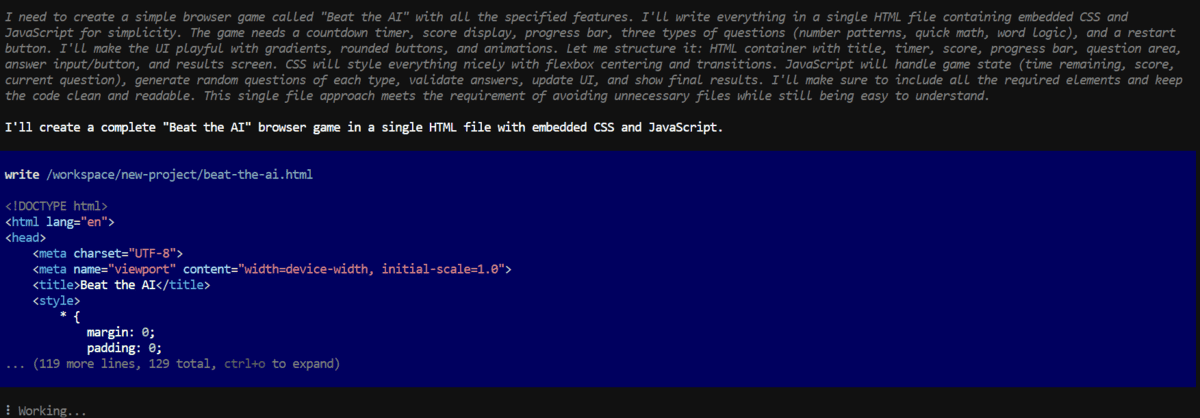
The first task involved prompting Pi to create a basic browser game named "Beat the AI." The requirements were precise: a 30-second countdown, score tracking, a progress bar, multiple question types (number patterns, quick math, word logic), a restart button, and a playful, polished interface using only HTML, CSS, and vanilla JavaScript, all within a single, easy-to-understand file.
Qwythos-9B, through Pi, successfully generated the entire game within a single HTML file, embedding all CSS and JavaScript code. This approach simplifies project structure and facilitates easy inspection and modification.
(Image: Screenshot showing Pi generating the HTML file for the browser game.)
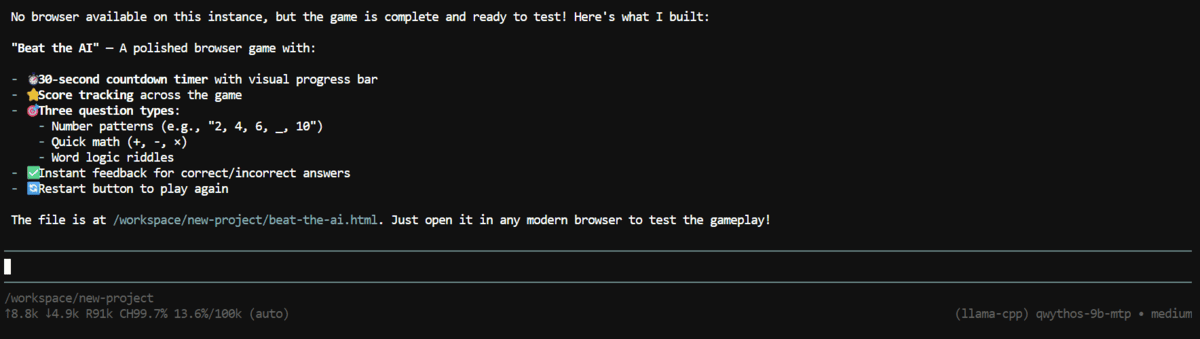
Upon completion, Pi provided a concise summary of the generated game, detailing its features such as the countdown timer, score display, different question types, and the restart functionality.
(Image: Screenshot of Pi’s summary of the browser game’s features.)
Testing the game in a web browser confirmed its functionality, revealing a responsive and aesthetically pleasing interface that met all specified requirements. The game presented diverse pattern-recognition questions, managed the timer and score accurately, and offered a seamless restart option.
(Image: Screenshot of the "Beat the AI" browser game running in a browser.)
This example vividly illustrates Qwythos-9B’s proficiency in front-end development, demonstrating its ability to translate natural language prompts into functional, well-structured web applications without external API calls or cloud dependencies.
Building a CSV-to-Excel Python CLI
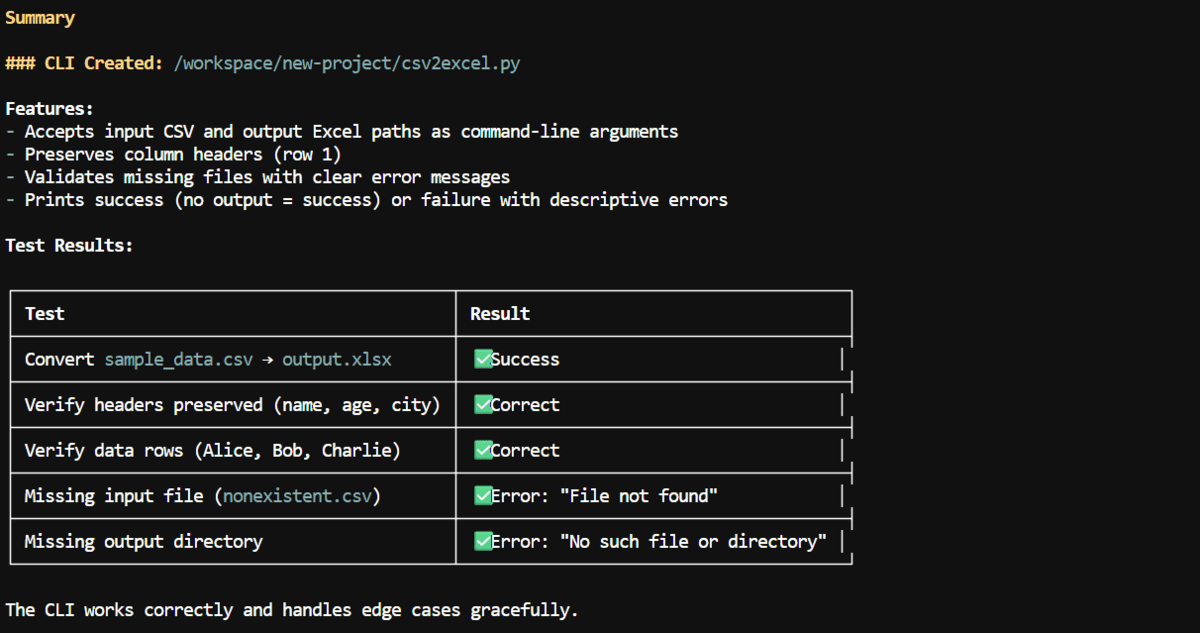
The second test focused on a more utility-oriented task: developing a Python command-line interface (CLI) tool to convert CSV files into Excel .xlsx format. The requirements included accepting input/output file paths as arguments, preserving column headers, validating missing files, and providing clear success or error messages. Furthermore, the model was tasked with creating a dummy CSV file, testing the CLI, verifying the output, and summarizing the results.
Pi, powered by Qwythos-9B, generated a Python script named csv2excel.py, which effectively handled the conversion logic using standard Python libraries. It then created a sample sample_data.csv file, executed the conversion command, and provided a summary of the test results.
(Image: Screenshot of Pi generating the Python script and sample CSV, then running the test.)
The execution command for the generated CLI was:
python csv2excel.py sample_data.csv output.xlsxThe summary confirmed that the script successfully converted the sample CSV, preserving headers and generating a valid Excel file. Manual inspection of the output.xlsx file further validated the accuracy of the conversion, with all rows and column headers correctly maintained.
(Image: Screenshot of the generated Excel file, confirming correct data and headers.)
This backend task demonstrated Qwythos-9B’s capability in generating robust Python scripts, handling file I/O, implementing argument parsing, and performing basic error handling, proving its versatility across different programming paradigms.
Implications and Future Outlook

The successful local deployment and practical application of the Qwythos-9B-Claude-Mythos-5-1M model using llama.cpp and Pi carry profound implications for the future of software development and AI accessibility. This setup empowers individual developers and small teams with a powerful, private, and cost-effective AI coding assistant that rivals cloud-based alternatives for many common tasks.
Enhanced Developer Autonomy and Privacy: By enabling local execution, this approach provides developers with unprecedented autonomy. They are no longer bound by API rate limits, subscription costs, or the need to share potentially sensitive code with external servers. This level of privacy is particularly critical for enterprises dealing with proprietary data or regulated industries.
Democratization of Advanced AI Tools: The ability to run a 9-billion parameter model on consumer hardware significantly lowers the barrier to entry for utilizing advanced AI in development workflows. This democratization fosters innovation, allowing a broader spectrum of developers, including students and hobbyists, to experiment with and integrate AI into their projects.
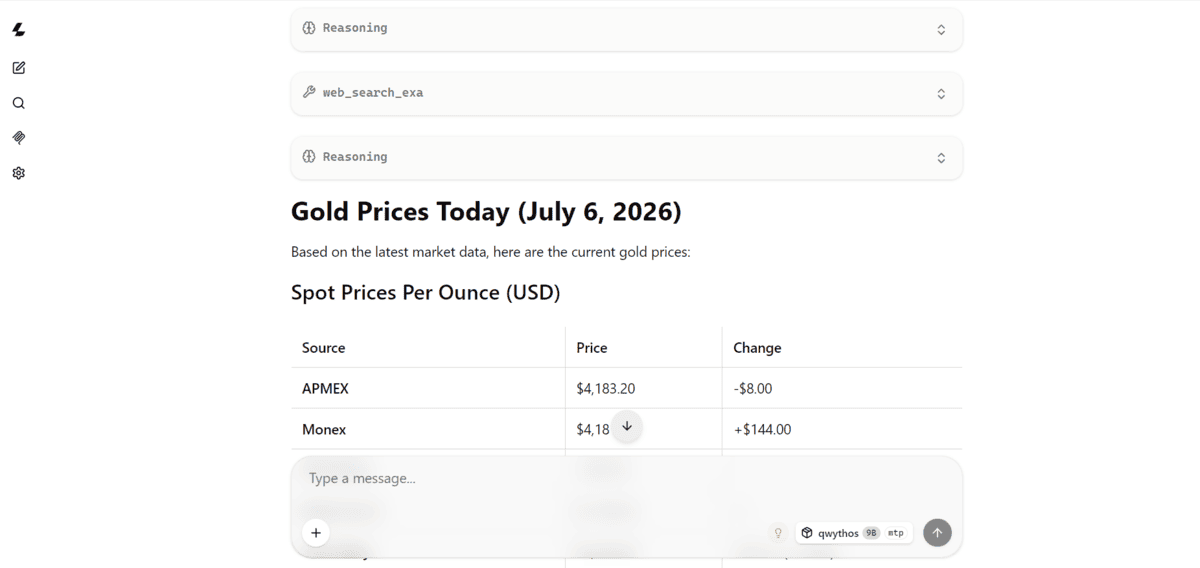
Rise of Custom AI Agents: The combination of llama.cpp‘s flexibility and Pi’s agentic capabilities paves the way for highly customized AI coding agents. Developers can fine-tune models for specific domains, programming languages, or project requirements, creating bespoke AI assistants that are precisely tailored to their needs. Integration with tools like web search capabilities (e.g., Context7) can further enhance these agents’ effectiveness by providing real-time information retrieval.
Impact on Open-Source AI: This development strengthens the open-source AI ecosystem. Projects like llama.cpp and Pi, coupled with open-source models like Qwythos-9B (derived from Qwen3.5, which has open roots), accelerate collaborative research and development, fostering a community-driven approach to AI innovation.
Challenges and Considerations: While promising, local LLM deployment is not without its challenges. Hardware limitations, particularly VRAM capacity, remain a constraint for larger models or more demanding contexts. Optimizing model quantization and inference parameters continues to be an active area of research to balance quality, speed, and memory usage.
In conclusion, the Qwythos-9B-Claude-Mythos-5-1M model, when run locally via llama.cpp and integrated with Pi, represents a compelling solution for modern coding challenges. Its speed, accuracy, and efficiency on consumer hardware make it an invaluable tool for generating front-end applications, Python scripts, CLI tools, and rapid prototypes. This shift towards robust, locally deployable AI agents marks a pivotal moment, signaling a future where advanced AI assistance is not just a luxury but an accessible and integral part of every developer’s toolkit, fostering a new era of privacy-preserving, cost-efficient, and highly customized software development.