The landscape of software development is undergoing a profound transformation, driven by the rapid advancements in artificial intelligence. At the forefront of this revolution is agentic coding, a paradigm where AI models autonomously manage and execute complex development tasks. Among the early innovators, Claude Code emerged as a prominent solution, enabling developers to articulate project requirements in natural language and witness the AI construct, modify, debug, and integrate applications with various services like MCP servers, APIs, and databases. This capability, while groundbreaking, often comes with significant operational costs and inherent limitations in its underlying "harness"—the crucial system that orchestrates the AI model’s interaction with files, context, terminal commands, tools, permissions, and multi-step workflows within a development environment. The effectiveness of an AI coding agent is not solely determined by the intelligence of its core model, but critically by the robustness and flexibility of this accompanying harness.
The burgeoning demand for more cost-effective, customizable, and versatile AI coding solutions has spurred the development of numerous alternatives to proprietary platforms like Claude Code. These emerging tools, many of which are open-source, offer developers greater control over model selection, support for local AI execution, enhanced tool integration, and superior agentic harnesses that optimize token usage and workflow efficiency. This article delves into seven of the most compelling alternatives for command-line interface (CLI) agentic coding, examining their unique features, benefits, and how they address the evolving needs of the modern developer. These alternatives represent a significant shift towards democratizing AI-powered development, offering pathways to improved productivity, reduced costs, and unprecedented customization.
The Rise of Agentic Coding and the Search for Alternatives
Agentic coding signifies a pivotal shift from traditional code generation to autonomous software development. Unlike simple code completion or snippet generation, an agentic system can comprehend high-level directives, plan a series of actions, execute terminal commands, modify multiple files, run tests, identify and fix errors, and even learn from its environment and past interactions. This sophisticated capability is powered by a robust AI model, but its practical utility hinges entirely on the "harness"—the architectural framework that empowers the AI to perceive its environment, interact with the operating system, manage project context, and utilize external tools. A superior harness allows an AI model to operate with greater autonomy, precision, and integration within existing developer workflows.
Initial offerings in this space, while powerful, often presented developers with a constrained ecosystem. High subscription costs, vendor lock-in to specific AI models, and a lack of granular control over the agent’s behavior or its environment were common frustrations. Industry reports, such as those from Gartner and IDC, project the AI in software development market to grow exponentially, with an increasing emphasis on developer productivity tools. This growth fuels a developer community actively seeking solutions that offer:
- Cost Efficiency: Alternatives that reduce API call costs by optimizing token usage or supporting cheaper, open-source models.
- Model Flexibility: The ability to choose from a diverse range of AI models (e.g., Anthropic, OpenAI, Google, local models via Ollama) based on task requirements, budget, or ethical considerations.
- Customization and Control: Open-source access, custom tool integration, and the ability to define specific agent behaviors and workflows.
- Integration with Existing Workflows: Seamless operation within CLI, IDEs, and CI/CD pipelines.
- Enhanced Harness Capabilities: More intelligent context management, error recovery, multi-step task handling, and secure sandboxing.
The emergence of the following seven alternatives is a direct response to these evolving market demands, signaling a maturity in the AI coding agent space where flexibility and developer empowerment are paramount.
A Deep Dive into Leading CLI Agentic Coding Alternatives
The market now offers a rich selection of CLI agentic coding tools designed to overcome the limitations of earlier solutions. Each platform brings its unique strengths, catering to different developer preferences and project scales.
1. OpenCode: The Open-Source Integrator
OpenCode stands out as a highly flexible, open-source coding agent that bridges the gap between terminal-based development and integrated development environments (IDEs), even offering a dedicated desktop application. Its core strength lies in its ability to deeply understand a codebase, facilitating tasks from bug fixes and feature additions to comprehensive code reviews. A key differentiating feature is its automatic loading of language servers, which significantly enhances the AI’s contextual understanding of various programming languages, leading to more accurate and relevant code modifications.
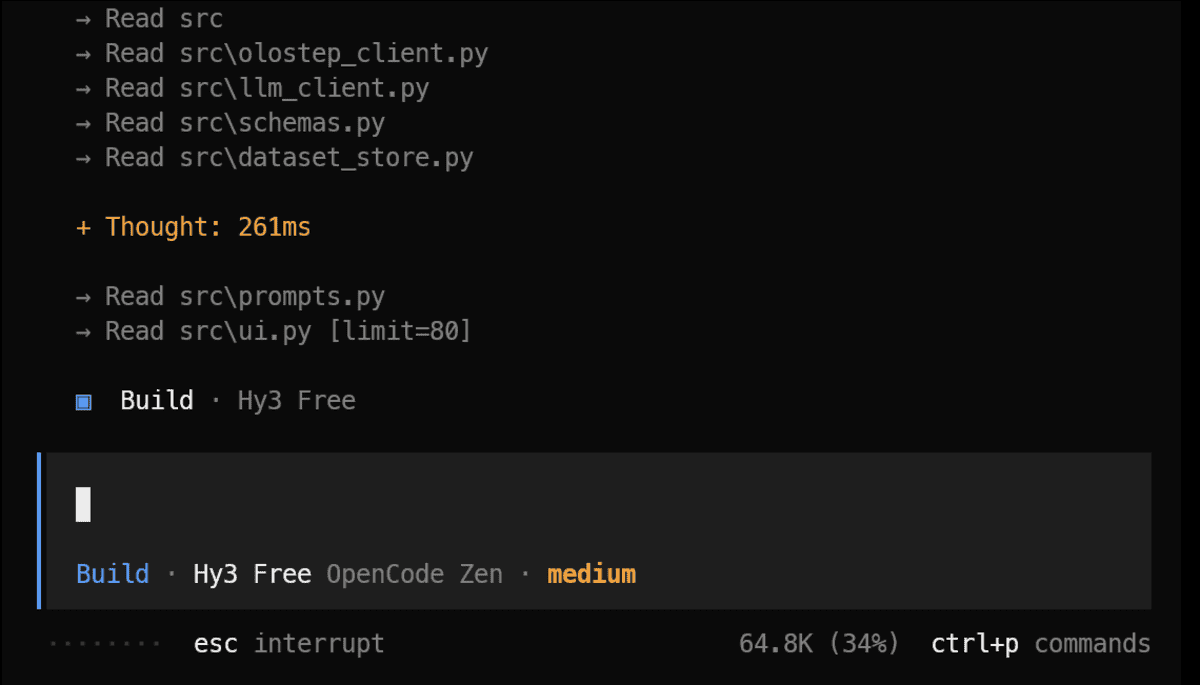
For developers seeking liberation from vendor constraints, OpenCode provides unparalleled model flexibility, allowing users to select the AI model best suited for their budget and task. This freedom extends to running multiple concurrent sessions, creating specialized custom agents for specific functions like planning or reviewing, and building bespoke workflows. OpenCode’s commitment to an open-source ethos, combined with its robust integration capabilities and emphasis on user control over models, agents, and integrations, positions it as a compelling choice for developers who prioritize adaptability and a comprehensive out-of-the-box experience. The community-driven nature of open-source projects also implies continuous improvement and a responsive development cycle, addressing emerging developer needs efficiently.
2. Pi: The Customizable Harness
Pi presents itself as a lightweight, open-source coding-agent harness meticulously designed for terminal-based operations. Its philosophy centers on maintaining a simple, minimalist core system, allowing users to extend its functionality through a rich ecosystem of extensions, skills, reusable prompts, themes, and project instructions. This modularity is a significant advantage for developers who prefer a highly tailored environment. Pi boasts extensive model provider support, encompassing over 15 services including Anthropic, OpenAI, Google, Kimi, OpenRouter, and Ollama, with the unique capability to switch models mid-session—a crucial feature for optimizing costs or leveraging specific model strengths for different sub-tasks.
Pi’s lean system prompt is engineered for token efficiency, potentially leading to substantial cost savings on API calls. Its extension architecture empowers users to integrate custom tools, define unique commands, design interfaces, manage memory, deploy sub-agents, and implement complex planning workflows. Furthermore, its advanced session management allows developers to revert to earlier states, branch off new development paths, and continue work without losing the original session context. While Pi’s default feature set is intentionally minimal, requiring users to invest time in customization, it is ideally suited for developers who revel in building and fine-tuning their own bespoke coding agent setup, offering a level of granular control rarely found in commercial alternatives.
3. Factory Droid: Automation for Enterprise Workflows
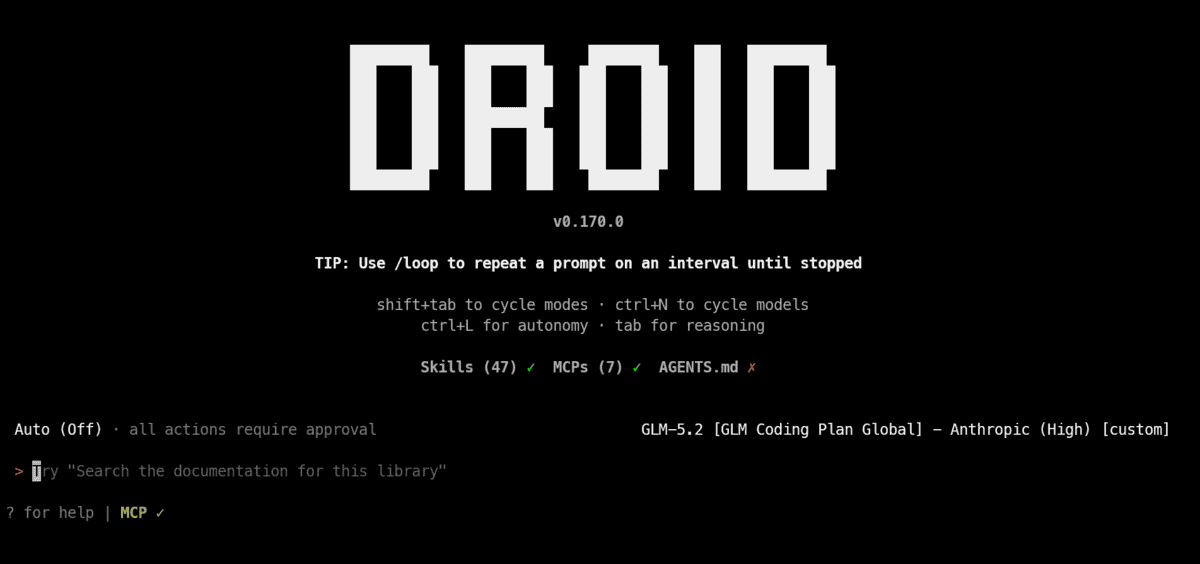
Factory Droid is a sophisticated coding agent designed for both terminal and IDE environments, particularly well-suited for team-based and automated development workflows. It excels at translating plain language tasks into actionable development steps, including codebase exploration, code generation, test execution, change reviews, and problem resolution. Beyond interactive sessions, Factory Droid offers robust support for saved sessions, custom commands, plugins, integration with MCP servers, a variety of AI models, and specialized sub-agents tailored for functions such as code review or security auditing.
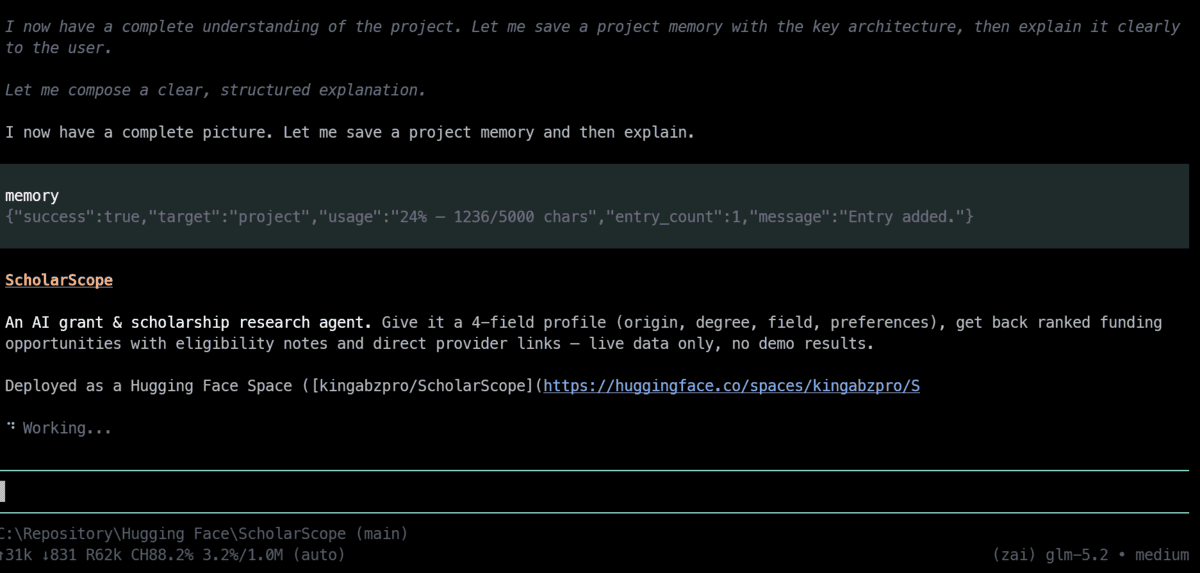
A standout feature for enterprise environments is Factory Droid’s droid exec mode, which enables headless task execution without requiring an interactive chat. This functionality is invaluable for scripting, batch jobs, and integrating AI-driven development into continuous integration/continuous deployment (CI/CD) pipelines, where automation is paramount. Furthermore, its "Factory Missions" capability allows for the decomposition of large, complex projects into smaller, manageable steps, which can then be assigned to different agents, with the system overseeing and verifying the final output. This structured approach to complex projects makes Factory Droid an attractive option for organizations aiming to scale their AI-assisted development efforts and streamline multi-agent collaboration.
4. Codex CLI: OpenAI’s Terminal Powerhouse
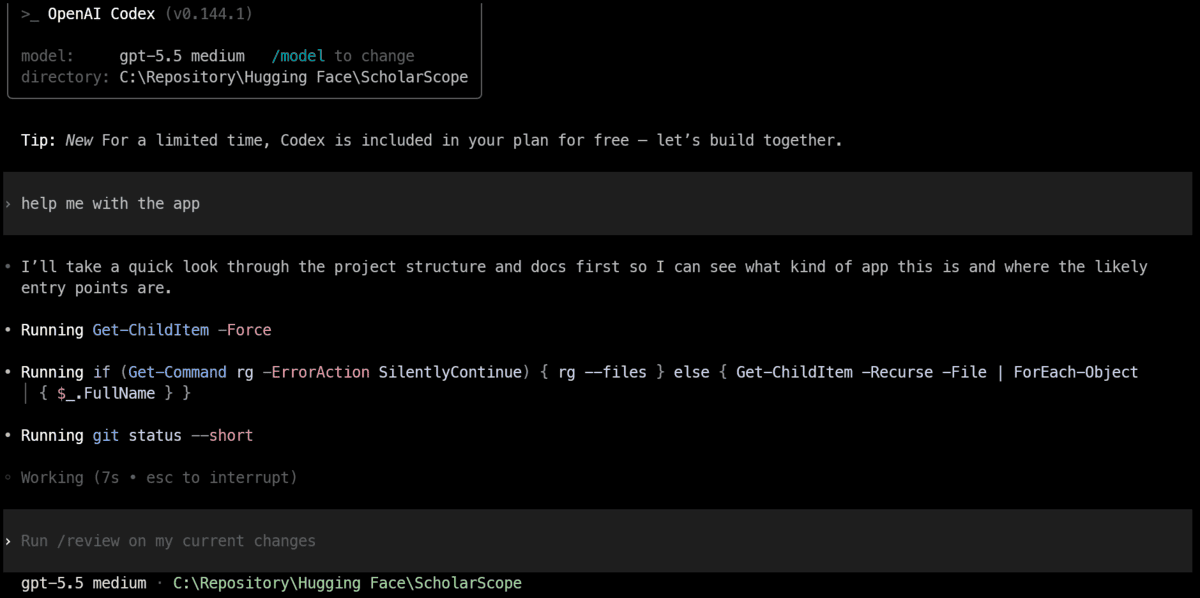
Codex CLI, an open-source offering from OpenAI, brings the formidable capabilities of OpenAI’s models directly to the terminal. It empowers developers to explore projects, modify files, execute commands, test code, and receive clear explanations of the changes made. Its feature set includes support for MCP servers, project-specific instructions, image processing, tiered permission levels, and a secure sandbox environment that restricts the agent’s access, mitigating potential security risks.
For developers already invested in the OpenAI ecosystem, particularly those with a ChatGPT subscription that includes Codex access, Codex CLI represents an exceptionally cost-effective alternative. The included usage often suffices for typical daily coding tasks, eliminating the need for an additional coding-agent subscription. Its blend of interactive coding capabilities and support for automated tasks, coupled with the ability to integrate local AI models, makes Codex CLI a versatile tool for both ad-hoc development and repeatable workflows. The direct lineage to OpenAI’s research also suggests a continuous integration of cutting-edge AI capabilities, ensuring its relevance in a rapidly evolving field.
5. Antigravity CLI: Google’s Multi-Agent Solution
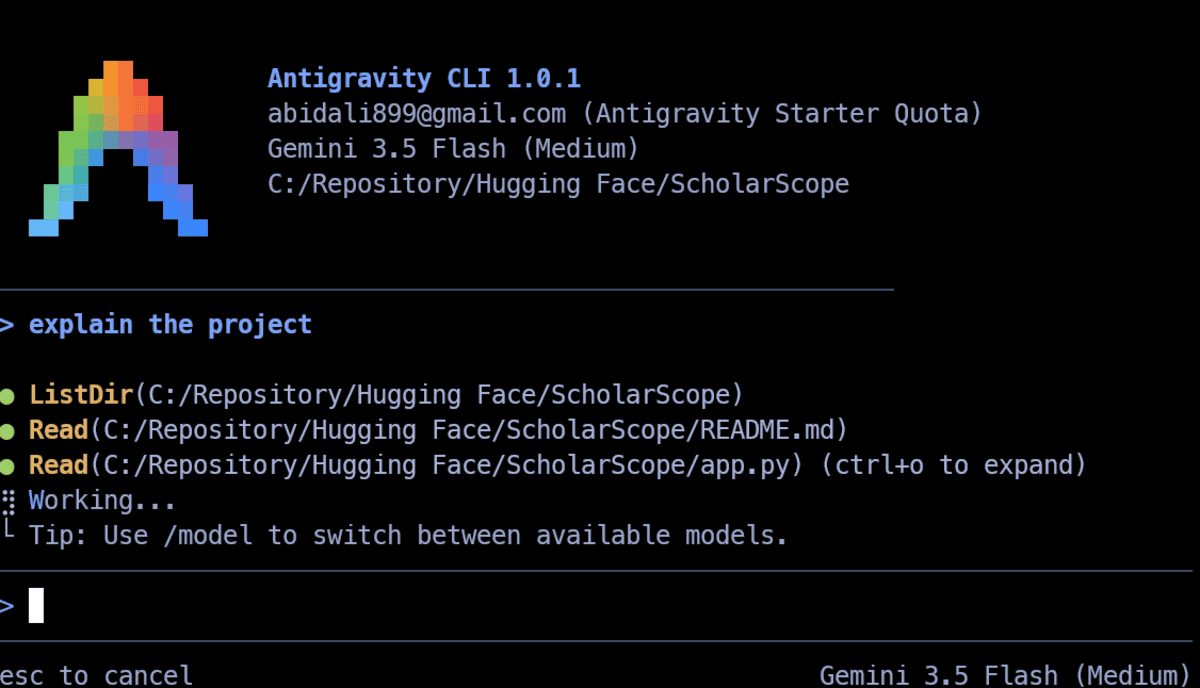
Antigravity CLI is Google’s terminal-based coding agent, engineered for speed and efficiency in keyboard-centric workflows, even over remote SSH connections. It intelligently understands codebases, edits multiple files concurrently, executes commands, utilizes various tools, and maintains a persistent conversation history. The platform is highly extensible, supporting skills, hooks, plugins, sub-agents, and project-specific instructions, allowing for deep customization to fit diverse development needs.
One of Antigravity CLI’s most significant advantages is its ability to facilitate faster execution through multi-agent workflows. It can orchestrate several agents to work on different facets of a large task—for instance, one agent researching a problem while another simultaneously modifies code—without blocking the terminal interface. This parallel processing capability can dramatically accelerate complex development cycles. Moreover, Antigravity CLI shares its agent harness and settings with the Antigravity desktop application, enabling seamless transitions between terminal and graphical interfaces. This synergy, combined with its strong integration with Gemini models and Google Cloud services, makes it a powerful choice for developers within the Google ecosystem who require a fast, robust CLI for coding, automation, and large-scale projects.
6. Cline: Unifying Development Environments
Cline is an open-source coding agent designed for broad compatibility, functioning seamlessly within the terminal and popular IDEs like VS Code and JetBrains. Its extensive capabilities include reading and editing files, executing terminal commands, browsing the web, installing dependencies, and autonomously testing its own changes. Cline supports both interactive sessions for dynamic development and headless execution for automated scripts, code reviews, and CI/CD pipeline integration, offering a comprehensive solution for various development scenarios.
Cline champions developer choice and control. Users can leverage their own API keys, select from a multitude of cloud providers, or run local models through platforms like Ollama and LM Studio, providing unparalleled flexibility in model selection and cost management. Furthermore, it integrates with MCP tools, adheres to project rules, supports skills, orchestrates parallel sub-agents, and even incorporates a Kanban board for managing multiple coding tasks concurrently. This holistic approach, combining extensive tool integration, model flexibility, and advanced project management features, positions Cline as a strong contender for developers seeking a highly customizable and efficient agentic coding experience across diverse environments.
7. Goose: The Versatile AI Agent Platform
Goose is an open-source AI agent platform accessible via CLI, a dedicated desktop application, or an API, designed for local execution on the user’s machine. Its robust capabilities include inspecting files, editing code, executing terminal commands, running tests, and completing multi-step development tasks. Goose distinguishes itself with broad model support, connecting to over 15 providers, including OpenAI, Anthropic, Google, Ollama, OpenRouter, Azure, and Amazon Bedrock, ensuring maximum flexibility for developers.
Goose offers developers extensive freedom over their choice of models and tools. It can integrate with more than 70 MCP extensions, utilize local models, or leverage existing ChatGPT, Claude, and Gemini subscriptions. Its versatility extends beyond mere coding; Goose can be applied to a wide array of tasks such as research, content writing, data analysis, and general automation. This multi-domain applicability, coupled with its local execution capabilities and extensive model and tool integration, makes Goose a powerful and adaptable solution for developers and users looking for a single, comprehensive AI agent for various intellectual and technical tasks.
Industry Trends and the Future of AI-Powered Development
The emergence and maturation of these sophisticated CLI agentic coding alternatives highlight several critical trends shaping the future of software development. The shift away from monolithic, proprietary solutions towards more open, flexible, and developer-centric tools is undeniable. This movement is driven by a collective desire within the developer community for greater control, cost-effectiveness, and the ability to tailor AI assistance to specific project needs and personal preferences.
Democratizing AI Development
Open-source initiatives like OpenCode, Pi, Cline, and Goose are democratizing access to advanced AI coding capabilities. By offering transparency, community-driven development, and support for local AI models, these platforms make AI development accessible to a broader audience, reducing barriers to entry and fostering innovation. This accessibility is crucial for startups, independent developers, and educational institutions that may lack the resources for expensive proprietary subscriptions. The ability to run models locally, for instance, not only cuts costs but also addresses privacy and security concerns associated with sending sensitive code to external cloud services.
The Evolving Role of the Developer
These tools are not replacing developers but augmenting their capabilities, shifting their role towards higher-level problem-solving, architectural design, and strategic oversight. With AI agents handling repetitive, time-consuming coding tasks, developers can focus on innovation, complex system design, and ensuring the overall quality and security of the software. The emphasis on robust "harnesses" means developers are increasingly interacting with AI not just as code generators, but as intelligent collaborators capable of understanding context, planning, and executing multi-step operations autonomously. This collaborative paradigm promises to accelerate development cycles, enhance productivity, and allow for more ambitious project scopes.
Conclusion: Navigating the Landscape of Agentic Coding Tools
The rapid evolution of CLI agentic coding tools signifies a dynamic and exciting period in software development. While Claude Code established an early benchmark, the current market is characterized by a vibrant ecosystem of alternatives offering superior flexibility, cost efficiency, and customization. For developers prioritizing open-source solutions and granular control over AI models and workflows, tools like Pi and OpenCode offer compelling advantages. Pi excels in its modularity and deep customization potential, while OpenCode provides a more complete, feature-rich experience out of the box, with strong language server integration.
For those already integrated into the OpenAI ecosystem, leveraging an existing ChatGPT subscription for Codex CLI presents a practical and cost-effective entry point into agentic coding. Meanwhile, platforms like Factory Droid, Antigravity CLI, Cline, and Goose cater to more specialized needs, ranging from enterprise-level automation and multi-agent orchestration to cross-environment compatibility and multi-domain AI applications. The overarching trend points towards a future where developers can select from a diverse toolkit of AI agents, each tailored to specific requirements—be it local AI execution, advanced project management, or seamless integration with existing cloud infrastructures. This diversification empowers developers to choose solutions that not only enhance productivity but also align with their budgetary, ethical, and operational preferences, ultimately reshaping the very fabric of software engineering.