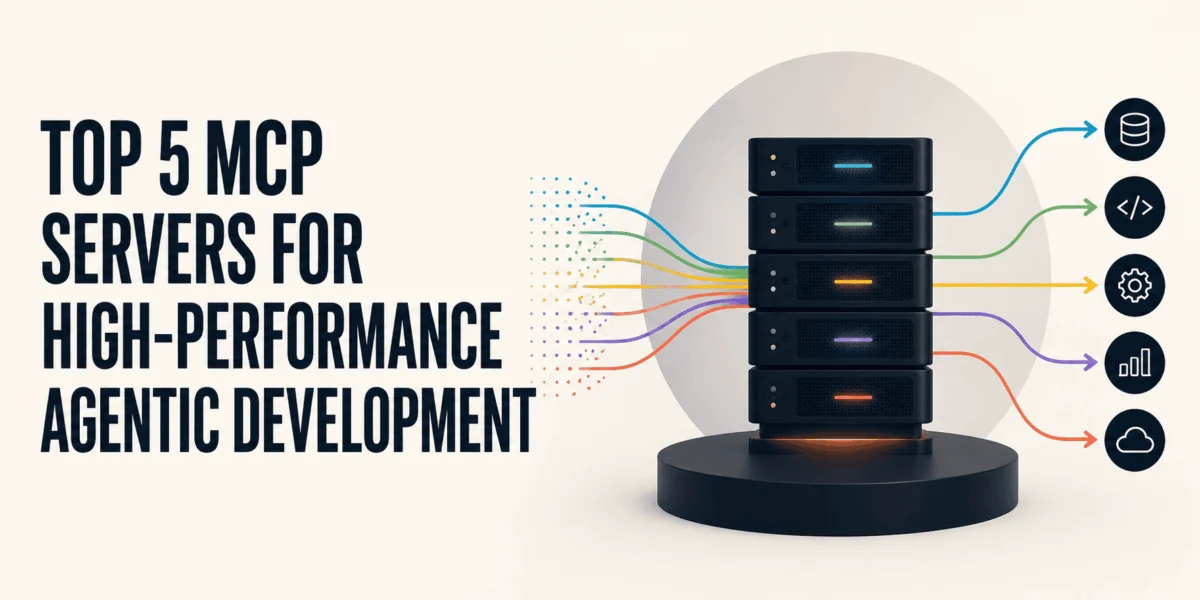
Eighteen months ago, the landscape of AI agent development was characterized by fragmentation, with connecting an AI agent to an external tool invariably necessitating the creation of bespoke "glue code" for each individual integration. This painstaking, resource-intensive process significantly hampered the scalability and efficiency of agentic systems. However, a transformative shift occurred with the advent of the Model Context Protocol (MCP), a standardized framework that has since been widely adopted across the industry, fundamentally reshaping how AI agents interact with the digital world.
The Genesis of Interoperability: Model Context Protocol (MCP)
The Model Context Protocol (MCP) emerged as a critical innovation to address the burgeoning complexity of AI agent ecosystems. Prior to its introduction, developers faced a significant hurdle: every new tool or service an AI agent needed to leverage required a custom integration layer. This not only consumed vast amounts of development time but also introduced a myriad of potential failure points and maintenance overheads. The core problem was a lack of a universal language or interface for agents to understand and interact with external resources in a structured and reliable manner.
Anthropic initiated this paradigm shift by open-sourcing the Model Context Protocol in late 2024. The protocol was conceived as a universal connector, designed to streamline the communication between AI agents and a diverse array of external tools and data sources. Its fundamental premise is to provide a standardized way for tools to expose their functionalities and for agents to consume them, much like the USB-C standard revolutionized peripheral connectivity. Instead of proprietary connectors for every device, MCP offered a single, coherent standard.
A Rapid Ascent: The MCP Adoption Timeline
The impact of MCP was almost immediate and its adoption trajectory remarkably swift. Following its open-source release by Anthropic in late 2024, the protocol quickly garnered attention from major industry players. Throughout 2025, technology giants such as OpenAI, Google, and Microsoft officially adopted MCP, integrating it into their respective AI agent development platforms and toolchains. This broad endorsement from industry leaders signaled a strong consensus on the necessity and utility of a unified protocol for agent interoperability.
The culmination of this rapid adoption and widespread industry support saw the protocol donated to a Linux Foundation body by the end of 2025. This strategic move cemented MCP’s status as an industry-standard, open-source technology, ensuring its vendor-neutral governance and fostering continued collaborative development. The donation to the Linux Foundation, a non-profit technology consortium dedicated to fostering open technology, underscores the protocol’s commitment to an open and accessible future for AI agent development. This chronology highlights not just the technical merit of MCP but also the urgent market demand it addressed, leading to its swift establishment as a foundational component in the evolving AI landscape.
The Ecosystem Explodes: Navigating the Agentic Tooling Landscape
The widespread adoption of MCP ignited an explosive growth in the ecosystem of agentic tools and servers. This rapid expansion, while indicative of innovation, also presented a new challenge: distinguishing genuinely high-performance, actively maintained solutions from the vast amount of "noise" and quickly archived projects. Many early listicles and recommendations for MCP servers quickly became outdated, pointing to repositories that were no longer supported or actively developed. This situation created a critical need for curated insights into the most effective and reliable tools available.
The emphasis has shifted from merely finding an MCP-compliant server to selecting servers that genuinely enhance an agent’s capabilities and performance. The criteria for evaluation have become more stringent, focusing on factors like active maintenance, robust functionality, integration with critical development workflows, and tangible improvements in an agent’s reasoning, interaction, and code generation abilities. The sheer volume of new tools necessitates a discerning approach to building a high-performance agent development setup, ensuring that chosen components are not only compliant but also contribute meaningfully to the agent’s operational efficiency and output quality.
Pivotal Tools for High-Performance Agentic Development
In this dynamic environment, a select few MCP servers have emerged as indispensable for developers aiming to build high-performance AI agents. These tools are chosen not merely for their popularity but for their profound impact on an agent’s actual capability, addressing specific bottlenecks and enhancing critical functions. The following five servers represent a cornerstone for any serious agentic development stack, each offering distinct advantages that elevate agent performance and reliability.
1. GitHub MCP Server: The Engine of Development Workflow Automation
The official GitHub MCP server stands as the undisputed backbone for any AI agent deeply integrated into software development workflows. This server seamlessly exposes a comprehensive suite of GitHub functionalities—repositories, issues, pull requests, GitHub Actions, and code security features—to an agent through natural language interfaces. Its direct maintenance by GitHub ensures that it remains perpetually synchronized with the platform’s evolving capabilities, preventing the lag often observed in third-party integrations.
For agentic development, the GitHub MCP server transforms an agent from a mere code reasoner into an active participant in the development lifecycle. It empowers agents to perform tangible actions such as opening pull requests, triaging incoming issues based on predefined criteria, or meticulously checking the status of failing CI/CD workflows. This capability is paramount for automating repetitive development tasks, accelerating release cycles, and enhancing team productivity. The server’s robust feature set, coupled with its active maintenance and approximately 30,000 stars (as of writing), positions it as the foundational element for agents designed to interact with and manage codebases effectively. Developers frequently report significant reductions in manual overhead for routine GitHub operations, attributing this efficiency directly to the GitHub MCP server’s seamless integration.
2. Playwright MCP (Microsoft): Mastering Web Interaction with Precision
Browser automation often represents a notorious failure point for AI agents, typically due to agents relying on visual interpretation of screenshots or imprecise pixel-coordinate guesses. Microsoft’s Playwright MCP ingeniously circumvents these challenges by driving the browser through its accessibility tree. This innovative approach provides the agent with structured, deterministic data about the web page’s elements and their relationships, rather than a raw image requiring complex vision model analysis.
The result is a dramatically faster and more reliable web interaction across more than 40 browser automation tools. By eliminating the vision model from the loop for basic interaction, Playwright MCP reduces computational overhead and drastically minimizes errors stemming from visual misinterpretations or changes in UI layout. This makes it the performance-conscious choice for any agent tasked with web application testing, sophisticated rendered page scraping, or completing complex multi-step web flows. With roughly 31,000 stars and continuous updates, Playwright MCP is lauded by developers for its precision and efficiency, enabling agents to navigate and manipulate web interfaces with human-like accuracy and speed, a capability crucial for tasks ranging from data collection to automated UI testing.
3. Context7 (Upstash): Elevating Code Quality and Combating Hallucinations
Context7, developed by Upstash, directly addresses one of the most persistent and frustrating failures in AI-driven code generation: the confidently hallucinated API call or function that is either deprecated or entirely non-existent. This server injects up-to-date, version-specific library documentation directly into the agent’s context, providing an invaluable, authoritative source of truth. By doing so, it proactively prevents the generation of incorrect or outdated code.
For agents operating on fast-moving libraries or frameworks, Context7 is arguably the highest-leverage server on this list. It acts as an intelligent guardian, ensuring that the code an agent writes is syntactically correct and semantically valid against the current state of its dependencies. This capability is reflected in its exceptional popularity, nearing 59,000 stars, and its highly active development cycle. Industry analyses suggest that integrating Context7 can reduce code-related hallucinations by up to 40% in agent-generated code, leading to significant time savings in debugging and refactoring. Developers universally praise Context7 for its ability to fix errors before they are written, making it an indispensable component for any code-generating agent striving for accuracy and robustness.
4. Serena (Oraios): Semantic Code Editing for Advanced Agents
Text search-and-replace, while a basic editing primitive, is a crude and often token-inefficient method for an agent to modify code. It frequently leads to unintended changes and necessitates extensive post-editing verification. Serena, developed by Oraios, transcends this limitation by providing an agent with a semantic, symbol-level understanding of a codebase. Leveraging the Language Server Protocol (LSP) across more than 40 programming languages, Serena enables agents to identify and edit actual functions, variables, or symbols rather than merely pattern-matching on strings.
The practical payoff of Serena is immense in terms of precision and token efficiency. Agents can read and modify exactly what is necessary, a critical advantage in large codebases where dumping entire files into context is both computationally expensive and time-consuming. This capability effectively endows a coding agent with the sophisticated understanding of an Integrated Development Environment (IDE) rather than the simplistic view of a text editor. For refactoring, bug fixing, or implementing feature enhancements, Serena drastically improves the accuracy and reliability of agent-driven code modifications. With approximately 24,000 stars, it represents a significant leap forward in empowering agents to perform complex, context-aware code manipulations, making development processes more agile and less prone to errors.
5. The Official Reference Servers: Foundational Primitives for Agentic Systems
To round out a comprehensive agentic setup, the official reference server collection provides a suite of dependable primitives essential for basic agent operations. Housed within a single monorepo, this collection includes servers for Filesystem (enabling local file access), Git (for version control operations), Fetch (for HTTP requests), Memory (for structured state management), and Sequential Thinking (which provides a structured space for an agent to reason step-by-step before executing actions). Collectively, this monorepo boasts over 80,000 stars, indicating broad community engagement, though this number reflects the entire set rather than individual server popularity.
It is crucial to note two honest caveats regarding these reference servers. Firstly, they are primarily maintained as educational references and solid building blocks. While functional, they are generally not designed or hardened for high-scale, production-grade infrastructure without additional robustification and security measures. Developers integrating these should consider them as foundational components upon which more production-ready systems can be built. Secondly, the project has archived several once-popular standalone servers, including the dedicated Postgres and Puppeteer ones. This highlights the rapid evolution of the MCP ecosystem and underscores the importance of verifying a server’s active status and maintenance before committing to building upon it, a lesson learned by many who encountered "dead repositories" from older "top MCP servers" lists.
Strategic Integration: Building a Robust Agentic Stack
The true power of the Model Context Protocol becomes evident when these specialized servers are strategically wired together. This integration creates a synergistic environment where an AI agent is equipped with a coherent and powerful set of capabilities, akin to having a highly specialized team of tools at its disposal. The GitHub MCP server grants the agent the "hands" to manage and move code within a version control system, automating repository interactions and workflow management. Playwright MCP provides the "eyes and fingers" to precisely navigate and interact with the dynamic landscape of the web, executing tasks that require browser automation with unparalleled reliability.
Context7 acts as the agent’s "knowledge base," ensuring that any code it generates is current, accurate, and free from common API-related hallucinations, thereby elevating the quality and correctness of its output. Serena offers the agent "surgical precision" for code editing, allowing it to understand and modify code semantically rather than relying on crude text-based operations, leading to highly targeted and efficient changes. Finally, the official reference servers provide the essential "plumbing"—local file access, basic version control, network requests, and structured reasoning—that underpins all these higher-level operations.
The Model Context Protocol itself performed the arduous task of making these diverse tools interoperable. The developer’s role has now shifted from building custom integrations to strategically selecting and configuring these well-chosen, actively maintained servers. This approach not only streamlines the development process but also unlocks unprecedented levels of performance and reliability for AI agents, transforming them into truly capable and autonomous contributors to software development and beyond.
The Broader Implications: Reshaping Software Development and Beyond
The emergence and rapid adoption of MCP and its specialized servers carry profound implications for the future of software development and the broader application of AI. This standardization is not merely a technical convenience; it represents a fundamental shift in how human developers will interact with and orchestrate AI. By abstracting away the complexities of tool integration, MCP empowers developers to focus on higher-level agent design, reasoning capabilities, and strategic task decomposition.
This evolution could lead to a significant acceleration in the pace of innovation, as agents become more adept at autonomously tackling complex problems. Roles within development teams may evolve, with a greater emphasis on "agent orchestration" and "AI-assisted development," where human expertise is augmented by highly capable AI counterparts. Furthermore, the principles of MCP extend beyond code generation, promising to unlock new possibilities in scientific research, data analysis, and creative industries, wherever intelligent agents can benefit from structured interaction with specialized tools.
Challenges and the Path Forward
Despite the transformative potential, the MCP ecosystem faces ongoing challenges. The rapid pace of development necessitates continuous vigilance regarding server maintenance and compatibility. Ensuring the security of agent-tool interactions, especially when agents handle sensitive data or control critical systems, remains a paramount concern. Ethical considerations surrounding autonomous agents, their decision-making processes, and potential biases also require careful attention and robust safeguards within the protocol and server implementations.
The path forward involves continued community collaboration under the Linux Foundation’s stewardship, fostering new server development, refining existing standards, and establishing best practices for security and ethical deployment. As AI agents become more ubiquitous, the robustness and reliability of their underlying protocols and tools will be critical for widespread adoption and trust.
Expert Perspectives on the Agentic Future
Industry analysts widely agree that the Model Context Protocol has been a game-changer, described by many as the "missing link" for scalable agentic AI. Developers frequently cite the drastic reduction in boilerplate code and integration headaches as a key factor in accelerating their projects. "MCP has effectively democratized agent development," one prominent AI researcher noted, "allowing even smaller teams to build sophisticated, multi-tool agents that would have been impossible just a year ago." The consensus is clear: MCP is not just a technical specification; it is an enabler of a new era of highly capable, interconnected AI agents that promise to redefine human-computer interaction and productivity.
In conclusion, the Model Context Protocol has undeniably done the heavy lifting by establishing a universal interoperability standard for AI agents and their tools. The subsequent challenge, and indeed the opportunity, lies in judiciously selecting and integrating the high-performance MCP servers that truly amplify an agent’s capabilities. By choosing well-maintained, purpose-built tools like the GitHub MCP Server, Playwright MCP, Context7, Serena, and the foundational reference servers, developers can construct robust, efficient, and intelligent agentic systems capable of tackling complex tasks with unprecedented precision and autonomy. This curated approach ensures that the promises of agentic AI are not just theoretical but become practical, high-impact realities in the evolving technological landscape.