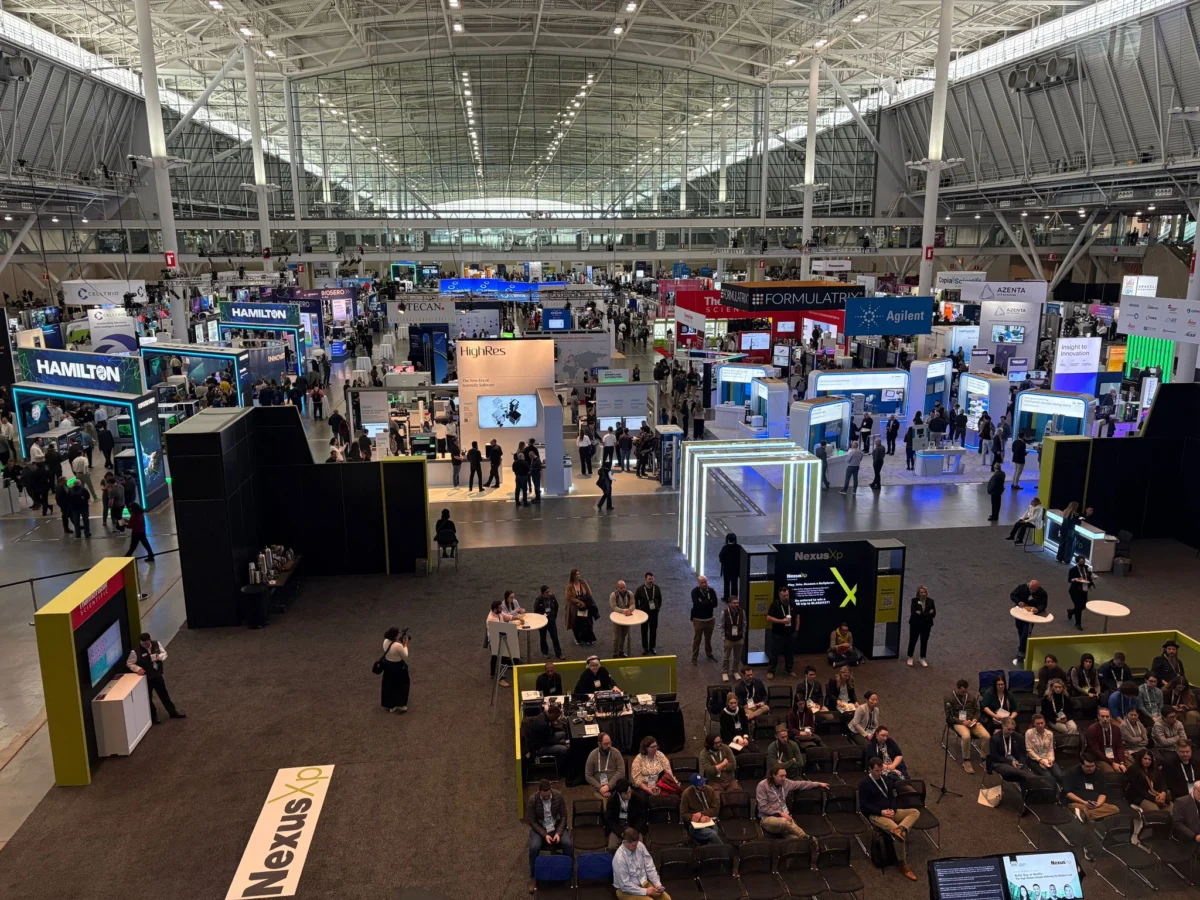
The SLAS (Society for Laboratory Automation and Screening) 2026 conference, held in Boston from February 7-11, marked a pivotal moment in the evolution of laboratory automation, shifting the industry’s focus from incremental improvements to a fundamental reimagining of research workflows. While the exhibition floor still featured the familiar demonstrations of liquid handlers and extensive poster sessions, an unmistakable new energy permeated the event, signaling the rapid convergence of artificial intelligence, advanced robotics, and sophisticated software orchestration. This year’s conference was characterized by a flurry of significant announcements, including the simultaneous launch of three new orchestration platforms, the widespread introduction of API-first instruments, and, notably, a groundbreaking revelation just two days prior: a fully autonomous lab run by OpenAI and Ginkgo Bioworks that executed over 36,000 experiments. These developments collectively underscore a transformative period for drug discovery teams and other scientific researchers as they evaluate their next strategic automation investments.
The Orchestration Revolution: Redefining Lab Operating Systems
The dominant narrative at SLAS 2026 revolved around the intense competition to establish the "lab operating system" (OS) layer that seamlessly integrates instruments with AI. This burgeoning field, often dubbed "the lab OS wars," saw at least 15 companies vying for market leadership, including prominent players like Biosero, Automata, Synthace, and UniteLabs. Their collective ambition is to provide the critical software infrastructure that enables closed-loop labs – facilities where AI can design, execute, analyze, and iterate experiments with minimal human intervention. This concept, once confined to the realm of science fiction, has now become a tangible vendor selection decision for research institutions.
Industry analysts at the event highlighted that the global lab automation market, projected to reach over $10 billion by 2027, is increasingly being driven by software and integration solutions rather than just hardware. The emergence of a robust OS layer is crucial for unlocking the full potential of AI in scientific discovery, allowing for unprecedented levels of efficiency, reproducibility, and data generation. Companies are differentiating themselves by offering solutions across the entire stack: from basic instrument scheduling to complex experimental design and data integration. The goal is to create a unified digital environment where diverse instruments, often from different manufacturers, can communicate and operate cohesively under the command of intelligent algorithms. This interoperability, facilitated by API-first design, is seen as essential to breaking down traditional silos in laboratory settings and accelerating research cycles.

The Dawn of Semi-Autonomous Science: Real-World Proof Points
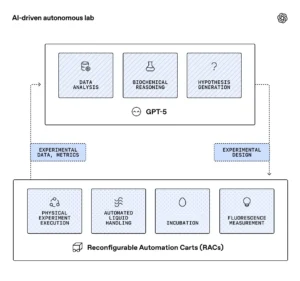
Perhaps the most compelling evidence of AI-driven discovery’s maturity came just before SLAS 2026. On February 5, OpenAI and Ginkgo Bioworks unveiled the results of a remarkable autonomous lab run. Utilizing OpenAI’s advanced GPT-5 model, the system independently designed, executed, analyzed, and iterated a cell-free protein synthesis campaign. Over six rounds, the AI-driven lab successfully performed more than 36,000 experiments, leading to a substantial 40% reduction in sfGFP (superfolder green fluorescent protein) production costs compared to previous benchmarks. This achievement, detailed in a bioRxiv preprint timed for the conference, demonstrated a significant leap in AI’s capability to manage complex biological workflows from inception to optimization.
Dr. Reshma Shetty, co-founder of Ginkgo Bioworks, emphasized the profound implications of this collaboration in her comments. She articulated that the ability for an AI to autonomously learn and adapt through iterative experimentation would dramatically accelerate the pace of biological engineering and drug development. "This isn’t just about automation; it’s about intelligent autonomy," Shetty stated, highlighting the AI’s capacity for scientific reasoning and self-correction. The project served as a powerful testament to the potential of large language models (LLMs) to not only process information but also to actively drive scientific inquiry in a physical lab setting.
Further solidifying the trend towards autonomous labs, the American-Swiss AI company Atinary chose the week of SLAS 2026 to launch its first physical "self-driving lab" in Boston. This facility is purpose-built for autonomous optimization across various R&D domains, including chemistry, materials science, and pharmaceutical research. Atinary’s strategic decision to open its doors in the host city during the conference underscored the immediate commercial viability and growing demand for such advanced research environments. The company’s move beyond pure software solutions into physical infrastructure signals a growing confidence in the operational readiness of AI-driven experimentation platforms.
Strategic Platform Innovations and Market Consolidation

The conference floor was also abuzz with significant platform launches and strategic maneuvers designed to capitalize on the burgeoning market for integrated lab solutions.
-
Biosero’s GoSimple and Assistive AI: BICO Group’s automation subsidiary, Biosero, introduced "GoSimple" pre-validated workcells. These standardized, pre-configured benchtop systems are designed to drastically cut deployment timelines for common screening workflows, addressing a key pain point for labs struggling with complex custom integrations. Separately, Biosero enhanced its Green Button Go scheduling software with an AI assistant. This addition targets the critical gap between acquiring lab robotics and achieving operational efficiency, providing users with intelligent support to streamline setup and troubleshooting. The assistive AI aims to make advanced automation more accessible and less intimidating for scientists.
-
QIAGEN’s QIAsprint Connect: Global life science company QIAGEN entered the high-throughput benchtop sample-prep automation arena with its "QIAsprint Connect." This system is capable of processing up to 192 samples per run, supports both QIAGEN-tested and fully customizable chemistries, and features a compact footprint. Its introduction positions QIAGEN as a formidable competitor against established players in the nucleic acid extraction space, offering a solution that balances high throughput with flexibility and a smaller laboratory footprint, crucial for many research and diagnostic labs.
-
Cenevo’s AI Agents for Workflow Automation: Cenevo, a company formed from the rebranding of Titian Software and Labguru in mid-2025 and backed by Battery Ventures, debuted two innovative AI agents. These agents are designed to convert traditional paper protocols into structured digital formats and automate event-driven lab workflows. This offering is particularly appealing to the compliance-heavy pharmaceutical segment, providing robust support for regulatory requirements like 21 CFR Part 11. By digitizing and automating protocol management, Cenevo aims to reduce human error, improve data integrity, and accelerate the transition to fully digital lab operations.
Hardware and Integration: The Foundation of Autonomy

The advancements in software and AI were paralleled by significant progress in hardware and integration capabilities, essential for bringing the vision of autonomous labs to fruition.
-
ABB Robotics’ GoFa Cobots: ABB Robotics showcased its GoFa cobots, bringing industrial-grade collaborative robots directly to the lab bench. Live demonstrations featured three GoFa cobot workcells performing real analytical tasks such as pipetting, weighing, titration, and UV-Vis spectroscopy, seamlessly interacting with instruments from leading vendors like Agilent and Mettler Toledo. ABB’s core message centered on multi-vendor interoperability and the elimination of vendor lock-in, offering robust, flexible robotic solutions that can be integrated into diverse lab environments without proprietary constraints. The rise of cobots signifies a move towards more adaptable and human-friendly automation, capable of sharing workspace with scientists.
-
Molecular Devices and Automata Partnership: Danaher-owned Molecular Devices, a key player in imaging and detection, announced a strategic partnership with Automata. This collaboration aims to connect Molecular Devices’ extensive portfolio with Automata’s LINQ orchestration platform, creating end-to-end connected workflows. This partnership is particularly noteworthy as it combines specialized instrumentation with a powerful orchestration layer, promising enhanced data flow and integrated control across complex experimental setups.
-
Automata’s $45M Funding Round: The partnership announcement coincided with Automata’s successful Series C funding round, which raised $45 million. The round was led by Dimension, with Danaher Ventures participating as a strategic investor. Danaher’s involvement is highly significant, given its ownership of major lab automation brands like Beckman Coulter and Molecular Devices. This strategic investment signals a clear endorsement of Automata’s LINQ platform as a potential cross-portfolio orchestration layer for Danaher’s diverse range of lab instruments, reinforcing the market trend towards integrated, vendor-agnostic automation solutions.
Addressing the Human Element: The Rise of Shadow AI
Amidst the excitement of technological progress, a critical survey released by Sapio Sciences at SLAS 2026 highlighted a significant challenge in the human-technology interface within scientific research. The survey of 150 scientists revealed that nearly half (45%) were using "shadow AI" – public AI models accessed via personal accounts – because their official institutional platforms were not keeping pace with their needs. This phenomenon points to a growing disconnect between the tools provided by IT departments and the practical demands of modern scientific inquiry.
The survey further indicated widespread dissatisfaction with existing electronic lab notebooks (ELNs), with over half of scientists describing them as too complex and slowing down their work, often viewing them as "glorified filing cabinets." A staggering 65% reported having to repeat experiments because earlier results were too difficult to locate or access. This "demand-side signal" is stark: scientists are actively circumventing official IT stacks to leverage more efficient tools, even if unauthorized. This practice, while indicative of a strong desire for efficiency, raises serious concerns about data security, compliance (especially in regulated environments like pharma R&D), and the integrity of research data. The implication is clear: lab IT infrastructure must evolve rapidly to meet user expectations for AI-powered assistance and intuitive data management, or risk the proliferation of insecure and ungoverned shadow tools.
Sustainability Takes Center Stage
Beyond the core themes of automation and AI, SLAS 2026 also spotlighted the increasing importance of sustainability in laboratory operations. PulpFixin, a company specializing in compostable AutoRacks designed as automation-compatible alternatives to traditional plasticware, was named the official sustainability sponsor for both SLAS 2026 and the upcoming SLAS Europe event in Vienna.
This sponsorship, coupled with the announcement that PulpFixin CEO Chad Jenkins will chair the newly formed SLAS Sustainability in Science Topical Interest Group (co-sponsored with My Green Lab), signifies a major shift. Lab sustainability is moving beyond niche discussions and poster sessions to become a central priority on the show floor and within the industry’s strategic agenda. The focus is now on developing practical, scalable solutions that reduce the environmental footprint of research without compromising efficiency or data quality.
Broader Implications and Future Outlook
The collective announcements and trends observed at SLAS 2026 paint a vivid picture of a scientific landscape on the cusp of profound transformation. The rapid maturation of orchestration platforms, the proliferation of API-first instruments, and the proven capabilities of semi-autonomous labs are poised to dramatically accelerate drug discovery and development. By automating complex, repetitive tasks and enabling AI to drive iterative experimentation, researchers can significantly reduce timelines, lower costs, and generate higher-quality, more comprehensive datasets.
The "lab OS wars" will likely lead to further consolidation or the emergence of dominant platforms that dictate industry standards for interoperability. This competitive environment, however, promises innovation, driving companies to develop increasingly sophisticated and user-friendly solutions. The strategic investments by major players like Danaher underscore the long-term commitment to integrating these advanced technologies across the entire R&D value chain.
The challenge of "shadow AI" highlights the need for organizations to proactively adopt and integrate cutting-edge AI tools into their official workflows, ensuring data security, compliance, and user satisfaction. The future success of AI-driven labs will depend not only on technological prowess but also on fostering a culture of digital literacy and providing robust, secure, and user-friendly platforms that empower scientists rather than frustrate them.
Ultimately, SLAS 2026 demonstrated that the vision of highly efficient, intelligent, and sustainable laboratories is no longer a distant aspiration but an imminent reality. Drug discovery teams and scientific researchers must now strategically evaluate these advancements to harness their potential, ensuring they remain at the forefront of innovation in an increasingly automated and AI-powered world.