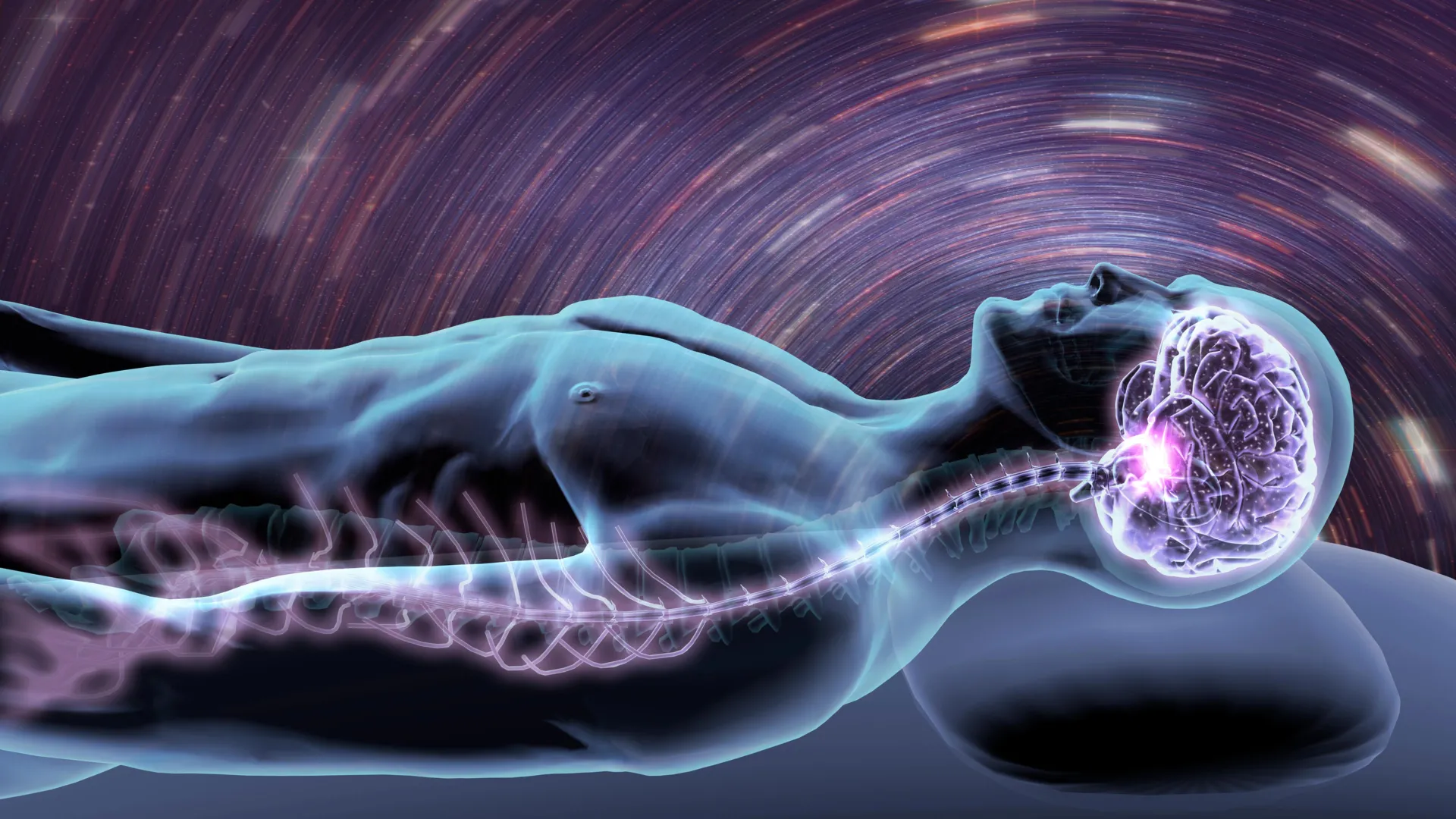
The scientific community has long grappled with the discrepancy between objective sleep metrics and the subjective experience of rest. While clinical sleep studies utilize polysomnography to measure brain waves, muscle tone, and heart rate, these data points often fail to capture why an individual wakes up feeling truly refreshed or, conversely, utterly exhausted despite "perfect" numbers on a screen. A groundbreaking study from researchers at the IMT School for Advanced Studies Lucca, recently published in the prestigious journal PLOS Biology, has identified a surprising protagonist in this mystery: the dream. The research suggests that vivid, immersive dreams are not mere interruptions of the sleep cycle but are essential components that contribute to the subjective sense of deep, restorative rest.
The Evolution of Sleep Science and the Dreaming Paradox
To understand the significance of the IMT School’s findings, one must look at the historical trajectory of sleep research. For the better part of the 20th century, sleep was categorized into distinct stages, primarily defined by the presence or absence of slow-wave activity. Deep sleep, or N3 stage sleep, was traditionally characterized by high-amplitude, low-frequency delta waves. During these periods, the brain was thought to be "offline," performing metabolic maintenance while consciousness remained dormant.
The discovery of Rapid Eye Movement (REM) sleep in the 1950s by Eugene Aserinsky and Nathaniel Kleitman introduced a paradox. During REM, the brain displays high-frequency activity that closely resembles a waking state, yet the body remains paralyzed and the individual is difficult to rouse. For decades, dreaming was almost exclusively associated with REM sleep and was often viewed as a sign of "light" sleep or partial arousal. Under this traditional framework, mental activity during the night was seen as a potential detractor from the quality of deep, unconscious rest.
However, the IMT School study challenges this dichotomy. By analyzing the intersection of neurophysiology and subjective reporting, the researchers have demonstrated that the brain’s internal narrative—the dream—plays a functional role in how we perceive the depth of our slumber.
Methodology: High-Density EEG and the 1,000-Awakening Protocol
The study was led by Giulio Bernardi, a professor of neuroscience at the IMT School and the senior author of the paper. To investigate the relationship between dreaming and sleep depth, the research team utilized data from 44 healthy adult participants. This data was gathered as part of a larger project funded by a European Research Council (ERC) Starting Grant, which aims to decode how sensory stimulation and internal experiences shape the sleep-wake cycle.
The methodology was rigorous and intensive. Over the course of four nights in a controlled laboratory setting, participants were monitored using high-density electroencephalography (EEG). Unlike standard clinical EEG, which uses a limited number of sensors, high-density EEG involves a vast array of electrodes (often up to 256) placed across the scalp. This allows researchers to map brain activity with high spatial resolution, identifying exactly which regions are active during different stages of sleep.
The most critical aspect of the study was the "serial awakening" protocol. Throughout the night, participants were awakened more than 1,000 times across the various study sessions. Upon waking, they were immediately asked to provide a detailed account of their mental state: Were they dreaming? How vivid was the experience? Did they feel they were "somewhere else"? They were also asked to rate their perceived depth of sleep on a quantitative scale. This approach allowed the researchers to correlate specific brain activity patterns and dream characteristics with the immediate subjective feeling of sleep depth.
The Immersiveness Factor: Quality Over Quantity
The findings revealed a striking correlation between the nature of a dream and the perceived quality of rest. The researchers discovered that participants reported the deepest sleep in two distinct scenarios: when they had no conscious experience at all (traditional deep sleep) and when they were engaged in vivid, immersive dreams.
Crucially, the study found that "shallow" sleep was most frequently associated with fragmented or vague mental activity. If a participant felt a vague sense of a presence or had fleeting, non-narrative thoughts, they were more likely to report that their sleep had been light or easily interrupted. In contrast, when the dreams were "immersive"—meaning the dreamer felt entirely present in a simulated environment with sensory details—the perceived depth of sleep was significantly higher.
"In other words, not all mental activity during sleep feels the same," explained Professor Bernardi. "The quality of the experience, especially how immersive it is, appears to be crucial. This suggests that dreaming may reshape how brain activity is interpreted by the sleeper: the more immersive the dream, the deeper the sleep feels."
Chronology of Sleep Perception Throughout the Night
Another significant contribution of the study is its analysis of how sleep perception changes as the night progresses. Under normal circumstances, "sleep pressure"—the biological drive to sleep—is highest at the beginning of the night and gradually dissipates until morning. Physiologically, this is marked by a decrease in slow-wave activity (SWA) as the hours pass.
Logic would suggest that as sleep pressure decreases, sleep would feel "lighter." However, the participants in the study reported the opposite: their perceived sleep depth actually increased toward the morning hours. The researchers found that this trend closely mirrored the increasing complexity and immersiveness of dreams that typically occur in the later stages of the night.
This discovery suggests that the internal narrative of a dream serves as a compensatory mechanism. As the physiological need for sleep wanes, the brain generates more intense, immersive experiences that help sustain the subjective feeling of being deeply asleep. This helps maintain the "sleep gate," preventing the individual from being easily disturbed by minor external stimuli like distant noises or shifts in room temperature.
Dreams as the "Guardians of Sleep"
The concept of dreams protecting the state of sleep is not entirely new, though the IMT School study provides the first modern neuroscientific evidence for it. The idea traces back to Sigmund Freud’s 1900 work, The Interpretation of Dreams, where he proposed that dreams act as "guardians of sleep" (Traumwächter). Freud hypothesized that dreams allow the mind to process internal desires and external disturbances without waking the sleeper.
The new research validates this intuition through a biological lens. By creating a self-contained, immersive reality, the brain effectively "buffers" itself against the outside world. This separation from the external environment is a hallmark of restorative sleep. If the brain is busy navigating a complex dream world, it is less likely to register and respond to the physical environment, thereby preserving the continuity of the sleep cycle.
Implications for Sleep Disorders and Mental Health
The findings have profound implications for the diagnosis and treatment of sleep disorders, particularly "paradoxical insomnia" (also known as sleep state misperception). Individuals with this condition often report lying awake all night, yet objective EEG data shows they were technically asleep.
Historically, medical professionals have struggled to address these complaints, often attributing them to psychological distress or inaccurate self-reporting. However, the IMT School study suggests that these patients may not be "wrong" about their experience. If their brain activity during sleep lacks the immersiveness required to create a sense of depth, or if their dreams are fragmented and shallow, their subjective experience will be one of wakefulness, regardless of what the slow-wave monitors indicate.
"Understanding how dreams contribute to the feeling of deep sleep opens new perspectives on sleep health," Bernardi noted. "If dreams help sustain the feeling of deep sleep, then alterations in dreaming could partly explain why some people feel they sleep poorly even when standard objective sleep indices appear normal."
By focusing on the quality of dream life, clinicians may find new avenues for therapy. Treatments that aim to stabilize sleep architecture and encourage more cohesive REM cycles could potentially improve the subjective quality of life for those who suffer from chronic unrefreshing sleep.
A Multidisciplinary Future in Lucca and Pisa
This study is a product of a burgeoning multidisciplinary collaboration in Italy. The research involved the IMT School for Advanced Studies Lucca, the Scuola Superiore Sant’Anna in Pisa, and the Fondazione Gabriele Monasterio. This partnership has led to the establishment of a state-of-the-art sleep laboratory designed to bridge the gap between basic neuroscience and clinical medicine.
By integrating neuroscientific expertise with medical practice, the facility aims to explore how brain-body dynamics shape the sleep-wake cycle. The researchers plan to expand their work to look at how these dynamics function in patients with neurodegenerative diseases, where dream patterns and sleep quality are often severely disrupted.
The study also raises intriguing questions for future research: Can we "train" the brain to have more immersive dreams? How do medications, such as antidepressants or sleep aids, affect the "immersiveness" of dreams and, consequently, the perceived depth of sleep? As scientists continue to peel back the layers of the sleeping mind, it becomes increasingly clear that the stories we tell ourselves in the dark are not just fantasies—they are the very fabric of our recovery and well-being.
In conclusion, the research from the IMT School for Advanced Studies Lucca marks a paradigm shift in sleep science. By elevating the role of the dream from a biological byproduct to a "guardian" of rest, the study provides a more holistic understanding of the human sleep experience. It affirms that to truly understand sleep, we must look beyond the waves on a monitor and listen to the experiences of the sleeper.