An international team of scientists has unveiled a groundbreaking molecular mechanism employed by a rare lineage of land plants, a discovery that holds profound implications for enhancing the efficiency of staple crops like wheat and rice, potentially revolutionizing global food production. The research, spearheaded by a collaboration between the Boyce Thompson Institute (BTI), Cornell University, and the University of Edinburgh, delves into a fundamental limitation of photosynthesis and offers a novel solution derived from the humble hornwort.
The Bottleneck of Photosynthesis: Rubisco’s Inefficiency
At the heart of plant life and, by extension, nearly all life on Earth, lies the enzyme Rubisco. This critical protein is responsible for the crucial first step of photosynthesis: capturing carbon dioxide (CO2) from the atmosphere and initiating the process of converting light energy into chemical energy, forming the basis of the food we consume. However, Rubisco is notoriously inefficient.
Rubisco’s primary function is to bind with CO2. Yet, its active site is also highly promiscuous, readily binding with oxygen (O2) in a process known as photorespiration. This interaction is a significant metabolic drain on plants. When Rubisco mistakenly binds with O2 instead of CO2, it triggers a series of energy-intensive reactions that ultimately release captured carbon, effectively undoing the work of photosynthesis. This inefficiency significantly curtails plant growth and biomass accumulation.
“Rubisco is arguably the most important enzyme on the planet because it’s the entry point for nearly all carbon in the food we eat,” explained BTI Associate Professor Fay-Wei Li, a co-lead investigator of the study. “But it’s slow and easily distracted by oxygen, which wastes energy and limits how efficiently plants can grow.”
Estimates suggest that photorespiration can reduce photosynthetic efficiency by as much as 20-50% in C3 plants, the most common type of photosynthetic organism, which includes major crops like wheat, rice, and soybeans. This energy wastage translates directly into reduced crop yields, a perennial challenge for agriculture.
Evolutionary Innovations in Carbon Concentration
Over eons of evolution, various organisms have independently developed strategies to mitigate Rubisco’s inherent limitations. A prime example is found in many types of algae. These aquatic organisms have evolved specialized cellular compartments called pyrenoids. Within these pyrenoids, Rubisco is meticulously organized, and CO2 is actively concentrated around the enzyme. This creates an environment where the concentration of CO2 is significantly higher than that of O2, thereby favoring the desired carboxylation reaction and suppressing wasteful photorespiration.
The concept of replicating this algal carbon-concentrating mechanism in terrestrial food crops has long been a tantalizing prospect for plant scientists. The ability to engineer crops with enhanced Rubisco efficiency could lead to dramatic increases in yield and resilience. However, the intricate molecular machinery required for pyrenoid formation and function in algae has proven exceptionally complex and recalcitrant to transfer into land plants, which do not possess these structures. Previous attempts to introduce key algal components into crops have met with limited success, highlighting the significant evolutionary and cellular differences between these organism groups.
Hornworts: An Evolutionary Bridge and a Surprising Discovery
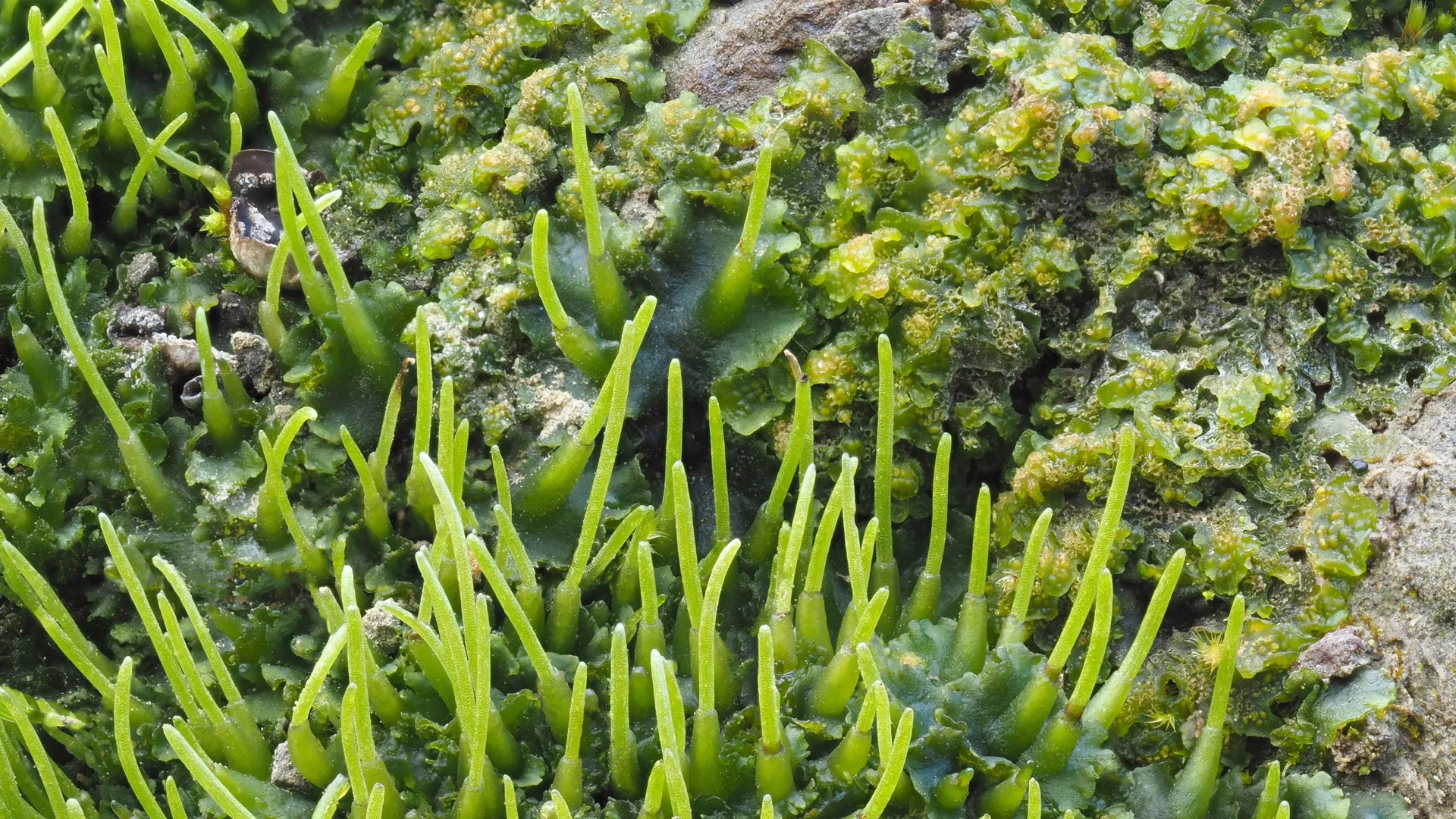
The scientific quest for a more translatable solution led researchers to examine hornworts, a small and ancient group of bryophytes. What makes hornworts particularly intriguing is that they are the only known land plants to have evolved carbon-concentrating compartments that bear functional similarities to algal pyrenoids. Given their closer evolutionary proximity to crop plants compared to algae, scientists hypothesized that hornworts might harbor molecular tools that would be more amenable to transfer into agricultural species.
The research team, comprising experts in plant molecular biology and genetics, embarked on a detailed investigation of the hornwort photosynthetic machinery. They anticipated discovering a mechanism analogous to that found in algae, likely involving a distinct protein that aggregates Rubisco. However, the findings that emerged were entirely unexpected and offered a paradigm shift in understanding how plants can optimize Rubisco function.
“We assumed hornworts would use something similar to what algae use — a separate protein that gathers Rubisco together,” stated Tanner Robison, a graduate student at BTI and a co-first author of the study. “Instead, we discovered they’ve modified Rubisco itself to do the job.”
The RbcS-STAR Protein: A Molecular Velcro for Rubisco Clustering
The linchpin of this novel mechanism is a unique protein component that the researchers have designated RbcS-STAR. Rubisco, a complex enzyme, is assembled from two types of protein subunits: large subunits (RbcL) and small subunits (RbcS). In hornworts, a specific variant of the small subunit (RbcS) possesses an appended region, known as the STAR domain.
This STAR region acts as a form of molecular “velcro.” Its unique structure allows it to interact with other Rubisco proteins, promoting their self-assembly into clustered aggregates within the plant cell. These clusters effectively create localized microenvironments that enhance CO2 availability around the enzyme, thereby minimizing photorespiration and boosting photosynthetic efficiency.
To validate the functional significance of the STAR domain and its potential for broader application, the research team conducted a series of rigorous experiments. Initially, they introduced the hornwort RbcS-STAR component into a closely related hornwort species that does not naturally form these Rubisco-rich structures. The results were striking: Rubisco, which was previously dispersed throughout the cell, began to aggregate into distinct, compartment-like structures, mirroring the organization seen in their pyrenoid-containing relatives.
The crucial next step was to test whether this mechanism could be effectively transferred to plants more relevant to agriculture. The researchers then introduced the RbcS-STAR component into Arabidopsis thaliana, a widely used model organism in plant science due to its well-understood genetics and rapid life cycle. Remarkably, the introduction of RbcS-STAR in Arabidopsis also led to the formation of dense Rubisco compartments within the chloroplasts, the cellular powerhouses where photosynthesis occurs.
“We even tried attaching just the STAR tail to Arabidopsis’s native Rubisco, and it triggered the same clustering effect,” commented Alistair McCormick, Professor at the University of Edinburgh and a co-lead investigator. “That tells us STAR is truly the driving force. It’s a modular tool that can work across different plant systems.” This finding underscores the remarkable versatility and conserved nature of this molecular interaction, suggesting that the STAR domain’s ability to induce Rubisco clustering is a fundamental biological property that can be harnessed across diverse plant species.
Implications for Agricultural Advancement and Food Security
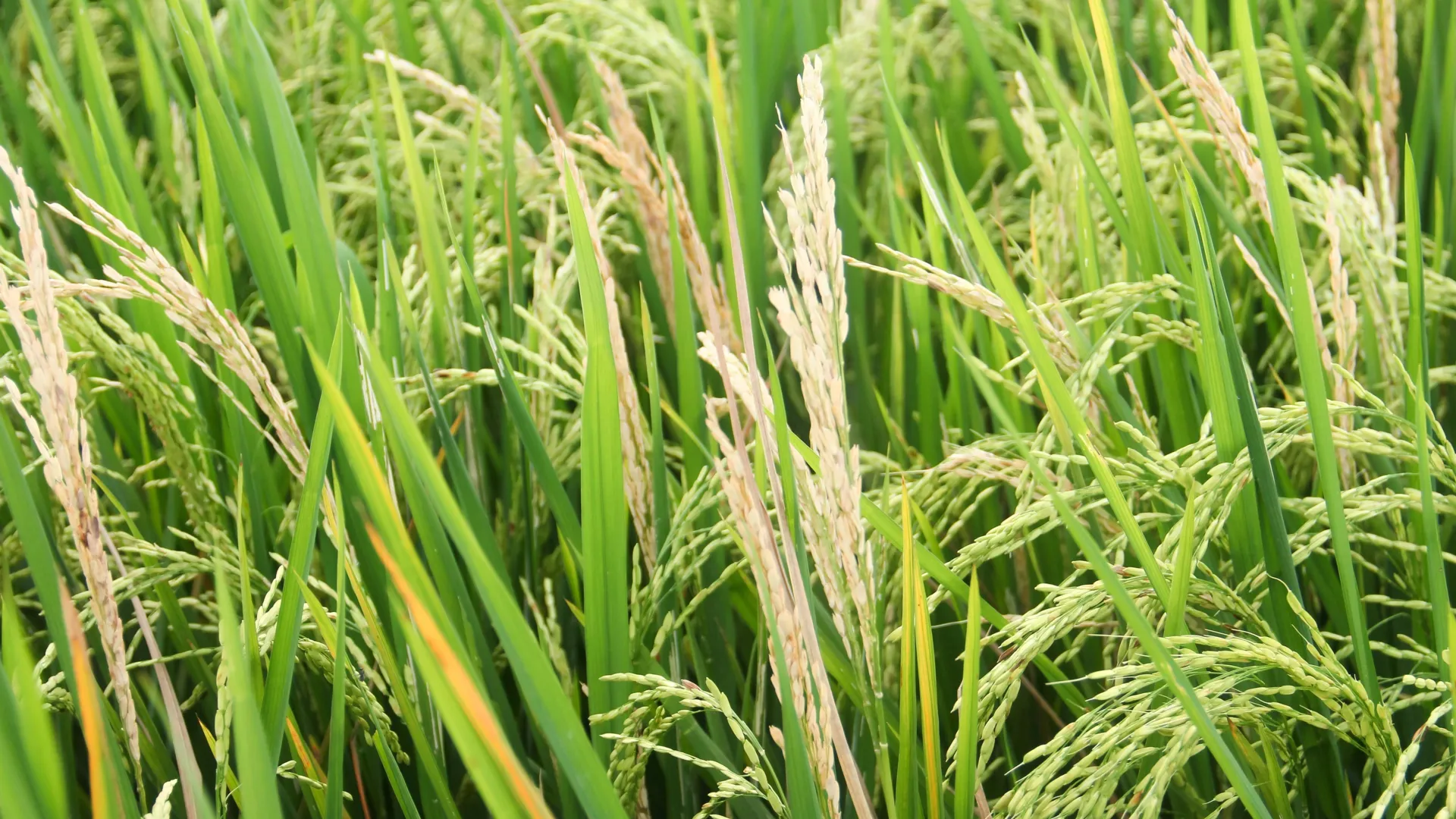
The discovery that the STAR domain can function effectively in unrelated plant species represents a significant leap forward in the pursuit of more efficient crops. It opens a direct pathway to potentially engineering staple crops like wheat, rice, maize, and soybean to incorporate this Rubisco-clustering mechanism. The prospect of simply introducing this “velcro” component into crop genomes, rather than attempting to transfer complex, multi-gene systems from algae, offers a more pragmatic and achievable route to enhancing photosynthetic performance.
However, the scientists are quick to temper enthusiasm with a realistic outlook, emphasizing that Rubisco clustering is only one piece of the puzzle. For optimal photosynthetic efficiency, plants must not only cluster Rubisco but also ensure a continuous and sufficient supply of CO2 to these enzyme aggregates.
“We have built a Rubisco house, but it won’t be an efficient house unless we update the HVAC,” explained Laura Gunn, Assistant Professor at Cornell University and a co-lead of the research. The analogy highlights the next critical challenge: developing or enhancing the cellular mechanisms responsible for transporting CO2 to the clustered Rubisco. This involves optimizing the function of other cellular components, such as the carbon-concentrating mechanisms present in C4 plants or investigating novel ways to deliver CO2 to the enzyme. The team is actively engaged in addressing this multifaceted challenge, which will likely involve a deeper understanding of carbon transport pathways within plant cells.
The potential impact of this research on global food security is immense. Even a modest increase in photosynthetic efficiency can translate into substantial improvements in crop yields. For instance, a 1% increase in photosynthetic efficiency could lead to millions of tons of additional grain production annually, which could help feed a growing global population projected to reach nearly 10 billion by 2050. Furthermore, more efficient plants may require fewer resources, such as water and fertilizers, potentially reducing the environmental footprint of agriculture and contributing to more sustainable farming practices.
This discovery exemplifies the power of exploring biodiversity to uncover novel biological solutions. By studying the evolutionary innovations of even rare and seemingly insignificant organisms like hornworts, scientists can gain profound insights into fundamental biological processes.
“This research shows that nature has already tested solutions we can learn from,” Professor Li remarked. “Our job is to understand those solutions well enough to apply them where they’re needed most — in the crops that feed the world.”
The study, published in the prestigious journal Science, represents a significant collaborative effort, with four early-career scientists—Tanner A. Robison, Yuwei Mao, Zhen Guo Oh, and Warren S.L. Ang—making equal contributions as co-first authors. The corresponding authors were Laura H. Gunn, Alistair J. McCormick, and Fay-Wei Li, underscoring the interdisciplinary and international nature of this pivotal scientific advancement. The research was funded by grants from the National Science Foundation, the U.S. Department of Agriculture, and the Biotechnology and Biological Sciences Research Council.
A Chronology of Discovery and Future Directions
The journey leading to this discovery involved years of foundational research into plant photosynthesis and evolutionary biology.
Early 2000s – 2010s: Initial research into Rubisco’s inefficiency and the discovery of carbon-concentrating mechanisms in algae and cyanobacteria. Early attempts to engineer improved photosynthesis in crops using algal genes met with limited success, highlighting the complexity of the task.
Mid-2010s: Renewed interest in exploring diverse plant lineages for alternative solutions. Hornworts, with their unique pyrenoid-like structures, emerge as a promising subject of study due to their phylogenetic position closer to crop plants.
Late 2010s – Early 2020s: Intensive investigation into the molecular basis of carbon concentration in hornworts. This period involved advanced genetic sequencing, protein analysis, and microscopy techniques to identify key players.
2023-2024: The pivotal discovery of the RbcS-STAR protein and its role in Rubisco clustering. The successful transfer of this mechanism into Arabidopsis and related hornwort species. Publication of findings in Science.
Present and Future: The research team is now focused on several key areas:
- CO2 Delivery Optimization: Investigating and potentially engineering enhanced CO2 transport systems within plant cells to complement Rubisco clustering.
- Crop Transformation: Developing strategies to efficiently introduce the RbcS-STAR component into elite crop varieties.
- Field Trials: Conducting extensive testing of genetically modified crops under real-world agricultural conditions to assess yield improvements and other agronomic traits.
- Broader Applications: Exploring the potential of the RbcS-STAR mechanism in other plant species, including those used for biofuel production or in other biotechnological applications.
The implications of this research extend beyond mere yield enhancement. More efficient photosynthesis can lead to plants that are more resilient to environmental stresses, such as drought and high temperatures, which are becoming increasingly prevalent due to climate change. By enabling plants to utilize sunlight and carbon dioxide more effectively, this breakthrough offers a tangible pathway towards a more sustainable and secure global food future. The intricate molecular solution found in hornworts serves as a powerful testament to the enduring ingenuity of nature and its potential to inspire transformative technological advancements.