New Orleans is poised to host the 31st Annual Executive War College on Diagnostics, Clinical Laboratory, and Pathology Management, a pivotal event bringing together an anticipated 1,500 clinical laboratory leaders and professionals from across the globe. Scheduled for April 28–29, this year’s college at the Hilton New Orleans Riverside is meticulously designed to arm attendees with practical, execution-focused strategies essential for navigating the complex and rapidly evolving landscape of the diagnostics and pathology industry. The agenda underscores critical areas including financial performance, robust workforce development, regulatory compliance, and the integration of cutting-edge technologies, with a distinct new focus on digital pathology and artificial intelligence (AI) in operations.
For over three decades, the Executive War College has served as a cornerstone event for laboratory executives, managers, and pathologists seeking to stay ahead of industry shifts. What began as a vital forum for addressing pressing operational and financial challenges has evolved into a comprehensive platform that anticipates future trends and equips leaders with the tools for sustainable growth and innovation. Its enduring relevance lies in its commitment to delivering actionable insights rather than just theoretical discussions, a hallmark that has cemented its reputation as a must-attend event for those shaping the future of laboratory medicine. The choice of New Orleans, a city renowned for its vibrant culture and accessibility, provides an ideal backdrop for intense learning and invaluable networking opportunities.
A Deep Dive into the 2026 Agenda: Addressing Core Industry Challenges
The 2026 program is structured around six overarching strategic themes, meticulously curated to reflect the most significant pressures and opportunities confronting clinical laboratories today. These themes collectively form a comprehensive roadmap for enhancing laboratory performance, ensuring compliance, and fostering innovation in an increasingly demanding healthcare environment.
- Reimbursement and Financial Performance: With ongoing pressures from payers, including the lingering effects of the Protecting Access to Medicare Act (PAMA), laboratories face an imperative to optimize financial performance. Sessions will delve into strategies for maximizing reimbursement, managing escalating costs, exploring new revenue streams, and demonstrating the value of laboratory services in a value-based care paradigm. Experts will share insights on contract negotiation, coding accuracy, and financial modeling to ensure fiscal stability.
- Workforce Development and Staffing Solutions: The severe and persistent shortage of qualified laboratory professionals continues to be a top concern. This theme will explore innovative approaches to recruitment, retention, and talent development. Discussions will cover effective pipeline programs, career ladder initiatives, task-shifting models, and the strategic integration of automation to alleviate staffing burdens and improve employee satisfaction.
- Regulatory Compliance and Risk Management: The regulatory landscape for laboratories is in constant flux, encompassing CLIA, CAP, state-specific regulations, and data privacy mandates like HIPAA. Sessions will provide updates on critical regulatory changes, best practices for maintaining compliance, strategies for audit readiness, and methods for mitigating legal and operational risks.
- Emerging Technologies and Innovation Adoption: This theme is central to the future of diagnostics, with a significant emphasis on digital pathology and artificial intelligence. Other topics will include advanced molecular diagnostics, point-of-care testing, and data analytics. Sessions will guide leaders on assessing new technologies, demonstrating return on investment, and successfully integrating them into existing workflows.
- Operational Efficiency and Quality Management: Achieving operational excellence is paramount for reducing errors, improving turnaround times, and enhancing patient safety. The program will feature strategies for process optimization, lean methodologies, pre-analytical phase management, and robust quality control systems, drawing on real-world case studies of successful implementation.
- Strategic Growth and Market Positioning: In a competitive market, laboratories must develop clear strategies for growth, diversification, and differentiation. Sessions will cover market analysis, strategic partnerships, service line expansion, and adapting to evolving patient and clinician needs to secure a competitive advantage.
Inaugural Executive Forum on Digital Pathology Management: A New Frontier
A groundbreaking addition to this year’s Executive War College is the inaugural Executive Forum on Digital Pathology Management. This dedicated, intensive session underscores the rapid maturation and increasing adoption of digital pathology workflows and AI in diagnostic medicine. The forum is designed as an interactive and collaborative experience, bringing together pioneers and early adopters to share practical implementation strategies.
The forum will explore the multifaceted aspects of transitioning to a digital pathology environment. This includes, but is not limited to, the selection and validation of whole-slide imaging (WSI) systems, the integration of digital pathology into existing laboratory information systems (LIS) and hospital information systems (HIS), and the development of robust data storage and management solutions. A significant portion will be dedicated to the application of artificial intelligence and machine learning algorithms for image analysis, diagnostic support, and workflow automation.
Attendees will gain actionable insights into developing compelling business cases for digital pathology, understanding the regulatory considerations for AI in diagnostics, and navigating the challenges of pathologist training and change management. The forum will address key questions such as: What is the true ROI of digital pathology? How can AI enhance diagnostic accuracy and efficiency? What are the ethical implications and data security requirements? By focusing on real-world experiences and practical playbooks, the forum aims to equip participants with the knowledge and confidence to initiate or accelerate their digital transformation journeys.
Insights from Dark Daily and The Dark Report
Leading up to the event, industry publications The Dark Report and Dark Daily have provided extensive coverage, highlighting key sessions and speakers that attendees should prioritize. These reports serve as a testament to the War College’s ongoing relevance and its role in shaping industry discourse. Their previews often delve into the specific challenges and innovative solutions that will be presented, offering a glimpse into the caliber of expertise gathered at the event. This pre-event coverage not only builds anticipation but also helps attendees strategically plan their participation to maximize learning.
Workforce Challenges: Innovative Solutions from Stanford Health Care

The persistent workforce crisis in clinical laboratories remains a critical theme, building on discussions from previous years. The 2025 Executive War College provided a platform for sharing innovative approaches to staffing, and these challenges are even more pronounced in 2026. Data from organizations like the American Society for Clinical Pathology (ASCP) consistently points to a significant and growing shortage of medical laboratory scientists, with projected retirement rates far outstripping the influx of new graduates. This deficit impacts everything from turnaround times to diagnostic accuracy and ultimately, patient care.
At the 2025 event, Jennifer Fralick, Vice President of Anatomic Pathology and Clinical Laboratories at Stanford Health Care, presented a compelling case study on how her institution is tackling the lab labor shortage. As reported by The Dark Report, Fralick detailed how Stanford’s strategy moves beyond conventional external hiring by focusing intensely on internal talent development. This includes the implementation of structured career ladders that provide clear pathways for advancement, comprehensive training programs to upskill existing staff, and smarter staffing models that strategically shift routine, non-licensed tasks to support personnel. These initiatives not only improve efficiency and reduce burnout among licensed professionals but also create sustainable, long-term workforce pipelines, reducing reliance on a shrinking external talent pool. Fralick’s return to this year’s event, where she will discuss an "AI playbook for labs," signifies the evolution of these solutions, demonstrating how technology is increasingly intertwined with workforce strategy to optimize human capital.
Optimizing Operations: Addressing Pre-Analytical Errors
Operational efficiency and quality assurance are perpetual concerns for clinical laboratories, directly impacting patient safety and diagnostic reliability. A critical area of focus is the pre-analytical phase, which accounts for an estimated 60-70% of all laboratory errors, according to various studies. These errors, occurring before a sample reaches the analytical instrument, can stem from incorrect test orders, improper patient preparation, faulty sample collection techniques, mislabeling, or inadequate sample transport and storage. The implications are severe: delayed diagnoses, incorrect treatments, patient harm, and significant financial costs due to repeat testing and wasted resources.
Last year, as highlighted by The Dark Report, Shashirekha Shetty, PhD, Professor in the Department of Pathology at Case Western Reserve University, delivered a powerful presentation on pathologists’ pivotal role in mitigating these pre-analytical errors. Dr. Shetty emphasized that laboratories must assert full ownership and responsibility over this phase. Her proposed solutions included the implementation of rigorous, standardized workflows for every step from test ordering to sample reception. She also stressed the importance of strengthening training programs for phlebotomists, nurses, and other collection staff, alongside fostering robust communication and collaboration with clinicians to ensure appropriate test ordering and sample handling. Furthermore, Dr. Shetty advocated for embedding pre-analytic quality into the overall quality management system, using data analytics to identify error hotspots and implement targeted interventions. Attendees at the 2026 conference can anticipate updated and expanded solutions to these challenges, including technological advancements and process improvements that build upon Dr. Shetty’s foundational insights.
Legal and Regulatory Acumen: The Role of Elizabeth Sullivan
The regulatory and legal landscape surrounding clinical laboratories is increasingly complex, making expert guidance indispensable. Healthcare attorney Elizabeth Sullivan of McDonald Hopkins, a respected voice in the field, will return to the Executive War College for two sessions at the 2026 conference. Her participation underscores the critical need for laboratory leaders to stay abreast of evolving compliance requirements, data privacy laws, and potential legal pitfalls.
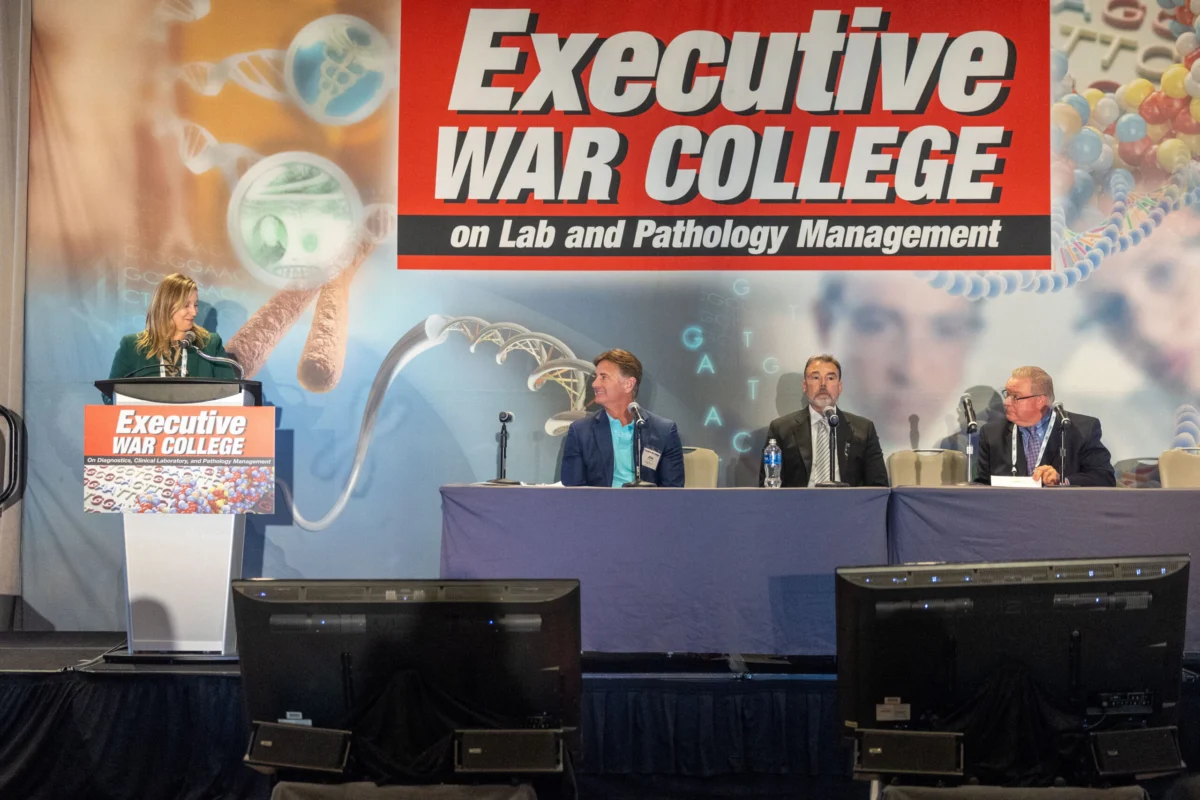
Sullivan’s sessions are expected to cover topics such as navigating new federal and state regulations, understanding the legal implications of emerging technologies like AI and genomic testing, ensuring HIPAA compliance in an era of expanding data sharing, and strategies for risk mitigation in laboratory operations. Her expertise provides attendees with crucial insights into proactive compliance measures, safeguarding their institutions against legal challenges and regulatory scrutiny. The photograph showing her leading a panel discussion at last year’s event highlights her engaging and informative approach, ensuring that complex legal topics are made accessible and actionable for laboratory executives.
Looking Ahead: Actionable Roadmaps for the Future
With nearly 80 sessions and an impressive roster of approximately 150 speakers, the 31st Annual Executive War College is meticulously designed to deliver practical tools, real-world case studies, and operational playbooks. The comprehensive program ensures that laboratory executives will not merely observe trends but will leave New Orleans armed with clear, actionable roadmaps. These roadmaps are vital for navigating the intricate web of financial pressures, intensifying regulatory scrutiny, and the relentless pace of technological change that defines the modern diagnostics industry.
The insights gained from this convergence of industry leaders, innovators, and experts are expected to drive significant advancements in laboratory management and patient care. By fostering an environment of collaborative problem-solving and knowledge exchange, the Executive War College continues its legacy of empowering clinical laboratory and pathology leaders to not only adapt to change but to actively shape the future of diagnostic medicine. The emphasis on practical, implementable strategies ensures that the investment of time and resources by attendees translates directly into improved operational efficiency, enhanced financial performance, superior patient outcomes, and a more resilient, future-ready laboratory enterprise.