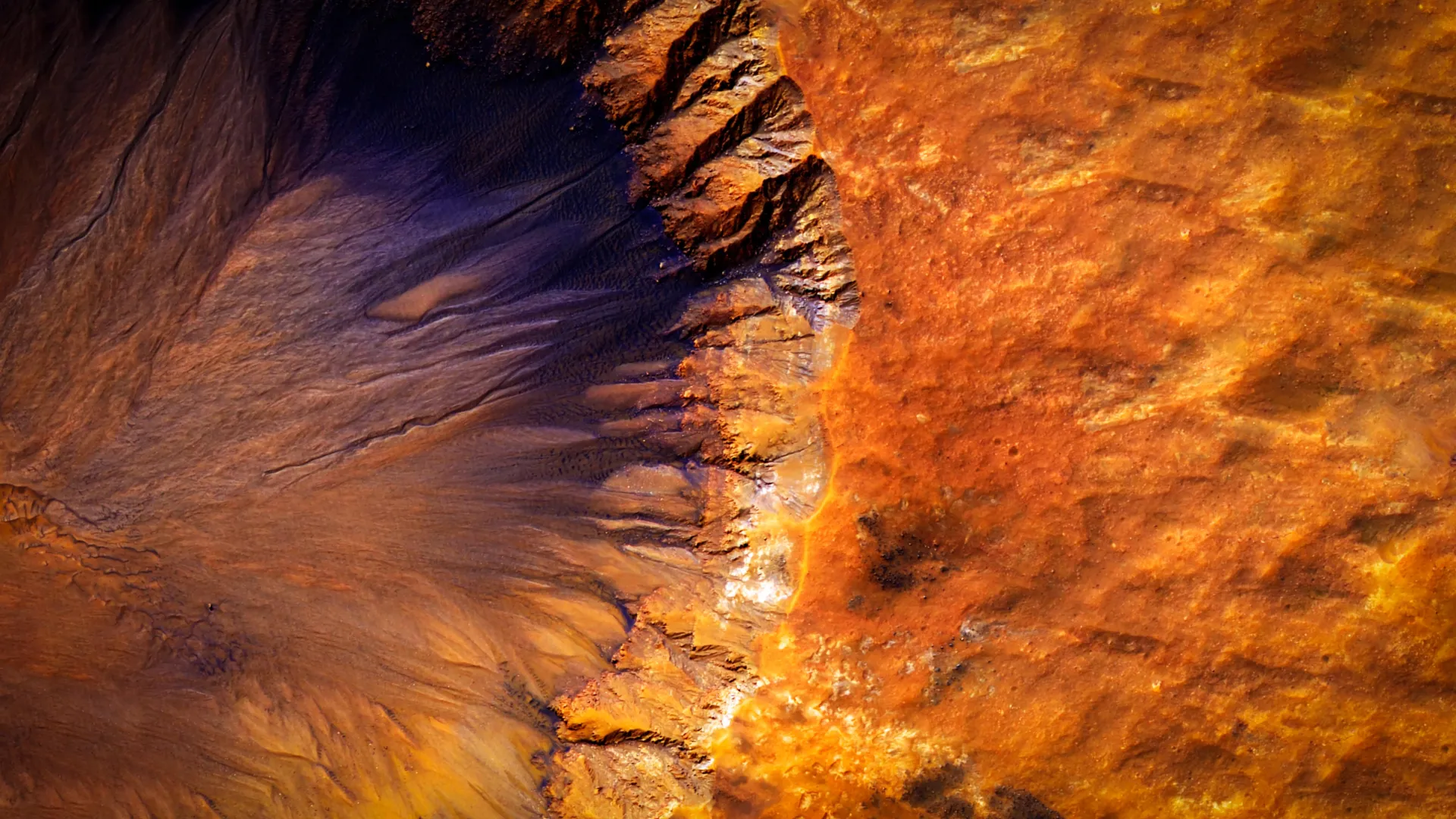
Mars, a planet perpetually bathed in the cold, thin light of a distant sun, presents an environment so inimical to life as we know it that the very notion of its existence, past or present, feels like science fiction. Yet, beneath its rust-colored facade lies a crucible of extreme conditions, a constant barrage of cosmic and chemical threats that would obliterate most Earthly organisms. Two primary adversaries stand out in this unforgiving landscape: the cataclysmic shockwaves unleashed by meteorite impacts and the ubiquitous, chemically aggressive perchlorates that saturate the Martian soil. These highly reactive salts possess the insidious ability to disrupt the fundamental molecular machinery of life, interfering with critical interactions like hydrogen bonds and hydrophobic forces – the very anchors that maintain the structural integrity of proteins and other vital cellular components. Understanding how life, in its most rudimentary forms, might withstand such formidable environmental pressures is a crucial step in the ongoing quest to answer one of humanity’s most profound questions: Are we alone in the universe?
In a groundbreaking study conducted at the Physical Research Laboratory in Ahmedabad, India, a team of scientists led by Purusharth I. Rajyaguru has turned to one of Earth’s most unassuming yet biologically versatile organisms – Saccharomyces cerevisiae, commonly known as baker’s yeast – to probe the limits of life’s endurance. This humble single-celled fungus, a staple in human endeavors from baking to brewing, is far more than a culinary workhorse. Its fundamental biological pathways and genetic makeup bear remarkable similarities to those of more complex life forms, including humans, making it an invaluable proxy for studying cellular responses to extreme stress. Furthermore, yeast has a proven track record in space exploration, having been a subject in previous orbital experiments, lending further credence to its utility as a model for extraterrestrial survival.
The Unseen Architects of Survival: Ribonucleoprotein Condensates
When cells encounter adversity, be it the crushing forces of a meteorite impact or the chemical assault of perchlorates, they don’t capitulate. Instead, they engage a sophisticated array of protective mechanisms. Among the most vital of these responses is the dynamic formation of ribonucleoprotein (RNP) condensates. These are not permanent cellular structures but rather transient, self-assembling compartments composed of RNA molecules and associated proteins. Their primary function is to act as cellular bulwarks, safeguarding precious genetic material and orchestrating the cell’s adaptive strategies in the face of environmental upheaval. Once the immediate crisis has passed and conditions stabilize, these temporary structures disassemble, allowing normal cellular operations to resume.
Within this fascinating realm of cellular defense, two key types of RNP condensates have garnered significant attention: stress granules and P-bodies. Both are intimately involved in the intricate management of RNA, the molecular messengers that carry the genetic blueprints for protein synthesis. Stress granules are primarily formed in response to various forms of cellular stress, acting as temporary storage sites for untranslated messenger RNAs and proteins, effectively sequestering them from potentially damaging processes. P-bodies, on the other hand, are more directly involved in RNA decay and translational repression, playing a critical role in regulating gene expression and clearing out damaged or surplus RNA molecules. The ability of yeast cells to efficiently form and regulate these RNP condensates has emerged as a pivotal factor in their capacity to withstand extreme conditions.
Recreating the Martian Gauntlet in the Laboratory
To meticulously simulate the harsh realities of the Martian environment, the research team employed a sophisticated and purpose-built instrument: the High-Intensity Shock Tube for Astrochemistry (HISTA). This cutting-edge facility, a testament to India’s growing capabilities in space science research, allowed for the generation of precisely controlled shock waves, mimicking the colossal forces generated when meteorites strike the Martian surface. The HISTA device is capable of producing shock waves with an intensity of up to 5.6 times the speed of sound, a significant magnitude that provides a realistic analog for the kinetic energy transfer experienced during impact events on Mars.
In tandem with the shock wave experiments, the researchers introduced perchlorates into the cellular environment. They utilized a sodium salt of perchlorate (NaClO4) at a concentration of 100 millimolar (mM). This concentration was carefully chosen to reflect the perchlorate levels that have been measured in Martian soil samples, making the experimental setup a robust representation of the planet’s chemical toxicity. By exposing the yeast cells to both these simulated Martian stressors, individually and in combination, the scientists aimed to gain unprecedented insights into the organism’s resilience and the underlying molecular mechanisms that facilitate survival.
A Surprising Resilience: Yeast Under Fire
The results of the experiments were nothing short of remarkable. Despite being subjected to conditions that would be instantly lethal to most complex life forms, the Saccharomyces cerevisiae cells demonstrated an extraordinary capacity to survive. Their growth rates were undeniably hampered, a clear indication of the stress they were enduring, but they remained viable throughout the exposure to the simulated shock waves, the perchlorate-rich environment, and even the dual onslaught of both stressors. This survival, even in a compromised state, is a significant finding, suggesting that basic life processes can indeed persist under conditions previously considered too extreme.
The cellular response of the yeast was equally compelling. In the face of shock wave exposure, the cells robustly initiated the formation of both stress granules and P-bodies, showcasing a comprehensive defense strategy. Interestingly, perchlorate exposure, while also inducing stress, primarily triggered the formation of P-bodies. This differential response suggests that distinct types of environmental challenges can activate nuanced, specialized cellular defense pathways, further underscoring the sophisticated adaptive capabilities of even simple organisms.
The critical importance of these RNP condensates for survival became starkly evident when the researchers examined genetically modified yeast strains that were engineered to be incapable of forming these protective structures. These mutant yeast cells exhibited a dramatically reduced ability to withstand the Martian-like conditions, struggling to survive under the same stressors that their intact counterparts navigated with relative success. This crucial observation firmly establishes RNP condensates as indispensable components of a cellular survival toolkit in extreme environments.
Unraveling the Molecular Story: Transcriptomic Insights
To delve deeper into the cellular consequences of these extreme Martian simulations, the scientists undertook a comprehensive analysis of the yeast’s transcriptome. The transcriptome represents the complete set of RNA molecules produced by a cell at a given time, offering a snapshot of gene expression and cellular activity. This detailed examination revealed that the Mars-like conditions had a significant impact on specific RNA transcripts, leading to their disruption. This finding provides concrete molecular evidence of how profoundly these environmental stresses infiltrate and alter fundamental cellular functions.
Despite the observed transcriptomic perturbations, the ability of the yeast to form RNP condensates appeared to play a crucial role in mitigating the damage. These structures seem to have acted as stabilizing agents, protecting essential cellular processes from complete collapse and thereby enhancing the organism’s overall survival prospects. The interplay between stress-induced RNA disruption and the protective capacity of RNP condensates offers a fascinating glimpse into the intricate molecular dance of life under duress.
Implications for the Search for Life Beyond Earth
The findings from this pioneering study carry profound implications for the ongoing search for extraterrestrial life. They strongly suggest that simple life forms, like yeast, possess a far greater degree of resilience than might have been previously assumed. The research not only validates the utility of yeast as a powerful model organism for astrobiological investigations but also highlights the critical role of RNP condensates as a fundamental survival mechanism that could be conserved across diverse life forms, including potential Martian biota.
By elucidating how terrestrial cells respond to and endure extreme conditions that mirror those found on Mars, scientists are equipped with a more refined understanding of the habitability of other worlds. This knowledge is instrumental in guiding future exploration missions, informing the design of life-detection instruments, and shaping our interpretations of any biosignatures that might be discovered. The resilience demonstrated by these yeast cells under simulated Martian duress bolsters the hypothesis that life, if it ever arose on Mars, might have found ways to persist in subsurface refugia or in other protected niches, shielded from the harshest surface conditions.
The study, published in the peer-reviewed journal Astrobiology in its most recent issue, represents a significant step forward in astrobiological research. The experimental setup, utilizing the HISTA facility, has been a subject of development for several years, with initial conceptualization dating back to the early 2010s. The successful integration of shock wave generation with chemical stress simulation marks a new benchmark in replicating extraterrestrial environmental stressors in a controlled laboratory setting.
Dr. Anya Sharma, a prominent astrobiologist not involved in the study, commented on the significance of the findings: "This research is incredibly exciting. It moves beyond theoretical possibilities and provides empirical evidence for life’s potential to adapt to environments we consider incredibly hostile. The focus on RNP condensates is particularly insightful, as these are fundamental cellular structures. If life evolved on Mars, it’s plausible it would have evolved similar protective mechanisms."
Looking ahead, the research team plans to expand their investigations to include other extremophilic microorganisms that inhabit Earth’s most challenging environments, such as deep-sea hydrothermal vents or highly saline lakes. Understanding the commonalities and differences in their survival strategies could reveal universal principles of life’s adaptability. Furthermore, efforts are underway to replicate these experiments with more complex cellular systems, including bacterial strains and even single-celled eukaryotic organisms that are more distantly related to humans, to assess the broader applicability of these findings. The quest to understand life’s tenacity in the face of cosmic adversity continues, and with each such study, the possibility of finding life beyond Earth inches closer to reality. The humble yeast, once overlooked, now stands as a potent symbol of life’s indomitable spirit, whispering secrets of survival from the stark, silent plains of Mars.