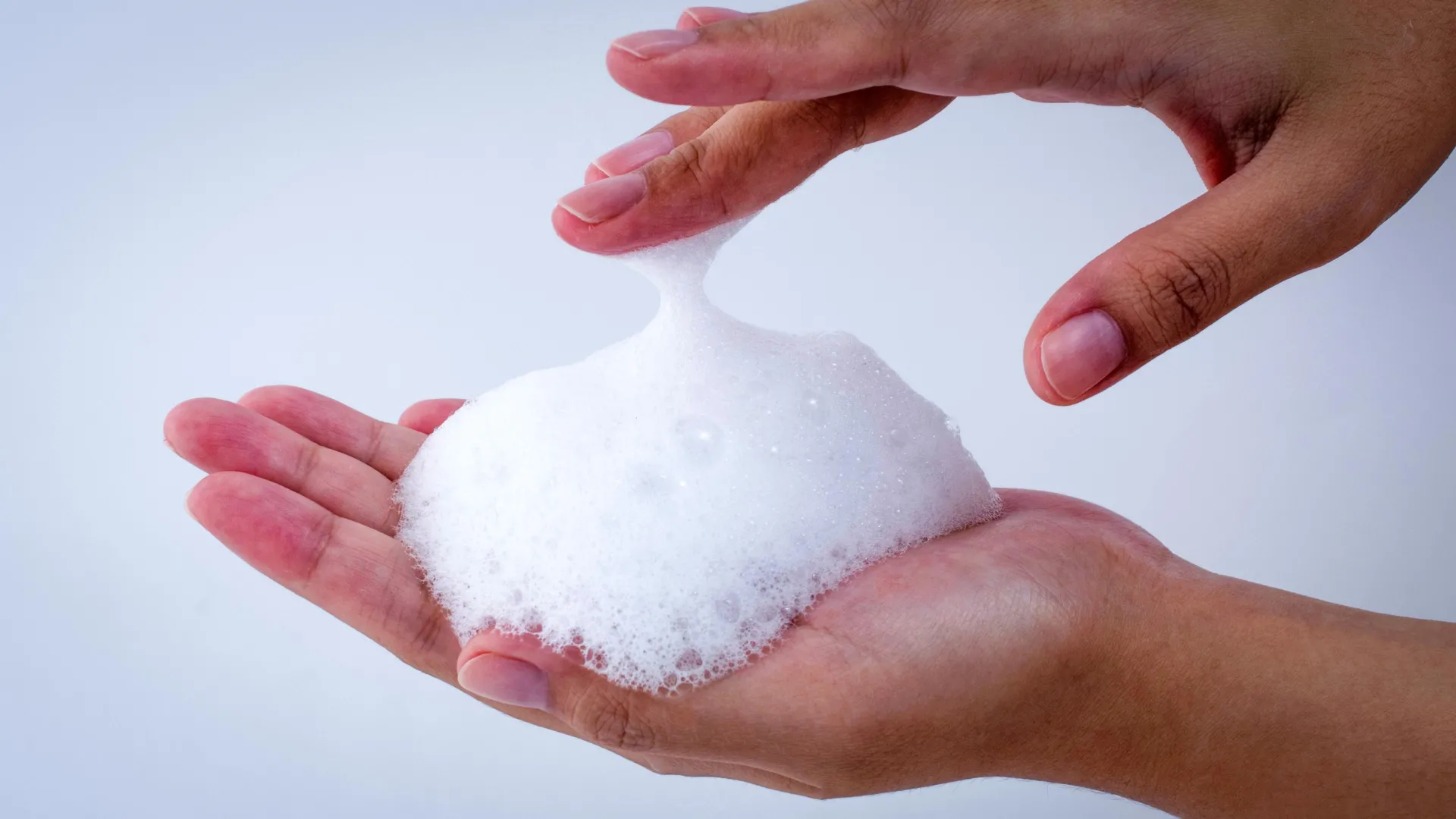
The fundamental physics governing how liquid drains from foams has remained a persistent enigma in soft matter science for decades, but researchers at Tokyo Metropolitan University have recently announced a breakthrough that resolves the discrepancy between theoretical models and observed reality. By moving beyond traditional static models and focusing on the dynamic rearrangement of bubbles, a team led by Professor Rei Kurita has demonstrated that foam drainage is controlled by yield stress—the specific pressure required to induce structural movement—rather than the purely osmotic pressures previously cited in scientific literature. This discovery has profound implications for industries ranging from firefighting and mineral extraction to food science and pharmaceuticals, where the stability and longevity of foams are critical to product efficacy.
The Scientific Discrepancy: Why Traditional Models Failed
Foams are complex topological structures consisting of a gas phase dispersed within a continuous liquid phase. This architecture is defined by a network of thin liquid films and channels known as Plateau borders, named after the 19th-century Belgian physicist Joseph Plateau. For over a century, the prevailing scientific consensus was that the drainage of liquid from these foams was primarily an "absorptive" process. This process was thought to be governed by osmotic pressure, which measures the energy change that occurs when bubbles are compressed and the surface area between gas and liquid shifts.
However, a significant "theory-reality gap" has long troubled the physics community. According to classical calculations based on osmotic pressure and surface tension, a column of foam would need to reach a height of approximately one meter before the gravitational pull on the liquid overcame the internal pressure, causing it to leak from the bottom. In practical, everyday settings, this is clearly not the case. Consumers and industrial operators observe foams as short as ten or twenty centimeters leaking liquid almost immediately after formation.
This overestimation by a factor of nearly ten suggested that the "absorptive limit" model was missing a crucial component of the foam’s internal mechanics. While scientists understood that liquid moves through the pathways between bubbles, the reason it began to move at such low heights remained a mystery until the Tokyo Metropolitan University team conducted their latest investigation.
Chronology of the Research and Experimental Design
The research project, supported by the JSPS KAKENHI Grant Number 20H01874, was initiated to provide a definitive answer to why foams are less stable than mathematics predicted. Professor Rei Kurita and his team began by simplifying the variables. Recognizing that different chemicals can drastically alter foam behavior, they utilized a variety of surfactants—compounds that lower surface tension—to create a wide spectrum of foam types. These included foams with varying bubble sizes and liquid-to-gas ratios.
The experimental setup involved placing these diverse foams into specialized, transparent containers made of parallel plates. This configuration allowed the researchers to maintain a controlled environment while providing a clear line of sight into the foam’s internal structure. By positioning these plates vertically, the team could observe the influence of gravity in real-time.
Over several months of observation, the researchers recorded the precise moment and height at which liquid began to seep from the base of each foam column. They utilized high-resolution imaging and video tracking to monitor the internal morphology of the foam, focusing not just on the liquid flow, but on the behavior of the bubbles themselves.
Quantitative Findings and the Universal Pattern
The data gathered by the Tokyo Metropolitan University team revealed a striking, universal pattern that had previously gone unnoticed. Regardless of the specific surfactant used or the initial size of the bubbles, the researchers found that the "critical height"—the point at which drainage begins—is inversely proportional to the liquid content of the foam.
Furthermore, the team calculated what they termed an "effective osmotic pressure" for the drainage process. Their findings indicated that the actual pressure resisting drainage was significantly lower than the predictions offered by traditional bubble-size and surface-tension formulas. This suggested that the foam was "giving way" to the liquid far more easily than the static model of a rigid bubble network allowed.
The quantitative analysis showed that as liquid accumulates at the bottom of a foam column due to gravity, it increases the local liquid fraction. When this fraction reaches a specific threshold, the internal resistance of the foam breaks down. The researchers realized that the foam was not acting as a fixed porous medium, like sand or a sponge, but as a dynamic material capable of internal reorganization.
The Breakthrough: Identifying Yield Stress as the Catalyst
The most significant moment of the study occurred during the analysis of internal video footage. The researchers observed that at the exact threshold where drainage commenced, the bubbles within the foam were not stationary. Instead, the liquid flow was exerting enough force to cause the bubbles to shift, slide, and rearrange their positions.
This led the team to conclude that foam drainage is not controlled by osmotic pressure alone, but by "yield stress." In the context of soft matter physics, yield stress is the amount of force required to make a material transition from behaving like a solid to behaving like a fluid. In a foam, the bubbles are jammed together, providing a degree of structural rigidity. For liquid to drain effectively, it must often force these bubbles to move to open up wider channels.
By incorporating yield stress into their mathematical framework, the researchers developed a new model that accurately predicts the height at which various foams will begin to leak. This model accounts for the energy required to deform the bubble network, providing a much closer match to the centimeter-scale drainage observed in real-world applications. This shift in perspective—from viewing foam as a static skeleton to viewing it as a "yield-stress fluid"—represents a fundamental change in how soft materials are understood.
Industrial Implications and Practical Applications
The implications of this research extend far beyond the laboratory. Foams are ubiquitous in modern industry, and the ability to control their drainage is a multi-billion-dollar concern.
- Fire Suppression: In firefighting, particularly in tackling large-scale industrial or chemical fires, specialized foams are used to smother flames and prevent oxygen from reaching the fuel. If a foam drains too quickly, the protective layer thins, and the fire can reignite. By understanding the yield stress of these foams, engineers can develop more resilient "aqueous film-forming foams" (AFFF) that maintain their structure for longer periods under extreme heat.
- Pharmaceuticals and Personal Care: From shaving creams to foaming cleansers and topical medications, the "mouthfeel" and stability of a foam are essential for consumer satisfaction and dosage consistency. This research allows formulators to precisely tune the surfactants and bubble sizes to prevent the unappealing "watery" separation that occurs when products sit on a shelf.
- Food and Beverage Industry: The stability of the head on a glass of beer or the texture of a chocolate mousse depends entirely on foam physics. The Tokyo Metropolitan University findings provide a roadmap for food scientists to create textures that are both stable and have specific breakdown characteristics when consumed.
- Mineral Flotation: In mining, foams are used to separate valuable minerals from ore. Bubbles attach to mineral particles and carry them to the surface. If the foam drains and collapses too quickly, the minerals are lost back into the slurry. Optimizing the yield stress of these industrial foams could significantly increase the efficiency of mineral recovery.
Analysis of Scientific Impact
The scientific community has reacted with interest to the TMU study, noting that it solves a problem that has been "hidden in plain sight." While the osmotic pressure model was mathematically elegant, its failure to match experimental data was often dismissed as a result of "impurities" or "experimental error" rather than a fundamental flaw in the theory.
By identifying the role of bubble rearrangement, Professor Kurita’s team has bridged the gap between fluid mechanics and structural geology. The behavior of foam, it turns out, is more similar to the "jamming transition" seen in grains of sand or the flow of landslides than it is to the flow of water through a pipe. This cross-disciplinary insight is expected to trigger a wave of new research into other soft materials, such as emulsions (mixtures of oil and water) and biological tissues, which may also be governed by similar yield-stress mechanisms.
Future Directions in Soft Matter Research
Following the publication of these results, the Tokyo Metropolitan University team plans to expand their research to more complex systems. While the current study focused on "simple" foams, many industrial foams contain solid particles or complex polymers that further complicate the drainage process.
The team’s next objective is to investigate how the addition of these particles—often called "Pickering foams"—alters the yield stress and drainage threshold. There is also interest in exploring how external vibrations or temperature fluctuations might trigger bubble rearrangement, potentially leading to "active" foams that can be commanded to drain or remain stable on demand.
The work supported by the JSPS KAKENHI grant marks a turning point in the study of foams. By moving the focus from the static geometry of bubbles to the dynamic forces that allow them to move, the researchers have finally provided a reliable tool for predicting and controlling one of the most common yet complex materials in the physical world. This new understanding ensures that the next generation of foam-based products will be more stable, more efficient, and better engineered for the challenges of the future.