

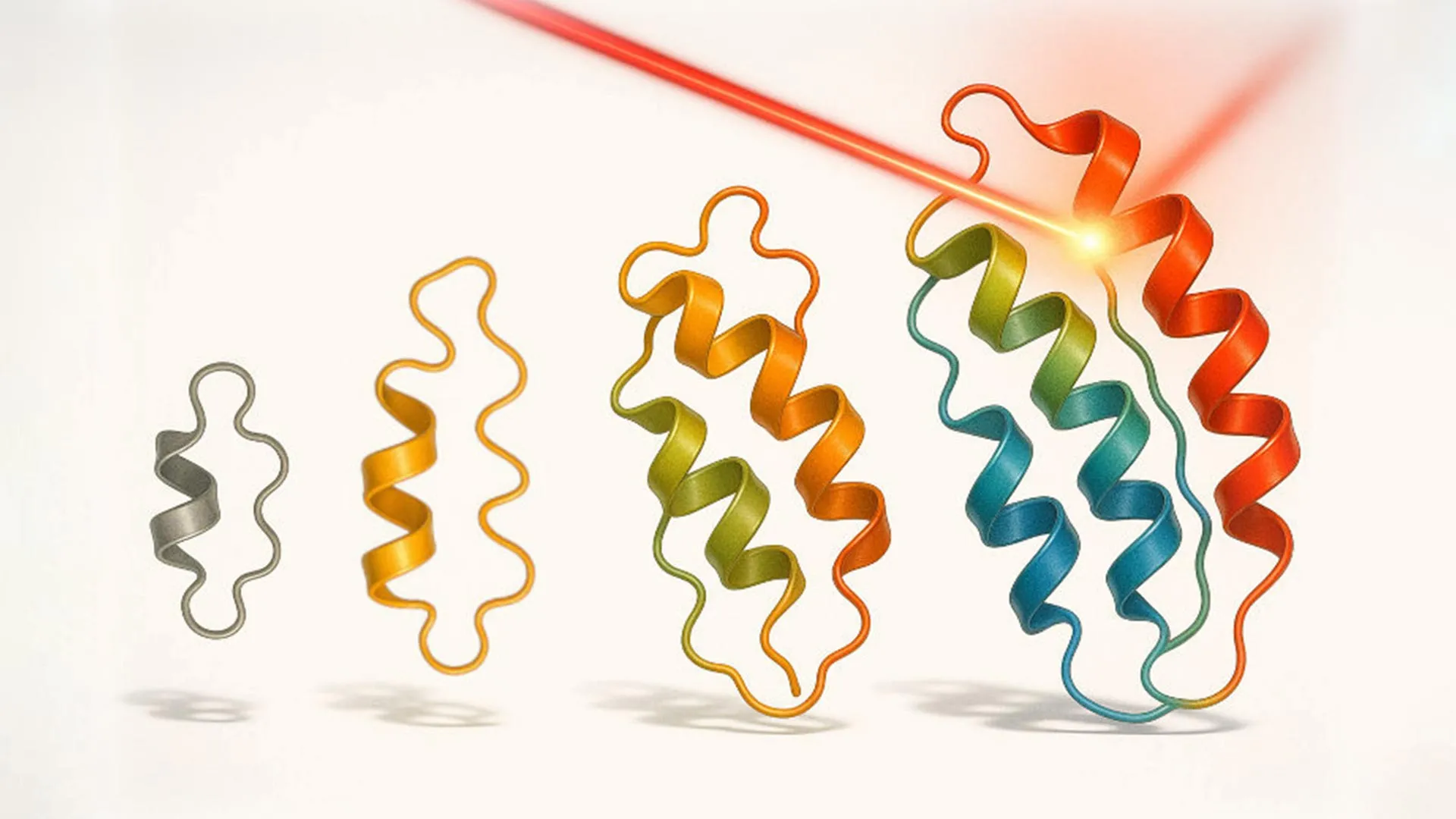
Evolution, nature’s relentless engine of biological innovation, has long been a source of inspiration for scientific advancement. For millennia, humanity has subtly guided this process, a practice that predates formal scientific understanding. Early agriculturalists, through the deliberate selection of crops and livestock exhibiting desirable traits such as higher yields or greater resilience, effectively steered the evolutionary trajectory of these organisms. This ancestral form of "directed evolution" laid the groundwork for more sophisticated methods that scientists now employ in the laboratory to engineer biological systems for specific purposes.
Today, the principles of directed evolution are actively applied to refine proteins, the workhorses of cellular machinery. Enzymes crucial for industrial manufacturing, antibodies that form the backbone of modern medicine, and even the components of everyday products like laundry detergents are all targets of this powerful technique. However, traditional directed evolution methods, while successful, have encountered inherent limitations when tasked with creating proteins that mimic the nuanced and dynamic behaviors observed in natural biological systems.
The Limitations of Traditional Directed Evolution
The prevailing paradigm in standard directed evolution typically involves applying a constant selective pressure. This approach favors proteins that exhibit sustained high activity, effectively rewarding a perpetual "on" state. Yet, the intricate tapestry of cellular life rarely operates in such a monolithic fashion. Many proteins function as sophisticated signaling molecules, acting as molecular switches or the biological equivalent of logic gates. These proteins are designed to respond to fluctuating environmental cues, shifting their activity states as conditions change.
Consider a protein that needs to transiently activate, then deactivate, and subsequently re-engage. In experimental setups that exclusively reward a single, persistent state, the necessary intermediate or alternative states can degrade over time. This can lead to proteins that lose their ability to switch states effectively, a deficit that can have detrimental consequences for cellular function, potentially leading to cell death. Consequently, engineering proteins capable of complex, multi-state dynamic behavior has remained a significant hurdle for conventional directed evolution approaches.
A Novel Approach: Optovolution and Light-Driven Protein Engineering
Bridging this gap, a team of researchers led by Sahand Jamal Rahi at EPFL’s Laboratory of the Physics of Biological Systems has unveiled a groundbreaking methodology termed "optovolution." This innovative technique leverages the precise control offered by light to guide the evolutionary development of proteins exhibiting dynamic functionalities, including the capacity for rudimentary computational tasks that adhere to binary, yes-or-no decision-making rules.
Published in the esteemed journal Cell, this research marks a significant stride towards aligning laboratory-evolved proteins with the operational principles of natural cellular systems. In living organisms, the temporal dynamics of molecular interactions and the ability to transition between distinct functional states are as critical as the sheer strength of a biological signal.
Engineering Yeast Cells for Dynamic Protein Selection
The foundation of the optovolution system was built using Saccharomyces cerevisiae, commonly known as budding yeast. This single-celled organism, a stalwart of both the brewing industry and fundamental biological research, was ingeniously re-engineered. The researchers manipulated the yeast cell cycle, making cell division contingent upon the dynamic behavior of the protein under evolutionary pressure. Specifically, the protein was required to exhibit a clean and timely transition between active and inactive states for the cell to survive and propagate.
The experimental setup ingeniously linked the protein’s output signal to a regulator that governs the cell cycle. This regulator, vital during a specific phase of the cell cycle, becomes toxic if it remains active during another. Consequently, if the protein being evolved stayed perpetually "on" or "off," the yeast cell would either stall in its division cycle or perish. Only those cells harboring proteins that successfully switched states at the appropriate moments were able to continue dividing, thereby passing on their advantageous genetic material.
Real-Time Evolutionary Control Through Light
The introduction of light as a control mechanism provided unprecedented precision to this evolutionary process. The researchers employed optogenetics, a powerful field that enables the activation or deactivation of genes using specific wavelengths of light. By delivering precisely timed pulses of light, they could actively compel the protein being evolved to cycle through its different states.
Each yeast cell cycle, lasting approximately 90 minutes, served as a rapid, high-throughput "pass or fail" test for the protein’s switching accuracy. Proteins that demonstrated superior dynamic behavior facilitated cell survival and reproduction, while variants exhibiting suboptimal switching patterns were effectively eliminated from the population. This automated selection process allowed optovolution to identify and propagate proteins with enhanced dynamic capabilities without the need for laborious manual screening or iterative adjustments, a significant departure from previous methodologies.
Expanding Protein Capabilities: New Variants and Enhanced Color Sensitivity
Employing the optovolution platform, the research team successfully evolved several distinct classes of proteins. Initially, they focused on improving a widely utilized light-controlled transcription factor. This effort yielded 19 novel variants. These engineered proteins exhibited increased sensitivity to light stimuli, reduced background activity in the absence of light, and, notably, the ability to respond to green light, a significant advancement from their original blue-light dependency. The development of proteins responsive to longer wavelengths of light, such as green and red, has historically been a formidable challenge due to the way these proteins absorb light energy.
In a further demonstration of optovolution’s versatility, the scientists engineered a red light-activated optogenetic system. This innovation eliminated the need for the yeast cells to be supplemented with an external chemical cofactor, simplifying experimental procedures. The evolutionary process led to an unexpected mutation that disrupted a native yeast transport protein. This alteration proved beneficial by enabling the system to utilize light-sensitive molecules already present within the cell, streamlining its implementation.
Proteins as Cellular Computers: Logic Gates and Decision Making
The study’s implications extend beyond light-sensing proteins. The researchers demonstrated that optovolution could be utilized to evolve a transcription factor that effectively functions as a single-protein computational unit. This engineered protein was designed to activate gene expression only when presented with two simultaneous inputs: one light-based signal and one chemical signal. This capability represents a crucial step towards building more sophisticated cellular circuits capable of complex decision-making.
The ability of proteins to exhibit dynamic behavior is fundamental to a vast array of biological processes. These include sensing environmental changes, executing complex decision-making pathways within cells, and precisely controlling critical events like cell division. By enabling these dynamic behaviors to evolve within living cellular environments, optovolution opens up exciting new avenues for synthetic biology, biotechnology, and fundamental biological research.
Broader Impact and Future Directions
The optovolution technique holds the potential to empower scientists in several key areas. It could facilitate the design of more intelligent and responsive cellular circuits, enabling the creation of biological systems with finely tuned control mechanisms. Furthermore, it promises to accelerate the development of optogenetic tools that can respond independently to multiple, distinct colors of light, offering greater flexibility and precision in experimental manipulation. Crucially, this approach may also provide invaluable insights into the evolutionary mechanisms that give rise to complex protein behaviors, deepening our understanding of life’s intricate molecular architecture.
The research team’s work builds upon decades of progress in directed evolution and optogenetics, but introduces a critical temporal dimension that was previously elusive. Traditional directed evolution, while powerful for optimizing single parameters, often overlooks the dynamic interplay of states that defines biological functionality. The ability of optovolution to impose selection pressures that specifically favor dynamic switching and temporal precision represents a paradigm shift.
Timeline of Advancements in Directed Evolution and Optogenetics:
- Early 20th Century: The concept of "directed evolution" emerges organically through agricultural practices, with humans selecting for desired traits in crops and livestock.
- Mid-20th Century: The discovery of DNA structure and the central dogma of molecular biology provides the molecular framework for understanding evolution.
- Late 20th Century: The formalization of directed evolution as a laboratory technique by scientists like Frances Arnold (Nobel Prize in Chemistry, 2018) allows for the directed evolution of enzymes and other proteins.
- Early 21st Century: The development of optogenetics, pioneered by Karl Deisseroth, Ed Boyden, and Gero Miesenböck, revolutionizes the ability to control cellular activity with light.
- 2010s onwards: Integration of directed evolution principles with optogenetic tools begins to emerge, allowing for more sophisticated control and selection of light-responsive proteins.
- Present Day: The introduction of optovolution by Rahi and colleagues at EPFL represents a significant advancement, specifically addressing the challenge of evolving dynamic, multi-state protein behavior through light-guided selection within living cells.
The implications for biotechnology are profound. Imagine engineered microbes that can precisely sense environmental pollutants and activate bioremediation pathways only when specific combinations of contaminants are present, or therapeutic proteins that can be activated or deactivated in specific tissues by light, minimizing off-target effects. In the realm of fundamental research, optovolution offers a powerful new lens through which to study the evolution of complex biological functions, providing experimental models for how cellular decision-making and temporal regulation might have arisen.
The successful engineering of proteins that respond to warmer colors of light, a feat long considered exceptionally difficult, underscores the power of this new methodology. This breakthrough opens doors for multiplexed control, where different proteins can be independently modulated by distinct wavelengths of light within the same cellular system. This level of control is essential for building increasingly complex synthetic biological circuits.
Furthermore, the unexpected discovery of a mutation that repurposes endogenous cellular machinery in the red light optogenetic system highlights the emergent properties that can arise from evolutionary processes. This finding not only simplifies the system’s application but also suggests that directed evolution can uncover novel and efficient biological solutions by leveraging existing cellular components in unforeseen ways.
The ability to create proteins that act as logic gates, integrating multiple signals to make binary decisions, is a cornerstone of computational biology. By extending directed evolution into this domain, optovolution provides a pathway to engineer biological computers capable of performing complex calculations within living cells. This could revolutionize fields ranging from drug discovery, where cellular responses can be programmed, to biosensing, where intricate environmental cues can be interpreted.
The research team’s work represents a significant leap forward in our ability to engineer biological systems with the precision and complexity found in nature. By harnessing the power of light and the fundamental principles of evolution, optovolution offers a compelling glimpse into a future where proteins are not merely optimized for static function but are engineered to perform dynamic, responsive, and even computational tasks, transforming our capabilities in both fundamental research and applied biotechnology.

















Leave a Reply