Researchers at Oregon Health & Science University (OHSU) have unveiled a groundbreaking discovery: a previously unrecognized internal cellular system that functions akin to "trade winds," actively and rapidly transporting essential proteins to the cell’s leading edge. This finding fundamentally alters the scientific paradigm for cell migration, cancer metastasis, and tissue repair, challenging decades-old assumptions about intracellular protein delivery.
A Paradigm Shift in Intracellular Transport
For years, the prevailing model in cell biology depicted protein movement within cells as a passive, diffusion-driven process. This "textbook view" suggested that proteins, like molecules in a gas, gradually dispersed until they reached their designated locations. However, the OHSU study, meticulously detailed in the prestigious journal Nature Communications, demonstrates that cells employ a far more sophisticated and directed mechanism. Instead of relying on random chance, cells actively generate controlled fluid currents that propel crucial proteins toward the front, the dynamic region responsible for extension, locomotion, and the intricate processes of healing and repair.
The implications of this discovery are profound, offering new avenues for understanding and potentially treating a range of critical biological processes and diseases. From the fundamental mechanics of how a single-celled organism navigates its environment to the aggressive spread of malignant tumors, this newly identified "cellular wind" system appears to play a pivotal role.
From Classroom Curiosity to Cellular Revelation
The genesis of this transformative discovery can be traced back to an unexpected observation during a neurobiology course at the esteemed Marine Biological Laboratory in Massachusetts. Catherine (Cathy) Galbraith, Ph.D., and James (Jim) Galbraith, Ph.D., co-corresponding authors of the study, were guiding students through a routine experiment when they encountered an anomaly that would ignite a significant scientific inquiry.
"It actually started out as an unexpected finding," Cathy recounted. "We were just conducting an experiment with students in class."
The experiment involved employing a laser to temporarily render a specific strip of proteins at the rear of a living cell invisible. This technique is a standard method for visualizing and tracking intracellular transport dynamics. As the experiment progressed, the researchers observed a peculiar phenomenon: a distinct, dark band emerged at the cell’s leading edge—the very area that protrudes and extends as the cell moves. This observation was not predicted by the existing diffusion model.
"We kind of did it for fun and then realized this gave us a way of measuring something that wasn’t able to be measured before," Cathy elaborated.
The FLOP Experiment: Illuminating Internal Flows
Further meticulous investigation revealed that this "dark band" was not a void but rather a concentrated wave of soluble actin, a critical protein integral to cell motility. The rapid movement of this actin to the cell’s front was far too swift to be explained by random diffusion. The researchers deduced that a more active, directed mechanism was at play.
"We realized the cartoon models in textbooks were missing a huge piece," Jim stated, emphasizing the departure from conventional understanding. "There had to be some kind of flow in the cell pushing things forward. Cells really do ‘go with the flow.’"
This insight led to the development of a novel experimental approach, which the team playfully named FLOP, an acronym for Fluorescence Leaving the Original Point. This modified fluorescence method involved activating fluorescent molecules at a single point and meticulously tracking their subsequent movement. Unlike conventional methods that might extinguish fluorescence, FLOP was designed to observe the outward propagation of the fluorescent signal, effectively visualizing the internal currents.
"It wasn’t a flop at all," Cathy quipped, underscoring the success of the experiment. "It was the opposite. It is anything but a flop, because it worked."
The Mechanism of Directed Cellular Currents
The Galbraiths, who joined OHSU in 2013 after significant research contributions at the National Institutes of Health (NIH), collaborated with Nobel Laureate Eric Betzig, Ph.D., at the Howard Hughes Medical Institute’s Janelia Research Campus. This collaboration was instrumental in leveraging cutting-edge imaging technologies that were crucial for visualizing these subtle intracellular flows.
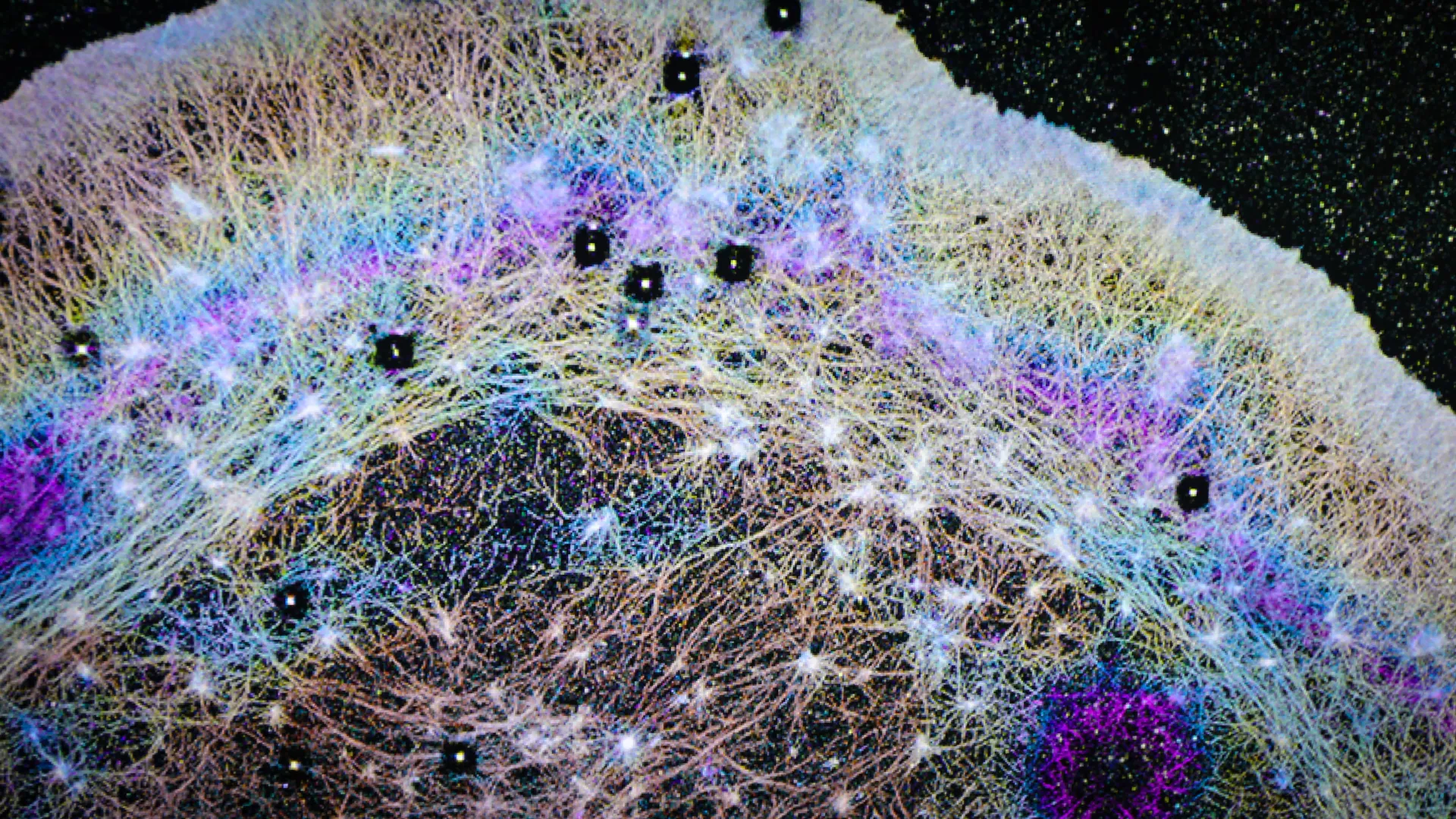
Utilizing highly specialized imaging tools, the team was able to confirm the existence of directed fluid currents within the cells. They liken these internal flows to atmospheric rivers—vast, concentrated streams of moisture that significantly influence weather patterns. In the cellular context, these "rivers" actively transport actin and other vital proteins towards the cell’s leading edge at speeds far exceeding what passive diffusion could achieve.
"We found that the cell can actually squeeze at the back and target where it sends that material," Jim explained, drawing an analogy to the behavior of a sponge. "If you squeeze half a sponge, the water only goes on that half. That’s basically what the cell is doing."
This directed transport system is remarkably efficient and non-specific, capable of carrying a diverse array of proteins simultaneously. This versatility supports a cascade of essential cellular functions, including the formation of cellular protrusions, adhesion to surfaces, and rapid changes in cell shape, all of which are fundamental to cell movement, immune surveillance, and tissue regeneration.
The Role of the Actin-Myosin Condensate Barrier
Further investigation revealed that these directed flows are confined within a specialized region at the cell’s front. This area is demarcated by an actin-myosin condensate barrier. This intricate structure acts as a physical boundary, effectively channeling the protein-rich currents towards the advancing edge of the cell, ensuring precise delivery of critical components for directed cellular activity. The researchers describe this functionally organized region as a "pseudo-organelle"—a compartment that, while not enclosed by a membrane like traditional organelles, plays a critical role in orchestrating cellular behavior.
Implications for Cancer Metastasis and Disease Progression
The implications of this discovery extend significantly into the realm of cancer research. The ability of cells to rapidly and efficiently transport proteins to their leading edge is crucial for their ability to invade surrounding tissues and metastasize to distant sites. The OHSU team posits that their findings may offer a compelling explanation for the aggressive migratory behavior observed in certain highly invasive cancer cells.
"We know these highly invasive cells have this really cool mechanism to push proteins really fast, really rapidly where they need them at the front of the cell," Jim observed. He further elaborated on the inherent similarities and functional divergences of cellular components: "All cells have basically the same components inside, much like a Porsche and a Volkswagen have many of the same parts, but when those parts are assembled into the final machine, they behave and function very differently."
Understanding how cancer cells exploit and potentially hyper-activate this internal transport system, compared to their healthy counterparts, opens up novel therapeutic strategies. By identifying the specific molecular mechanisms that drive this enhanced cellular motility in cancer, scientists may be able to develop targeted therapies designed to impede or halt the spread of the disease.
"If you can understand the differences, you can target future therapies based on how cancer cells and normal cells work differently," Jim emphasized, highlighting the translational potential of this fundamental research.
A "Pseudo-Organelle" with Far-Reaching Consequences
The identification of this "pseudo-organelle" and its associated "cellular winds" provides a new lens through which to view cellular dynamics. Just as subtle shifts in atmospheric jet streams can dramatically alter weather patterns, alterations in these internal cellular currents could have profound effects on the initiation and progression of diseases.
"Just as small shifts in the jet stream can change the weather, small changes in these cellular winds could change how diseases begin or progress," Cathy remarked, underscoring the broad significance of the discovery.
Advanced Imaging and Interdisciplinary Collaboration
The success of this research was heavily reliant on a synergistic interplay of expertise from diverse scientific disciplines, including engineering, physics, microscopy, and cell biology. Crucial contributions were made by collaborators at the Janelia Research Campus, particularly specialists in fluorescence correlation spectroscopy and advanced 3D super-resolution imaging techniques.
"The instrumentation we needed doesn’t exist in most places," Cathy noted, highlighting the unique capabilities required for this research. "Janelia had a one-of-a-kind setup that let us test and confirm what we were seeing."
The study critically utilized advanced imaging tools developed at Janelia, including iPALM (interferometric photoactivated localization microscopy). This sophisticated technique possesses the resolution to visualize structures at the nanometer scale, a level of detail essential for discerning the compartmentalization and dynamics of the internal flows.
"iPALM allowed us to physically see the compartments," Jim stated. "There’s no other light-based technique that could do that."
A Timeline of Discovery
The journey from a classroom observation to a paradigm-shifting scientific revelation can be broadly outlined:
- Early 2000s – Present: The Galbraiths develop expertise in cell biology and microscopy, including collaborations at the NIH and later at OHSU.
- Specific Date Unknown (Presumed Late 2010s/Early 2020s): During a neurobiology course at the Marine Biological Laboratory, Cathy and Jim Galbraith, alongside students, conduct a standard experiment tracking intracellular protein movement.
- Unexpected Observation: The emergence of a distinct band at the cell’s leading edge, not explicable by diffusion, is noted.
- Initial Investigation: The Galbraiths begin to hypothesize about directed intracellular flows as the cause of this observation.
- Collaboration with Janelia Research Campus: Leveraging advanced imaging techniques, particularly iPALM and expertise in fluorescence correlation spectroscopy, the team develops methods to visualize and quantify these internal currents.
- Development of the FLOP Experiment: A novel experimental approach is designed and implemented to directly observe and measure the directed movement of proteins.
- Confirmation of "Cellular Trade Winds": The existence of directed fluid flows, actively transporting proteins, is confirmed. The concept of a "pseudo-organelle" and the actin-myosin condensate barrier are elucidated.
- Publication in Nature Communications: The comprehensive findings are published, formally introducing the scientific community to the newly discovered cellular transport system.
- Ongoing Research: The OHSU team and collaborators continue to explore the full implications of these findings for various biological processes and disease states.
Broader Impact and Future Directions
The ramifications of this discovery are poised to ripple across multiple scientific disciplines. Beyond cancer research, the findings hold significant promise for advancements in drug delivery, where understanding how to manipulate cellular transport could lead to more targeted and effective therapies. Furthermore, the research offers new insights into the intricate processes of tissue repair and regeneration, potentially paving the way for novel regenerative medicine approaches. The field of synthetic biology may also benefit from this newfound understanding of how to engineer cellular systems with enhanced transport capabilities.
"All you had to do was look," Cathy concluded, reflecting on the profound simplicity of the discovery once revealed. "The flows were there all along. Now we know how cells use them."
The research team, including coauthors Brian English, Ph.D., of Janelia Research Campus, and Ulrike Boehm, Ph.D., formerly with Janelia, is optimistic about the future trajectory of this research. Funding for this pivotal study was provided by grants from the National Institute of General Medical Sciences (NIH), the U.S. National Science Foundation, the W. M. Keck Foundation, and the Howard Hughes Medical Institute. The advanced imaging work was further supported by the Advanced Imaging Center at Janelia and the OHSU School of Medicine. This collaborative effort, fueled by cutting-edge technology and scientific curiosity, has undeniably opened a new chapter in our understanding of the fundamental workings of life.