The pursuit of a definitive treatment for Alzheimer’s disease has long been hindered by the microscopic complexity of the human brain and the elusive nature of protein degradation. However, a team of researchers at Oregon State University (OSU) has recently achieved a significant milestone in neurochemical research, providing the first real-time, second-by-second observation of the chemical processes that lead to the debilitating protein clumping associated with the disease. This breakthrough, led by Marilyn Rampersad Mackiewicz, an associate professor of chemistry in the OSU College of Science, offers a new lens through which scientists can view the molecular origins of dementia, potentially paving the way for more targeted and effective pharmaceutical interventions.
The study, published in the prestigious journal ACS Omega, focuses on the interactions between amyloid-beta proteins and metal ions—specifically copper. While the presence of amyloid-beta "plaques" has been recognized as a hallmark of Alzheimer’s for decades, the precise mechanism of how these proteins transition from healthy, soluble states into toxic, communication-blocking aggregates has remained largely obscured. By utilizing a specialized measurement technique, the OSU team has successfully quantified these interactions as they happen, moving the scientific community closer to understanding the "how" and "when" of neurodegeneration.
The Molecular Architecture of Alzheimer’s Disease
Alzheimer’s disease currently stands as the most prevalent form of dementia globally, characterized by a progressive decline in cognitive function, memory loss, and personality changes. In the United States, the Centers for Disease Control and Prevention (CDC) identifies Alzheimer’s as the sixth-leading cause of death among adults aged 65 and older. As the global population ages, the number of individuals living with the condition is projected to nearly triple by 2050, placing an unprecedented strain on healthcare systems and families alike.
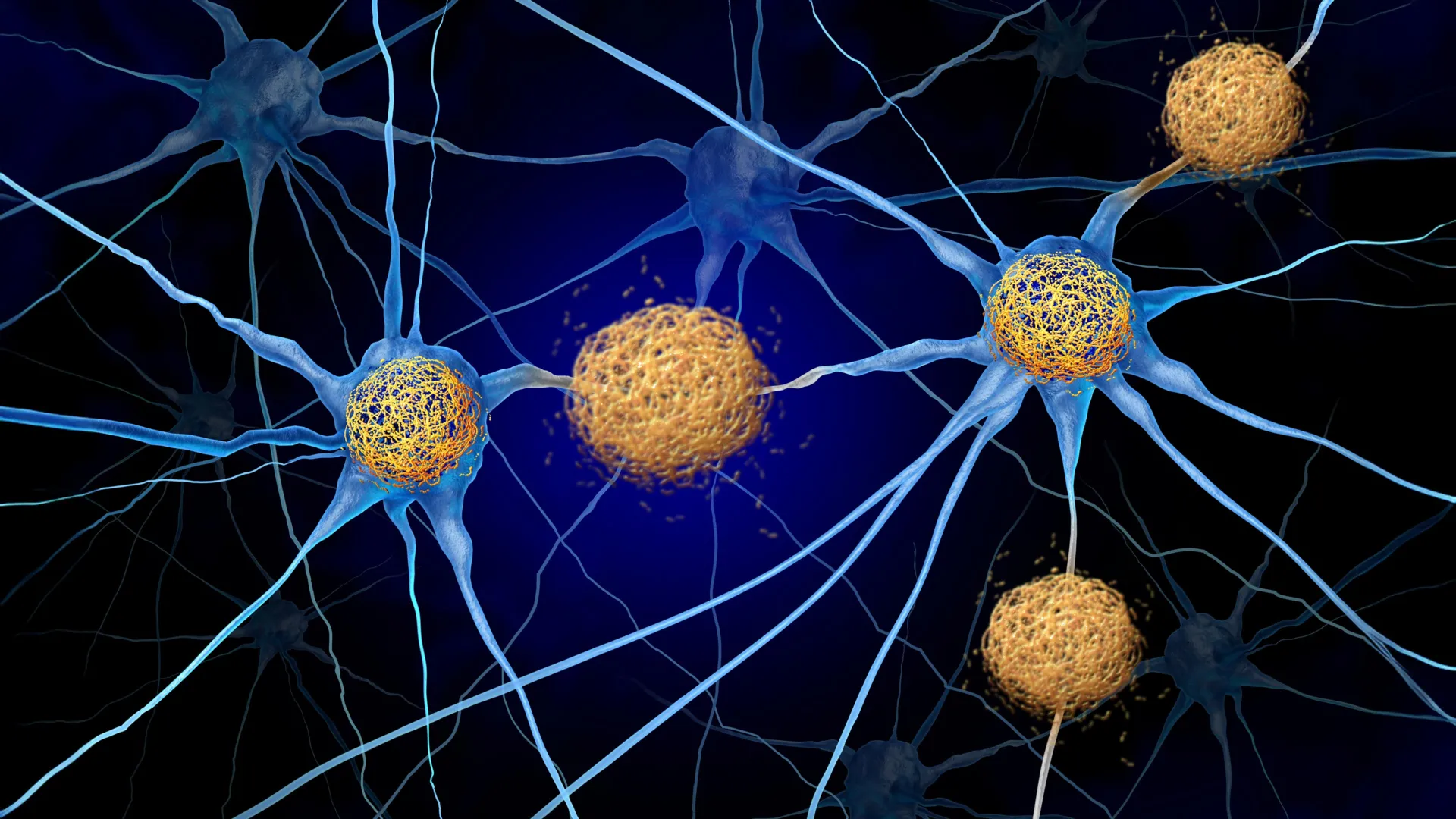
At the heart of the disease’s pathology is the amyloid-beta protein. In a healthy brain, these proteins are produced and typically cleared away without incident. However, in patients with Alzheimer’s, these proteins undergo a structural transformation, folding incorrectly and sticking together to form oligomers and eventually large, insoluble plaques. These plaques accumulate in the spaces between neurons, disrupting the synaptic communication essential for memory and learning.
The "amyloid hypothesis" has dominated Alzheimer’s research for over thirty years, suggesting that the accumulation of these proteins is the primary driver of the disease. Recent clinical successes with monoclonal antibody treatments, such as lecanemab, which target and clear amyloid from the brain, have provided further evidence for this theory. However, these treatments often come with significant side effects and are most effective only in the earliest stages of the disease. The OSU discovery aims to refine this approach by identifying the very earliest triggers of protein aggregation.
The Critical Role of Metal Ions in Neurological Health
One of the most compelling aspects of the OSU study is its focus on the role of biometals in the brain. Metals such as copper, zinc, and iron are essential for normal physiological function; they act as catalysts for enzymatic reactions and are vital for neurotransmission. However, the brain maintains a delicate homeostatic balance of these metals. When this balance is disrupted, the results can be catastrophic.
"Too many of some metal ions, like copper, can interact with amyloid-beta proteins in ways that lead to protein aggregation," explained Dr. Mackiewicz. "But most experiments have only shown the end result, not the interactions and aggregation process itself."
Copper, in particular, has been identified as a double-edged sword. While it is necessary for cellular respiration and antioxidant defense, "free" or unbound copper in the brain can promote oxidative stress. When copper ions bind to amyloid-beta, they can catalyze the formation of reactive oxygen species, which damage neuronal membranes and accelerate the clumping of proteins. The OSU team’s ability to watch this binding occur in real-time allows researchers to see exactly how copper acts as a "glue" for amyloid-beta, providing a target for future drugs that could prevent the glue from setting.
Real-Time Observation: A Technological Leap
The "specialized measurement technique" employed by Dr. Mackiewicz and her team represents a shift in bio-analytical chemistry. Traditional methods for studying protein aggregation often involve "end-point assays," where researchers mix chemicals and then check the results hours or days later. While useful, these methods provide a static "snapshot" of a dynamic process.
The OSU method, however, functions more like a high-definition video. By monitoring the interaction "second by second," the researchers can determine the rate at which proteins begin to clump and the specific concentration of metal ions required to trigger the process. This level of granularity is essential for drug design, as it allows scientists to identify the precise moment when a therapeutic intervention would be most effective.
"We developed a method that lets us observe those interactions live… and directly measure how different molecules interrupt or reverse them," Mackiewicz said. "It shifts the question from ‘does something work?’ to ‘how does it work, and when?’"
The Efficacy of Selective Chelators
A major component of the study involved testing the efficacy of chelators—molecules designed to bind to metal ions and remove them from a biological system. The term "chelator" is derived from the Greek word chele, meaning "claw," reflecting the molecule’s ability to "grab" onto metal ions.
Chelation therapy has been explored in the past as a potential treatment for Alzheimer’s, but results have been inconsistent. The OSU research provides clarity on why some of these attempts may have failed. In their experiments, the team compared two different types of chelators:
- The Non-Selective Chelator: This molecule was effective at capturing metal ions but lacked specificity. It bound to various metals indiscriminately, which in a clinical setting could lead to the depletion of essential minerals, causing adverse side effects.
- The Selective Chelator: This molecule demonstrated a high affinity specifically for copper ions. By targeting the metal most responsible for amyloid-beta aggregation without disturbing other vital metal balances, this selective approach represents a more sophisticated and potentially safer path for drug development.
The team observed that the selective chelator not only stopped the clumping process but, in some instances, helped to "unform" or reverse existing aggregations. This finding is particularly significant, as it suggests that future treatments might not only slow the progression of Alzheimer’s but could potentially restore some lost neurological function.
The Contribution of Undergraduate Researchers
Beyond its scientific implications, the project is a testament to the power of undergraduate research. Dr. Mackiewicz was joined by a dedicated group of students from both Oregon State University and Portland State University. Supported by the SURE Science Program (Summer Undergraduate Research Experience) and philanthropic donations from Julie and William Reiersgaard, these students were integral to the data collection and analysis phases of the study.
The student team included Alyssa Schroeder (OSU) and Eleanor Adams, Dane Frost, Erica Lopez, and Jennie Giacomini (Portland State University). Their involvement highlights OSU’s commitment to providing early-career scientists with hands-on experience in high-impact research.
"This kind of real-time insight… is important for designing better treatments and for understanding why some widely used chemical approaches may not behave the way we assume they do," Mackiewicz noted, emphasizing that the fresh perspectives of student researchers often contribute to the innovative nature of such projects.
Broader Impact and the Road to Clinical Application
While the findings published in ACS Omega provide a "roadmap" for therapy, Dr. Mackiewicz is careful to manage expectations regarding the timeline for a cure. The transition from laboratory chemistry to a bedside treatment is a rigorous process that typically spans a decade or more.
The next phase of the research will involve moving from simplified chemical models to more complex biological environments. This includes testing the selective chelators in cellular models and, eventually, preclinical animal models to ensure safety and efficacy within a living system.
The implications of this research extend beyond Alzheimer’s. Protein misfolding and metal imbalance are also key features of other neurodegenerative conditions, including Parkinson’s disease and Amyotrophic Lateral Sclerosis (ALS). The measurement techniques developed at OSU could theoretically be applied to these diseases, opening new avenues for a broad spectrum of neurological research.
Analysis of Scientific Implications
The success of the OSU study arrives at a critical juncture in neurology. For years, the "amyloid-beta vs. tau" debate divided the scientific community, with some arguing that the tau protein (which forms "tangles" inside neurons) was a more important target than amyloid-beta. Today, a consensus is emerging that both are part of a complex, synergistic path to decay.
By providing a method to quantify the very beginning of the amyloid cascade, the OSU team has given researchers a tool to intervene before the "tau tangles" even begin to form. Furthermore, the focus on metal ions addresses a long-standing piece of the Alzheimer’s puzzle: the role of environmental and metabolic factors in triggering genetic predispositions.
"Many potential Alzheimer’s treatments fail due to an incomplete understanding of how amyloid-beta protein aggregation occurs," Mackiewicz said. "By directly observing and quantifying these interactions, our work provides a roadmap for creating more effective therapies."
As the scientific community digests the data from ACS Omega, the focus shifts to how these "surgical" chelators can be delivered across the blood-brain barrier—one of the most significant hurdles in neuro-pharmacology. If the OSU team can successfully navigate the complexities of biological delivery, their real-time chemistry could eventually translate into a transformative clinical reality for millions of families worldwide. For now, the discovery serves as a beacon of progress, proving that even the most complex biological "clots" can be understood and, perhaps one day, undone.