

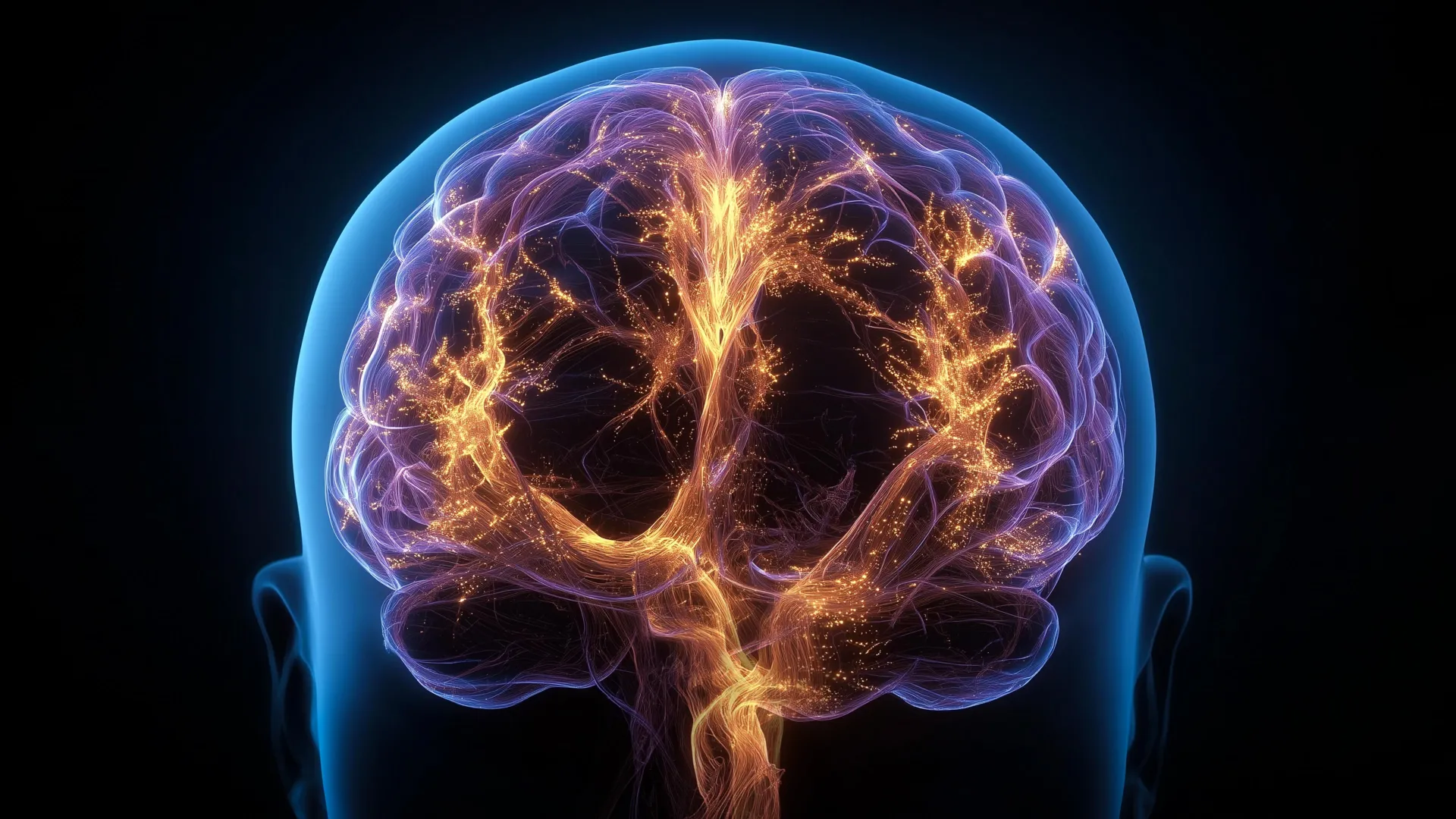
A collaborative international research effort has uncovered a significant biological marker in the brains of individuals with psychopathic traits, potentially shifting the scientific understanding of antisocial behavior from a purely environmental perspective to one rooted in neurobiology. The study, led by neuroscientists from Nanyang Technological University, Singapore (NTU Singapore), the University of Pennsylvania, and California State University, reveals that the striatum—a core component of the brain’s reward system—is approximately 10 percent larger in individuals who exhibit psychopathic tendencies compared to those who do not.
This finding, published in the Journal of Psychiatric Research, provides empirical evidence that the brains of individuals with high psychopathy scores are structurally distinct. By utilizing high-resolution magnetic resonance imaging (MRI) and standardized psychological assessments, the research team has highlighted a correlation between the volume of the striatum and the "stimulation-seeking" behaviors often associated with psychopathy.
Understanding Psychopathy and the Role of the Striatum
Psychopathy is a complex personality disorder characterized by a constellation of traits, including a lack of empathy, shallow affect, egocentricity, and a persistent disregard for social norms and the rights of others. While the term is often sensationalized in popular culture, clinical psychopathy is measured through rigorous diagnostic tools such as the Psychopathy Checklist—Revised (PCL-R).
The focus of this study, the striatum, is a subcortical structure within the basal ganglia. It serves as a critical hub for the brain’s reward-processing circuitry, receiving inputs from the cerebral cortex and dopamine-producing neurons. Historically, the striatum was primarily associated with motor control and movement planning. However, over the last two decades, its role has been expanded to include decision-making, motivation, reinforcement learning, and the modulation of social behavior.
In the context of psychopathy, the striatum is of particular interest because it governs how individuals respond to rewards and seek out new experiences. The researchers hypothesized that if the striatum is enlarged, it may lead to an overactive reward system, driving the impulsive and thrill-seeking behaviors frequently observed in psychopathic individuals.
Methodology: Beyond the Prison Walls
One of the most significant aspects of this research was the composition of the study group. While much of the existing literature on psychopathy focuses on incarcerated populations—individuals who have already been convicted of crimes—this study examined a community sample of 120 individuals in the United States.
Participants underwent comprehensive MRI scans to measure the volume of various brain regions. Simultaneously, they were evaluated using the PCL-R, which assesses 20 different items related to interpersonal, affective, and lifestyle factors. This approach allowed the researchers to examine psychopathic traits across a broader spectrum of the general population, including those who may function successfully in society despite possessing these traits.
By including 12 women in the sample, the researchers also broke new ground. Traditionally, psychopathy research has been heavily male-centric. The finding that an enlarged striatum is also present in females with psychopathic traits suggests that the biological underpinnings of the disorder may be consistent across genders, though the researchers noted that larger female-specific studies are required to confirm these preliminary results.
Key Findings: The Link Between Volume and Impulsivity
The data revealed a clear statistical link: as psychopathy scores increased, so did the volume of the striatum. On average, those with high psychopathy scores possessed a striatum roughly 10 percent larger than the control group.
The study further analyzed which specific psychopathic traits were most closely tied to this structural difference. The researchers found that the relationship was primarily driven by Factor 2 traits of the PCL-R—specifically, impulsive behavior and a constant need for stimulation. In fact, these two factors accounted for 49.4 percent of the association between striatal volume and psychopathy.
"Because biological traits, such as the size of one’s striatum, can be inherited to child from parent, these findings give added support to neurodevelopmental perspectives of psychopathy," stated Professor Adrian Raine, a co-author from the University of Pennsylvania’s Departments of Criminology, Psychiatry, and Psychology. "This suggests that the brains of these individuals do not develop normally throughout childhood and adolescence."
A Chronology of Neurobiological Discovery
The 2022 study sits within a broader timeline of evolving neuroscientific inquiry into antisocial behavior:
- Late 20th Century: Early research focused almost exclusively on the prefrontal cortex, the "brakes" of the brain, suggesting that psychopathy resulted from an inability to control impulses due to frontal lobe deficits.
- Early 2000s: Attention shifted toward the amygdala, the brain’s emotional center, with studies showing that psychopaths often have a reduced amygdala volume, correlating with a lack of fear and empathy.
- 2010s: Functional MRI (fMRI) studies began to show that the striatum in psychopathic individuals was hyper-responsive to reward cues, even when those rewards came at a high social or legal cost.
- 2022: The NTU, UPenn, and CSU study confirmed that the difference is not just functional (how the brain works) but structural (how the brain is built), specifically identifying the 10 percent volume increase in the striatum.
- 2025 and Beyond: Subsequent meta-analyses and network studies have begun to view psychopathy as a "disconnection syndrome," where the enlarged reward centers (striatum) and weakened control centers (prefrontal cortex) fail to communicate effectively.
Scientific and Official Responses
The implications of the study have resonated throughout the fields of neurocriminology and psychology. Assistant Professor Olivia Choy of NTU’s School of Social Sciences emphasized that while the findings are robust, they do not discount the role of the environment.
"Psychopathy can be linked to a structural abnormality in the brain that may be developmental in nature," Choy explained. "At the same time, it is important to acknowledge that the environment can also have effects on the structure of the striatum. It is a complex interplay between nature and nurture."
Professor Robert Schug of California State University, Long Beach, highlighted the importance of the community-based approach. "Helping us understand psychopathic traits in individuals who are not in jails and prisons, but rather in those who walk among us each day, is a novel scientific approach," Schug noted. This perspective is vital for identifying "successful psychopaths"—individuals who may use their traits to excel in high-stakes corporate or political environments without resorting to physical violence.
External experts, such as Associate Professor Andrea Glenn from The University of Alabama, who was not involved in the study, have lauded the work for its replicability. "This study increases our confidence that psychopathy is associated with structural differences in the striatum," Glenn said. "Future studies will be needed to understand the factors that may contribute to these structural differences."
Broader Impact and Ethical Implications
The discovery of a 10 percent volume difference in a key brain region raises profound questions for the legal and medical systems. If psychopathy is indeed a neurodevelopmental disorder rooted in brain structure, the following areas may see significant shifts:
1. Criminal Responsibility and Sentencing
If a defendant’s brain is "hardwired" for impulsivity and reward-seeking, defense attorneys may increasingly use neuroimaging as mitigating evidence. However, this is a double-edged sword: while it may suggest lower culpability, it may also lead judges to view the individual as "permanently broken" and therefore more likely to recidivate, potentially leading to longer preventative detentions.
2. Early Intervention and Prevention
In typical human development, the striatum usually undergoes a "pruning" process, shrinking as a child matures into adulthood. The finding that it remains enlarged in psychopathic adults suggests a failure in this developmental milestone. This opens the door for potential early interventions. If high-risk children can be identified through behavioral and biological screening, social and cognitive therapies could be implemented to strengthen the prefrontal cortex’s ability to regulate the striatum.
3. Redefining Treatment
Traditionally, psychopathy has been considered untreatable. However, understanding the specific role of the striatum allows for more targeted pharmacological or behavioral therapies. For instance, treatments that modulate dopamine levels—the primary neurotransmitter of the striatum—might help reduce the pathological need for extreme stimulation.
The Evolution of the Network Theory
While the 2022 study focused specifically on the striatum, more recent research in 2025 has expanded this view. A study published in European Archives of Psychiatry and Clinical Neuroscience found that while the striatum may be enlarged, other regions like the orbitofrontal cortex and insular cortex often show reduced volume in antisocial individuals.
This suggests that psychopathy is not defined by a single "broken" part of the brain, but rather by a disruption in the frontal-subcortical circuits. The enlarged striatum acts as a powerful engine for reward-seeking, while the shrunken frontal regions act as failing brakes. Furthermore, recent functional analyses published in Neuroscience and Biobehavioral Reviews argue that the "Default Mode Network"—involved in self-referential thought and empathy—is also impaired, preventing individuals from truly internalizing the pain of others.
Conclusion
The identification of an enlarged striatum provides a tangible, measurable link between biology and antisocial behavior. It moves the conversation away from purely moral or social explanations for psychopathy and toward a more nuanced, medicalized understanding of the disorder.
As researchers continue to map the complex networks of the human brain, the goal remains the same: to understand the roots of human behavior well enough to prevent harm, improve treatment, and create a more informed society. The 10 percent difference in the striatum is more than just a statistic; it is a window into the biological reality of one of humanity’s most challenging personality disorders. Future research will likely focus on the genetic triggers that cause this over-development and how environmental factors, such as childhood trauma or neglect, might exacerbate these pre-existing biological vulnerabilities.















Leave a Reply