

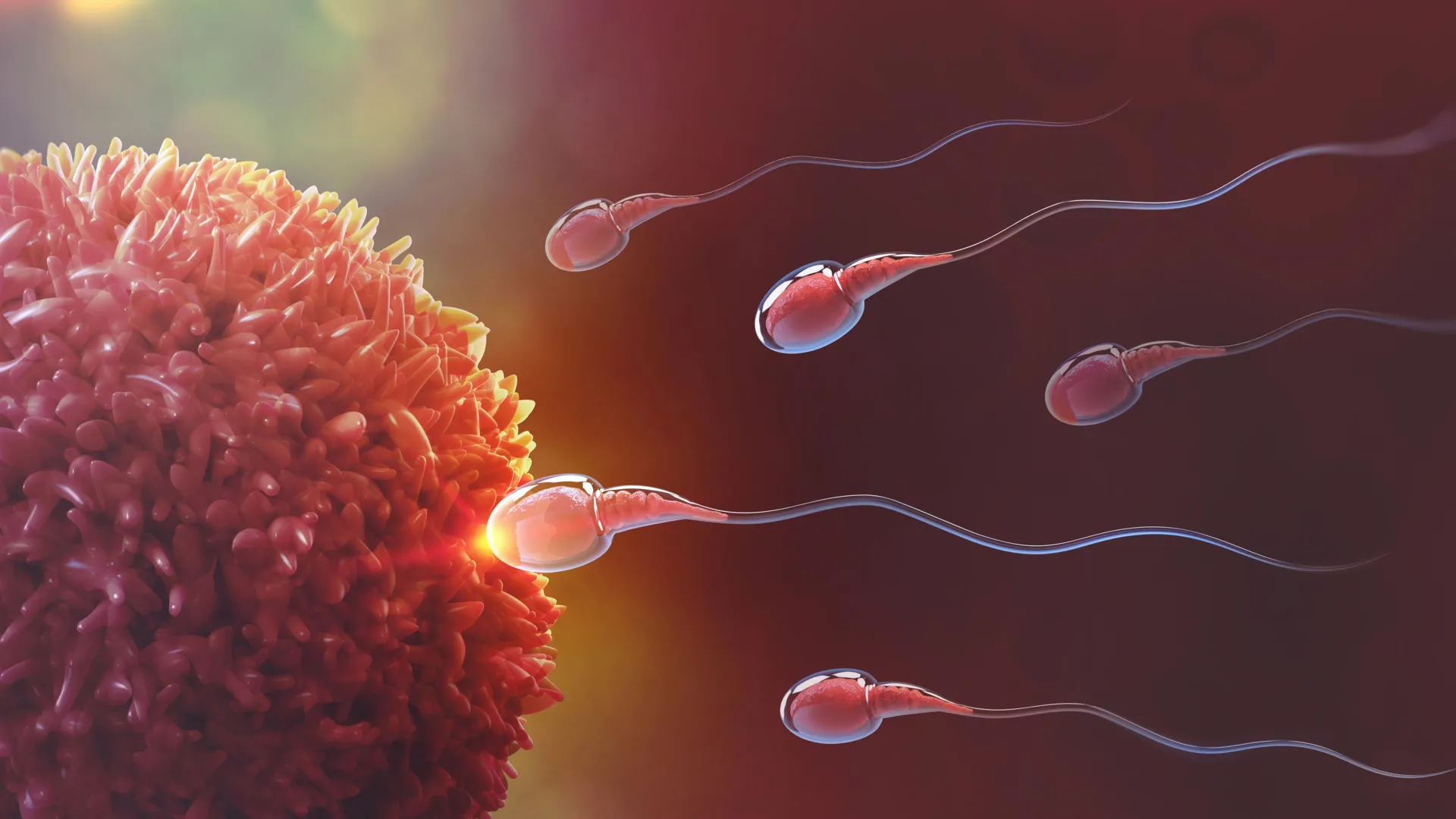
A team of scientists at Michigan State University has announced the discovery of a specific molecular mechanism that serves as a high-velocity power switch for sperm cells, a finding that carries profound implications for the future of reproductive medicine. The study, led by Melanie Balbach, an assistant professor in the Department of Biochemistry and Molecular Biology, identifies how sperm transition from a dormant, low-energy state to a hyper-activated, high-energy state necessary for fertilization. This breakthrough, published in the Proceedings of the National Academy of Sciences, provides a potential blueprint for both addressing global infertility and developing the world’s first effective, nonhormonal male contraceptive.
The research focuses on the unique metabolic requirements of the sperm cell, which is arguably one of the most specialized cells in the mammalian body. Unlike other cells that maintain a relatively steady homeostatic balance to support various bodily functions, a sperm cell’s entire biological existence is predicated on a single, high-stakes mission: finding and penetrating an egg. To accomplish this, the cell must undergo a dramatic "metabolic reprogramming" upon entering the female reproductive tract, a process that requires a sudden and massive influx of energy.
The Biological Mechanics of Sperm Activation
Before ejaculation, mammalian sperm are maintained in a quiescent state within the male reproductive system. This low-energy phase is essential for preserving the limited resources of the cell until they are needed. However, the transition into the female reproductive tract triggers a series of rapid physiological changes. The sperm must begin swimming with significantly more force—a state known as hyperactivation—and undergo biochemical alterations to their outer membranes to facilitate interaction with the egg.
"Sperm metabolism is special since it’s only focused on generating more energy to achieve a single goal: fertilization," explained Dr. Balbach, the senior author of the study. She noted that while many types of cells undergo rapid switches in energy states, sperm represent an ideal model for studying metabolic reprogramming due to the binary nature of their activity levels.
The Michigan State University (MSU) study aimed to solve a long-standing mystery in reproductive biology: exactly how the sperm cell manages this energy surge. While scientists have known for decades that sperm consume glucose to power their journey, the specific enzymatic pathways that regulate this "switch" remained elusive. By identifying these pathways, researchers can now look for ways to either enhance them to treat infertility or inhibit them to prevent pregnancy.
Innovative Methodology: Mapping the Metabolic Path
To uncover the secrets of sperm energy production, Dr. Balbach’s team collaborated with experts from the Memorial Sloan Kettering Cancer Center and the Van Andel Institute. The researchers utilized advanced techniques in mass spectrometry and metabolomics to track the movement of nutrients within the cell.
The team developed a sophisticated method to follow how sperm process glucose, the primary sugar they absorb from their environment. To explain the complexity of this tracking, Dr. Balbach used a vivid analogy: "You can think of this approach like painting the roof of a car bright pink and then following that car through traffic using a drone."
By "painting" glucose molecules with chemical markers, the researchers were able to map the exact route these molecules took through the sperm’s internal machinery. They observed that in activated sperm, the "painted cars" moved significantly faster and preferred specific metabolic "routes" or pathways that were not utilized when the sperm were in their inactive state. Furthermore, the researchers were able to identify the "intersections" where metabolic traffic tended to slow down, identifying the specific enzymes that act as gatekeepers for energy production.
The Role of Aldolase as a Metabolic Regulator
The central discovery of the study is the pivotal role of an enzyme called aldolase. In the complex chain of glycolysis—the process by which cells break down glucose to produce energy—aldolase acts as a critical control point. The researchers found that when sperm are activated, aldolase activity increases dramatically, allowing the cell to rapidly convert glucose into the adenosine triphosphate (ATP) required for high-speed swimming.
Interestingly, the study also revealed that sperm do not rely solely on external glucose. They also draw upon internal energy reserves they carry from the moment they are formed. The interplay between these internal stores and the external glucose absorbed within the female reproductive tract is regulated by a suite of enzymes that function like traffic controllers, directing the flow of fuel to ensure maximum efficiency during the final push toward the egg.
Dr. Balbach plans to expand this research by investigating how other sugars, such as fructose, contribute to this process. Fructose is found in high concentrations in the seminal fluid and may play a complementary or distinct role in the sperm’s energy profile depending on the species and the specific stage of the journey.
Addressing the Global Crisis of Infertility
The findings have immediate relevance for the field of assisted reproductive technology (ART). Infertility is a growing global health concern, affecting approximately one in six people worldwide, according to data from the World Health Organization. While much of the historical focus in fertility treatments has been on the female reproductive system, male-factor infertility contributes to nearly half of all cases.
By understanding the metabolic switch that powers sperm, clinicians may be able to develop new diagnostic tools to assess sperm quality more accurately. Currently, sperm analysis often focuses on count and basic motility. However, a sperm cell might appear healthy under a microscope but lack the metabolic "gearbox" necessary to achieve the energy surge required for fertilization.
"Better understanding the metabolism of glucose during sperm activation was an important first step," Dr. Balbach said. "Now we’re aiming to understand how our findings translate to other species, like human sperm." If the same enzymatic pathways are confirmed in humans, it could lead to media additives for in-vitro fertilization (IVF) that optimize sperm energy levels, potentially increasing the success rates of such procedures.
A New Era for Male Contraception
Perhaps the most culturally significant application of this research lies in the development of a nonhormonal male contraceptive. For decades, the burden of pregnancy prevention has fallen disproportionately on women. Most female contraceptives are hormone-based, which can lead to a wide range of side effects, including mood changes, weight gain, and increased risks of blood clots.
In contrast, male contraceptive development has faced numerous hurdles. Most attempts have focused on suppressing sperm production entirely through hormonal manipulation. However, these methods often take weeks or months to become effective and can cause significant side effects, leading to high dropout rates in clinical trials. Furthermore, many men are hesitant to use hormonal treatments that might interfere with testosterone levels or libido.
The MSU research suggests a paradigm shift: instead of stopping sperm production, scientists could simply "turn off" the energy switch. By using an inhibitor to block the activity of aldolase or other key enzymes, it may be possible to render sperm incapable of the energy surge needed for fertilization.
"One option is to explore if one of our ‘traffic-control’ enzymes could be safely targeted as a nonhormonal male or female contraceptive," Balbach noted. This approach offers several advantages:
- On-Demand Effectiveness: Because it targets the function of the sperm rather than its production, such a drug could potentially be taken shortly before activity.
- Nonhormonal: It would not interfere with the endocrine system, avoiding the side effects associated with testosterone or estrogen manipulation.
- Reversibility: Once the inhibitor leaves the system, new sperm being produced (or the next batch of activated sperm) would function normally.
Societal Impact and Future Directions
The potential for a reliable male contraceptive could have a transformative effect on public health. Statistics show that approximately 50% of all pregnancies worldwide are unplanned. Providing men with more agency in their fertility could significantly reduce this number, offering more options for couples and reducing the contraceptive burden on women.
"This would give men additional options and agency in their fertility," Dr. Balbach said. "Likewise, it creates freedom for those using female birth control, which is hormone-based and highly prone to side effects."
The research at Michigan State University was supported by the National Institute of Child Health and Human Development and utilized the university’s cutting-edge Mass Spectrometry and Metabolomics Core. As the team moves forward, the focus will shift toward identifying specific chemical compounds that can safely inhibit these metabolic enzymes in humans without affecting other cells in the body.
While a commercial "male pill" based on this technology may still be years away, the identification of the aldolase switch marks a definitive turning point. It moves the conversation from theoretical possibility to a concrete biochemical target, providing a new pathway for medical science to address some of the most fundamental challenges in human reproduction.















Leave a Reply