


A multi-institutional research initiative led by Yale University has successfully mapped the precise biological mechanism by which a naturally occurring antibody prevents sperm cells from successfully bonding with an egg. This breakthrough, achieved through high-resolution structural analysis, identifies how a specific protein interaction essential for life can be obstructed by the immune system. The findings, published in the Proceedings of the National Academy of Sciences (PNAS), provide a foundational blueprint for two divergent but equally significant medical applications: the treatment of unexplained "immuno-infertility" and the development of a new class of non-hormonal contraceptives.
The study centers on a delicate molecular "handshake" between a sperm cell and an egg, a process that has long been a focal point of reproductive biology. By utilizing advanced imaging techniques and rodent models, the team—led by Steven Tang, an assistant professor of molecular biophysics and biochemistry at Yale—has finally answered a decades-old question regarding how the immune system can inadvertently, or perhaps strategically, intervene in the fertilization process.
The Molecular Architecture of Fertilization
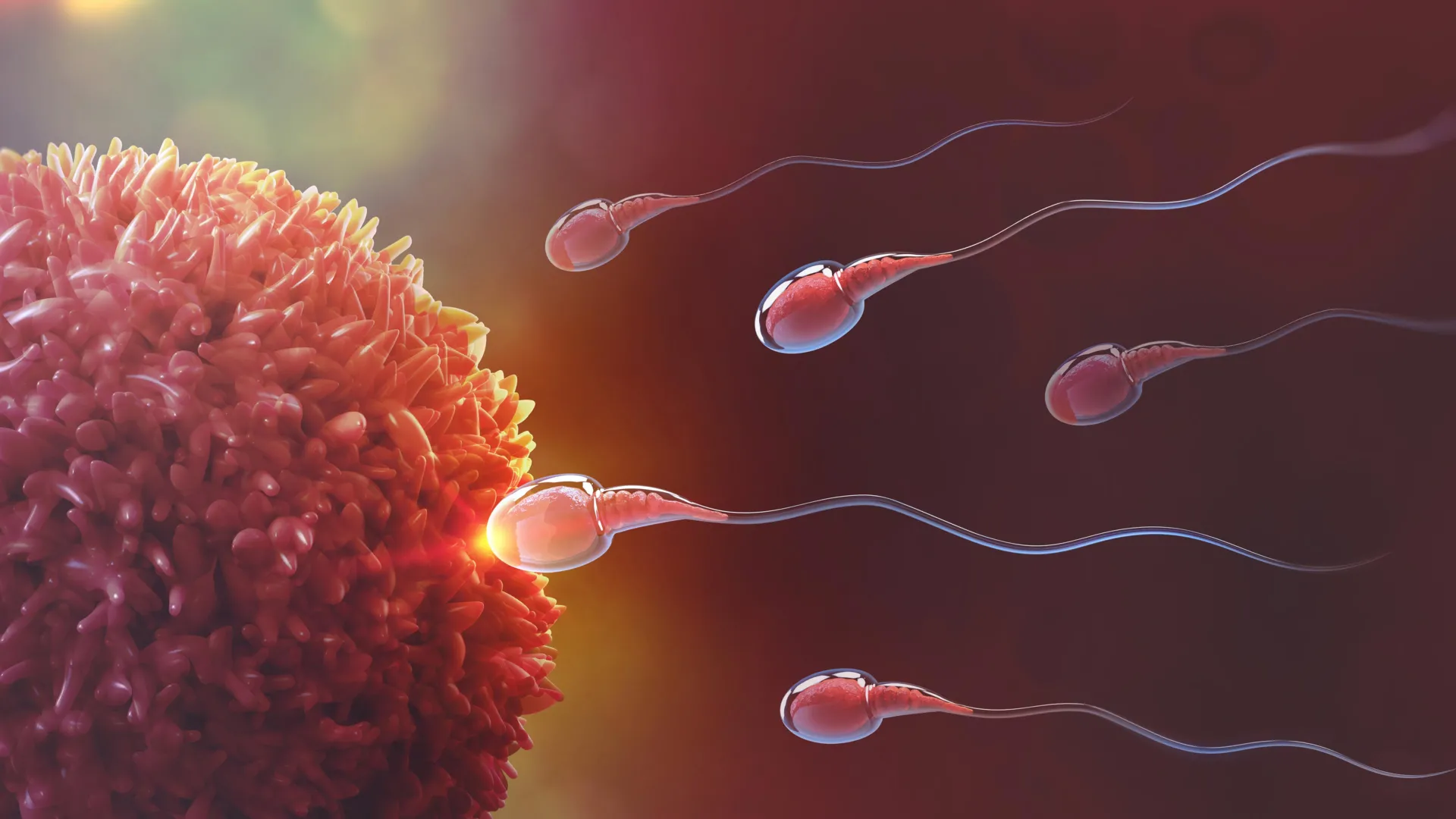
At the heart of human and mammalian reproduction are two primary players: IZUMO1 and JUNO. IZUMO1 is a protein located on the surface of the sperm, named after a famous Japanese shrine dedicated to marriage. Its counterpart, JUNO, is a receptor located on the surface of the egg, named after the Roman goddess of fertility and childbirth. For fertilization to occur, these two must recognize one another, adhere, and eventually fuse their membranes to allow the transfer of genetic material.
The Yale-led study highlights how this IZUMO1-JUNO connection is the "gatekeeper" of life. However, in some individuals, the immune system produces antibodies that treat sperm as foreign invaders. One such antibody, known as OBF13, was the primary subject of this research. While OBF13 was discovered 40 years ago by researchers at Osaka University, the exact manner in which it physically blocked the IZUMO1 protein remained a mystery until now.
By analyzing the X-ray crystal structure of the IZUMO1 protein while bound to the OBF13 antibody, the researchers were able to visualize the "clogging" of the mechanism. They found that OBF13 attaches to the sperm protein in a specific orientation that reconfigures its shape, effectively preventing it from fitting into the JUNO receptor on the egg. This physical obstruction is the direct cause of fertilization failure in these models.
A Forty-Year Chronology of Discovery
The journey to this discovery began in the early 1980s at Osaka University in Japan. At the time, reproductive immunologists were investigating why some otherwise healthy couples were unable to conceive. They discovered that some women—and even some men—produced "anti-sperm antibodies." Among these, OBF13 was identified as a particularly potent inhibitor of fertilization.
For four decades, OBF13 served as a tool in laboratory settings to study fertilization, yet the lack of high-resolution structural data meant that scientists were working in the dark regarding its binding site. The timeline of the current breakthrough accelerated with the advent of more sophisticated X-ray crystallography and molecular modeling techniques.
Steven Tang and his colleagues at Yale, working in collaboration with the original pioneers at Osaka University, including first author Yonggang Lu and co-author Masahito Ikawa, combined historical biological data with modern biophysical analysis. This bridge between 20th-century immunology and 21st-century structural biology allowed the team to pinpoint the exact amino acid sequences where the antibody and the sperm protein collide.
Addressing the Global Infertility Crisis
The implications for infertility are profound. Statistics from the Centers for Disease Control and Prevention (CDC) indicate that approximately 9% of men and 11% of women of reproductive age in the United States experience fertility issues. Globally, the World Health Organization (WHO) estimates that roughly one in six people worldwide experience infertility in their lifetime.
A significant portion of these cases is categorized as "unexplained infertility," where standard tests show no hormonal or anatomical abnormalities. Many researchers believe that a subset of these cases is caused by immuno-infertility—where the body’s own immune defenses prevent the IZUMO1-JUNO bond.
"This work provides high-resolution information that will open avenues for discovering IZUMO1 regulators," said Tang. By understanding how OBF13 blocks the sperm, clinicians may eventually be able to design "decoy" molecules or targeted therapies that prevent these antibodies from interfering with the fertilization process, offering hope to couples who have previously exhausted traditional IVF (in vitro fertilization) options.
The Quest for Non-Hormonal Contraception
While the study offers a path toward creating life, it simultaneously offers a revolutionary path toward preventing unintended pregnancy. The current contraceptive landscape is dominated by hormonal methods for women, such as the pill, patches, and IUDs, which can carry side effects ranging from mood swings and weight gain to more serious risks like blood clots. For men, options remain largely limited to barriers (condoms) or permanent procedures (vasectomies).
The discovery of a high-affinity variant of OBF13—a "super-antibody" that binds even more tightly to the sperm protein—provides a template for a new class of "immuno-contraceptives." Because this method targets a specific protein found only on sperm cells, it could theoretically provide a highly effective, non-hormonal alternative with minimal side effects on the rest of the body’s systems.
The research team identified specific amino acid sites on the JUNO receptor that define its binding affinity. By manipulating these sites or designing small-molecule inhibitors that mimic the OBF13 antibody, scientists could develop a "male pill" or a long-acting injectable that renders sperm temporarily unable to recognize an egg.
Supporting Data and Technical Analysis
The technical rigor of the study involved mapping the "anti-sperm antibody-antigen complex structure." This is the first time such a structure has been visualized at this level of detail. The researchers used the SLAC National Accelerator Laboratory in California, a facility supported by the U.S. Department of Energy, to conduct high-intensity X-ray diffraction.
The data revealed that the OBF13 antibody does not just sit on top of the IZUMO1 protein; it induces a conformational change. In the field of biochemistry, this is akin to changing the shape of a key so it can no longer enter its designated lock. Furthermore, the researchers identified that even when OBF13 is present, certain mutations or engineered versions of the JUNO receptor could still "capture" the sperm. This finding is critical because it suggests that the interference is not an "all-or-nothing" event, but a process that can be fine-tuned or bypassed through medical intervention.
Institutional Collaboration and Funding
The success of the study is a testament to international scientific cooperation. The partnership between Yale University and Osaka University allowed for a seamless transition from rodent model observations to molecular mapping. The research was supported by a diverse array of prestigious institutions, reflecting the high stakes of reproductive science.
Funding was provided in part by the National Institutes of Health (NIH) and the David Sokal Innovation Award of the Male Contraception Initiative, a group dedicated to bringing new male birth control options to market. Additional support came from the Japan Society for the Promotion of Science, the Japan Agency for Medical Research and Development, and the Takeda Science Foundation.
This broad base of support underscores the global recognition that reproductive health—both in terms of aiding conception and providing better contraceptive choices—is a public health priority.
Broader Impact and Future Outlook
The Yale-led discovery marks a shift in how scientists approach the "black box" of fertilization. By moving from general observations of cell behavior to the specific atomic interactions of proteins, the field of reproductive biology is entering an era of precision medicine.
In the near term, the research will likely lead to improved diagnostic kits for infertility. Current tests for anti-sperm antibodies are often generalized; the new data allows for tests that specifically look for antibodies targeting the IZUMO1-binding domain. This could lead to more personalized treatment plans for patients undergoing fertility treatments.
In the long term, the focus will shift toward drug screening. With the crystal structure of the IZUMO1-OBF13 complex now public, pharmaceutical researchers can use computer-aided drug design to find small molecules that mimic the antibody’s blocking effect. These small molecules would be easier to manufacture and administer than full antibodies, making them ideal candidates for a new generation of contraceptives.
"We are reporting the first anti-sperm antibody-antigen complex structure," Tang concluded. "This is not just about understanding a biological quirk; it is about providing the high-resolution blueprints necessary to guide the design of the next generation of reproductive medicines."
As the scientific community digests these findings, the focus remains on the transition from the laboratory to the clinic. While rodent models have provided the essential proof of concept, human trials will be the next frontier. Given the high conservation of the IZUMO1 and JUNO proteins across mammalian species, there is significant optimism that these findings will translate directly to human reproductive health, potentially transforming the lives of millions worldwide who seek better control over their fertility.















Leave a Reply