

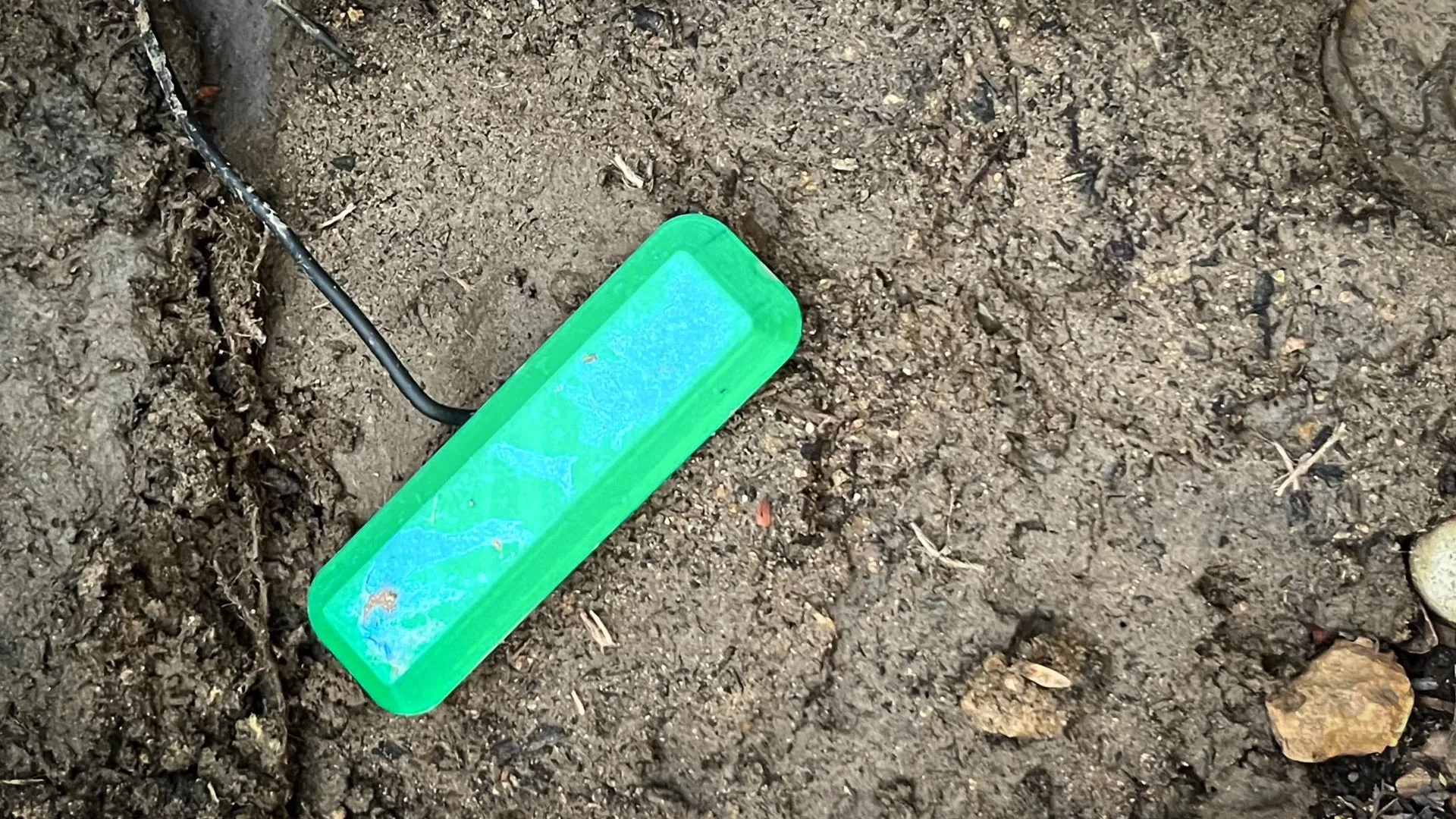
In a significant leap for sustainable technology, a research team led by Northwestern University has unveiled a groundbreaking microbial fuel cell (MFC) that harvests electricity from the metabolic activity of bacteria naturally residing in soil. This innovative device, roughly the dimensions of a paperback book, represents a potential paradigm shift in how we power the burgeoning Internet of Things (IoT). By capturing the minute energy released as microorganisms decompose organic matter within the earth, the researchers have created a power source that is not only renewable but potentially indefinite, provided there is organic carbon present in the soil.
The development comes at a critical juncture for the electronics industry. As the world moves toward a future defined by trillions of interconnected devices, the environmental and logistical costs of traditional power sources have become increasingly untenable. This soil-powered system is specifically engineered to support underground sensors used in precision agriculture and environmental monitoring, offering a robust alternative to lithium-ion batteries and solar panels, both of which face significant limitations in remote, subterranean, or harsh environments.
The Mechanism of Soil-Based Microbial Power
To understand the breakthrough, one must first look at the biological engine driving the device. Microbial fuel cells operate on a principle similar to traditional chemical batteries, utilizing an anode, a cathode, and an electrolyte. However, instead of relying on a finite supply of chemicals to trigger a reaction, MFCs utilize "electrogenic" bacteria. These microbes, which are ubiquitous in soil worldwide, naturally release electrons during the process of breaking down organic material.
When these bacteria are provided with a conductive surface—in this case, an anode made of carbon felt—they transfer these electrons as part of their respiratory process. The electrons then flow through a circuit toward a cathode, generating a steady, albeit small, electric current. "These microbes are everywhere; they already live in soil," explained George Wells, an associate professor of civil and environmental engineering at Northwestern’s McCormick School of Engineering and a senior author of the study. "We can use very simple engineered systems to capture their electricity. We’re not going to power entire cities with this energy. But we can capture minute amounts of energy to fuel practical, low-power applications."
Overcoming a Century of Technical Hurdles
While the concept of the microbial fuel cell dates back to 1911, the technology has historically been plagued by inconsistency. Previous designs struggled to maintain a balance between moisture and oxygen—two components essential for the device to function. If the cell was buried too deep, it lacked the oxygen necessary for the cathode to complete the circuit. If it was too close to the surface, it would dry out, halting the microbial activity at the anode.
"Although MFCs have existed as a concept for more than a century, their unreliable performance and low output power have stymied efforts to make practical use of them, especially in low-moisture conditions," said Bill Yen, a Northwestern alumnus who led the research during his time at the university.
To solve this, the Northwestern team spent two years iterating on various geometries. They eventually moved away from the traditional "sandwich" design, where the anode and cathode are stacked parallel to one another. Instead, they developed a perpendicular orientation. The final design features a horizontal anode made of carbon felt that sits deep within the soil to capture electrons from microbes in a moist environment. Perpendicular to this is a vertical cathode made of conductive metal, the top of which sits flush with the soil surface.
This "T-shaped" geometry ensures that the bottom of the device stays hydrated by the soil’s moisture while the top remains exposed to the air, providing a consistent supply of oxygen. Furthermore, the researchers added a protective cap and an internal air chamber to allow for airflow while preventing debris and water from flooding the cathode. To ensure resilience during heavy rains, the cathode was treated with a waterproof coating, allowing it to function even when the ground is fully saturated and to dry out quickly once water recedes.
Proven Performance in the Field
The team’s rigorous testing phase lasted nine months, during which they compared four different prototypes across varying environmental conditions. The results were definitive: the perpendicular design outperformed its predecessors by 120% in terms of power longevity and stability.
In real-world testing, the device was used to power a suite of sensors measuring soil moisture and detecting physical touch. The touch-sensing capability is particularly notable for wildlife conservation, as it allows researchers to track animal movements through a specific area without the need for cameras or intrusive equipment.
The system also integrates a low-power communication method known as "backscatter" technology. Rather than using energy-intensive traditional radio transmitters, the device includes a small antenna that reflects existing ambient radio frequency signals to transmit data. This allows the fuel cell to communicate sensor readings to a central hub with minimal energy expenditure. On average, the fuel cell generated 68 times more power than was required to operate its sensors and communication hardware, proving its viability for long-term, autonomous deployment.
Addressing the Battery and Solar Dilemma
The primary motivation behind this research is the inherent failure of current power solutions for large-scale outdoor sensor networks. In precision agriculture, farmers utilize sensors to monitor nitrogen levels, moisture, and pH to optimize crop yields and reduce water waste. However, a 100-acre farm might require hundreds or thousands of these sensors.
Traditional batteries present a massive logistical hurdle. They eventually die, requiring manual replacement—a task that is labor-intensive and expensive on a large scale. Furthermore, batteries contain toxic heavy metals and flammable lithium, which pose environmental risks if left in the ground or disposed of improperly.
Solar power, while renewable, is equally problematic in agricultural settings. Solar panels must be positioned above ground, where they take up valuable space and are prone to being covered by dust, mud, or vegetation. They also fail to provide power during the night or during extended periods of heavy cloud cover.
"Farmers are not going to go around a 100-acre farm to regularly swap out batteries or dust off solar panels," Yen noted. By harvesting energy from the soil itself, the Northwestern team has turned the environment into the power source, creating a "set-it-and-forget-it" solution that can potentially last as long as the soil contains organic matter.
Global Supply Chains and Ethical Engineering
The implications of this research extend beyond the farm. The team emphasized the importance of using accessible, non-toxic materials in their design. Current electronic manufacturing is heavily dependent on complex global supply chains and the extraction of conflict minerals.
Josiah Hester, a co-author of the study and former Northwestern faculty member now at the Georgia Institute of Technology, highlighted the lessons learned from recent global disruptions. "With the COVID-19 pandemic, we all became familiar with how a crisis can disrupt the global supply chain for electronics," Hester said. "We want to build devices that use local supply chains and low-cost materials so that computing is accessible for all communities."
By using carbon felt and common metals, the researchers have ensured that the fuel cell can be produced without relying on the volatile markets associated with lithium or cobalt. The team has also committed to the principles of "Open Science," releasing their full designs, tutorials, and simulation tools to the public. This move is intended to encourage other engineers and hobbyists to iterate on the design, potentially leading to even more efficient versions of the technology.
Analysis of Future Impact
The successful demonstration of this soil-powered fuel cell suggests a future where environmental monitoring is truly decentralized and sustainable. As the "Internet of Soil" grows, this technology could be instrumental in:
- Combating Climate Change: By providing continuous data on soil carbon sequestration and moisture levels, these sensors can help scientists better understand and mitigate the effects of global warming on land ecosystems.
- Water Conservation: Precision irrigation, powered by permanent soil sensors, could significantly reduce the amount of water used in global agriculture, which currently accounts for approximately 70% of freshwater withdrawals.
- Reducing E-Waste: Shifting away from disposable batteries in the IoT sector would prevent millions of tons of toxic waste from entering landfills annually.
Looking forward, the Northwestern researchers are exploring the development of fully biodegradable versions of the fuel cell. Such a device would eventually dissolve into the earth after its mechanical components have reached the end of their lifespan, leaving behind no trace of electronic waste.
While the current output of the fuel cell is low—measured in microwatts—it is perfectly calibrated for the "low-power, long-life" requirements of the next generation of environmental sensors. As the efficiency of ultra-low-power microchips continues to improve, the gap between the power generated by soil microbes and the power required by complex computing tasks will continue to shrink.
The study, titled "Soil-powered computing: The engineer’s guide to practical soil microbial fuel cell design," was published in the Proceedings of the Association for Computing Machinery on Interactive, Mobile, Wearable and Ubiquitous Technologies. It received support from several major institutions, including the National Science Foundation, the USDA National Institute of Food and Agriculture, and the Alfred P. Sloan Foundation. This collaborative effort underscores the multidisciplinary nature of the project, bridging the gap between microbiology, materials science, and electrical engineering to solve one of the most pressing challenges in the digital age.













Leave a Reply