A groundbreaking study led by researchers at the Wellcome Sanger Institute has fundamentally altered the scientific understanding of chronic myeloid leukemia (CML), a cancer of the blood and bone marrow. By utilizing advanced whole-genome sequencing and phylogenetic analysis, the research team has identified that the genetic origins of CML occur years—and sometimes over a decade—before clinical diagnosis. Most significantly, the study reveals that once the disease-triggering genetic mutation occurs, the resulting cancerous cells multiply at explosive rates that far exceed the growth patterns observed in almost any other form of human cancer. This discovery challenges long-held assumptions about the "chronic" nature of the disease’s early stages and provides critical insights into why some patients fail to respond to standard treatments.
The Genetic Catalyst: Understanding the Philadelphia Chromosome
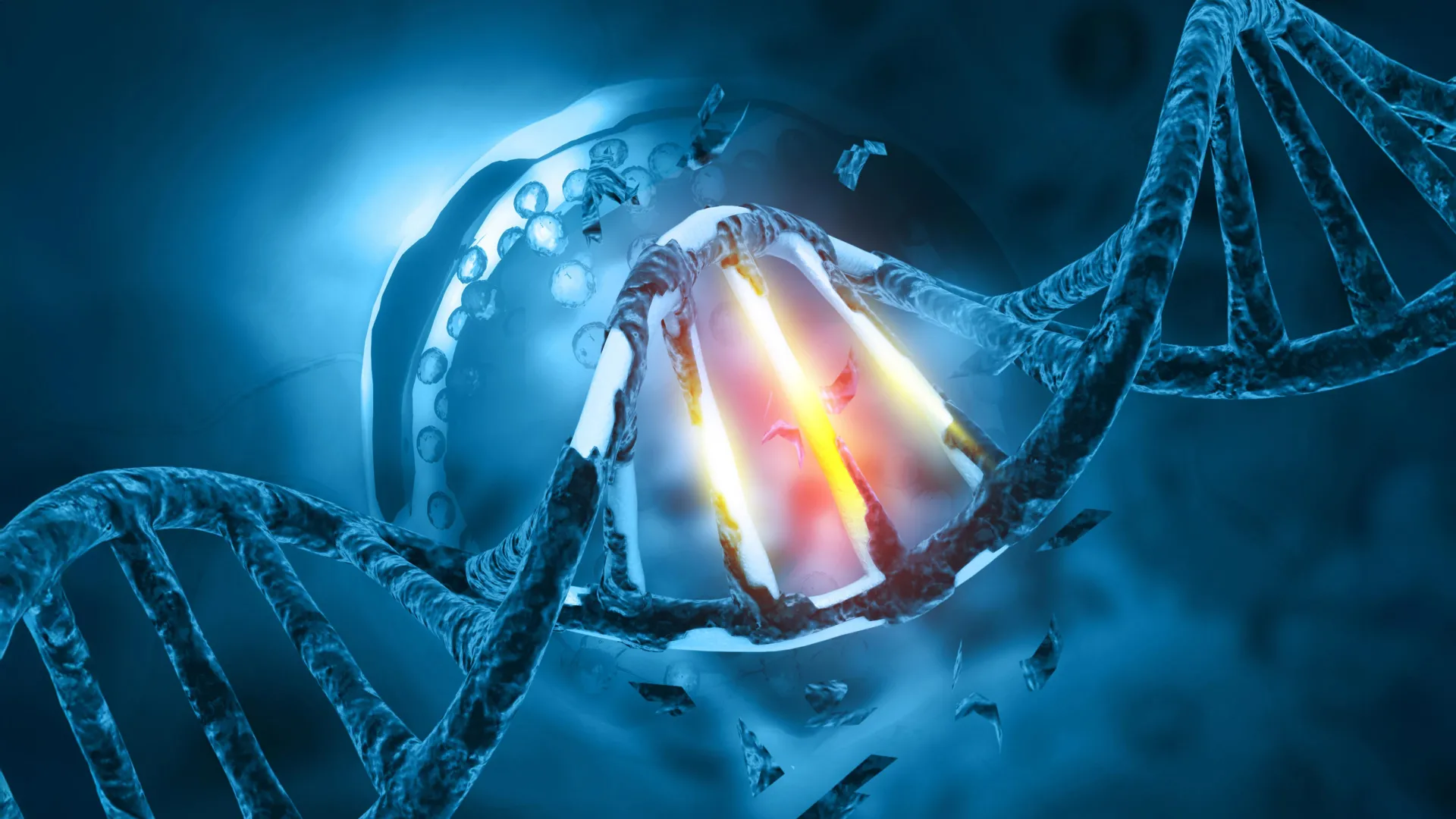
Chronic myeloid leukemia is characterized by the overproduction of white blood cells in the bone marrow. For decades, the primary driver of this malignancy has been known: a specific genetic translocation where pieces of chromosome 9 and chromosome 22 swap places. This structural rearrangement fuses a portion of the ABL1 gene from chromosome 9 with the BCR gene on chromosome 22. The resulting hybrid is known as the BCR::ABL1 fusion gene, located on what scientists call the "Philadelphia chromosome."
This fusion gene acts as a constitutive molecular switch. In a healthy cell, the ABL1 protein helps regulate cell division and growth, turning "on" and "off" based on the body’s needs. However, when fused with BCR, the resulting protein is permanently stuck in the "on" position. This sends a continuous, unstoppable signal to the bone marrow to produce abnormal white blood cells. While the existence of the Philadelphia chromosome was first discovered in 1960, the exact timeline of its emergence and the speed at which it drives the disease remained a mystery until now.
A Decadal Timeline: When the First Spark Ignites
The research, published in the journal Nature, utilized a sophisticated "molecular clock" approach to trace the ancestry of cancer cells. By analyzing over 1,000 whole genomes of single blood cells from nine patients aged 22 to 81, the team constructed phylogenetic trees—essentially genealogical maps for cells. These trees allowed researchers to work backward from the point of diagnosis to the moment the BCR::ABL1 fusion first occurred.
The data revealed a consistent pattern: the initial genetic fusion typically happens between three and 14 years before a patient ever experiences symptoms or receives a diagnosis. This suggests a significant "latent" period during which the cancer is present but undetected. However, the term "latent" may be a misnomer, as the study found that during this window, the cancer is far from dormant. Instead, it is characterized by a period of accelerating expansion that eventually reaches a tipping point.
Explosive Expansion: The Outlier of the Cancer World
One of the most startling findings of the Sanger Institute study is the sheer velocity of CML cell proliferation. In most cancers, including common solid tumors like lung or colon cancer, the disease develops through the slow accumulation of multiple genetic mutations over several decades. These cancers typically require five, six, or more "hits" to the genome before a cell becomes truly malignant.
In contrast, CML appears to be driven by a single, uniquely powerful event. The BCR::ABL1 fusion is so potent that it can drive the expansion of a single cell into a massive population of billions in a relatively short timeframe. The researchers documented growth rates exceeding 100,000 percent annually. This is substantially faster than growth rates recorded for other blood-related malignancies and most solid tumors.
Dr. Jyoti Nangalia, the senior author of the study and a hematologist at the University of Cambridge, noted that CML is a clear "outlier" in oncology. While most cancers follow a "slow-burn" trajectory, CML operates like an explosion. This explains why the disease can move from a sub-clinical state to a life-threatening condition in a matter of years rather than decades.
The Impact of Age and Treatment Resistance
The study also highlighted significant variability in how CML behaves across different demographics. Notably, age was found to be a primary factor in the speed of cancer progression. Younger patients in the study exhibited much higher rates of cell multiplication compared to older patients. This suggests that the biological environment of a younger person’s bone marrow may be more conducive to the rapid expansion of BCR::ABL1 clones, or that the cells themselves possess different fitness levels based on the host’s age.
Furthermore, the research established a critical link between growth rates and clinical outcomes. For the past two decades, the standard of care for CML has been Tyrosine Kinase Inhibitors (TKIs). These drugs, such as Imatinib (Gleevec), work by binding to the BCR-ABL1 protein and blocking its ability to send growth signals. While TKIs have turned CML from a terminal illness into a manageable chronic condition for many, approximately 20 percent of patients do not respond well to the therapy.
The Sanger Institute team found that patients with the fastest-growing cancer clones were the least likely to respond to TKI therapy. This suggests that the inherent "fitness" or growth velocity of the cancer cells at the time of diagnosis could serve as a predictive biomarker. If clinicians can determine the growth rate of a patient’s leukemia early on, they may be able to tailor treatment plans more aggressively for those at high risk of resistance.
Insights from the "All of Us" Cohort
To determine if the BCR::ABL1 fusion gene could exist in the general population without ever causing disease, the researchers turned to the "All of Us" Research Program. This massive NIH-funded initiative in the United States provides a diverse database of health records and genomic data from over 200,000 participants.
The analysis of this cohort yielded a sobering conclusion: the expansion of BCR::ABL1 clones without subsequent symptoms is extremely unlikely. Almost every individual in the database who was found to carry the fusion gene was either already diagnosed with a blood disorder or was diagnosed shortly thereafter. This confirms that the BCR::ABL1 mutation is a "high-penetrance" event—meaning that if you have the mutation, the development of leukemia is almost inevitable. This distinguishes CML from other genetic predispositions where a mutation might only slightly increase the risk of disease.
Clinical Perspectives and Future Directions
The implications of this research for the future of hematology are profound. Dr. Aleksandra Kamizela, a co-first author of the study and a resident doctor, emphasized the gap between current clinical testing and the genomic reality of the disease. Currently, doctors use reverse transcription polymerase chain reaction (RT-PCR) tests to monitor the levels of the fusion gene in a patient’s blood. While effective for tracking treatment progress, these tests do not provide the granular DNA-level history revealed by whole-genome sequencing.
"In a clinical setting, we are not able to routinely see differences in the genetic cause of CML in patients at the DNA level," Dr. Kamizela stated. "Our findings provide a rationale to look at the rate of cancer growth more closely in future studies in order to understand if we can use such information in a clinical setting."
The ability to look back in time through phylogenetic trees opens the door for potential early detection strategies. If the cancer is present for up to 14 years before diagnosis, there is a theoretical window for intervention. However, because the mutation is rare and the growth is so rapid toward the end of that window, screening the general population remains a challenge.
Conclusion: Redefining the "Chronic" in Leukemia
The Sanger Institute’s research effectively redefines the biological narrative of chronic myeloid leukemia. By proving that the disease is the result of a single, hyper-potent genetic fusion that triggers explosive growth years before symptoms appear, the study shifts the focus from the point of diagnosis to the years of evolutionary development preceding it.
The findings underscore the importance of precision medicine in oncology. Understanding that CML is not a uniform disease, but one with varying growth velocities influenced by age and genetics, allows for a more nuanced approach to patient care. As researchers continue to validate these findings in larger patient cohorts, the hope is that growth-rate analysis will become a standard tool in the oncologist’s arsenal, helping to identify those patients who need alternative therapies before resistance to standard treatments even begins.
This work not only provides a roadmap for understanding CML but also sets a precedent for using phylogenetic analysis to study other cancers. By mapping the "family trees" of tumor cells, scientists can finally begin to understand the dark period of cancer’s evolution—the years of hidden growth that occur before a patient ever walks into a doctor’s office. In the fight against leukemia, knowing the enemy’s history may be the key to securing the patient’s future.