The search for life beyond Earth has long captivated humanity, and Mars, our planetary neighbor, remains a prime candidate for harboring past or present microbial existence. While much of the focus has historically been on analyzing Martian rocks, clays, and soils for biosignatures, new research from NASA Goddard Space Flight Center and Penn State University suggests a paradigm shift may be in order: future missions should prioritize exploring Martian ice deposits, including permafrost and ice caps. Scientists have demonstrated in laboratory settings that ancient microbial remnants, such as amino acids, could be remarkably well-preserved within pure ice for tens of millions of years, even under the relentless bombardment of cosmic radiation.
This groundbreaking study, published in the peer-reviewed journal Astrobiology, challenges previous assumptions about the longevity of organic molecules in extraterrestrial environments. By simulating the harsh conditions of Mars, researchers found that crucial building blocks of life could persist for an astounding 50 million years or more within ice, a timescale far exceeding the estimated age of many current surface ice deposits on the Red Planet, which are often less than two million years old. This revelation has significant implications for the design and objectives of future astrobiology missions, potentially redirecting exploration efforts towards these icy reservoirs.
Recreating Martian Conditions: A Laboratory Experiment
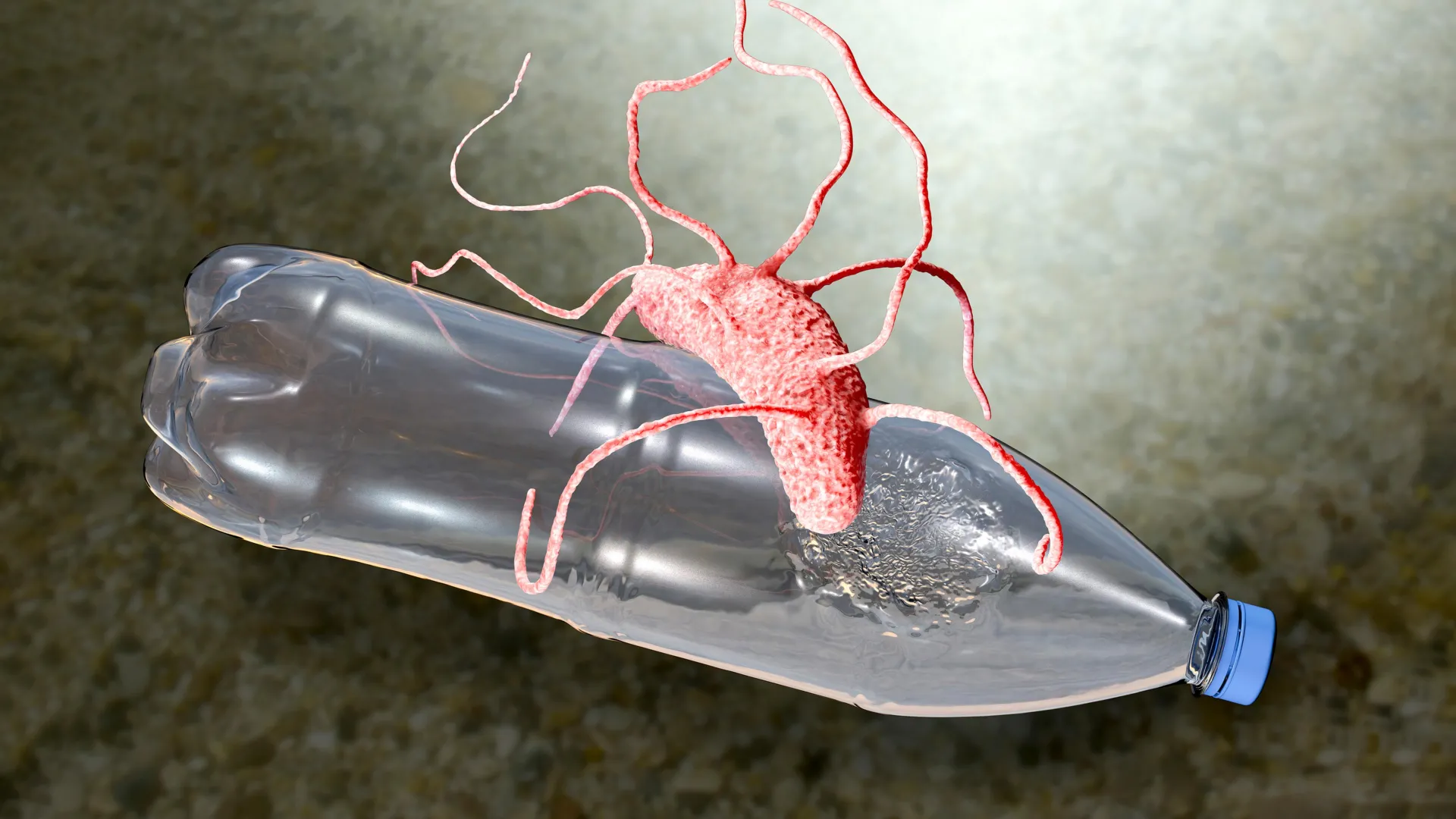
The scientific endeavor was spearheaded by Alexander Pavlov, a space scientist at NASA Goddard, who completed his doctoral work in geosciences at Penn State in 2001. The core of the research involved a meticulous laboratory simulation designed to replicate the frigid temperatures and intense radiation environment of Mars. The team prepared various samples, sealing E. coli bacteria – a common terrestrial bacterium often used in astrobiological research due to its well-understood biology and hardy nature – within test tubes filled with either pure water ice or a mixture of water and materials commonly found in Martian regolith, such as silicate-based rocks and clays.
These meticulously prepared samples were then subjected to a rigorous radiation experiment within a gamma radiation chamber located at Penn State’s Radiation Science and Engineering Center. To mimic Martian surface temperatures, the chamber was maintained at a chilling minus 60 degrees Fahrenheit (-51 degrees Celsius). The bacteria within the samples were exposed to radiation levels equivalent to 20 million years of cosmic ray bombardment on the Martian surface. Following this initial exposure, the samples were vacuum-sealed and, crucially, transported back to NASA Goddard under strict cold chain conditions to preserve their integrity for subsequent analysis. The research team then extrapolated these results, modeling an additional 30 years of radiation exposure, bringing the total simulated preservation period to an impressive 50 million years.
The Protective Power of Pure Ice
The results of this extensive simulation were, in the words of the researchers, "striking." In samples composed solely of pure water ice, a remarkable finding emerged: more than 10 percent of the amino acids, the fundamental units that comprise proteins and are essential for all known life, survived the entire 50 million-year simulated radiation exposure. This level of preservation was far greater than anticipated.
In stark contrast, samples that were mixed with Martian-like sediment exhibited significantly faster degradation. These mixed samples broke down approximately 10 times faster than those encased in pure ice and ultimately did not survive the full simulated duration. This observation points to a crucial distinction in how different Martian environments might preserve organic molecules.
This finding builds upon a prior study conducted by the same research team in 2022. That earlier work had indicated that amino acids preserved in a mixture containing only 10% water ice and 90% Martian soil were destroyed more rapidly than samples composed entirely of sediment. Based on those initial findings, the scientific community, including Pavlov himself, had expected that organic material in pure water or ice alone would degrade even more swiftly.
"Based on the 2022 study findings, it was thought that organic material in ice or water alone would be destroyed even more rapidly than the 10% water mixture," Pavlov explained in a statement. "So, it was surprising to find that the organic materials placed in water ice alone are destroyed at a much slower rate than the samples containing water and soil."
The researchers hypothesize that the accelerated breakdown of organic molecules in the mixed samples may be attributed to the formation of a thin film at the interface where ice comes into contact with mineral surfaces. This interstitial layer could potentially facilitate the movement of radiation, allowing harmful particles to reach and damage the delicate amino acid structures more readily.
"While in solid ice, harmful particles created by radiation get frozen in place and may not be able to reach organic compounds," Pavlov elaborated. "These results suggest that pure ice or ice-dominated regions are an ideal place to look for recent biological material on Mars." This suggests that the solid, frozen matrix of pure ice acts as a more effective shield, immobilizing radiation byproducts and preventing them from interacting with and degrading the preserved organic molecules.
Broader Implications for the Search for Extraterrestrial Life
The implications of this research extend beyond Mars, offering new hope for the search for life on other icy celestial bodies within our solar system. The team also conducted experiments on organic material at temperatures analogous to those found on Europa, one of Jupiter’s icy moons, and Enceladus, a moon of Saturn known for its subsurface ocean and geysers. At these even colder temperatures, the rate of organic molecule deterioration slowed down even further, suggesting that the preservation potential in such environments could be even more profound.
These findings are particularly encouraging for NASA’s upcoming Europa Clipper mission, which is slated to launch in 2024. This ambitious spacecraft will embark on a 1.8 billion-mile journey to Jupiter, arriving in 2030. Europa Clipper’s primary objective is to study Europa’s ice shell and its vast subsurface ocean, investigating whether the conditions beneath the surface are conducive to supporting life. The mission is designed to perform 49 close flybys of the moon, gathering critical data to assess its habitability. The discovery that organic molecules can persist for such extended periods in icy environments bolsters the scientific rationale for such missions, increasing the likelihood that any potential biosignatures on Europa might still be detectable.
Drilling into Mars’ Icy Past: Future Mission Prospects
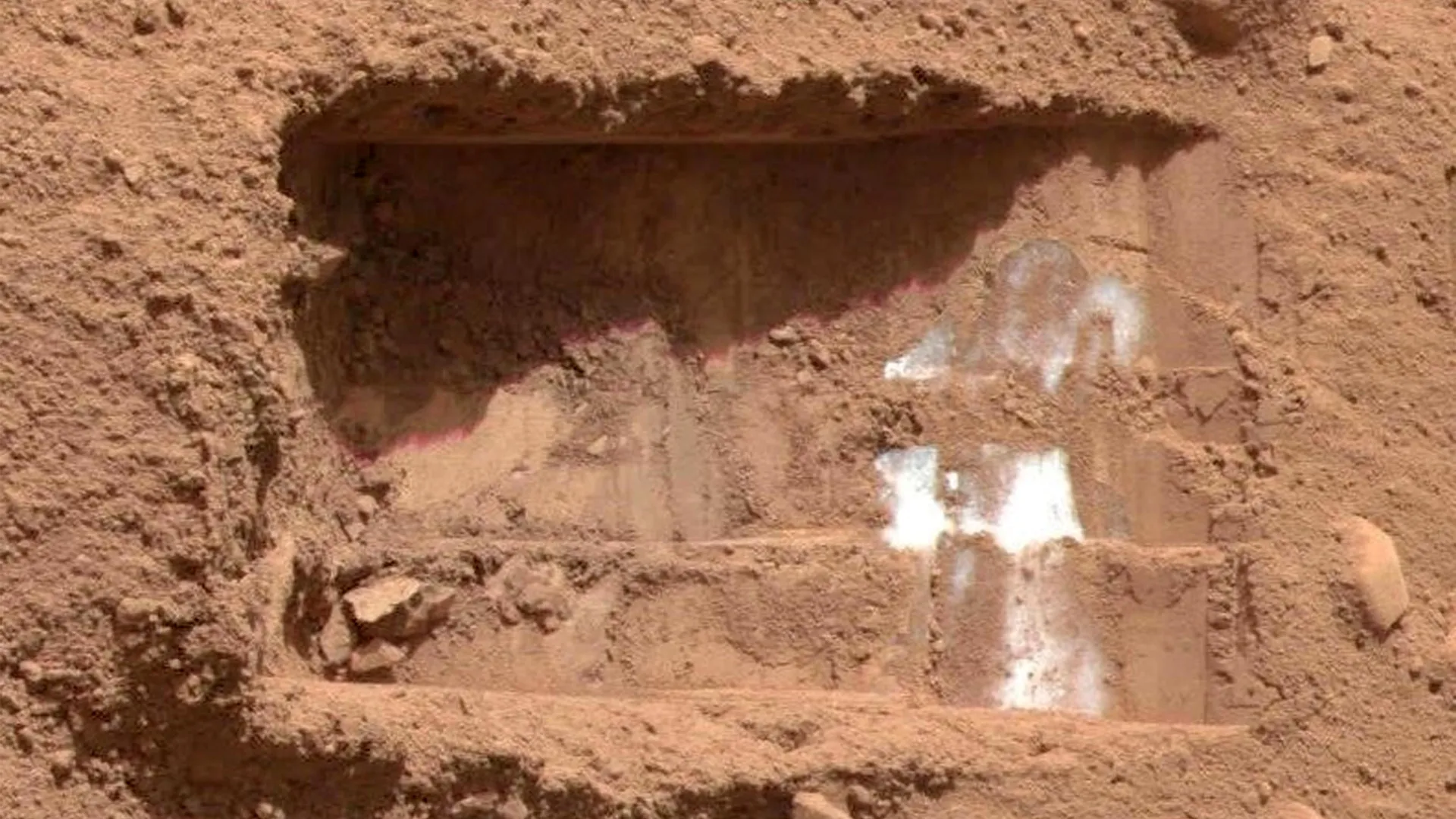
The prospect of finding ancient life preserved in Martian ice naturally leads to questions about the technological capabilities required to access these subterranean treasures. The history of Martian exploration offers some clues. The NASA Mars Phoenix mission, which landed in 2008 in the Martian equivalent of the Arctic Circle, was the first to successfully dig down and capture photographic evidence of subsurface ice. This mission provided direct confirmation of water ice in the Martian regolith, a critical step in understanding the planet’s hydrological history and potential for past habitability.
"There is a lot of ice on Mars, but most of it is just below the surface," noted co-author Christopher House, a professor of geosciences at Penn State and director of the Penn State Consortium for Planetary and Exoplanetary Science and Technology. "Future missions need a large enough drill or a powerful scoop to access it, similar to the design and capabilities of Phoenix." This highlights the need for advancements in robotic excavation technology to reach these promising icy layers.
The researchers’ findings suggest that future Mars missions should be equipped with instruments capable of analyzing pristine ice samples, potentially employing techniques that minimize contamination and maximize the detection of delicate organic molecules. The development of sophisticated drills, coring devices, and in-situ analytical instruments will be paramount for unlocking the secrets held within Martian ice.
A Timeline of Discovery and Future Horizons
The research leading to this significant publication is part of a broader, ongoing scientific inquiry into the preservation of organic matter in extraterrestrial environments. The 2022 study, which laid some of the groundwork for the current findings, demonstrated the rapid degradation of organic material in mixed ice-sediment samples. This earlier result might have led some to believe that pure ice would offer even less protection.
The current study, however, represents a crucial recalibration of those expectations. By extending the simulation period and focusing on pure ice, the team has provided compelling evidence for the exceptional preservative qualities of this frozen medium. The timeline of preservation, extending to 50 million years, places ancient Martian ice deposits within the realm of potential discovery for near-future missions.
The scientific team involved in this groundbreaking research comprises a collaborative effort between institutions. In addition to Professor Christopher House from Penn State, the NASA Goddard contingent includes Alexander Pavlov, Zhidan Zhang (a retired lab technologist in Penn State’s Department of Geosciences), Hannah McLain, Kendra Farnsworth, Daniel Glavin, Jamie Elsila, and Jason Dworkin. This interdisciplinary approach, bridging expertise in geosciences, space science, and laboratory analysis, underscores the complexity and collaborative nature of modern planetary science.
Funding for this critical research was provided by NASA’s Planetary Science Division Internal Scientist Funding Program, specifically through the Fundamental Laboratory Research work package at Goddard Space Flight Center. This investment in basic scientific inquiry continues to yield vital insights that shape the future direction of space exploration.
The Broader Impact: Rethinking Martian Exploration
The implications of this research are profound for the ongoing quest to answer one of humanity’s most fundamental questions: are we alone in the universe? By identifying pure ice as a potentially superior medium for preserving evidence of past life, scientists are gaining a more nuanced understanding of how and where to search for biosignatures on Mars and other celestial bodies.
This shift in focus could lead to the redesign of future rover and lander missions, incorporating advanced drilling capabilities and specialized analytical instruments designed to probe icy subsurface environments. The successful identification of well-preserved ancient organic material within Martian ice could provide definitive evidence of past microbial life, revolutionizing our understanding of the origins and distribution of life in the cosmos.
The scientific community will undoubtedly be closely following the development of technologies that can effectively access and analyze these frozen archives. The prospect of unearthing direct evidence of ancient Martian life, locked away in ice for eons, is a tantalizing one that continues to drive innovation and inspire exploration. This latest research serves as a powerful reminder that sometimes, the most valuable discoveries lie hidden beneath the surface, waiting to be unearthed.