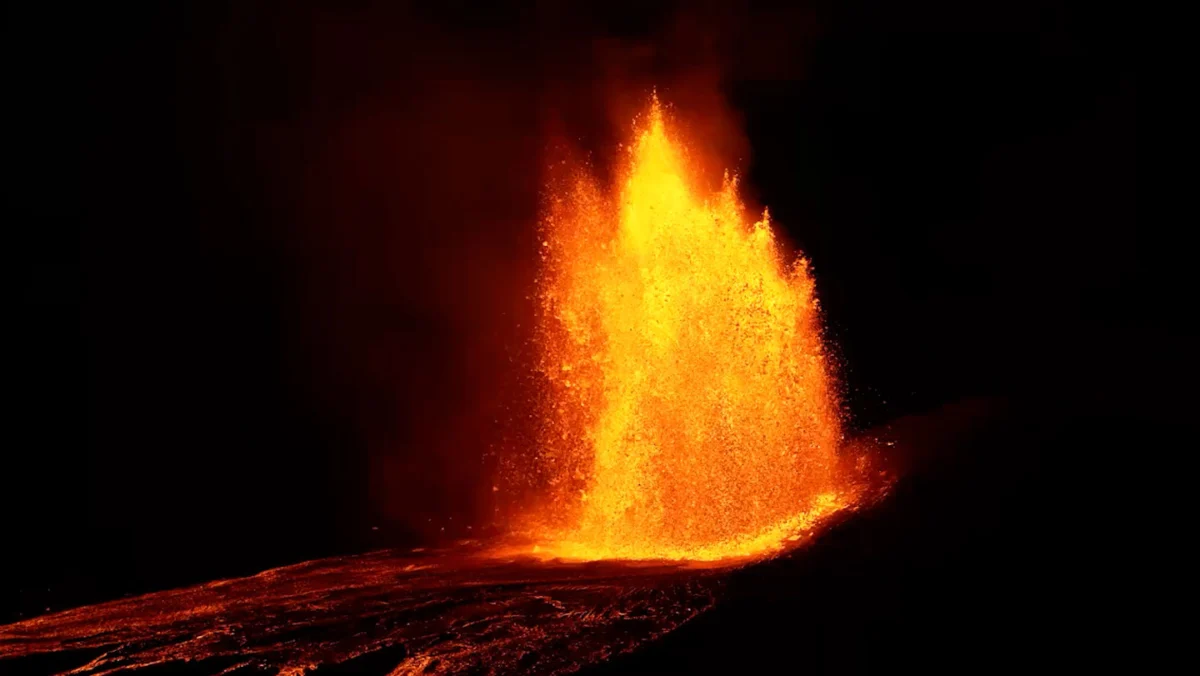
The iconic Kilauea volcano, long celebrated as one of the most active geological sites on the planet, has entered a period of unprecedented volcanic behavior that is challenging long-standing scientific models. Since the current eruptive phase commenced in December 2024, the summit crater of Halemaʻumaʻu has transformed into a site of recurring, high-intensity pyrotechnics. Between late 2024 and September 2026, the volcano produced 54 distinct lava fountains, some reaching staggering heights of 457 meters. This frequency of episodic fountaining is not only a visual spectacle but a rare geological event, with similar patterns recorded only three times since 1823.
A Chronology of the 2024–2026 Eruptive Surge
The current period of activity began at dawn on December 23, 2024. While Kilauea has been in a state of nearly continuous eruption for nearly two centuries, the shift toward a "fountain era" marked a significant departure from previous, more steady-state effusion patterns.
Throughout 2025, the frequency of these events accelerated. By the spring of 2026, the Hawaiian Volcano Observatory (HVO) had cataloged a surge in seismic and acoustic signatures that preceded each burst. On April 23, 2026, the volcano initiated its 45th recorded fountain episode of this specific cycle. By the time researchers compiled their findings for a report published in the journal Science on October 8, 2026, the tally of fountains had reached 54, demonstrating a consistent, albeit unpredictable, rhythm of gas-driven volcanic outbursts.
Unlike traditional lava flows, which are often characterized by slow-moving, basaltic streams, these fountains represent rapid, high-pressure releases of volcanic material. The events vary in duration, ranging from short-lived pulses lasting only a few hours to sustained displays spanning several days.
Decoding the Mechanism: The Piston Hypothesis
For decades, the scientific community has debated the triggers behind episodic volcanic fountaining. The rarity of these events—specifically those occurring in quick succession within a single eruption—has historically left researchers with limited data. However, the intensity of the 2024–2026 cycle has provided the U.S. Geological Survey (USGS) and international partners with a wealth of high-resolution data.
Ashton Flinders, a research geophysicist at the USGS Hawaiian Volcano Observatory, and his colleagues have been at the forefront of analyzing this data. The team focused on two primary, competing hypotheses. The first suggested that water dissolved in deep-seated magma becomes volatile as pressure drops, causing a rapid expansion and a fountain. The second, often referred to as the "soda bottle" or foam hypothesis, posited that a carbon dioxide-rich layer of foam atop the magma chamber builds pressure until it violently breaches the surface.
Through continuous monitoring of seismic activity, temperature fluctuations, and gas emissions, researchers have moved toward a more nuanced explanation. The data suggests that the magma acts similarly to a piston in a combustion engine. As magma moves through narrow, restrictive volcanic vents, trapped gases build up and then release, causing the column to rise and fall rhythmically. Crucially, the absence of high concentrations of carbon dioxide in the emitted gases has led the research team to de-emphasize the foam hypothesis, pointing instead to the gas-driven piston mechanism as the primary driver of these fountains.
The Laboratory of Kilauea: Monitoring and Data Collection
Kilauea is arguably the most extensively monitored volcano in the world. Its accessibility and consistent activity allow for a level of instrumentation that is impossible at more remote or volatile sites. The USGS maintains an array of sensors that track the physical "breathing" of the volcano.
Prior to each fountain event, researchers observed a distinct pattern: the caldera floor would swell and tilt, providing a clear indication that magma was accumulating in the shallow subsurface. Beginning with the fourteenth fountain in the sequence, the team identified a recurring, minutes-long sequence of seismic energy and low-frequency acoustic signals. These "tremors" served as a diagnostic signature, allowing scientists to anticipate an impending fountain with greater accuracy than ever before.
This systematic approach to data collection represents a milestone in volcanology. By integrating geodetic data—which measures the deformation of the Earth’s surface—with infrasound and seismic monitoring, scientists are creating a real-time diagnostic model for Kilauea. This model not only helps explain the current cycle but provides a foundational framework for understanding episodic eruptions in similar basaltic volcanoes globally.
Implications for Public Safety and Geological Research
While the current fountains are confined to the summit area of Halemaʻumaʻu, the implications of this new phase of activity are significant for both emergency management and the broader scientific community.
For the Hawaiian Volcano Observatory, the primary goal remains public safety. Frequent, high-energy fountaining requires constant vigilance regarding volcanic gases, particularly sulfur dioxide, which can pose health risks to communities downwind of the summit. The ability to predict these fountains, even by a short margin, allows for better coordination with the National Park Service and local authorities to manage access to the Kilauea summit.
From a research perspective, the "fountain era" provides a rare opportunity to study the plumbing system of a shield volcano. The data gathered suggests that the internal structure of Kilauea is undergoing dynamic changes. The repetitive nature of these events indicates that the vent geometry and the magma supply system are currently in a state of flux. Researchers are now looking at how these fountains affect the long-term stability of the summit crater and what they reveal about the deep-crustal magma reservoirs that feed the volcano.
Broader Context and Future Outlook
The history of Kilauea is one of persistent change. While the volcano has been erupting almost continuously for nearly two centuries, its character fluctuates between effusive lava lake activity, explosive events, and, as seen currently, episodic fountaining.
The fact that this specific style of fountaining has only occurred three times since 1823 highlights the uniqueness of the current cycle. The first recorded instance was in the 19th century, with subsequent occurrences appearing sporadically. The current 2024–2026 cycle, however, has set a new record for frequency, forcing a re-evaluation of the thresholds that lead to such behavior.
As of late 2026, the activity remains ongoing. The USGS continues to issue regular updates, emphasizing that while the current patterns are well-documented, the volcano remains inherently unpredictable. The scientific community remains cautious about projecting how much longer this fountain phase will last. Whether the volcano will revert to a stable lava lake or transition into a new phase of activity remains the subject of intense, ongoing observation.
The findings published in Science serve as a testament to the importance of long-term, sustained monitoring. By treating Kilauea not just as a landmark, but as a living laboratory, geophysicists are gaining unprecedented insights into the life cycle of one of the world’s most dynamic natural features. The collaborative effort between the USGS, the Hawaiian Volcano Observatory, and academic institutions ensures that every burst, tilt, and tremor is documented, contributing to a global understanding of volcanic hazards and the fundamental mechanics of the Earth’s interior.
As Kilauea continues to evolve, the scientific community remains focused on the next chapter of its development, ensuring that the lessons learned from these 54 fountains will inform future disaster mitigation strategies and broaden our understanding of the planet’s volcanic heart.