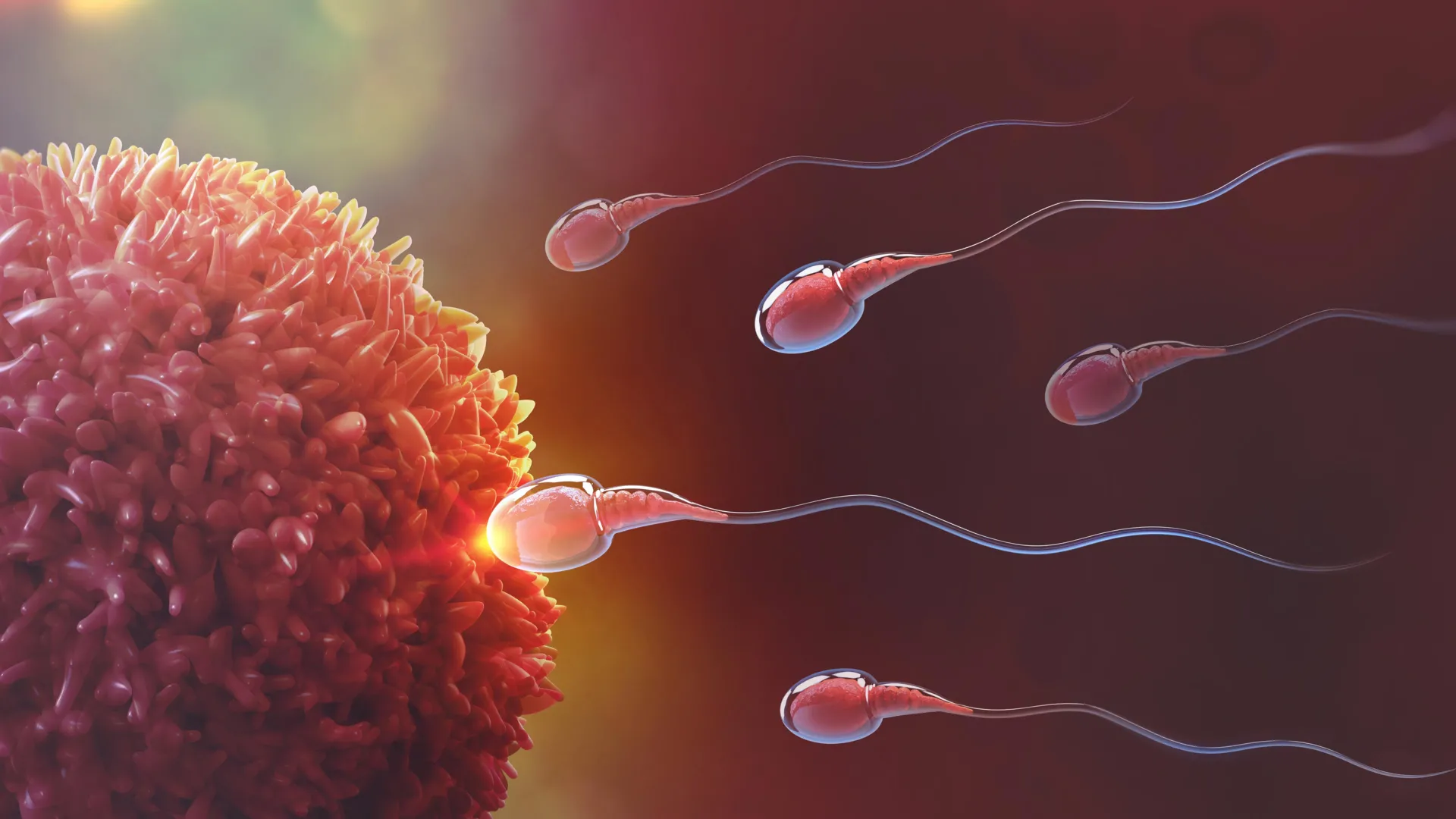
A team of biomedical researchers at Michigan State University (MSU) has announced the identification of a critical molecular "switch" that governs the energy surge in sperm cells immediately prior to fertilization. This discovery, published in the Proceedings of the National Academy of Sciences (PNAS), provides a detailed roadmap of sperm metabolism, offering a potential breakthrough in two major areas of reproductive medicine: the treatment of male infertility and the development of the world’s first effective, nonhormonal male contraceptive.
The study, led by Melanie Balbach, an assistant professor in the Department of Biochemistry and Molecular Biology at MSU, elucidates how sperm cells transition from a dormant, low-energy state to a hyper-activated, high-energy state. This metabolic "reprogramming" is essential for the sperm to navigate the complex environment of the female reproductive tract and successfully penetrate the protective layers of an egg. By understanding the enzymatic controls of this process, scientists believe they can either enhance this energy production to treat infertility or inhibit it to provide a reversible, on-demand form of birth control.
The Unique Nature of Sperm Metabolism
Sperm cells are biological anomalies in the context of cellular metabolism. Unlike most cells in the human body, which must balance energy production with growth, repair, and long-term maintenance, a mature sperm cell is a single-purpose vessel. Its entire metabolic framework is streamlined toward one ultimate objective: achieving fertilization.
"Sperm metabolism is special since it’s only focused on generating more energy to achieve a single goal: fertilization," explained Dr. Balbach, who joined Michigan State University in 2023. This singularity of purpose makes sperm an ideal model for studying metabolic reprogramming—the process by which a cell rapidly shifts its internal chemistry to meet new environmental demands.
For the majority of their existence within the male reproductive system, mammalian sperm remain in a state of suspended animation. They consume very little oxygen and process fuel at a minimal rate to preserve their longevity. However, upon ejaculation and entry into the female reproductive tract, they undergo a process known as capacitation. During this phase, sperm must rapidly increase their swimming speed (hyper-activation) and modify their outer membranes to prepare for fusion with the egg. These physiological changes require an immediate and massive influx of adenosine triphosphate (ATP), the primary energy currency of the cell.
Mapping the Metabolic Path: The "Pink Car" Analogy
While the scientific community has long recognized that sperm require a surge of energy for fertilization, the specific biochemical pathways and "traffic controllers" that manage this surge remained elusive. To solve this mystery, Dr. Balbach collaborated with specialists at Memorial Sloan Kettering Cancer Center and the Van Andel Institute.
The research team developed an innovative method to track how sperm process glucose, the primary sugar they absorb from their environment. By using advanced imaging and metabolic flux analysis, the researchers were able to map the chemical journey of glucose as it moved through the sperm’s internal machinery.
Dr. Balbach described the methodology using a vivid analogy: "You can think of this approach like painting the roof of a car bright pink and then following that car through traffic using a drone. In activated sperm, we saw this painted car moving much faster through traffic while preferring a distinct route and could even see what intersections the car tended to get stuck at."
Using MSU’s state-of-the-art Mass Spectrometry and Metabolomics Core, the team identified that activated sperm do not just "run faster" on the same tracks; they actually reroute their metabolic processes. They discovered that an enzyme known as aldolase acts as a primary regulator in this energy conversion. Furthermore, the study revealed that sperm do not rely solely on external glucose; they also tap into internal energy reserves stored within the cell to jumpstart their journey.
A Chronology of Discovery
The findings at Michigan State University represent the culmination of years of research into male reproductive biology. Earlier in her career at Weill Cornell Medicine, Dr. Balbach was part of a team that demonstrated how blocking a specific sperm enzyme—soluble adenylyl cyclase (sAC)—could cause temporary, reversible infertility in mice. That landmark study proved that it was possible to disable sperm function without interfering with hormone levels or permanent sperm production.
Building on that foundation, the current research at MSU sought to identify the downstream metabolic effects of such inhibitors. The timeline of this research reflects a growing shift in the scientific community toward nonhormonal male contraceptives. For decades, the primary focus of male birth control research was on hormonal suppression—essentially trying to stop the production of sperm altogether. However, hormonal methods often take weeks or months to become effective and can cause side effects similar to those experienced by women on the pill, including mood changes, weight gain, and altered libido.
By focusing on metabolism rather than production, Balbach’s team is targeting the "functional" window of the sperm. This approach allows for the possibility of a drug that could be taken shortly before intercourse to temporarily "turn off" the sperm’s energy switch, rendering them unable to reach the egg, with the effects wearing off within hours.
Addressing a Global Reproductive Health Crisis
The implications of this research are vast, addressing two ends of the reproductive spectrum. According to the World Health Organization (WHO), infertility affects approximately one in six people globally. In about half of those cases, male factor infertility is a contributing or primary cause. Many instances of male infertility are "idiopathic," meaning the cause is unknown despite normal sperm counts. Dr. Balbach’s work suggests that many of these cases may be rooted in metabolic failures—sperm that look healthy under a microscope but lack the "fuel" or the "switch" necessary to complete their journey.
Conversely, the need for better contraceptive options is equally urgent. Data suggests that approximately 50% of all pregnancies worldwide are unplanned. While several highly effective options exist for women, they often come with significant systemic side effects. For men, the only available options remain condoms (which have a high "typical use" failure rate) and vasectomies (which are intended to be permanent).
"Right now, this would give men additional options and agency in their fertility," Balbach said. "Likewise, it creates freedom for those using female birth control, which is hormone-based and highly prone to side effects."
Expert Analysis: The Path to Clinical Application
The discovery of the aldolase-driven metabolic switch provides a specific target for drug development. In a clinical setting, a pharmaceutical inhibitor could be designed to bind to this enzyme, effectively "clogging" the metabolic intersection and preventing the sperm from achieving the hyper-activated state.
Medical analysts suggest that a nonhormonal metabolic inhibitor would be a "holy grail" in contraceptive research for several reasons:
- Speed of Action: Because it targets the sperm directly rather than the process of spermatogenesis (which takes about 74 days), the effect could be nearly instantaneous.
- Reversibility: Once the inhibitor is metabolized by the body, subsequent sperm would remain unaffected, allowing for a rapid return to fertility.
- Safety Profile: By avoiding the endocrine system, the drug would likely avoid the systemic side effects associated with testosterone or estrogen manipulation.
However, the transition from mouse models to human application requires rigorous testing. Dr. Balbach noted that the next phase of the research involves translating these findings to human sperm cells. "Better understanding the metabolism of glucose during sperm activation was an important first step, and now we’re aiming to understand how our findings translate to other species, like human sperm," she stated.
Future Directions and Institutional Support
The research was supported by the National Institute of Child Health and Human Development (NICHD), part of the National Institutes of Health (NIH), reflecting the federal government’s interest in expanding reproductive choices.
At Michigan State University, the focus will now shift toward identifying specific "traffic-control" enzymes that can be targeted safely. The university’s commitment to biochemistry and molecular biology provides a robust infrastructure for this next phase. The team plans to investigate how sperm utilize different fuel sources, such as fructose (which is abundant in the seminal vesicles) versus glucose (found in the female tract), to further refine potential treatments.
In addition to contraception, the study opens new doors for improving Assisted Reproductive Technologies (ART). For couples undergoing In Vitro Fertilization (IVF), the ability to "boost" the metabolic state of a partner’s sperm could significantly increase the success rates of fertilization in the lab.
As the scientific community moves forward, the work of Dr. Balbach and her colleagues serves as a reminder of the power of fundamental metabolic research. By peering into the microscopic engine of a single cell, researchers have found a potential solution to some of the most personal and pressing challenges in global public health. The "molecular switch" in sperm is no longer just a biological curiosity; it is a gateway to a new era of reproductive autonomy and medical innovation.