A long-standing mystery in atmospheric science, the hypothesized phenomenon of corona discharges emanating from treetops during thunderstorms, has been definitively observed and captured on film for the first time in a groundbreaking discovery by a team of Penn State researchers. This direct observation, detailed in a recent publication in Geophysical Research Letters, provides critical validation for a theory that has eluded scientists for over 70 years and opens new avenues for understanding atmospheric chemistry, air quality, and the intricate interactions between forests and the Earth’s electrical environment. The findings suggest that these subtle, ultraviolet (UV) glows are not merely a curiosity but a potentially significant source of atmospheric cleansing agents, with profound implications for environmental science.
A Decades-Old Enigma Illuminates the Canopy
For more than half a century, meteorologists and atmospheric scientists have suspected that trees might emit small pulses of electricity, known as corona discharges, from the tips of their leaves during electrical storms. This hypothesis stemmed from peculiar patterns of electric field activity detected in and above forest canopies during thunderstorms—anomalies that could not be fully explained by lightning strikes or other known electrical phenomena. These theories posited that the immense electrical potential differences generated between storm clouds and the ground could induce a weak ionization of the air around sharp points, such as tree leaves, leading to a faint, localized glow. While similar phenomena, like St. Elmo’s Fire, have been observed on ship masts or aircraft wings, the specific occurrence on countless individual tree leaves within a forest canopy remained undocumented in nature, confined only to laboratory simulations. The ephemeral nature of these discharges, their occurrence during often severe weather, and their faintness, particularly in the UV spectrum invisible to the naked eye, presented formidable observational challenges that had stumped researchers worldwide.
The significance of confirming these discharges extended beyond mere curiosity. Scientists believed that if widespread, these treetop glows could play a crucial role in atmospheric chemistry. The ionization process involved in corona discharges is known to produce highly reactive chemical species, particularly hydroxyl radicals (OH), which are often referred to as the "detergents of the atmosphere." These radicals are vital for breaking down pollutants and greenhouse gases, thereby influencing regional air quality and contributing to global climate regulation. Without direct observation, however, the actual prevalence and impact of these natural corona discharges remained speculative, a missing piece in the complex puzzle of Earth’s atmospheric processes.
The Expedition’s Genesis: A Quest for Florida’s Storms
The quest to capture this elusive phenomenon was spearheaded by a dedicated team from Penn State’s Department of Meteorology and Atmospheric Science and the Penn State Applied Research Lab. The interdisciplinary group included William Brune, a distinguished professor of meteorology and atmospheric science, whose extensive background in atmospheric chemistry provided crucial insights into the potential impacts of these discharges; Patrick McFarland, a doctoral candidate and the lead author of the study, who was instrumental in the field observations and data analysis; Jena Jenkins, an assistant research professor; and David Miller, a former associate research professor now at the Applied Research Lab, who contributed to the technical development of the specialized equipment.
Their mission, launched in June 2024, began with a strategic focus on Florida, a state renowned for its frequent and often intense summer thunderstorms. The team embarked in a modified 2013 Toyota Sienna minivan, which served as their mobile observatory. Affixed to the roof of this unassuming vehicle was a sophisticated, hand-built telescopic weather device. This custom-engineered system, later named the Corona Observing Telescope System (COTS), was designed to peer into the heart of storms and detect the faint UV emissions characteristic of corona discharges. The choice of Florida was no accident; the state’s unique geographical position, surrounded by warm waters, creates a highly unstable atmosphere conducive to the daily formation of convective thunderstorms, offering what the researchers hoped would be prime conditions for their observations. The goal was clear: to finally move the observation of treetop corona discharges from theoretical models and laboratory experiments into the realm of confirmed natural phenomena.
Navigating Nature’s Caprice: Challenges in the Sunshine State
The initial phase of the expedition, however, proved to be a testament to the unpredictable nature of field research. For three weeks, McFarland and Brune diligently chased storms across Florida, often following rapidly developing and dissipating weather systems. Despite the Sunshine State’s reputation, the weather during their visit proved uncharacteristically elusive. Pop-up storms would form with promise, only to vanish as quickly as they appeared, leaving the researchers with little to show for their efforts. The continuous pursuit of these transient phenomena required immense patience, adaptability, and quick decision-making, as they navigated unfamiliar roads and constantly adjusted their observational strategies based on real-time weather forecasts and radar data.
The frustrations mounted as days turned into weeks without the sustained, intense thunderstorm activity necessary for a conclusive observation. The team, equipped with their cutting-edge instruments, found themselves in a race against time and the vagaries of atmospheric conditions. The specialized equipment required stable conditions and close proximity to the storm-affected canopy, which was difficult to achieve with the rapidly moving and short-lived storms they encountered. As the planned three-week window drew to a close, and with their return journey to Penn State looming, the prospect of returning empty-handed became a real concern. This period highlighted the immense logistical and meteorological challenges inherent in capturing such a subtle and fleeting natural event, underscoring why it had remained unconfirmed for so long.
The Breakthrough Moment: North Carolina’s Sustained Fury
The turning point came not in Florida, but unexpectedly as the team began their journey northward. Just west of Interstate 95, as they drove through North Carolina, massive and sustained thunderstorms began to crop up, painting the radar with the vibrant colors of intense precipitation and electrical activity. Recognizing this unforeseen opportunity, the team swiftly exited the highway, seeking a suitable vantage point. They found it in a parking lot at the University of North Carolina at Pembroke, a location that offered both relative safety and an unobstructed view of a nearby forest.
With urgency, they trained their advanced instruments, particularly the COTS, towards the upper branches of a towering sweetgum tree. The rangefinder on their device precisely logged the tree’s distance at 100 feet from their van, providing ideal conditions for observation. For nearly two hours, the thunderstorm raged, flashing lightning across the sky and pouring rain, creating an electrically charged environment that proved perfect for their long-awaited observation. During this extended period, the team meticulously recorded data, and to their immense satisfaction, their UV camera captured what they had been seeking: minuscule pulses of electricity, glowing on the tips of the sweetgum leaves. As the storm began to wane, they were able to pivot their instruments and observe similar corona discharges on a nearby longleaf loblolly pine tree, confirming the phenomenon across different tree species.
The data collected was compelling. On the sweetgum tree alone, the COTS recorded 859 distinct corona events, each ranging from a brief blink to several seconds in duration. An additional 93 events were captured on the loblolly pine. Furthermore, during the remainder of their field campaign, the researchers successfully observed coronae in four more thunderstorms and on four additional tree species, demonstrating that this was not an isolated incident but a widespread phenomenon. These first directly-observed corona discharges occurring in nature were then meticulously analyzed, culminating in their recent publication in Geophysical Research Letters, a prestigious peer-reviewed journal in the Earth sciences. Patrick McFarland, the lead author, encapsulated the profound significance of their achievement, stating, "This just goes to show that there’s still discovery science being done. For more than half a century, scientists have theorized that corona exists, but this proves it."
Unveiling the Mechanism: The Dance of Electricity and Leaves
The scientific explanation behind these glowing treetops lies in the fundamental principles of atmospheric electricity during thunderstorms. As storm clouds develop, powerful updrafts and downdrafts, coupled with ice crystal collisions, lead to a significant separation of electrical charges. Typically, the lower portions of thunderclouds accumulate a strong net negative charge, while the ground directly beneath them becomes positively charged by induction. This creates a massive electrical potential difference, or voltage, between the cloud base and the Earth’s surface, establishing an intense electric field that extends from the cloud down to the ground.
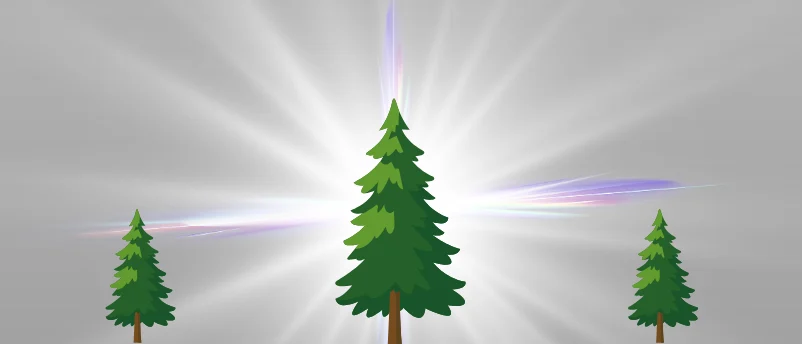
In this highly charged environment, the positive electrical ground charge, driven by the attractive force of the negative cloud above, seeks the path of least resistance to rise. Trees, being tall and conductive structures, act as natural conduits for this charge. The charge flows upwards through the tree trunks and branches, concentrating at the highest and sharpest points—the myriad tiny, hair-like tips of their leaves and needles. According to the principle of point discharge, electrical fields are significantly enhanced at sharp points. When the electric field strength at these leaf tips becomes sufficiently high, it ionizes the air molecules immediately surrounding them. This ionization process, where air molecules lose or gain electrons, creates a plasma that emits a weak glow, predominantly in the ultraviolet (UV) spectrum, but sometimes faintly visible. This is the corona discharge—a continuous, low-current electrical flow that silently and invisibly (to the naked eye) emanates from the canopy during a storm, silently releasing accumulated charge back into the atmosphere.
The Atmospheric Cleanser Connection: Hydroxyl Production and Air Quality
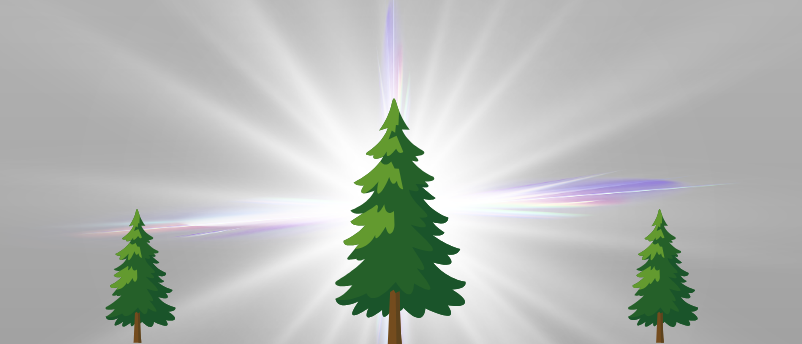
Beyond their captivating visual (with specialized instruments) and electrical characteristics, these corona discharges hold critical implications for atmospheric chemistry, particularly through their role in generating hydroxyl radicals (OH). The UV radiation emitted by the corona discharges possesses sufficient energy to break apart water vapor (H2O) molecules present in the air, leading to the formation of hydroxyl radicals.
Hydroxyl is widely recognized as the most important oxidizer in the troposphere, the lowest layer of Earth’s atmosphere. Often dubbed the "detergent of the atmosphere," OH radicals initiate the breakdown of a vast array of chemical compounds, both natural and anthropogenic. They react with volatile organic compounds (VOCs) emitted by trees (such as isoprene and terpenes) and human activities (like industrial emissions and vehicle exhaust), as well as with potent greenhouse gases like methane (CH4). By reacting with these substances, hydroxyl transforms them into more soluble and less harmful compounds that are easier to remove from the atmosphere through precipitation or deposition.
The Penn State team’s prior research, conducted through controlled laboratory experiments, had already established a strong correlation between the UV emissions from corona discharges and the creation of hydroxyl compounds. By applying high-voltage, low-current electrical impulses to tree branches, they demonstrated that corona events were indeed capable of producing these crucial atmospheric cleansers. The direct observation of widespread corona discharges in nature now validates these earlier findings and suggests that forests, during thunderstorms, could be a substantial, previously underestimated source of atmospheric cleansing agents. This understanding could lead to significant revisions in atmospheric chemistry models, particularly those concerning regional air quality and the global methane budget, potentially altering our perception of how natural processes contribute to the self-cleaning capacity of the atmosphere.
Ingenuity in Instrumentation: The Corona Observing Telescope System (COTS)
The success of this groundbreaking observation hinged on the development and deployment of the sophisticated Corona Observing Telescope System (COTS). This bespoke instrument represents a significant leap in atmospheric research technology, specifically designed to overcome the challenges of detecting faint, transient UV emissions during adverse weather conditions.
At its core, the COTS integrates a Newtonian telescope, renowned for its excellent light-gathering capabilities, with a highly sensitive UV camera. This camera is specifically tuned to detect the narrow band of UV wavelengths emitted by corona discharges, while simultaneously incorporating advanced filters to completely block the much stronger solar UV wavelength band. This crucial design feature ensures that only UV emissions from corona, lightning, and fire (which can be visually identified and accounted for) are recorded, preventing interference from sunlight and allowing for clear detection even during daylight hours if conditions permit.
To ensure precise targeting and data correlation, the COTS is geolocated, meaning its exact position and orientation are continuously monitored, allowing researchers to accurately pinpoint the observed phenomena. It is also equipped with a specialized device for measuring atmospheric electricity, providing real-time data on the ambient electric field strength—a critical parameter for understanding the conditions under which corona discharges occur. Furthermore, the system is meticulously calibrated for UV emissions using a mercury lamp, a standard source of known UV output. This calibration ensures that the recorded UV signals can be quantitatively analyzed, providing accurate measurements of the intensity and characteristics of the corona discharges. The robust design of the COTS, capable of operating effectively in the pouring rain and strong electrical fields of a thunderstorm, was pivotal in allowing the researchers to capture the elusive glow and collect the unprecedented data that confirmed the existence of treetop corona in nature.
Validation and Wider Observations: A New Frontier
The rigorous methodology employed by the Penn State team and the compelling evidence gathered in North Carolina have been thoroughly vetted through the peer-review process, leading to the publication of their findings in Geophysical Research Letters. This journal is a highly respected publication within the Earth and space sciences community, known for publishing high-impact, short-format research that reports original and timely scientific advances. The acceptance of their paper underscores the significance and validity of their discovery.
The observations were not limited to a single tree or a single storm. As McFarland noted, the COTS captured 859 corona events on the sweetgum tree and 93 on the loblolly pine, with individual events lasting from a mere blink to several seconds. This high frequency and duration during a single storm provided substantial data for analysis. Furthermore, the team’s ability to observe coronae in four additional thunderstorms and on four additional tree species throughout their field campaign robustly demonstrates that this is a widespread and common phenomenon, not a localized anomaly.
McFarland’s evocative description, "It’s nearly invisible to the naked eye but our instruments give rise to a vision of swaths of scintillating corona glowing as thunderstorms pass overhead," vividly portrays the hidden electrical ballet occurring above us. This widespread presence of coronae has far-reaching implications, not only for the removal of hydrocarbons emitted by trees and human activities but also for potential subtle tree leaf damage. The observation of leaf damage at the point of corona emission during previous laboratory experiments raises questions about the long-term health of trees and forests exposed to these electrical phenomena.
Beyond the Glow: Ecological and Climate Ramifications
The confirmation of widespread corona discharges on tree canopies during thunderstorms opens up a new frontier of interdisciplinary research, prompting a cascade of questions with significant ecological and climate ramifications. The direct observation of these phenomena necessitates a re-evaluation of current atmospheric models and a deeper investigation into their impact on forest ecosystems.
One of the most immediate questions concerns the health of the trees themselves. While the discharges are a natural process, the researchers noted leaf damage in their earlier lab experiments where corona was induced. Are trees harmed by these electrical pulses, particularly during prolonged or frequent storm events? Or have they evolved sophisticated mechanisms to withstand and perhaps even benefit from this regular electrical interaction with the atmosphere? The subtle leaf damage observed could potentially influence photosynthesis rates, nutrient uptake, or susceptibility to pests and diseases, impacting overall tree vitality and forest productivity. Collaborations with tree ecologists and biologists are essential to conduct long-term studies, potentially involving physiological monitoring of trees in high-thunderstorm regions, to understand the chronic effects of these discharges.
From an ecological perspective, the widespread occurrence of corona discharges could have broader implications for the entire forest ecosystem. How might the localized production of hydroxyl radicals near the canopy affect the chemistry of the forest air, influencing airborne pathogens, insect behavior, or even the dispersal of pollen and spores? Does this atmospheric cleansing benefit the forest by reducing ground-level ozone precursors or other pollutants that could harm vegetation? Conversely, could the electrical fields themselves affect root growth, mycorrhizal fungi, or the intricate microbial communities within the soil, which are vital for forest health?
On a larger scale, the discovery has profound implications for climate science and atmospheric chemistry. If forests are indeed a significant source of atmospheric oxidizers via corona discharges, this could necessitate adjustments in global models of air quality and greenhouse gas budgets. The role of forests in mitigating air pollution might be more complex and active than previously understood, extending beyond simple carbon sequestration and the emission of VOCs. Understanding the magnitude and frequency of these discharges across different forest types and climatic zones will be crucial for accurately quantifying their contribution to the global hydroxyl budget and, consequently, to the self-cleaning capacity of the Earth’s atmosphere. This could lead to a re-evaluation of regional air quality forecasts and strategies for managing atmospheric pollutants.
A New Frontier in Discovery Science
The Penn State team’s achievement is a powerful reminder that even in an era dominated by advanced satellite technology and complex computational models, the natural world continues to hold profound secrets awaiting discovery. The confirmation of treetop corona discharges, a phenomenon theorized for over seven decades, exemplifies the enduring spirit of scientific exploration and the critical role of painstaking field observation combined with technological innovation.
The questions that now arise from this discovery are fertile ground for future research, blazing new paths into our understanding of the intricate connections between Earth’s biosphere and atmosphere. As scientists begin collaborations with ecologists and biologists, they will delve into the multifaceted impacts of these electrical phenomena, from the cellular level of leaf physiology to the broader scale of forest ecosystem health and global atmospheric chemistry. This landmark observation not only solves a long-standing mystery but also unveils a dynamic and previously hidden interaction between trees and thunderstorms, promising a richer, more nuanced understanding of the natural world around us and the vital processes that sustain it.