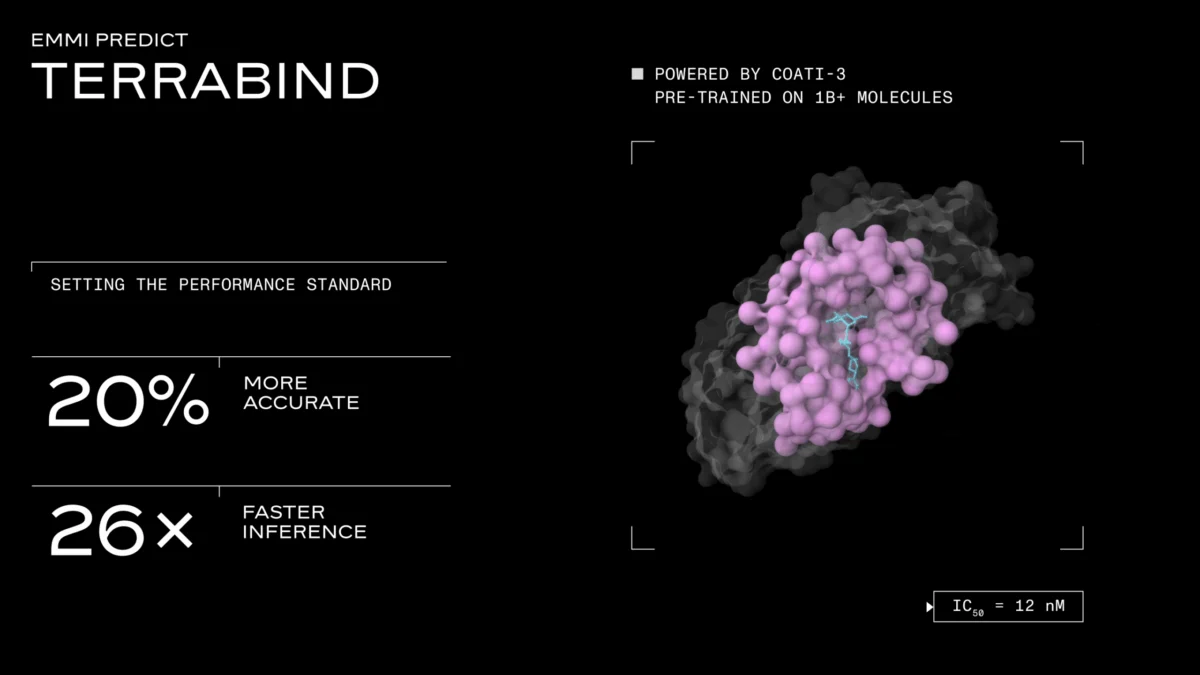
Terray Therapeutics, a burgeoning startup based in the Los Angeles area, has unveiled TerraBind, a groundbreaking potency prediction model designed to significantly accelerate and enhance early-stage drug discovery. This new model directly challenges the prevailing architectural paradigms in artificial intelligence-driven molecular design, claiming a 26x faster inference rate and a 16-20% improvement in accuracy compared to established models like Boltz-2, while also uniquely incorporating built-in uncertainty quantification. The announcement marks a critical juncture in the application of AI to pharmaceutical research, promising to redefine the practical limits of virtual screening and candidate selection.
The Evolving Landscape of AI in Drug Discovery
The field of AI-powered drug discovery has seen rapid advancements in recent years, with a particular focus on predicting how small molecules interact with target proteins. A significant milestone was achieved last June with the release of Boltz-2 by a collaborative effort between MIT and Recursion. Boltz-2 garnered considerable attention as the first open-source AI model capable of jointly predicting protein structure and small-molecule binding affinity. Its predecessor, Boltz-1, had already seen widespread adoption, and Boltz-2 built on this momentum by offering an impressive speed advantage, approaching the accuracy of physics-based free-energy perturbation methods at roughly 1,000 times the speed. This level of performance opened new avenues for rapid preliminary screening, enabling researchers to evaluate a greater number of potential drug candidates than ever before.
However, despite these advancements, Terray Therapeutics posits that diffusion-based co-folding models, including Boltz-2 and those developed by other prominent players like Isomorphic Labs, share a fundamental architectural bottleneck that restricts their utility in the demanding environment of real-world drug discovery programs. The core of Terray’s argument lies in the computational intensity and potential inefficiencies of generating detailed all-atom 3D poses through a diffusion step as a prerequisite for potency prediction.
TerraBind’s Core Innovation: Bypassing the Diffusion Bottleneck
According to Jacob Berlin, Ph.D., co-founder and CEO of Terray, the prevailing sequence in nearly every structure-based potency prediction model involves three key steps: encoding the molecule and protein, generating a detailed all-atom 3D pose via a diffusion process to illustrate how the molecule fits against the protein, and then deriving the potency prediction from that generated pose. Berlin likens this indirect approach to "trying to decide the income of people by first looking at pictures of how they dress, instead of directly trying to predict the income." He emphasizes that in drug discovery, the ultimate goal is simply to determine "how well the molecule works."
TerraBind’s architectural insight represents a significant departure from this established paradigm. The model entirely eliminates the diffusion-based pose generation step, which Terray identifies as consuming approximately 96% of the total compute cost in traditional methods. Instead, TerraBind leverages Terray’s proprietary chemical foundation model, COATI (which has been openly published on ChemRxiv and GitHub), to encode molecules and proteins into a shared, abstract representation space. This encoded information is then directly fed into a Pairformer module. The Pairformer is designed to resolve critical structural features and predict potency without ever needing to construct a complete, all-atom 3D picture of the molecule’s interaction with the protein.
Specifically, the "TerraBind-Struct" component operates at a coarse-grained level, focusing only on protein Cβ atoms and ligand heavy atoms. This simplified representation avoids the iterative denoising and computationally expensive all-atom coordinate generation steps characteristic of diffusion models. The tangible result of this architectural simplification is a dramatic reduction in inference time: from 27.8 seconds per complex for Boltz-2 down to a mere 1.04 seconds for TerraBind, as measured end-to-end on a single NVIDIA A6000 GPU (using 196 tokens and 10 samples). This efficiency gain is not merely incremental but transformative, fundamentally altering the scale and speed at which drug candidates can be evaluated.
Unprecedented Speed and Scalability for Drug Discovery Workflows
The 26-fold increase in inference speed delivered by TerraBind translates into a profound shift in the practical capabilities of AI models within drug discovery. Traditionally, the industry standard for virtual screening has been limited to evaluating thousands of molecules due to computational constraints. Terray’s new model, however, enables million-scale screening, pushing the boundaries of what is feasible in early-stage compound identification.
To maximize this speed advantage, Terray has integrated TerraBind into a sophisticated two-tiered screening pipeline. The first tier utilizes an "ultra-fast sequence-only model" known as TerraBind-Seq. This initial screening step is remarkably efficient, boasting an estimated 20,000 times lower computational cost than public alternatives. Its purpose is to rapidly identify a subset of highly promising candidates from a vast pool of generated molecules. Once this initial, high-throughput filtering is complete, the selected subset of candidates proceeds to the second tier, where they undergo the full structure-based treatment using TerraBind-Struct. Even at this more detailed level, TerraBind-Struct remains approximately 20 times cheaper and faster than Boltz-2.
This tiered approach allows Terray to efficiently navigate the vast chemical space, moving from broad, rapid assessment to more precise, structure-informed evaluation, ultimately enabling the screening of millions of molecules – a scale previously unimaginable for routine drug discovery programs. Such a capability is crucial for identifying novel chemical entities that might otherwise be missed, thereby accelerating the discovery of potential new medicines.
Elevated Accuracy and the Role of Coarse-Grained Geometry
A common concern when simplifying a computational model by stripping out major architectural components is a potential compromise in accuracy. However, Terray’s internal benchmarks suggest the opposite for TerraBind. Jacob Berlin asserts, "You would worry that you’re trading speed and scale for quality, but we don’t. The quality is best in class: 20% better than Boltz, roughly on par with what Isomorphic put out, but it does 26 times more and quantifies the uncertainties."
TerraBind demonstrated a 16-20% improvement in Pearson correlation relative to Boltz-2 across two independent test sets. These included the publicly available CASP16 binding affinity challenge data and a proprietary dataset comprising over 25,000 assay readouts spanning 18 distinct targets. On the proprietary dataset, TerraBind outperformed Boltz-2 on 15 out of 18 targets, indicating robust and consistent superior performance. While the CASP16 results are publicly verifiable, the proprietary dataset results underscore Terray’s internal validation of TerraBind’s capabilities.
Terray attributes these unexpected accuracy gains to a unique benefit of its architecture: by removing the diffusion head, the Pairformer module is "forced to fully resolve structural features" itself, rather than offloading this complex task to a downstream generative step. This direct resolution of structural features within the potency prediction module appears to lead to a more refined and accurate understanding of molecular interactions.
Furthermore, TerraBind achieves its results by producing coarse-grained geometry rather than the highly detailed, all-atom poses generated by diffusion models. Terray argues that this level of structural detail is entirely sufficient for reliable pose prediction and affinity ranking, even if it does not yield the granular, "publication-quality visualizations" that diffusion model outputs can provide. The focus, in Terray’s view, is on predictive power and practical utility in drug discovery, rather than purely aesthetic or overly detailed structural representations that may not be necessary for accurate affinity prediction.
Revolutionizing Candidate Selection with Uncertainty Quantification
Beyond speed and accuracy, Terray emphasizes that the most critical missing feature in many existing AI models for drug discovery is the ability to quantify the confidence level of each prediction. In the traditional drug discovery workflow, after generating and scoring a multitude of molecules, researchers often adopt a "greedy" selection approach, simply picking the top-ranked candidates for experimental synthesis and testing.
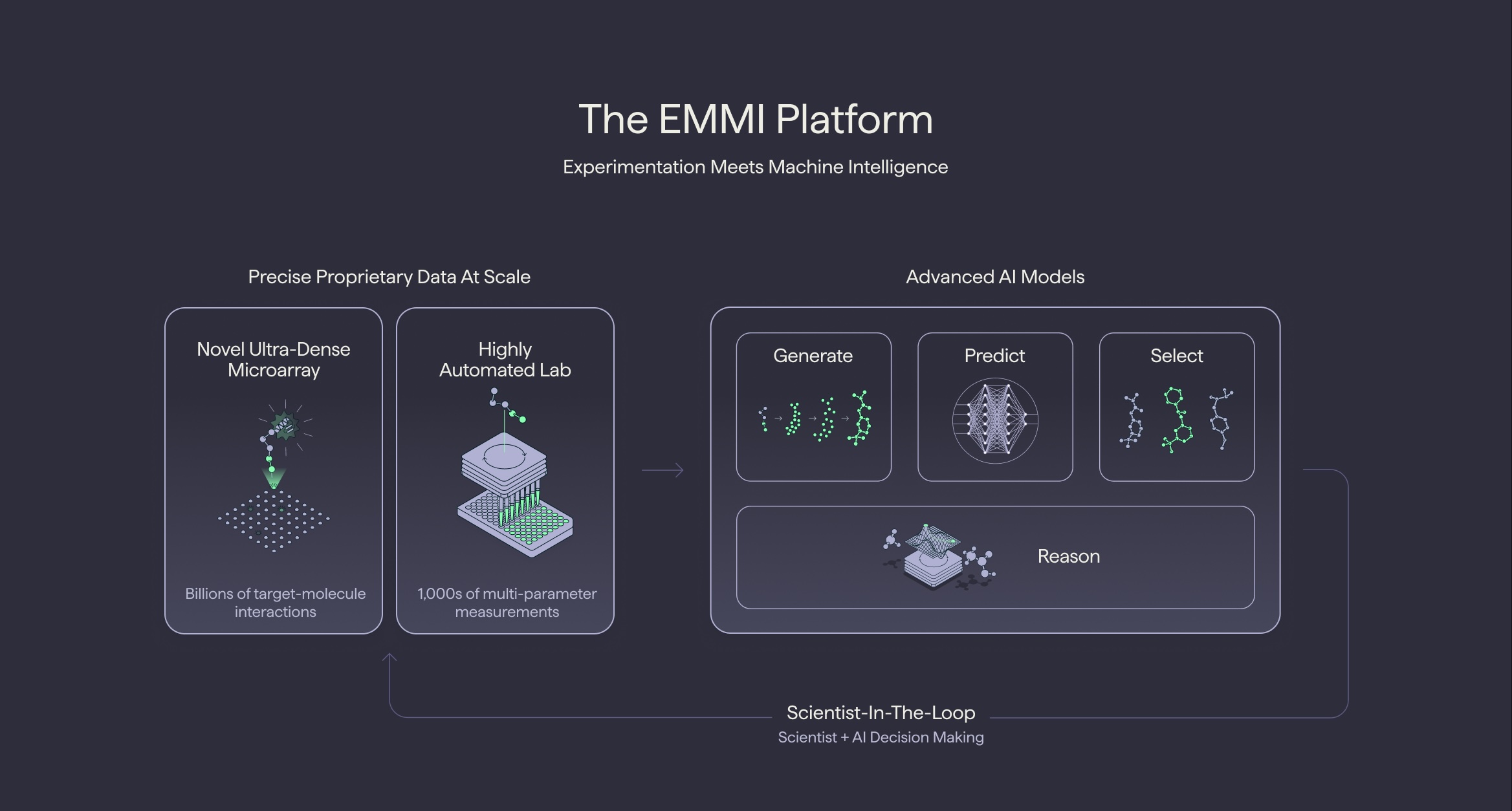
However, as Terray explains in its documentation for the EMMI platform (its integrated experimental and computational platform), model uncertainty can often be correlated. If, for instance, the top 25 molecules all share a common structural motif that the model inadvertently overvalues, a greedy selection could result in a batch where every molecule either succeeds or fails together. While enforcing structural diversity helps mitigate this to some extent, it doesn’t account for shared uncertainties among structurally distinct molecules. This can lead to inefficient experimental cycles and wasted resources if entire batches of promising-looking compounds fail in the lab.
TerraBind addresses this critical challenge through "TerraBind-Epinet," a specialized variant that employs epistemic neural networks to estimate the model’s uncertainty for every prediction. This crucial uncertainty information is then fed into an advanced acquisition function called Expected Maximum (EMAX). EMAX allows for the construction of what Berlin describes as "hedged baskets" of molecules for synthesis.
Explaining the concept, Berlin states, "The math will tell you: if this molecule is what I think it is, this other molecule is unlikely to be what I think it is, and vice versa. So you can build hedged baskets of molecules where if number one works, number ten won’t, which is fine, you got a winner, but if number two doesn’t, number nine probably will. You get rid of the ‘whole set’ type outcome that’s very common in drug discovery, where you make a bunch of molecules and you don’t move your program far enough along."
This intelligent, uncertainty-aware selection strategy has yielded impressive results in Terray’s internal benchmarking. The approach demonstrated a 6x improvement in selection performance compared to conventional greedy methods, and retrospective studies indicated roughly 3x savings in time and cost. By reducing the risk of entire experimental batches failing, uncertainty quantification stands to dramatically improve the efficiency and success rates of early-stage drug development, allowing researchers to make more informed decisions and accelerate progress towards clinical candidates.
From Model Advantage to Clinical Impact: The Road Ahead
While the technical achievements of TerraBind are significant, Jacob Berlin remains pragmatic about the distinction between model performance and actual drug development outcomes. He candidly acknowledges, "Going from model advantage to drug development advantage is actually non-trivial. Everybody always skips it: ‘Oh, my model won on this benchmark, problem solved.’ But you have to imbue it in your internal workflows and connect it all the way through."
Terray Therapeutics, founded in 2019, operates its internal drug discovery pipeline with a focus on immunology. As of this announcement, the company’s programs have not yet reached the clinical stage, meaning TerraBind’s claims, while backed by robust internal and public benchmarks, remain preclinical. However, Terray has successfully hit key milestones in strategic partnerships with major pharmaceutical players, including Bristol Myers Squibb, Gilead, and Calico, indicating a level of validation and confidence from established industry leaders. These collaborations serve as crucial proving grounds for Terray’s platform and its ability to deliver tangible results within complex drug discovery programs.
Terray’s Strategic Moat: Data and Workflow Integration
The question of whether Terray’s architectural innovations will be widely adopted by competitors is one Berlin expects will be answered quickly. He anticipates that the core architectural choices, once demonstrated, will likely "sweep through many of the models very quickly." However, he argues that Terray’s durable competitive advantage, or "moat," rests on two distinct pillars: its unparalleled proprietary data and its deeply integrated workflow.
Firstly, Terray claims to have amassed the largest global database of small-molecule binding data, currently exceeding 14 billion unique target-molecule interactions. This colossal dataset is not static; it continues to grow at an astonishing rate of approximately 1 billion interactions per quarter. This data is generated through Terray’s proprietary ultra-dense microarray hardware, a sophisticated experimental platform capable of measuring interactions between 32 million molecules and targets of interest in a matter of minutes. Crucially, this hardware allows Terray to generate measurements in vast areas of chemical space where no public datasets currently exist. Berlin highlights this distinction: "Almost everybody in the AI space except us has focused their work in areas of known chemical space, because they don’t have proprietary hardware and data at the scale we do." Terray’s EMMI platform blog reinforces this, stating that many current "AI drugs" often resemble existing patents because models perform best when tasked with optimizing previously addressed challenges. Terray’s ability to generate novel data in unexplored chemical regions gives it a unique edge in discovering truly innovative compounds.
Secondly, Terray’s advantage lies in its seamless workflow integration. COATI, the chemical foundation model underpinning TerraBind’s speed and accuracy, has been under continuous development for years and has been trained on over one billion molecules. It is not merely a standalone prediction tool but forms the backbone of Terray’s entire generate-predict-select cycle, used daily by its scientists. This deep integration allows for a fluid, iterative process of molecular design and evaluation. Berlin further notes that Terray’s scientists are increasingly interacting with the EMMI platform through an AI agent, shifting from manually sequencing models to simply asking the system for a desired outcome and allowing the AI to autonomously plan and execute the necessary workflow. This level of automation and intelligent orchestration represents a significant leap in efficiency and scientific productivity.
Industry Recognition and Future Outlook
Terray Therapeutics has attracted substantial investment, having raised over $200 million in funding, with NVIDIA and Bedford Ridge co-leading its Series B round. NVIDIA’s involvement is particularly noteworthy, as the tech giant is both an investor and a technology development partner, underscoring the strategic importance of Terray’s work in the broader AI landscape. The TerraBind announcement itself is being co-promoted with NVIDIA, signaling a strong alliance between the two companies.
Founded in 2019, Terray predates both the COVID-19 pandemic and the subsequent surge in AI interest fueled by models like ChatGPT. This means the company was already building its foundational thesis around the transformative potential of AI in drug discovery before it became a widespread industry trend. Berlin views the ongoing debate between AI "hype" and "reality" as an inherent aspect of the protracted timeline of drug development.
Looking ahead, Berlin envisions a future where AI’s impact on drug discovery will be undeniable, albeit observed retrospectively. He concludes, "In 15 years, when you look back, it’ll be like, ‘Whoa, the drug discovery process changed, the success rate changed, the time to get through all this changed.’ But as you go through it, right up against the frontier, you’ll have people arguing all the way through because one drug will fail, two will succeed, and you’ll have the whole cycle again." This long-term perspective acknowledges the inherent uncertainties and challenges of drug development while maintaining optimism about the cumulative, transformative power of AI innovations like TerraBind.
By accelerating inference, improving accuracy, and crucially, quantifying uncertainty, TerraBind offers a compelling vision for a more efficient, less speculative future in drug discovery. Its unique architectural approach, backed by proprietary data and integrated workflows, positions Terray Therapeutics as a significant force in the ongoing revolution of AI-driven pharmaceutical research.