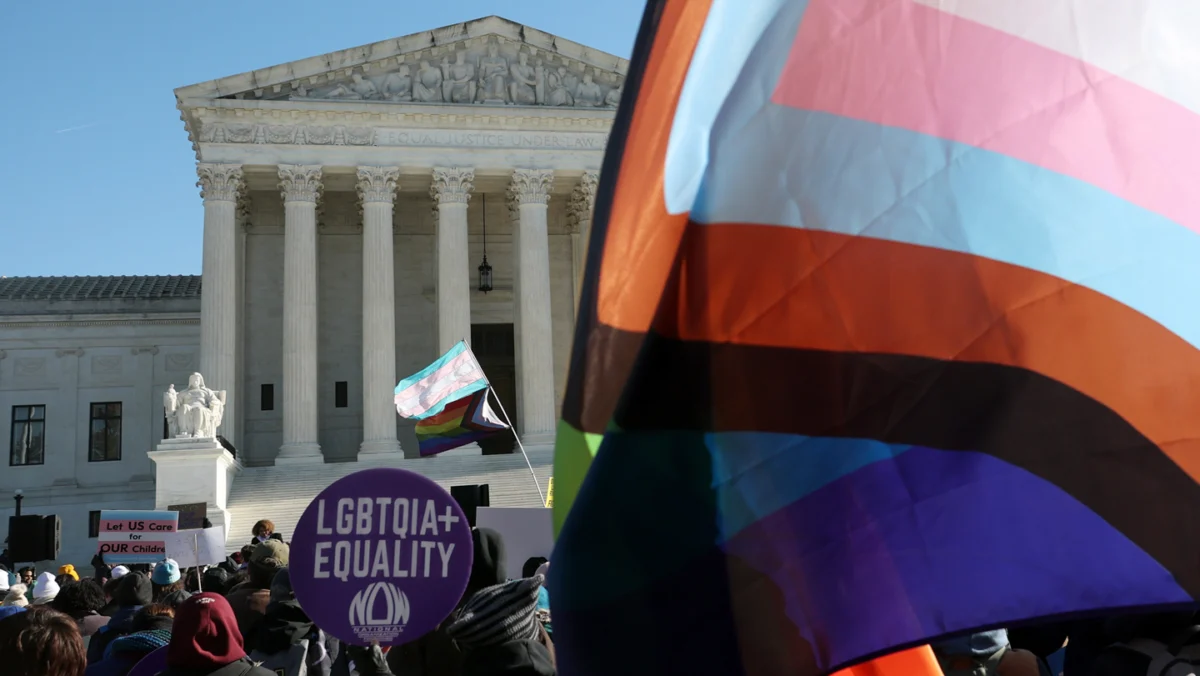
In a landmark decision that reverberated through legal and advocacy circles, the U.S. Supreme Court ruled in late March that Colorado’s statute prohibiting “conversion therapy” for minors infringes upon a therapist’s First Amendment rights. The ruling, which centers on the fundamental nature of protected speech versus regulated medical practice, has ignited debate about the boundaries of professional conduct, parental rights, and the state’s role in safeguarding vulnerable populations. The case, which saw arguments presented on December 4, 2024, and its implications are further amplified by the Court’s prior actions, including the 2025 ruling in U.S. v. Skrmetti, which affirmed a state’s authority to restrict minors from receiving gender-affirming treatments.
The Core of the Ruling: Speech vs. Medical Practice
At the heart of the Supreme Court’s decision lies a critical distinction: whether engaging in conversations aimed at changing a minor’s sexual orientation or gender identity constitutes medical conduct that can be regulated by the state, or whether it falls under the purview of protected speech. The Court, in its majority opinion, leaned heavily towards the latter, asserting that such discussions, even when occurring within a therapeutic setting, are fundamentally an exchange of ideas and expressions, thus shielded by the First Amendment. This perspective suggests that the state’s interest in protecting minors from potential harm, while significant, cannot override the constitutional right to free speech.
This interpretation challenges existing legal frameworks that often categorize certain therapeutic interventions as medical practices subject to professional licensing boards and state regulations. Proponents of the ruling argue that it affirms the principle that therapists, like all individuals, have the right to express their views and engage in dialogue, even on sensitive topics, without undue government interference. They contend that a blanket prohibition on such conversations criminalizes speech itself, rather than regulating demonstrable harm.
Background and the Colorado Statute
The case originated from Colorado’s statute, enacted to ban "conversion therapy" for individuals under 18. Conversion therapy, broadly defined, encompasses practices and therapies that seek to change an individual’s sexual orientation or gender identity. These practices have been widely condemned by major medical and mental health organizations, including the American Medical Association, the American Psychological Association, and the American Academy of Pediatrics, which have stated that such efforts are ineffective and harmful, often leading to depression, anxiety, and increased risk of suicide.
Colorado’s law aimed to protect LGBTQ+ youth from these purported harms, framing conversion therapy as a dangerous practice that inflicts psychological damage. The state argued that its statute was a necessary public health measure, akin to regulations on other potentially harmful medical or therapeutic practices. However, the therapists challenging the law contended that it was an overreach, infringing on their right to provide counsel and engage in dialogue with their clients and their families, even on topics deemed controversial.
Chronology of Legal Battles
The path to the Supreme Court was a protracted one, marked by legal challenges and appeals. Following the enactment of Colorado’s ban, therapists and advocacy groups opposing such restrictions filed lawsuits, arguing that the law was unconstitutional. These challenges were based on the assertion that the statute violated free speech principles by restricting the content of therapeutic conversations.
Lower courts grappled with the interpretation of the statute, with varying outcomes. The case eventually ascended to the Supreme Court, where oral arguments were heard on December 4, 2024. The anticipation surrounding the decision was palpable, given its potential to set a precedent for how states can regulate therapeutic practices involving minors, particularly concerning issues of sexual orientation and gender identity.
The Impact of the U.S. v. Skrmetti Ruling
The Supreme Court’s decision in the Colorado case is underscored by its prior ruling in U.S. v. Skrmetti in 2025. In Skrmetti, the Court upheld a state’s authority to prevent minors from accessing gender-affirming treatments. While seemingly distinct, the two rulings, when viewed together, paint a complex picture of the Court’s approach to issues concerning LGBTQ+ youth and state regulation.
The Skrmetti decision affirmed the state’s power to intervene in medical decisions for minors deemed to be in their best interest, particularly when those treatments are considered experimental or carry significant risks. This ruling provided a legal basis for states to restrict access to certain medical interventions for transgender youth. The subsequent ruling on conversion therapy, however, appears to carve out an exception for speech, even within a therapeutic context, suggesting a nuanced approach where the nature of the intervention—whether medical treatment or verbal discourse—dictates the extent of state regulatory power.
This juxtaposition raises questions about the consistency and coherence of the Court’s jurisprudence on these matters. Critics argue that the rulings create a paradox: the state can restrict medical treatments for transgender youth based on perceived risks, but it cannot restrict conversations aimed at altering their gender identity or sexual orientation, even if those conversations are also deemed harmful by medical experts.
Supporting Data and Expert Opinions
Major medical and mental health organizations have consistently opposed conversion therapy, citing extensive research on its detrimental effects. Reports from the American Psychological Association have documented increased rates of depression, anxiety, suicidal ideation, and substance abuse among individuals who have undergone conversion therapy. The consensus among these professional bodies is that sexual orientation and gender identity are not illnesses to be cured or changed, but rather natural aspects of human diversity.
According to the Williams Institute at UCLA School of Law, a leading research center on sexual orientation and gender identity law and public policy, at least 20 states and the District of Columbia have enacted laws or policies banning conversion therapy for minors. These legislative actions reflect a growing societal and professional consensus on the harms associated with these practices. The Supreme Court’s ruling now casts a shadow over these state-level protections, potentially weakening their enforceability.
Reactions from Related Parties
The Supreme Court’s decision has elicited strong reactions from various stakeholders:
-
LGBTQ+ Advocacy Groups: Many expressed deep disappointment and concern, viewing the ruling as a setback for the safety and well-being of LGBTQ+ youth. They argue that it emboldens practices that are widely recognized as harmful and could lead to a resurgence of discredited therapies. Organizations like GLAAD and The Trevor Project have voiced fears that this decision could increase the risk of harm to vulnerable young people.
-
Therapists and Mental Health Professionals: The ruling has been met with a mixed response. Some therapists who advocate for client autonomy and free speech within therapeutic settings may see it as a vindication of their professional judgment. However, many others, particularly those adhering to the ethical guidelines of major professional organizations, expressed concern that the ruling could be misinterpreted or misused to justify harmful practices.
-
Legal Scholars: Legal analysts are divided. Some hail the decision as a victory for free speech principles, emphasizing the importance of protecting diverse viewpoints, even those that may be unpopular or controversial. Others critique the ruling for potentially undermining the state’s ability to protect children from harm, arguing that the line between speech and conduct can be blurred in a therapeutic context.
-
Parents and Families: For parents of LGBTQ+ youth, the ruling carries significant weight. Those who support their children’s identities fear that this decision could lead to increased pressure from family members or religious institutions to subject their children to harmful conversion practices. Conversely, some parents who hold traditional views on sexuality and gender may see the ruling as a license to seek out such therapies.
Broader Impact and Implications
The Supreme Court’s ruling has far-reaching implications that extend beyond the immediate parties involved:
-
Erosion of State Protections: The decision directly challenges the authority of states to enact and enforce bans on conversion therapy for minors. This could lead to a patchwork of legal protections across the country, with some states maintaining bans and others seeing them weakened or overturned.
-
Debate on Professional Ethics: The ruling intensifies the ongoing debate about the ethical boundaries of therapeutic practice, particularly when dealing with sensitive issues related to sexual orientation and gender identity. It raises questions about the responsibility of professional organizations to provide clear guidance and enforce ethical standards in the face of conflicting legal interpretations.
-
Impact on Mental Health Landscape: The decision could influence the landscape of mental health services available to LGBTQ+ youth. There are concerns that it might inadvertently legitimize practices that are not supported by scientific evidence and could lead to a decline in the availability of affirming and evidence-based care.
-
Future Legal Challenges: This ruling is likely to spur further legal challenges and advocacy efforts. Advocates for LGBTQ+ rights are expected to seek legislative solutions at the state and federal levels to reinforce protections for youth. Conversely, groups that support conversion therapy may use this ruling to challenge existing bans in other states.
-
The Role of the Judiciary: The decision highlights the significant role of the judiciary in shaping public policy and social norms, particularly concerning the rights of minority groups and the balance between individual liberties and state interests. The interpretation of "speech" in this context could have ripple effects on how other forms of professional communication are regulated.
In conclusion, the Supreme Court’s decision that talk therapy aimed at changing sexual orientation or gender identity is protected speech, not medical conduct subject to state prohibition, represents a significant shift in the legal landscape surrounding conversion therapy. While proponents hail it as a victory for free speech, critics express grave concerns about the potential consequences for the well-being of LGBTQ+ youth. The ruling’s long-term impact will undoubtedly be shaped by ongoing legal battles, legislative responses, and the evolving understanding of mental health and human rights.