In a landmark study that bridges the gap between experimental physics and advanced machine learning, researchers at Emory University have successfully utilized a specialized neural network to uncover previously hidden dynamics within dusty plasma. The research, published in the Proceedings of the National Academy of Sciences (PNAS), marks a significant shift in how artificial intelligence is deployed in the laboratory. Rather than acting as a simple tool for data sorting, the AI was integrated into the theoretical framework to identify non-reciprocal forces—interactions where two particles do not influence each other equally—with a precision exceeding 99%. This breakthrough offers not only a more granular understanding of the fourth state of matter but also provides a universal methodology that could be applied to systems as diverse as industrial fluids and metastatic cancer cells.
The Challenge of Non-Reciprocal Interactions
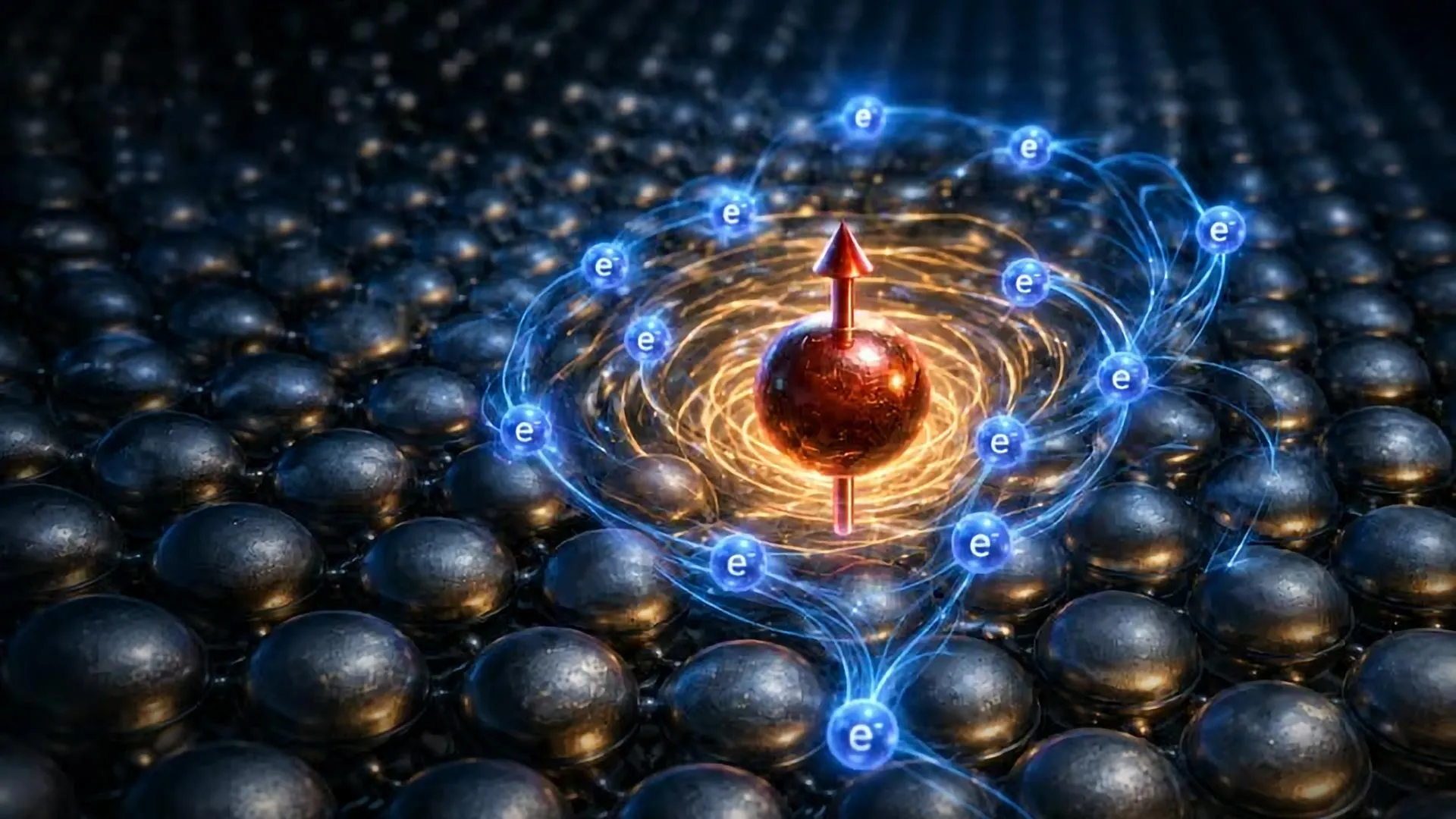
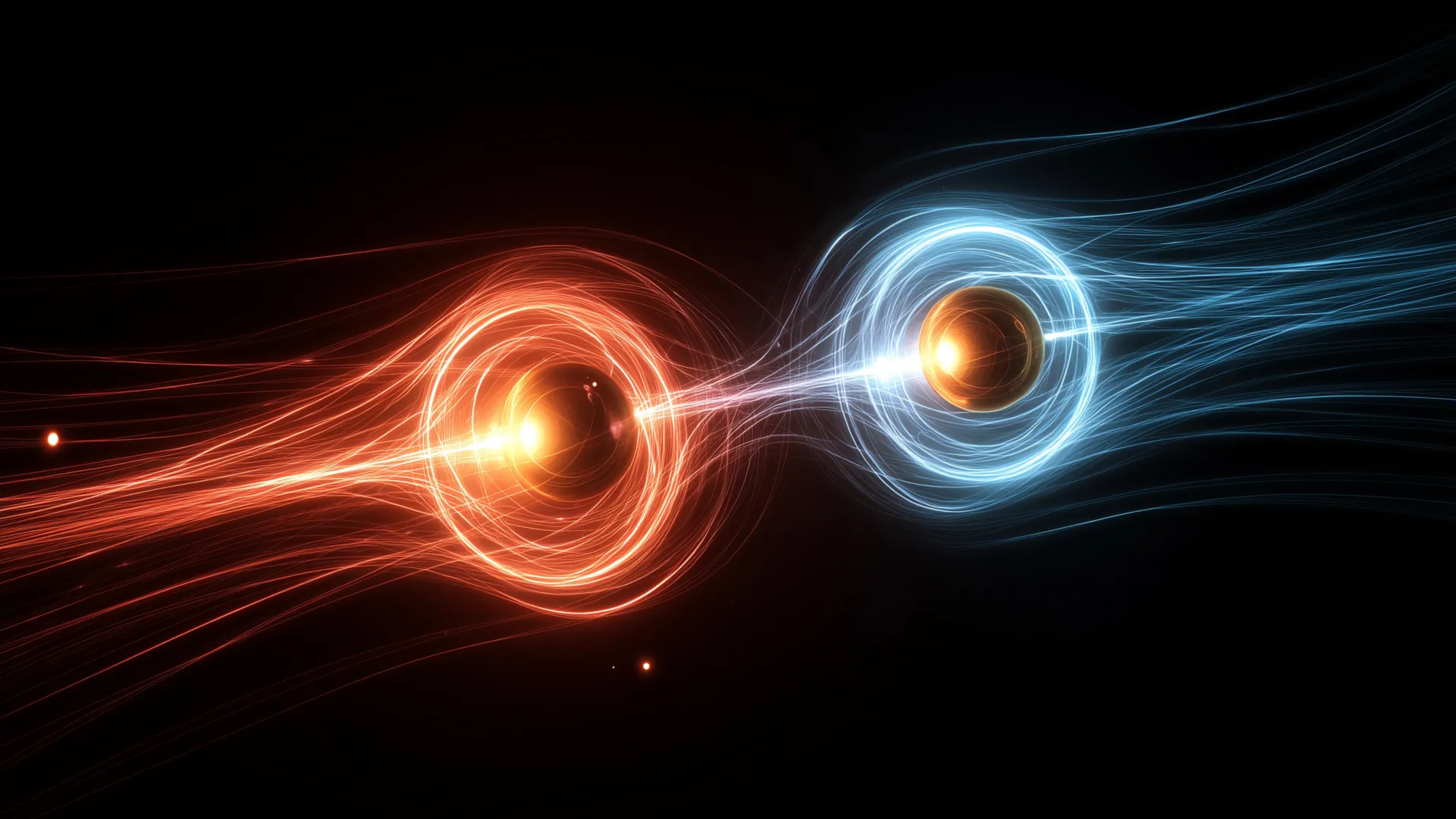
At the heart of the study lies the concept of non-reciprocity, a phenomenon that complicates the classical Newtonian understanding of physics. In a standard reciprocal system, if Particle A exerts a force on Particle B, Particle B exerts an equal and opposite force back on Particle A. However, in complex, "out-of-equilibrium" systems like dusty plasmas, this symmetry is often broken. These non-reciprocal forces are notoriously difficult to measure because they are frequently masked by environmental noise, drag, and the sheer number of interacting components.
The Emory team, led by experimental physicist Justin Burton and theoretical physicist Ilya Nemenman, focused on dusty plasma as their testing ground. Dusty plasma is a ionized gas containing microscopic charged dust grains. These grains interact through complex electromagnetic fields and the flow of the plasma itself, creating "wakes" similar to those left by boats in water. These wakes mean that a leading particle affects a trailing particle differently than the trailing particle affects the leader, creating a directional dependency that has long eluded precise mathematical modeling.
A Chronology of Interdisciplinary Innovation
The project was the result of a multi-year collaboration that required a fundamental rethinking of how AI interacts with physical laws. The timeline of the discovery reveals a meticulous process of trial and error, beginning with the development of new hardware and culminating in a sophisticated software architecture.
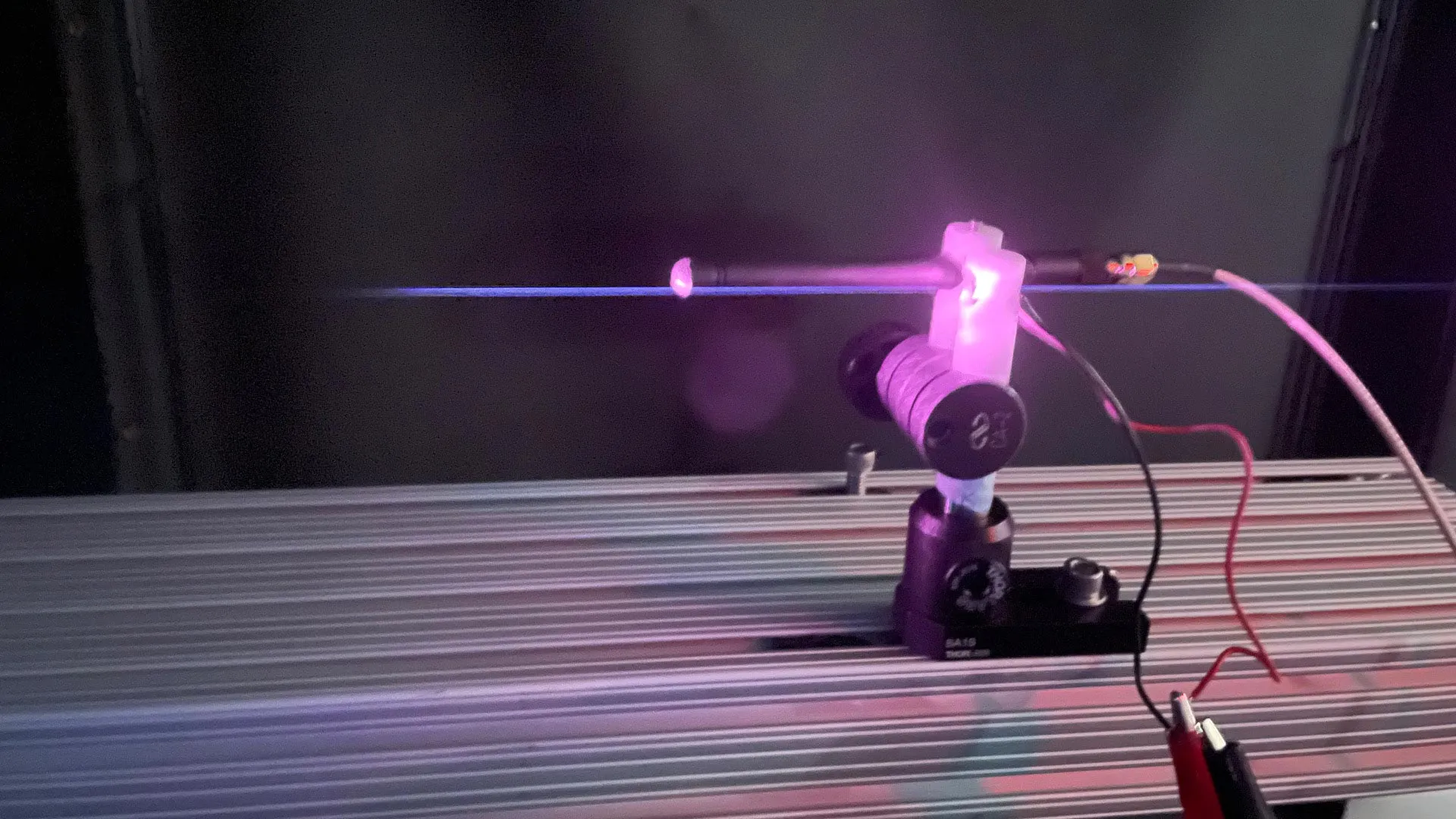
The experimental phase began in Professor Justin Burton’s laboratory, where researchers constructed a vacuum chamber to simulate the conditions of dusty plasma. By suspending plastic microspheres in ionized gas, the team created a controlled environment to observe particle interactions. To capture these movements, they developed a tomographic imaging system. This setup involved a laser sheet moving rapidly through the chamber while a high-speed camera captured thousands of frames per second. This allowed the team to reconstruct the three-dimensional trajectories of dozens of particles simultaneously.
Following the data collection, the project entered a year-long theoretical development phase. Professor Ilya Nemenman and his team worked to design a neural network that could function with limited data. Unlike commercial AI models that require millions of data points, scientific experiments often produce "small data" sets that are highly specific. The challenge was to create a "white box" AI—a model whose internal logic is transparent and follows known physical constraints—while still leaving room for the machine to "discover" unknown variables. Through weekly interdisciplinary meetings, the team refined the network’s structure to ensure it could separate known forces, such as gravity and gas drag, from the mysterious inter-particle forces they sought to define.
Technical Insights into Dusty Plasma Physics
The AI model’s success in describing non-reciprocal forces with 99% accuracy has led to several surprising corrections of established theories. For decades, physicists operated under certain assumptions regarding the relationship between a particle’s size and its electrical charge within a plasma. One common assumption was that a particle’s charge increased linearly with its radius. However, the AI-driven analysis revealed a far more nuanced relationship, showing that the charge is influenced by local plasma density and temperature in ways that previous models had oversimplified.
Furthermore, the research addressed the "screening length" of forces between particles. In plasma physics, it is generally accepted that the electrostatic force between two charged particles decreases exponentially with distance, a phenomenon known as Debye screening. The Emory study found that the rate of this decay is not a universal constant but is significantly affected by the size of the particles themselves. By seeing these interactions in "exquisite detail," as Nemenman described it, the team was able to provide a precise approximation for the wake-mediated attraction and repulsion that occurs between particles in a flow.
The Role of Plasma in the Natural and Industrial Worlds
To understand the impact of this research, one must consider the ubiquity of plasma. Often referred to as the fourth state of matter, plasma consists of a gas where electrons have been stripped from their atoms, leaving a mixture of positively charged ions and free electrons. It constitutes roughly 99.9% of the visible universe, appearing in stars, the solar wind, and the Earth’s ionosphere.
Dusty plasma, specifically, is found in various natural environments. In the rings of Saturn, the interaction between dust particles and the planet’s magnetosphere creates complex patterns. On the Moon, the lack of a significant atmosphere and weak gravity allow charged dust to hover above the lunar surface, a phenomenon that famously plagued Apollo astronauts by coating their suits and equipment in abrasive grit.
On Earth, the study of dusty plasma has immediate practical implications. During large-scale wildfires, the mixture of soot and smoke can become ionized, creating a dusty plasma that interferes with radio frequencies. This can lead to communication blackouts for emergency responders. By using the Emory team’s AI framework, researchers may eventually develop better models to predict and mitigate these signal disruptions.
Supporting Data and Methodology
The strength of the Emory study lies in its hybrid approach. The neural network was not given a "blank slate." Instead, it was structured with a physics-informed architecture that divided particle motion into three distinct components:
- Velocity-Dependent Drag: The resistance particles face as they move through the background gas.
- External Fields: The influence of gravity and the electrical confinement of the vacuum chamber.
- Inter-particle Interactions: The specific forces between dust grains, including the non-reciprocal wake effects.
By isolating these variables, the AI was able to pinpoint the exact mathematical form of the non-reciprocal forces. The experimental validation involved comparing the AI’s predictions against independent laboratory runs. The data showed that the AI could predict the future positions of particles based on their current state with unprecedented fidelity, proving that the discovered "laws" were consistent across different experimental conditions.
Official Responses and Collaborative Impact
The National Science Foundation (NSF), which primarily funded the research, has hailed the project as a milestone in interdisciplinary science. Vyacheslav Lukin, the program director for the NSF Plasma Physics program, emphasized that the project serves as a blueprint for future research. According to Lukin, the ability of AI to recognize and even control collective interactions in complex systems is a frontier that could lead to advances in both technology and the study of living systems.
The researchers themselves emphasize that the human element remains central to AI-driven discovery. Justin Burton noted that the development of the tool required intense critical thinking and a deep understanding of the humanities and sciences to ensure the AI was used ethically and effectively. The collaboration also served as a training ground for the next generation of scientists; the study’s first author, Wentao Yu, has since moved to a postdoctoral fellowship at Caltech, while co-author Eslam Abdelaleem is now at Georgia Tech.
Broader Implications: From Paint to Pathogens
The implications of this AI framework extend far beyond the vacuum chambers of a physics lab. The researchers believe their "universal framework" can be applied to any many-body system where individual components interact to create a collective behavior.
In the industrial sector, this could revolutionize the manufacturing of complex fluids such as paint, ink, and specialized coatings. Understanding how particles within these fluids interact at a microscopic level could lead to more stable products and more efficient application processes.
Perhaps most significantly, the study offers a new lens through which to view biological systems. Ilya Nemenman, who also specializes in theoretical biophysics, pointed out that the movement of cells within the human body—particularly in the context of cancer—shares many characteristics with the collective motion seen in dusty plasmas. In the case of metastasis, understanding the non-reciprocal forces that allow certain cells to break away from a tumor and migrate to other parts of the body is a critical area of oncology. If the AI framework can be adapted to biological data, it may help researchers identify the physical triggers that cause cancer to spread.
Future Directions in AI-Enhanced Physics
As Nemenman prepares to bring these techniques to the Konstanz School of Collective Behavior in Germany, the focus is shifting toward applying these AI tools to even more complex systems, such as bird flocks, fish schools, and human crowds. The goal is to move from describing these systems to predicting and potentially influencing their behavior.
The Emory study stands as a testament to the idea that AI, when properly constrained by physical principles, is not merely a "black box" but a powerful magnifying glass. It allows scientists to see through the noise of complex data to find the elegant, underlying rules that govern the universe. As Justin Burton concluded, the proper use of AI is like a mission "to boldly go where no one has before," opening doors to realms of physics that were previously thought to be too complex for human or machine to decipher alone. This research ensures that the next era of discovery will be defined by a partnership between human intuition and algorithmic precision.