The hum of the cosmos, once confined to the realm of scientific inquiry and the silent vigilance of radio telescopes, has found an unexpected new outlet: a musical collaboration that transforms complex astrophysical data into captivating soundscapes. A trio of individuals, drawn together by a shared fascination with the invisible forces that shape our solar system, has launched a project that bridges the gap between cutting-edge space weather research and the universal language of music. Their work, rooted in the analysis of radio waves emanating from Earth’s magnetosphere and beyond, is not just an artistic endeavor but a novel approach to public engagement with a field critical to our technological infrastructure and planetary well-being.
The genesis of this unique partnership lies in the remote, windswept landscape of Antarctica. Here, nestled amidst the stark beauty of the frozen continent, a sophisticated, spider-like antenna stands as a silent sentinel. This instrument is not merely collecting data; it is actively listening to the subtle, yet powerful, radio waves that ripple through Earth’s upper atmosphere. These celestial whispers, often triggered by the dynamic interplay between solar winds – streams of charged particles emanating from the Sun – and the Earth’s protective magnetic field, as well as terrestrial phenomena like lightning, carry vital information about the conditions in space. Scientists at the prestigious British Antarctic Survey (BAS) meticulously study these radio wave emissions. Their objective is twofold: to gain a deeper understanding of space weather, the ever-changing environment in near-Earth space, and to illuminate its intricate connections with Earth’s climate.
Space weather, often an invisible threat, can have profound and far-reaching consequences. Geomagnetic storms, for instance, can disrupt satellite communications, interfere with GPS navigation systems, and even pose risks to astronauts in orbit. They can also induce currents in power grids, leading to widespread blackouts. The ongoing research in Antarctica, by analyzing the radio wave signatures of these events, aims to provide crucial early warnings and improve predictive models, thereby mitigating potential damage.
The inspiration for the musical project, dubbed "The Sounds of Space," emerged from a serendipitous encounter between individuals from disparate backgrounds but united by a common curiosity. Dr. Anya Sharma, a lead researcher in magnetospheric physics at BAS, has dedicated years to deciphering the complex patterns within these radio waves. Her work involves sophisticated algorithms and deep theoretical knowledge, translating fluctuating energy levels and particle densities into actionable scientific insights.
Her collaborator, renowned electronic music producer Leo Vance, had been exploring novel sound generation techniques, seeking inspiration beyond traditional musical structures. Vance, known for his ambient and experimental compositions, was captivated by the raw, often unpredictable, sonic potential hidden within scientific data. He recognized that the intricate variations in radio wave signals – their frequencies, amplitudes, and temporal fluctuations – possessed an inherent musicality, a cosmic rhythm waiting to be unveiled.
The third member of this unlikely ensemble is Elara Chen, a digital artist and data visualization specialist. Chen’s expertise lies in transforming abstract datasets into compelling visual narratives. She saw in the space weather data not just numbers and graphs, but a canvas for creating immersive sensory experiences. Her initial work involved mapping the radio wave data onto dynamic visual representations, but she soon realized that a sonic dimension would complete the picture.
The initial spark for the collaboration ignited approximately eighteen months ago during a public outreach event organized by the BAS. Dr. Sharma was presenting her research on the radio emissions detected in Antarctica, using complex audio spectrograms to illustrate the phenomenon. Leo Vance, attending the event, was struck by the unique textures and evolving patterns within the sounds, which he described as "a symphony of the invisible." He approached Dr. Sharma after the presentation, expressing his profound interest in exploring the sonic potential of her data.
Intrigued by Vance’s artistic vision, Dr. Sharma initially expressed skepticism, given the highly technical nature of her work. However, Vance’s earnest enthusiasm and his demonstrated ability to translate abstract concepts into evocative sound convinced her to explore the possibility. It was during a subsequent meeting, facilitated by Elara Chen, who had also been involved in visualizing some of Sharma’s data for a separate exhibition, that the full scope of "The Sounds of Space" began to take shape. Chen, with her background in multi-sensory artistic installations, immediately saw the synergy between Sharma’s scientific rigor, Vance’s musical artistry, and her own ability to weave these elements into a cohesive experience.
The project officially commenced approximately twelve months ago, with the team establishing a workflow that balanced scientific accuracy with artistic freedom. Dr. Sharma provided Vance and Chen with curated datasets, meticulously extracted and analyzed from the Antarctic radio telescope. These datasets encompassed various phenomena, including signatures of solar flares, coronal mass ejections, and the subtle oscillations of the magnetosphere during periods of geomagnetic quiet.
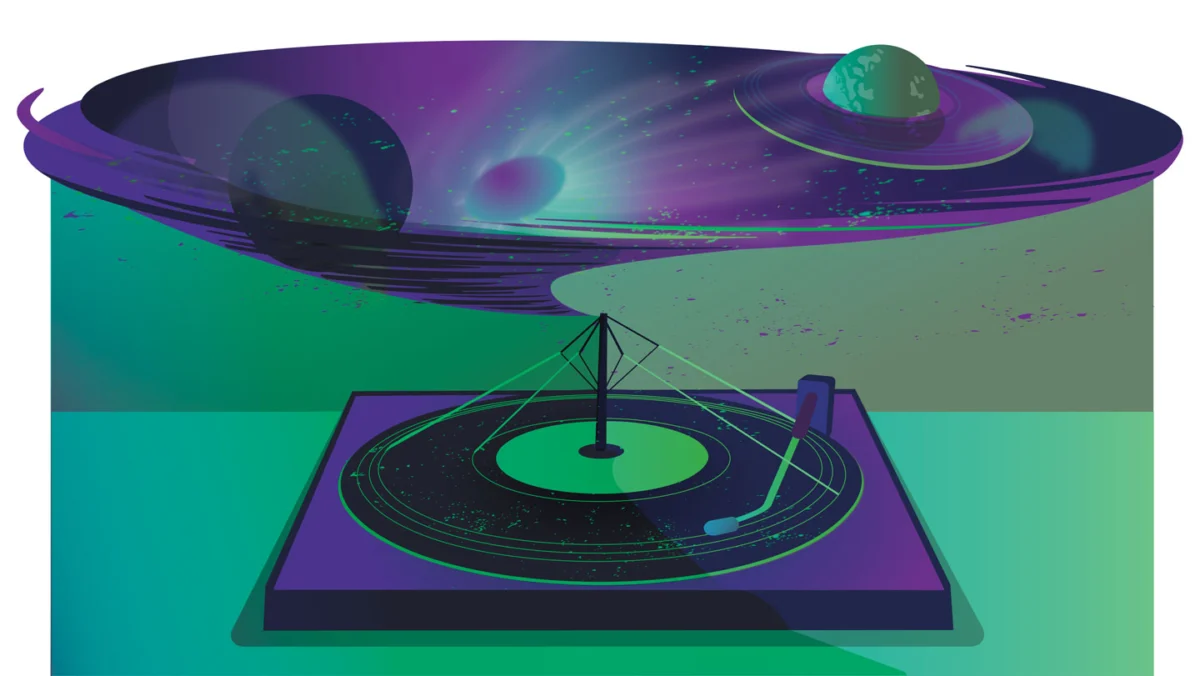
Vance then embarked on the intricate process of sonification. This involved mapping specific data parameters – such as the intensity of radio waves at particular frequencies, the rate of change in these intensities, and the temporal duration of specific events – to musical elements like pitch, rhythm, timbre, and volume. For instance, a sudden surge in radio wave activity might be translated into a crescendo of synthesized tones, while the subtle, persistent hum of the magnetosphere could be represented by a low, evolving drone. Vance emphasized that his goal was not to simply assign arbitrary sounds to data points, but to create a sonic narrative that reflected the underlying physics and the dynamic nature of space weather.
"It’s about finding the inherent music within the chaos," Vance explained in a recent interview. "The raw data from these radio waves has a certain texture, a certain rhythm. My job is to amplify that, to reveal the underlying structure and emotional resonance that science might not typically focus on, but which is undeniably present."
Elara Chen’s role was equally crucial. She worked in parallel with Vance, developing visualizations that would complement and enhance the auditory experience. Her digital art incorporated elements inspired by the visual representations of space weather phenomena, such as swirling plasma, magnetic field lines, and the aurora borealis, all synchronized with Vance’s musical compositions. The aim was to create a multi-sensory immersion, allowing audiences to not only hear but also "see" the forces at play in space.
"We wanted to move beyond the sterile graphs and charts," Chen stated. "The goal is to evoke a sense of wonder and connection. When you see the visual representation of a solar flare accompanied by Leo’s powerful soundscape, you begin to grasp the sheer scale and energy of these events in a way that a textbook simply cannot convey."
The first major output of "The Sounds of Space" is a series of three album-length releases, each focusing on a distinct aspect of space weather research. The inaugural album, titled "Magnetospheric Whispers," delves into the daily fluctuations of Earth’s magnetic field. It features subtle, evolving ambient soundscapes, punctuated by moments of unexpected sonic activity that represent geomagnetic substorms and auroral displays. The data used for this album was primarily collected over a six-month period from the Antarctic observatory, offering a detailed sonic diary of Earth’s magnetic shield.
The second release, "Solaris Symphony," explores the impact of solar activity on Earth. This album incorporates more dramatic and energetic compositions, reflecting the power of solar flares and coronal mass ejections. Vance utilized data from both ground-based observatories and satellite-based instruments to capture the full spectrum of solar influence. For example, the album includes a section dedicated to the Carrington Event of 1859, the most significant geomagnetic storm on record, which is sonified to convey its immense disruptive power. While direct radio wave data from that era is unavailable, Vance used historical accounts of telegraph disruptions and auroral displays to inform the composition, creating a sonic interpretation of this pivotal historical event.
The third and final album in the series, "Cosmic Currents," ventures further, incorporating radio wave data from deeper space phenomena, such as pulsars and distant galaxies, interpreted through the lens of their potential influence on Earth’s environment. This album pushes the boundaries of the project, exploring theoretical connections and the vastness of the universe.
The scientific community has reacted with a mixture of intrigue and cautious optimism. Dr. Evelyn Reed, a leading astrophysicist at NASA, commented, "This project represents a truly innovative approach to science communication. By translating complex scientific data into a universally accessible medium like music, ‘The Sounds of Space’ has the potential to engage a much broader audience with the vital field of space weather research. It’s an exciting testament to the aesthetic beauty that can be found within scientific inquiry."
However, some scientists have raised questions about the potential for misinterpretation. Dr. Jian Li, a specialist in radio astronomy, noted, "While artistic license is inherent in such projects, it is crucial that the underlying scientific integrity is maintained. The public must understand that these are interpretations, albeit informed ones, and not direct representations of the raw data without any creative intervention. Clear communication about the methodology employed in the sonification process will be paramount."
The implications of "The Sounds of Space" extend beyond mere public engagement. By forcing a re-examination of scientific data through an artistic lens, the project may foster new avenues of scientific discovery. Vance has spoken of how the process of translating data into music has sometimes led him to perceive subtle patterns that were not immediately apparent in the raw numerical representations, prompting Dr. Sharma to re-examine certain datasets with fresh perspective.
Furthermore, the project highlights the increasing convergence of STEM (Science, Technology, Engineering, and Mathematics) fields with the arts and humanities (STEAM). This interdisciplinary approach is increasingly recognized as crucial for fostering creativity, problem-solving skills, and a more holistic understanding of the world. "The Sounds of Space" serves as a powerful example of how these seemingly disparate fields can not only coexist but enrich one another.
The team plans to embark on a global tour, presenting live performances of their music accompanied by Elara Chen’s immersive visuals. These events will also include Q&A sessions with Dr. Sharma, allowing the public to delve deeper into the science behind the sounds. The British Antarctic Survey has expressed its full support for the initiative, recognizing its potential to raise awareness and foster a greater appreciation for the critical research conducted at its remote stations.
In an era where understanding and mitigating the effects of space weather are becoming increasingly important, "The Sounds of Space" offers a unique and compelling invitation to listen to the universe. It is a reminder that even the most abstract scientific phenomena possess an inherent beauty and a rhythm that can resonate deeply, transforming the invisible forces that shape our planet into a captivating and accessible symphony. The project stands as a testament to human curiosity, the power of interdisciplinary collaboration, and the profound connections that can be forged between the realms of science and art.