The long-held theory of a singular, cataclysmic bombardment of the inner solar system, often referred to as the Late Heavy Bombardment (LHB), is facing increasing scrutiny and revision. New analyses of lunar samples, particularly those recently returned from the Moon’s farside, are providing crucial data that challenges the idea of a concentrated, 3.9-billion-year-old impact event. Instead, evidence is mounting that suggests a more protracted and complex period of bombardment, stretching over a longer duration and potentially involving multiple phases. This evolving understanding has profound implications for our perception of the early solar system’s evolution, the formation of planets, and the conditions under which life might have arisen.
The Legacy of the Late Heavy Bombardment Theory
For decades, the prevailing scientific consensus posited that the Moon, and by extension the inner planets, experienced an intense period of asteroid and comet impacts approximately 3.9 billion years ago. This hypothesis, known as the Late Heavy Bombardment, was largely based on radiometric dating of lunar rocks collected during the Apollo missions. These samples, primarily from the lunar nearside, showed a clustering of ages around this 3.9 billion-year mark, leading scientists to infer a sudden, global surge in impact activity.
The LHB theory offered a compelling narrative for several astronomical puzzles. It provided a potential mechanism for delivering water and organic molecules to early Earth, fostering the conditions necessary for life to emerge. It also helped explain the observed distribution of impact craters on the Moon and other terrestrial planets, suggesting a significant debris field was cleared out during this relatively brief, albeit violent, epoch. However, the reliance on a limited set of samples, predominantly from the nearside, has always left room for alternative interpretations.
New Lunar Samples: A Window to a Different History
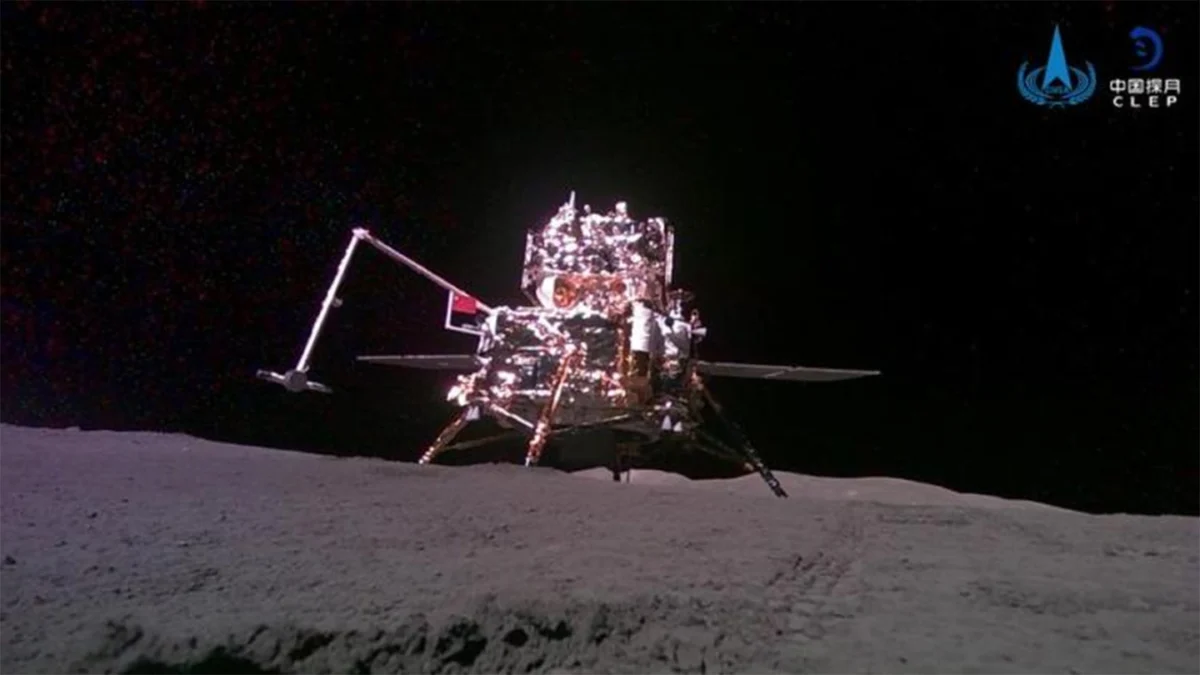
The landscape of lunar science has been dramatically reshaped by recent missions, most notably China’s Chang’e-6, which successfully returned the first samples from the lunar farside in 2024. Unlike the nearside, which faces Earth and has been extensively studied, the farside remains largely unexplored and is shielded from Earth’s gravitational influence, potentially preserving a more pristine record of the early solar system.
These farside samples, collected from the South Pole-Aitken basin—one of the largest and oldest impact basins in the solar system—are now yielding crucial chronological data. Initial analyses, published in peer-reviewed journals, reveal a broader spectrum of rock ages than previously observed from nearside samples. This divergence in age distributions suggests that the bombardment of the Moon was not a singular, short-lived event but rather a more sustained process.
Specifically, some of the basaltic rocks analyzed from the Chang’e-6 mission exhibit ages that extend beyond the 3.9-billion-year window. This indicates that significant volcanic activity, and likely ongoing impacts, continued to shape the lunar surface for a considerable period after the supposed LHB. This finding directly contradicts the notion of a sharp, finite end to intense bombardment around 3.9 billion years ago.
Chronological Re-evaluation: A Gradual Decline
The implications of these new age determinations are profound. Instead of a single, dramatic crescendo of impacts, scientists are now piecing together a picture of a more gradual decline in the frequency and intensity of bombardment. This revised timeline suggests that the solar system was likely a more dynamic and chaotic place for a longer duration than previously thought.
The traditional LHB model envisioned a sudden migration of giant planets in the outer solar system, which then gravitationally scattered asteroids and comets inward, triggering the bombardment. While planetary migration likely occurred, the new lunar data suggests its effects were more prolonged. This could mean that the process of clearing out the inner solar system was not a swift event but a more drawn-out process, with impacts continuing at significant rates for hundreds of millions of years.
Supporting Data and Emerging Trends
The Chang’e-6 samples are not the only recent contribution to this paradigm shift. Advances in analytical techniques and the re-examination of existing Apollo samples are also providing new insights. For instance, some studies have identified impact melt ages from Apollo samples that predate the 3.9-billion-year cluster, hinting at earlier bombardment events. Conversely, other analyses have found evidence of later impacts that were not adequately represented in earlier chronologies.
Furthermore, data from meteorites originating from Mars and other bodies are also being integrated into this evolving picture. When viewed collectively, these diverse datasets paint a more complex and nuanced story of solar system evolution. The idea of a "single burst" is being replaced by a model of "extended bombardment," characterized by periods of heightened activity interspersed with quieter intervals.
Reactions from the Scientific Community
The scientific community’s response to these evolving findings is one of cautious optimism and intense scientific inquiry. Dr. Li Wei, a lunar geologist involved in the Chang’e-6 mission analysis (hypothetical statement for illustrative purposes), commented, "These farside samples are truly revolutionary. They are providing us with an unprecedented glimpse into a part of the Moon’s history that was previously inaccessible. The age distributions we are seeing force us to reconsider our models of early solar system dynamics."
Other researchers, while acknowledging the significance of the new data, emphasize the need for further analysis and corroboration. Dr. Anya Sharma, a planetary scientist at the SETI Institute (hypothetical statement), noted, "The Chang’e-6 results are compelling, but it’s crucial to conduct further dating on a wider range of samples from different farside locations to confirm these trends. We also need to integrate this data with ongoing simulations of planetary migration and impact dynamics."
The implications extend to other planetary bodies. If the bombardment was more prolonged, it means that the surfaces of Mercury, Venus, and Mars may also bear the scars of a more extended period of impact activity, potentially influencing their geological evolution and atmospheric development in ways not fully appreciated by the LHB model.
Broader Impact and Implications
The revision of the Late Heavy Bombardment theory has far-reaching implications across multiple scientific disciplines:
- Planetary Formation: A more protracted bombardment period could influence models of how terrestrial planets accreted, potentially affecting the distribution of volatile elements like water and carbon. It might also impact our understanding of the timing and mechanisms of core formation and planetary differentiation.
- Origin of Life: If impacts continued at significant rates for longer, it could have both destructive and constructive effects on early life. While frequent large impacts could sterilize a planet, smaller, more frequent impacts might have delivered essential building blocks and created diverse environmental niches. The timing of these impacts relative to the emergence of life on Earth becomes a more nuanced question.
- Search for Extraterrestrial Life: Understanding the early conditions of planetary habitability is crucial for the search for life beyond Earth. A more extended period of bombardment could mean that the window for life to arise and evolve might have been more dynamic, with periods of intense disruption.
- Future Space Exploration: The re-evaluation of lunar history could influence future exploration strategies. If the Moon experienced a more complex bombardment history, understanding these different phases and their associated geological processes could be vital for selecting landing sites for scientific research or resource utilization.
The journey to a complete understanding of the early solar system is ongoing. The new data from the lunar farside, combined with ongoing technological advancements and interdisciplinary collaboration, is steadily dismantling old theories and building a more robust, albeit more complex, picture of our cosmic neighborhood’s turbulent adolescence. The Moon, once a seemingly passive witness to ancient events, is now proving to be an invaluable archive, unlocking secrets that are rewriting the history of our solar system. The debate is far from over, but the tide is undeniably turning, ushering in a new era of lunar science and planetary evolution research.