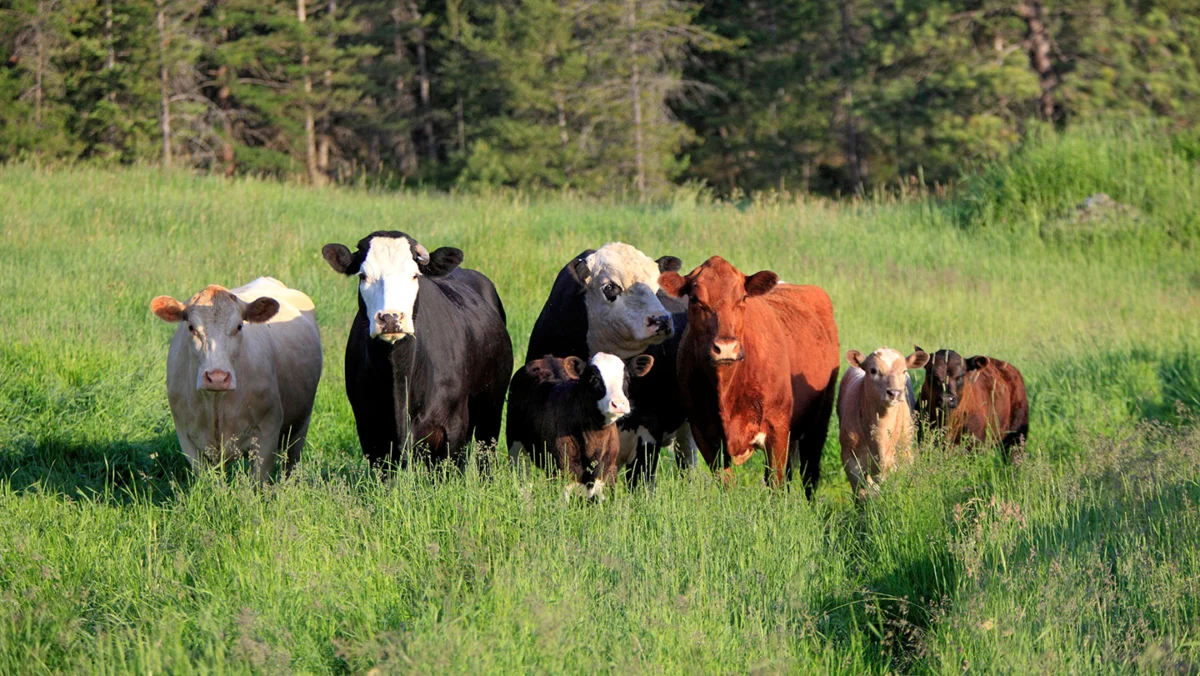
A groundbreaking genome analysis of Beefalo, a hybrid livestock breed celebrated for its supposed fusion of cattle and bison genetics, has yielded a surprising and potentially contentious finding: the vast majority of the analyzed animals contain little to no discernible bison DNA. This revelation challenges decades of established understanding about the breed’s origins and its prized characteristics, raising questions about the very foundation of Beefalo’s identity and market appeal. The study, published on June 10th in the journal eLife, employed sophisticated genomic sequencing techniques on preserved genetic material from the breed’s earliest days, aiming to unravel the true genetic makeup of this iconic American livestock.
The Promise of a Hybrid: Beefalo’s Genesis and Appeal
The concept of the Beefalo emerged in the mid-20th century with the ambitious goal of creating a superior livestock animal. Breeders envisioned a hybrid that would inherit the hardiness, disease resistance, and foraging efficiency of the American bison ( Bison bison) while retaining the docile temperament and established farming practices associated with domestic cattle (Bos taurus). The purported benefits were significant: a leaner, more tender meat with higher protein content, a reduced environmental impact due to a more efficient diet, and greater resilience in challenging climates. This potent combination of desirable traits fueled the breed’s development and marketing, positioning Beefalo as a premium alternative to conventional beef.
The American Beefalo Association (ABA), the primary registry and governing body for the breed, established specific genetic standards. A "full-blood" Beefalo, according to the ABA, is defined as having three-eighths bison ancestry and five-eighths cattle ancestry. This precise ratio was intended to ensure the presence of key bison genetic contributions while maintaining a significant cattle component for manageability and established breeding programs. Over the years, this genetic blueprint has been central to the breed’s identity, influencing breeding strategies, consumer perception, and market value. The allure of consuming meat from an animal that embodies the spirit of the American West, with its wild, robust ancestry, has been a significant selling point for Beefalo producers.
A Deep Dive into the Genome: Unveiling Unexpected Results
The recent study, led by evolutionary biologist Beth Shapiro of the University of California, Santa Cruz, and her team, embarked on the first comprehensive genome-wide analysis of the Beefalo breed. Their objective was to definitively assess the extent of bison DNA present in the animals that formed the foundation of the breed. The researchers meticulously collected and analyzed DNA from preserved semen samples. Crucially, the samples were sourced from 47 animals, with a significant portion collected in the 1970s and 1980s. This temporal focus was deliberate, aiming to examine the genetic makeup of the earliest generations of Beefalo, closer to their initial crossbreeding efforts. Several samples were also obtained from individuals directly descended from the original Beefalo herd, providing a direct link to the breed’s inception.
The findings of this extensive genomic investigation were striking and, for the researchers, unexpected. Out of the 47 analyzed individuals, a staggering 39 contained no detectable bison ancestry. This means that a significant majority of the foundational Beefalo samples sequenced showed a genetic profile almost entirely consistent with domestic cattle. The remaining eight Beefalo that did exhibit some genetic markers of bison ancestry still fell short of the breed’s established standard, containing less than the stipulated three-eighths bison DNA. This suggests that even in the earliest stages of Beefalo development, the intended genetic contribution from bison may have been significantly diluted or, in many cases, absent.
"It was a surprise to us to discover that most of the Beefalo individuals we sequenced did not have detectable bison ancestry," stated Dr. Shapiro in an interview. This sentiment underscores the divergence between the commonly held belief about Beefalo’s genetic makeup and the empirical evidence derived from advanced genomic analysis. The study’s coauthor, Jonas Oppenheimer, an evolutionary biologist now at the Centre for Paleogenetics in Stockholm, further elaborated on the implications: "While there clearly has been some gene flow between the two species since cattle were brought to North America, it has been far less frequent and far less consequential than previously believed."
The American Beefalo Association’s Response: Disputing the Findings
The publication of these findings has not been met with universal acceptance. The American Beefalo Association (ABA) has formally contested the study’s conclusions, expressing serious reservations about the methodology and the representativeness of the samples used. Dan Stricker, president of the ABA, issued a statement highlighting the association’s established protocols for verifying bison ancestry.
"We have serious concerns that the samples used in Dr. Shapiro’s study do not accurately represent modern, registered Beefalo that have been selectively bred for bison traits over many generations," Stricker asserted. He emphasized that all "full-blood" Beefalo within the ABA registry are required to undergo rigorous DNA testing. These tests are conducted by accredited laboratories, including those at the University of California, Davis, and Neogen Genomics in Edmonton, Alberta, and are designed to confirm the presence and proportion of bison DNA according to the breed’s standards.
Stricker’s comments suggest a potential disconnect between the genetic material analyzed in the academic study and the current population of registered Beefalo animals. The ABA’s position implies that the sampled semen may not accurately reflect the genetic legacy of the breed as it has evolved under their stewardship. The association’s argument hinges on the idea that selective breeding over many generations, coupled with stringent DNA testing, has maintained and potentially enhanced the bison characteristics in their current herds.
Chronology of a Contested Breed
The development of Beefalo can be traced back to the mid-20th century. Initial attempts at crossbreeding bison and cattle were documented as early as the late 19th century, but these efforts often faced significant challenges and did not result in stable, recognized breeds. The modern Beefalo breed project gained momentum in the 1950s and 1960s, with breeders actively seeking to establish a viable hybrid.
- Late 19th Century: Early, largely unsuccessful, attempts at crossbreeding bison and cattle are recorded.
- Mid-20th Century (1950s-1960s): The modern Beefalo breeding program gains traction. Breeders aim to create a hardy, efficient, and desirable meat-producing hybrid.
- 1970s-1980s: The generation of animals whose semen samples were analyzed in the eLife study were actively breeding. This period is critical for understanding the foundational genetics of the breed.
- Late 20th Century: The American Beefalo Association is established, formalizing breed standards and registry. The "three-eighths bison" standard becomes a key tenet.
- Early 21st Century: Advances in genomic sequencing technology enable in-depth analysis of animal DNA.
- June 10, 2024: The eLife study by Shapiro and colleagues is published, presenting findings of little to no bison DNA in early Beefalo samples, sparking debate with the ABA.
The researchers, while acknowledging their focus on the breed’s foundational individuals, argue that it is unlikely for present-day Beefalo to possess significantly more bison ancestry than their progenitors. Oppenheimer suggested that if the foundational animals had such a low proportion of bison DNA, it would be improbable for subsequent generations to have accumulated it without substantial and consistent interbreeding efforts, which the study’s findings do not support.
Biological Hurdles and the Broader Context of Hybridization
The apparent lack of significant bison ancestry in Beefalo might stem from inherent biological challenges in interspecies breeding. While interbreeding between bison and cattle is possible, the process may be more difficult and less successful than commonly assumed. Throughout the 20th century, numerous attempts were made to establish stable populations of bison-cattle hybrids, but many of these endeavors ultimately failed to produce a lasting, recognized breed. The Beefalo, it appears, may have been one such effort where the intended genetic infusion did not fully materialize.
This finding also offers a new perspective on a related concern within wildlife conservation: the presence of cattle genes in wild bison populations. Conservationists have expressed worries that hybridization could dilute the unique genetic traits of wild bison, impacting their distinctive behaviors, disease resistance, and potentially even their legal protections. However, the work by Shapiro and Oppenheimer, along with their broader research on cattle-bison hybrids, suggests that the extent of gene flow from cattle into wild bison populations might be less prevalent and less impactful than previously feared. Their research implies that while some gene flow has occurred since cattle were introduced to North America, it has been a less significant evolutionary force than some conservationists have hypothesized.
Implications for the Beefalo Industry and Consumer Trust
The study’s findings, if validated and widely accepted, could have profound implications for the Beefalo industry. The breed’s primary marketing advantage—its purported blend of bison and cattle genetics—is directly challenged. This could affect consumer perception, demand for Beefalo meat, and the economic viability of producers who have invested in the breed based on its established genetic profile.
The ABA’s strong rebuttal highlights the potential for a protracted debate within the livestock community. The association’s insistence on the accuracy of its own DNA testing protocols and the genetic integrity of its registered animals suggests a willingness to defend the breed’s established identity. Future research may be needed to reconcile the differing findings, potentially involving analysis of contemporary Beefalo herds and a deeper examination of the specific genetic markers used by both academic researchers and industry bodies.
Ultimately, this study opens a critical dialogue about genetic purity, breed standards, and the scientific validation of livestock claims. For consumers, it raises questions about what they are truly purchasing when they opt for Beefalo products. The scientific community, meanwhile, gains valuable insights into the complexities of interspecies hybridization and the historical development of livestock breeds, even if those insights challenge long-held assumptions about a beloved American hybrid. The future of the Beefalo breed may depend on how effectively the industry can address these scientific revelations and maintain consumer trust in the face of evolving genetic understanding.