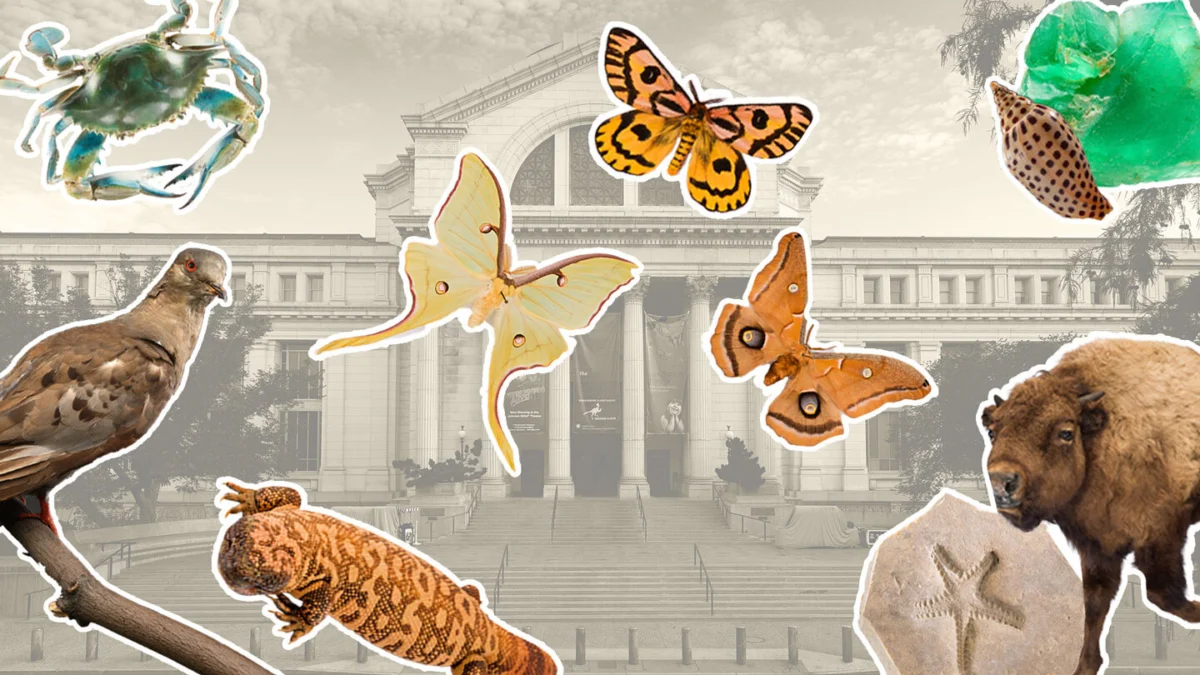
Washington D.C. – A new landmark exhibition at the Smithsonian National Museum of Natural History invites visitors to embark on a comprehensive journey through the natural diversity and rich cultural heritage of the United States. Titled "From These Lands," the exhibition is a cornerstone of the Smithsonian Institution’s broader initiative, "Our Shared Future: 250," commemorating the nation’s upcoming 250th anniversary. The exhibition, which opened to the public after an exclusive press preview, offers a panoramic view of the American landscape, its inhabitants, and the stories that have shaped its identity, spanning from the final moments of an extinct species to the ancient remnants of prehistoric life.
The ambition of "From These Lands" is to present the United States not through its political borders, but through the lens of its land, its myriad creatures, and the interwoven narratives they represent. This expansive approach encompasses all 50 states, the District of Columbia, and the five U.S. territories, utilizing over 600 meticulously curated specimens and cultural artifacts. According to Kirk Johnson, Sant Director of the National Museum of Natural History, the exhibition’s core objective is to foster a sense of personal connection for every visitor. "Our real goal is for everyone who comes to this museum to see themselves and their place in this exhibit," Johnson stated. "Every object has a host of stories, and this exhibit intends to bring all those stories together around individual objects."
Rather than adhering to a conventional state-by-state organization, "From These Lands" is structured thematically, highlighting stories that transcend geographical boundaries and underscore shared connections to the land. This approach acknowledges the complex and multifaceted nature of the United States, embracing its inherent diversity. Aaron Tremper, Assistant Editor at Science News Explores, who attended the press preview, observed that the exhibit effectively captures this idea, stating, "America contains multitudes, and this exhibit leans into that."
Celebrating Biodiversity: From Microscopic Marvels to Ancient Giants
The exhibition vividly illustrates that the diversity of the United States extends far beyond its human population, encompassing a vast array of living organisms. A compelling display of insects from various states and Washington, D.C., provides a colorful snapshot of this biological richness. These preserved specimens represent a fraction of the estimated 91,000 insect species currently identified in the United States, offering a tangible glimpse into the intricate web of life that thrives across the nation.
Beyond the contemporary, "From These Lands" delves deep into the geological past, showcasing remarkable fossil discoveries that shed light on prehistoric ecosystems. A particularly arresting display features an array of fossils from New Mexico, representing a 240-million-year-old graveyard of giant, salamander-like amphibians. Some of these ancient creatures stretched up to nine feet long, offering a humbling perspective on the scale of life that once inhabited the continent.
Stewart Edie, Research Geologist and Curator of Fossil Mollusca, explained the scientific intrigue surrounding these fossils. "It’s a lot of amphibian all at once, and it makes you wonder how in the world did this happen?" Edie remarked. Initial interpretations suggested a simple scenario of aggregation in a drying pond. However, closer examination revealed a more dynamic event. "When you look more closely, what you see is that it’s not just articulated skeletons," Edie elaborated. "They’re not just there. They’re jumbled. They’re all mixed up. So there was some movement involved." Further analysis of the bones indicated a lack of significant weathering, suggesting a rapid burial event. "There was likely an event like a flood that moved bodies, and they accumulated and the bones got all jumbled and they were rapidly buried," Edie concluded. This interpretation underscores the power of geological evidence to reconstruct past environmental catastrophes and the evolutionary history of life.
Narratives of Resilience and Extinction: Charting America’s Ecological Story
"From These Lands" also confronts the sobering reality of biodiversity loss and the critical importance of conservation efforts. The exhibition juxtaposes iconic symbols of extinction with compelling stories of species brought back from the brink, creating a powerful dialogue about human impact and intervention.
The specter of extinction is personified by Martha, the last known passenger pigeon, one of the Smithsonian’s most treasured artifacts. The passenger pigeon, once numbering in the billions across North America, was driven to extinction by overhunting and habitat destruction, disappearing entirely by the early 20th century. Its inclusion serves as a potent reminder of ecological fragility.
In a deliberate curatorial choice, Martha is displayed alongside the Guam rail, a bird species that was successfully rescued from the precipice of extinction. Torben Rick, Curator of North American Archaeology, detailed the dramatic story of the Guam rail. "What happened in Guam is towards the end of World War II, brown snakes were accidentally introduced," Rick explained. "So, you’ve got an invasive species that comes in – several bird species who had never encountered a predator like that went extinct." The Guam rail was critically endangered, pushed to the very edge of survival. However, a concerted conservation effort, initiated in the 1980s by Smithsonian scientists from the Conservation Biology Institute and the National Zoo, led to the establishment of a successful breeding program. Today, over 200 Guam rails have been reintroduced into the wild on Guam, a testament to the power of dedicated conservation science.
The exhibition also highlights the delicate balance of marine ecosystems. Rick elaborated on the plight of kelp forests along the Pacific coast, ecosystems teeming with biodiversity. "Kelp forests are these just incredible, high biodiverse forests in the ocean that flank the entire Pacific coast of the U.S.," he stated. The intricate food web, involving urchins, sea otters, and other marine life, is susceptible to disruption. The global fur and oil trade led to the near-extinction of sea otters and other marine mammals, which in turn allowed sea urchin populations to explode, decimating kelp forests. "In a healthy system they all kind of keep each other in balance," Rick noted. "But what happened during the global fur and oil trade, sea otters and other seals and sea lions were pushed to the brink of extinction and we saw in many areas they were they were totally eliminated." The recovery of these species, driven by conservation biologists and restoration efforts across the U.S., is presented as a beacon of hope for ecological restoration.
The Human Element: Collections, Curators, and Curiosity
"From These Lands" underscores that the Smithsonian’s collections are not merely repositories of specimens but are living archives, continuously expanded through the dedication of scientists, researchers, and citizen collectors. The exhibition draws attention to the extensive bird collection, a project that has been accumulating specimens for over a century. This vast collection serves as an invaluable historical record, documenting shifts in animal populations, species migration patterns, and, with the advent of new technologies, offering insights into genetic makeup through DNA analysis.
The personal stories behind these collections are also brought to the forefront. Stewart Edie shared an anecdote about President Theodore Roosevelt, an avid birder, who as a young man collected two bird specimens that were later donated to the museum. "It’s not just the museum scientists – these specimens are coming from all parts of our country and helping to grow the national collections and helping us create this cumulative knowledge of biodiversity through time," Edie emphasized, illustrating how contributions from diverse individuals have been instrumental in building the national scientific record.
Catalyzing Exploration and Understanding
Beyond presenting scientific and cultural narratives, "From These Lands" aims to ignite a sense of personal exploration and encourage visitors to engage with the broader American landscape. The exhibition’s curators hope to inspire a deeper appreciation for the nation’s diverse regions and foster a desire to experience them firsthand.
"I wanted to trigger people to visit the rest of the nation," Kirk Johnson explained. "Go see a place you’re not familiar with. Go think of a place you’ve only heard the name before and go to that place and experience what it is. ‘Cause every part of this nation is wonderful and really interesting, and there are so many ways to look at a given place, and what we try to do here is catalyze your curiosity about how you might approach a place." This sentiment suggests that the exhibition serves not as a final destination but as a powerful catalyst for personal discovery and a deeper connection to the American experience.
The "From These Lands" exhibition is a significant component of the Smithsonian Institution’s "Our Shared Future: 250" initiative, a comprehensive program designed to mark the United States’ 250th anniversary by fostering reflection on the nation’s past, present, and future through various exhibitions, programs, and public events across its museums and research centers. This exhibition, in particular, offers a compelling and multifaceted perspective on the nation’s identity, weaving together its natural wonders and cultural tapestry into a cohesive and inspiring narrative.