A newly discovered single-celled organism, Euplotes gigatrox, exhibits a remarkable and unsettling transformation, morphing into a "supergiant" version of itself that consumes its genetically identical smaller brethren. This bizarre phenomenon, observed in gunk scraped from an aquarium filter in Curaçao, sheds light on the complex behaviors that can arise in even the simplest forms of life and hints at fundamental biological processes relevant to the evolution of multicellularity. Researchers reported their findings on May 14 in the Proceedings of the National Academy of Sciences.
The Microbe’s Remarkable Metamorphosis
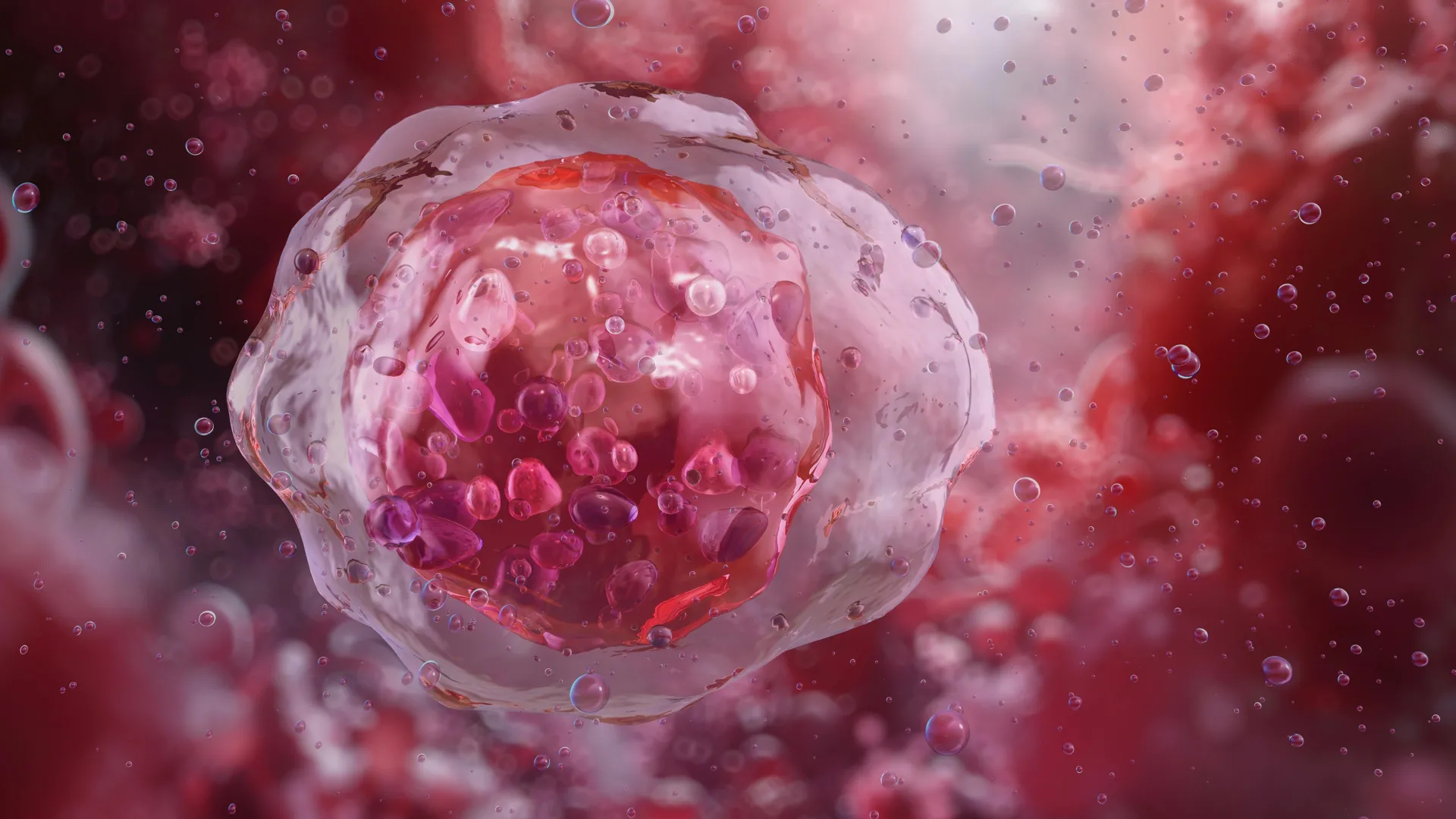
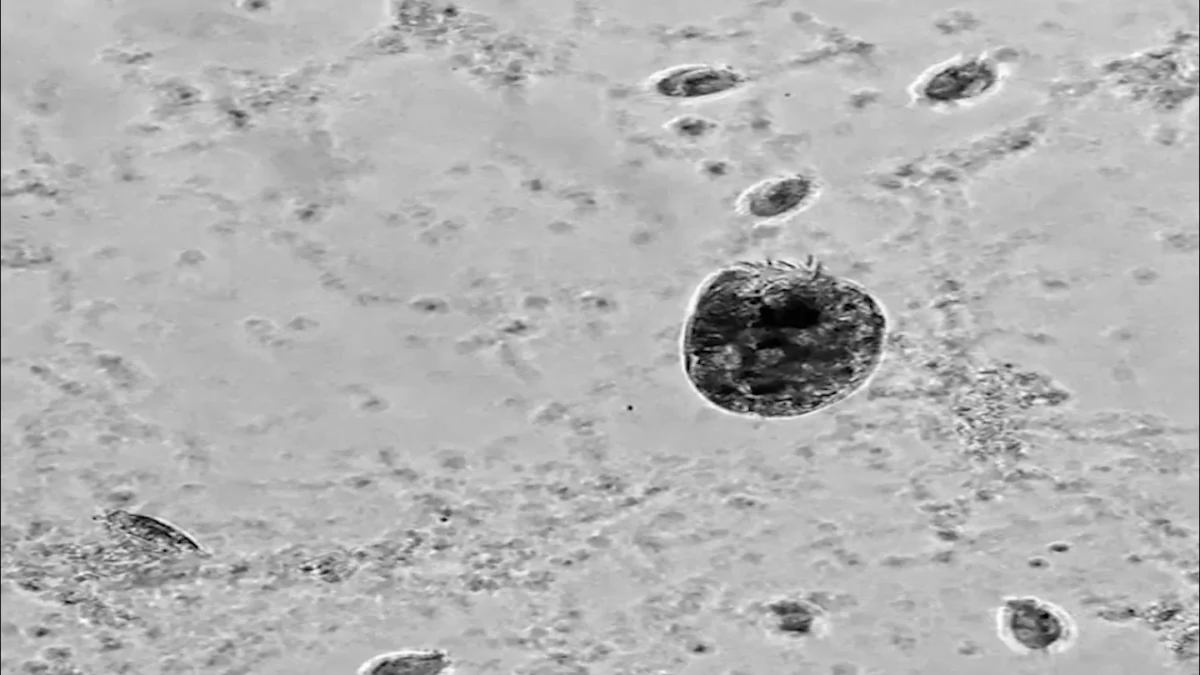
Euplotes gigatrox is a protist, a diverse group of eukaryotic microorganisms that are neither plants nor animals. Visually, it resembles a small, ciliated insect, navigating its microscopic world by beating hair-like structures called cilia. Its usual diet consists of bacteria and other minuscule microbes. However, under specific conditions, a subset of these protists undergoes a dramatic physical and behavioral change, ballooning to more than twice their normal size. This "supergiant" form then actively hunts and devours its regular-sized kin, a process termed cannibalism.
The precise environmental triggers for this transformation are still under investigation, but preliminary observations suggest a strong correlation with abundant food resources. "It tends to happen when there is plenty of food," stated Ben Larson, a cell biologist at Rensselaer Polytechnic Institute in Troy, N.Y., who led the discovery and research. This observation suggests that nutrient-rich conditions, rather than scarcity, may paradoxically instigate a form of internal competition and population control within the microbial community.
A Two-Stage Transformation
The transformation into a cannibalistic supergiant is not instantaneous but occurs in distinct stages. According to Larson, the initial phase is characterized by the development of an enlarged oral apparatus. "A cell gets a big mouth, and they start running around like crazy," he described. During this initial stage, the enlarged protist is not yet a highly efficient predator. However, if it successfully captures a smaller sibling or cousin within its capacious mouth, a more profound physical rescaling of the cell occurs. This is when the organism truly becomes a "supergiant."
"The body plan of the cell rescales, and they grow up to be these just enormous cannibalistic supergiants," Larson explained, emphasizing the dramatic shift in morphology and function.
Behavioral Divergence: The Microscopic Hulk Analogy
The behavioral differences between the regular-sized E. gigatrox and its supergiant counterpart are striking, drawing a compelling analogy to the fictional character the Hulk. Just as Bruce Banner transforms into the powerful, often destructive Hulk, these protists undergo a fundamental shift in their modus operandi.
Beyond the obvious act of cannibalism, the supergiant cells exhibit altered locomotion. While their smaller counterparts are adept swimmers, the enlarged giants tend to move in a more restricted manner, often observed walking in circles. This suggests that the drastic increase in size fundamentally reconfigures their cellular machinery and movement strategies.
The Cycle of Giantism and Reversion
The existence of these supergiant forms is not a terminal state. E. gigatrox possesses a remarkable mechanism for reverting to its normal size and behavior. This process involves asymmetric cell division, where the giant cell divides unevenly, producing offspring of regular size. This lopsided division allows the giant cell to gradually shrink.
The reproductive capacity of the giant cells is significantly higher than their normal-sized counterparts. A single supergiant can produce up to nine regular-sized offspring within a 24-hour period, and potentially as many as 16 within 120 hours. In contrast, normal-sized E. gigatrox typically divide only once every 24 hours. With each successive asymmetric division, the original giant cell continues to decrease in size, shedding its enlarged form until it returns to its standard dimensions and typical behavior. This ability to reproduce rapidly and then revert to a smaller size suggests a sophisticated life cycle strategy for managing resources and responding to environmental fluctuations.
Genetic Underpinnings of Transformation
The profound physical and behavioral changes observed in E. gigatrox are rooted in significant genetic reprogramming. Larson and his colleagues found that a substantial portion of the organism’s genes, up to 42 percent, are involved in the transitions between its regular and supergiant states, and the subsequent reversion. This high percentage underscores the complexity of the genetic pathways that govern cell size, morphology, and behavior.
Understanding these genetic mechanisms could provide invaluable insights into fundamental biological processes. The study of how a single-celled organism can orchestrate such dramatic changes in its body plan and behavior may illuminate how simple life forms develop complex functionalities. Furthermore, it could offer clues about the evolutionary pathways that led to the emergence of multicellular life from single-celled ancestors. The ability to scale up and down, to adapt morphology for specialized functions like predation, and to manage cellular resources efficiently are all critical aspects of biological evolution.
Chronology of Discovery and Research
The discovery of Euplotes gigatrox and its peculiar transformation likely began with observations made by Ben Larson during his fieldwork. The specific location of the sample collection, an aquarium filter in Curaçao, suggests that these microbes may inhabit diverse aquatic environments.
Initial Observation (Undated): Ben Larson collects samples from an aquarium filter in Curaçao. Microscopic examination reveals the presence of Euplotes gigatrox.
Discovery of Supergiant Phenomenon (Undated): During laboratory cultivation and observation of the E. gigatrox samples, Larson and his team notice the occurrence of unusually large individuals exhibiting cannibalistic behavior.
Detailed Behavioral and Morphological Studies (Ongoing): Researchers conduct in-depth studies to document the stages of transformation, the behavioral differences between normal and giant forms, and the process of reversion through asymmetric division.
Genetic Analysis (Undated): Comprehensive genetic sequencing and analysis are performed to identify the genes involved in the size transformation and its related behaviors.
Publication of Findings (May 14, 2026): The research is formally published in the Proceedings of the National Academy of Sciences, detailing the discovery and the implications of the E. gigatrox transformation.
Broader Implications and Future Research
The implications of this research extend beyond the fascinating biology of a single-celled organism. The study of Euplotes gigatrox offers a unique model system for exploring several key areas in biology:
- Cellular Plasticity: The organism’s ability to dramatically alter its size and function in response to environmental cues highlights the inherent plasticity within cells. Understanding the molecular mechanisms governing this plasticity could have applications in developmental biology and regenerative medicine.
- Evolution of Complexity: The transition from a simple, non-cannibalistic protist to a "supergiant" predator and back again provides a tangible example of how complex behaviors can emerge from simple cellular units. This research could inform theories on the early stages of evolution that led to the development of more complex life forms.
- Ecological Dynamics: The phenomenon of cannibalism within a single species, triggered by resource availability, offers insights into population regulation and competitive dynamics within microbial communities. This could be relevant to understanding the behavior of microbes in natural ecosystems and in applied settings like wastewater treatment or bioreactors.
- Gene Regulation and Development: The large number of genes involved in the transformation suggests intricate regulatory networks. Deciphering these networks could reveal novel pathways for controlling cell growth, differentiation, and morphology, potentially offering new targets for therapeutic intervention in diseases characterized by abnormal cell growth.
Future research will likely focus on pinpointing the specific environmental cues that initiate the transformation, identifying the key genetic and molecular players responsible for the size increase and behavioral changes, and exploring the ecological role of this phenomenon in its natural habitat. The study of Euplotes gigatrox is a testament to the endless wonders of the microbial world and its profound relevance to understanding life itself.