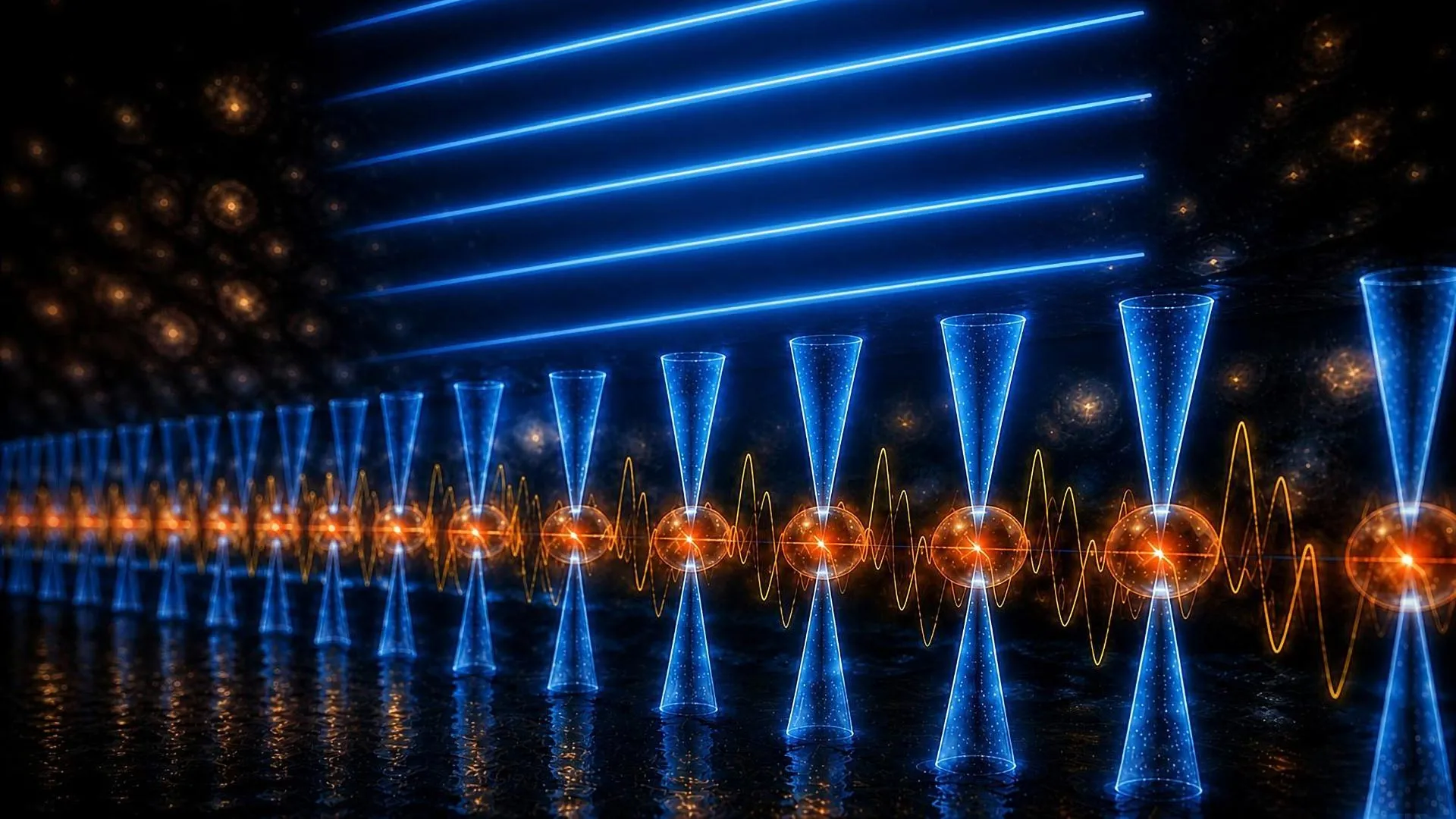
In a landmark advancement for many-body physics, researchers at Heidelberg University’s Institute for Theoretical Physics have successfully reconciled two long-standing, contradictory models of quantum behavior. The new theoretical framework provides a unified explanation for how impurities—individual atoms or electrons—interact with a surrounding "sea" of fermions. This breakthrough addresses a decades-old puzzle regarding the transition between mobile quasiparticles and the chaotic state known as Anderson’s orthogonality catastrophe, offering a singular lens through which to view the complex dynamics of quantum matter.
The research, led by doctoral candidate Eugen Dizer and Professor Dr. Richard Schmidt, bridges the gap between two fundamental paradigms in quantum mechanics. For years, physicists had to choose between a model where an impurity moves fluidly as a "quasiparticle" and one where a heavy, stationary impurity causes the surrounding environment to collapse into a state of total decoherence. By identifying the subtle role of "recoil"—the minute movements of even the heaviest particles—the Heidelberg team has demonstrated that these two states are not mutually exclusive but are instead parts of a continuous physical spectrum.
The Nature of the Quantum Impurity Problem
To understand the significance of the Heidelberg discovery, one must first look at the environment in which these interactions occur: the Fermi sea. In quantum physics, fermions—a class of particles that includes electrons, protons, and neutrons—are governed by the Pauli Exclusion Principle. This principle dictates that no two fermions can occupy the same quantum state simultaneously. Consequently, in a dense collection of fermions, the particles stack into a "sea" of energy levels, filling up from the lowest possible energy to a specific threshold known as the Fermi level.
When a foreign particle, or "impurity," is introduced into this Fermi sea, it does not simply sit in isolation. Instead, it interacts with the surrounding particles. These interactions are the foundation of many-body physics, a field dedicated to understanding how the collective behavior of countless particles gives rise to the properties of matter, from electrical conductivity to superconductivity.
The Quasiparticle Paradigm: The Fermi Polaron
For much of the 20th century, the dominant way to describe a mobile impurity in a Fermi sea was through the concept of the quasiparticle. First proposed by Soviet physicist Lev Landau in the 1930s and 40s, the quasiparticle model suggests that as an impurity moves through a medium, it interacts with nearby particles, effectively "dragging" a cloud of excitations along with it.
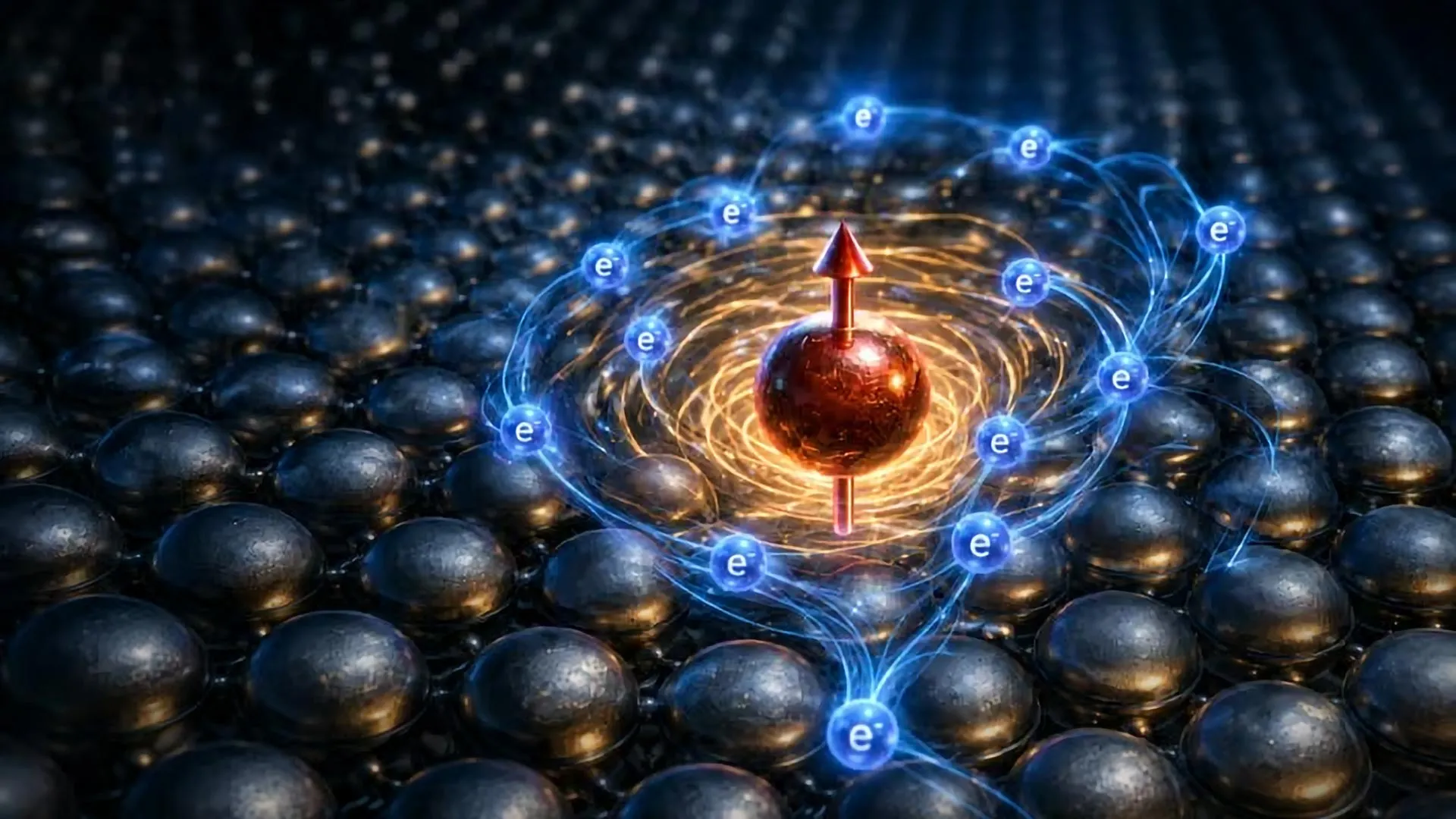
This combination of the original particle and its surrounding cloud of influence behaves like a single, independent entity with a modified mass and energy. In the context of a Fermi sea, this specific type of quasiparticle is known as a "Fermi polaron." The polaron model has been highly successful in explaining how electrons move through semiconductors or how atoms behave in ultracold gases. As Eugen Dizer notes, this model has become a fundamental tool for understanding strongly interacting systems across various scales, from the subatomic to the macroscopic.
The Orthogonality Catastrophe: A Quantum Dead End
However, the quasiparticle model begins to fail when the impurity becomes exceptionally heavy or stationary. In 1967, the Nobel laureate Philip W. Anderson described a phenomenon that seemed to negate the possibility of quasiparticles in certain conditions. He called it "Anderson’s orthogonality catastrophe" (AOC).
Anderson discovered that when a heavy, immobile impurity is introduced or perturbed within a Fermi sea, the surrounding fermions rearrange themselves so drastically that the new state of the system becomes "orthogonal" to the original state. In mathematical terms, the overlap between the initial and final wave functions of the system drops to zero. This "catastrophe" implies that the collective motion required to form a stable quasiparticle is impossible because the background environment is too fundamentally altered to support the "cloud" that defines a polaron.
For decades, these two descriptions—the mobile polaron and the immobile orthogonality catastrophe—existed as separate islands in theoretical physics. Physicists lacked a cohesive mathematical bridge that could explain how a system transitions from one to the other as the mass of the impurity changes.
The Heidelberg Breakthrough: Tiny Motions and the Energy Gap
The research team at Heidelberg University utilized advanced analytical techniques to probe the "gray area" between these two extremes. Their findings, published in Physical Review Letters, reveal that the missing link lies in the infinitesimal motion of the impurity, a factor previously overlooked in heavy-particle models.
The researchers discovered that even when an impurity is extremely heavy, it is never truly motionless. As the surrounding Fermi sea adjusts to the presence of the impurity, the impurity itself undergoes a process of "recoil." This tiny movement, though nearly imperceptible, is sufficient to change the quantum landscape.
"The theoretical framework we developed explains how quasiparticles emerge in systems with an extremely heavy impurity, connecting two paradigms that have long been treated separately," explains Eugen Dizer.
According to the team’s calculations, these subtle motions create a specific energy gap. This gap prevents the total decoherence predicted by Anderson’s orthogonality catastrophe and allows a quasiparticle to crystallize out of the complex, highly correlated quantum background. Essentially, the researchers proved that the "catastrophe" is a limiting case that is softened by the reality of particle physics, allowing the polaron model to survive even in environments previously thought to be too hostile for quasiparticles.
A Chronology of Quantum Impurity Theory
The journey toward this unified theory has spanned nearly a century of scientific inquiry:
- 1933–1941: Lev Landau introduces the concept of the quasiparticle, providing a way to simplify the complex interactions of many-body systems.
- 1948: The concept of the "polaron" is refined to describe electrons interacting with lattice vibrations in crystals.
- 1967: Philip W. Anderson publishes his paper on the orthogonality catastrophe, challenging the universality of the quasiparticle description for stationary impurities.
- 2000s: The advent of ultracold atomic gas experiments allows physicists to create "artificial" Fermi seas in the lab, providing a playground to test these theories with high precision.
- 2010–2020: Researchers observe the transition between polarons and molecular states, but a unified mathematical description for heavy-mass impurities remains elusive.
- 2024: The Heidelberg team publishes their unified framework, successfully linking the polaron and AOC paradigms.
Technical Analysis and Experimental Relevance
The implications of this unified theory extend far beyond theoretical mathematics. In the realm of experimental physics, particularly those involving ultracold atoms, the ability to predict how impurities behave is crucial. In these experiments, lasers and magnetic fields are used to cool atoms to temperatures just above absolute zero, creating a "quantum simulator" where the laws of physics can be observed in slow motion.
The Heidelberg framework provides a versatile tool for describing quantum impurities across different spatial dimensions—whether in a 3D gas or a 2D sheet of material. It also offers a natural explanation for the transition between "polaronic" states (where the impurity is "dressed" by the sea) and "molecular" states (where the impurity binds tightly to a single particle from the sea).
Professor Richard Schmidt, who leads the Quantum Matter Theory working group, emphasizes that the research is directly relevant to the development of novel materials. "Our research not only advances the theoretical understanding of quantum impurities but is also directly relevant for ongoing experiments with ultracold atomic gases, two-dimensional materials, and novel semiconductors," he states.
Broader Impact on Quantum Technology
The unification of these theories has significant potential for the future of quantum technology and material science. By understanding how to maintain the stability of quasiparticles in crowded environments, scientists may be able to design more efficient semiconductors or develop new types of quantum bits (qubits) for quantum computing.
In many proposed quantum computing architectures, information is stored in the states of individual particles. However, these particles must exist within a larger environment. If the environment causes an "orthogonality catastrophe," the information is lost to decoherence. The Heidelberg team’s discovery that a "recoil" energy gap can protect quasiparticles suggests new ways to shield quantum information from the noise of its surroundings.
Furthermore, the research contributes to the "STRUCTURES" Cluster of Excellence and the "ISOQUANT" Collaborative Research Centre 1225 at Heidelberg University. These initiatives aim to find common structural themes across vastly different physical scales—from the formation of galaxies to the behavior of subatomic particles. The unification of the polaron and AOC models is a prime example of this mission, showing that a single mathematical framework can govern disparate physical phenomena.
Conclusion
The work of Dizer, Schmidt, and their colleagues marks a definitive shift in many-body physics. By resolving the tension between the quasiparticle model and the orthogonality catastrophe, they have provided a more complete map of the quantum world. As experimentalists continue to push the boundaries of what is possible with ultracold matter and 2D materials, this unified theory will serve as an essential guide, proving once again that even the most "catastrophic" quantum puzzles can be solved through the lens of unified theoretical physics.