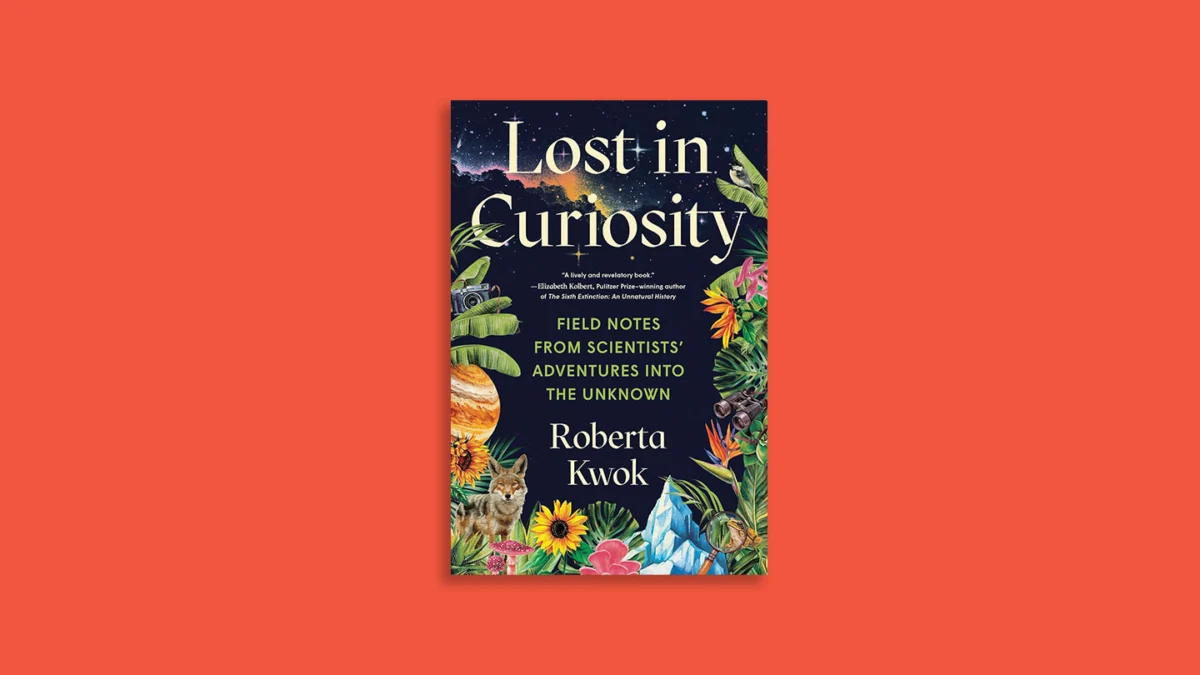
Tales of discovery are almost never as tidy as they seem. Science journalist Roberta Kwok’s debut book, Lost in Curiosity: Field Notes from Scientists’ Adventures into the Unknown, peels back the polished veneer of scientific achievement to reveal the messy, often arduous, and profoundly human journey behind groundbreaking discoveries. The book eschews the myth of the solitary genius, instead illuminating the collaborative spirit, resilience, and sheer grit required to navigate the unpredictable landscape of scientific inquiry.
Kwok’s narrative begins with a compelling anecdote from her own doctoral research, where a costly mishap with a high-powered microscope and a delicate nanomaterial nearly derailed her academic career. This personal experience serves as a potent microcosm of the book’s central thesis: scientific progress is frequently paved with setbacks, unforeseen obstacles, and moments of profound doubt. The author meticulously chronicles the less-celebrated realities of scientific pursuit, from equipment malfunctions and logistical nightmares to the agonizing wait for results and the emotional toll of repeated failures.
The Unvarnished Reality of Scientific Endeavor
Lost in Curiosity opens with the dramatic account of glaciologists grappling with the urgent task of studying melting ice sheets in Greenland. Their mission, fraught with the inherent challenges of extreme environments, is further complicated by a cascade of misfortunes. Years of dedicated effort are repeatedly thwarted by severe weather patterns, a critical helicopter reservation mix-up, and the unprecedented global disruption of the COVID-19 pandemic. These intertwined challenges not only delayed crucial data collection but also placed expensive, specialized equipment at significant risk, underscoring the precarious balance between scientific ambition and the unpredictable forces of nature and global events.
Kwok masterfully weaves together the threads of triumph and tribulation, presenting the scientists’ experiences with a blend of humor and pathos. Readers are invited to share in the scientists’ laughter at absurd mishaps, cringe at near-disasters, and empathize with the emotional weight of setbacks. This approach demystifies the scientific process, revealing it as a deeply human endeavor characterized by perseverance rather than effortless brilliance.
Beyond the Stereotype: Science as a Collaborative Marathon
One of the most significant contributions of Lost in Curiosity is its dismantling of the pervasive myth of the lone scientific genius, epitomized by figures like Einstein, Darwin, or Mendel. Kwok argues that contemporary science is fundamentally a team sport, demanding extensive collaboration, communication, and mutual support. The "lost" in the book’s title, she suggests, often refers to scientists grappling with complex data, refining experimental designs, or formulating Plan B after a promising hypothesis proves untenable. This persistent state of "being lost" is not a sign of incompetence but an intrinsic characteristic of scientific exploration, where nature guards its secrets jealously.
The book offers readers a glimpse into a diverse array of scientific frontiers currently being explored by U.S.-based researchers. These include investigations into the lasting impact of historical redlining practices on contemporary biodiversity, the intricate physics governing the seemingly random process of crumpling materials, and the ambitious quest to identify and characterize exomoons—moons orbiting planets outside our solar system. Across these varied disciplines, Kwok highlights the common threads of frequent experimental failures, the ambiguity of initial findings, and the myriad logistical hurdles, ranging from the mundane to the monumental, that scientists must overcome.
A Call for Deeper Engagement and Political Context
While Lost in Curiosity excels at bringing the scientists and their challenges to life, the review suggests a missed opportunity in its lack of a unifying throughline or explicit takeaway message. The author posits that readers are left to draw their own conclusions from each anecdotal account, transforming the reading experience into a leisurely exploration rather than a focused expedition with a clear destination. This structural critique implies that a more robust analytical framework could have elevated the book’s impact, guiding readers toward a deeper understanding of the broader implications of scientific progress and its inherent difficulties.
A more significant critique leveled against the book is its apparent apolitical stance during a period of heightened political entanglement with scientific endeavors. The review points to the demonstrable impact of recent U.S. federal administrations on scientific funding, institutional independence, and the dissemination of factual information. The curtailment of science funding, the erosion of research institution autonomy, the disregard for established scientific consensus, and the propagation of misinformation have created an increasingly challenging environment for researchers. The review raises the pertinent question of whether the scientists featured in Kwok’s book are also contending with these politically induced obstacles, such as canceled grants, the deliberate erasure of federal data, and significant workforce reductions.
Resilience in the Face of Adversity
Despite these critiques, the reviewer acknowledges the profound resilience of the scientists portrayed in Lost in Curiosity. Their unwavering passion and tenacity, Kwok demonstrates, are not merely personal traits but essential qualities for navigating the arduous terrain of scientific research. This resilience, the reviewer suggests, offers a source of hope, implying that these dedicated individuals are best equipped to persevere through the current complex and often politically charged landscape. Kwok’s characterizations—the “Energizer Bunnies,” the “generational problem solvers,” and the “justice seekers”—underscore the multifaceted motivations and enduring spirit of those committed to advancing scientific knowledge.
The book concludes with a poignant exchange that encapsulates this spirit of tenacious optimism. When asked about their motivation in the face of existential threats like climate change, a coastal engineer responds, "I don’t think we’re completely screwed yet. I think if we start thinking that we’re too late, then we have lost.” This sentiment highlights the crucial role of sustained effort and unwavering belief in the possibility of progress, even when confronting daunting challenges. It is this very spirit of hopeful persistence, the review implies, that defines the enduring quest for scientific understanding.
The article concludes by directing readers to purchase Lost in Curiosity through Bookshop.org, noting that Science News will earn a commission on eligible purchases, reinforcing the symbiotic relationship between journalistic reviews and book sales platforms.