

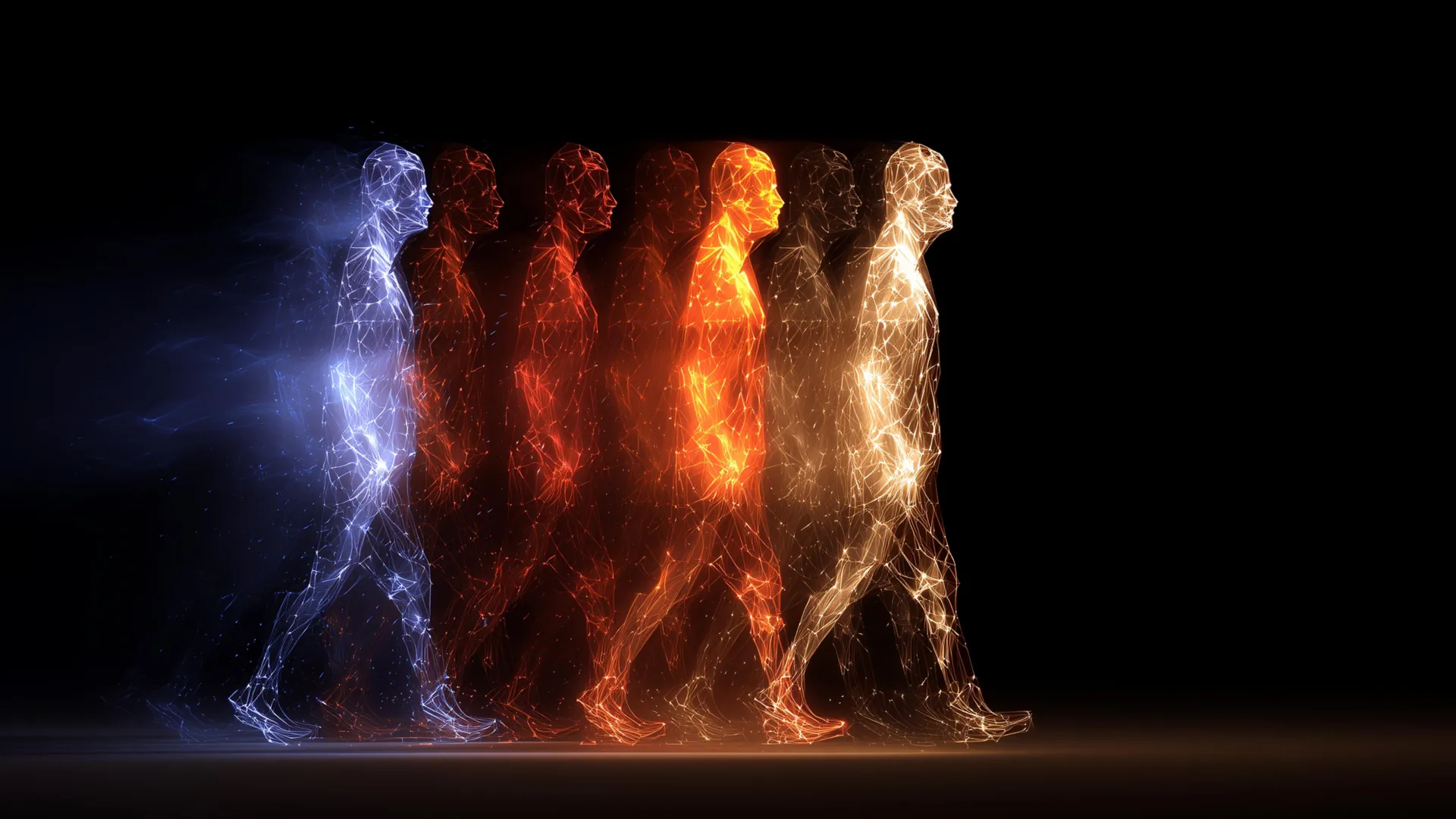
The long-held narrative of human origins, suggesting a singular ancestral population in Africa as the sole source of all modern humans, is undergoing a significant revision. Groundbreaking genetic research, published in the prestigious journal Nature in 2023, presents a more nuanced and intricate picture of our species’ beginnings. Instead of a simple family tree, scientists are now looking at a complex network of deeply interconnected branches, indicating that early human groups were geographically dispersed across the African continent, engaging in extensive gene flow for millennia before distinct genetic signatures became evident in present-day populations.
This paradigm-shifting study, co-led by Brenna Henn, a professor of anthropology and genomics at UC Davis, and Simon Gravel of McGill University, analyzed genetic material from contemporary African populations alongside fossil evidence from early Homo sapiens. The researchers aimed to resolve longstanding uncertainties stemming from the limitations of both the fossil record and ancient DNA, which have historically presented a fragmented view of our evolutionary past. "This uncertainty is due to limited fossil and ancient genomic data, and to the fact that the fossil record does not always align with expectations from models built using modern DNA," explained Henn. "This new research changes the origin of species."
The Genesis of a More Complex Model: Africa as a Mosaic of Origins
While the scientific consensus firmly places the origin of Homo sapiens within Africa, the precise mechanisms by which early human groups separated, migrated, intermingled, and ultimately shaped one another across the vast continent have remained a subject of intense debate. Traditional models often depicted a more linear progression, but the integration of extensive genomic data from southern, eastern, and western Africa has revealed a far more dynamic and interconnected evolutionary landscape.
The research team meticulously tested several competing hypotheses regarding human evolution and migration in Africa, drawing upon established theories in paleoanthropology and population genetics. Their approach was to build computational models that could best explain the observed genetic diversity in living Africans. The study’s authors emphasize that the limitations of past research were not due to a lack of effort, but rather the inherent challenges in piecing together a history spanning hundreds of thousands of years with incomplete evidence.
The Crucial Contribution of the Nama Genomes
A pivotal element of this comprehensive analysis was the inclusion of 44 newly sequenced genomes from modern Nama individuals residing in southern Africa. The Nama people are renowned for possessing exceptionally high levels of genetic diversity, a characteristic that makes them an invaluable resource for understanding the deep history of human populations. By collecting saliva samples from Nama individuals in their communities between 2012 and 2015, the research team gained unprecedented insights into the genetic architecture of human origins.
The comparison of these genomes with those from other African populations allowed the researchers to rigorously assess whether a "single-source" model of human origin, or a more complex, interconnected model, better explained the observed genetic patterns. The results strongly favored the latter, suggesting that the earliest discernible population split among early humans, still detectable in living people, occurred approximately 120,000 to 135,000 years ago.
Crucially, before this significant split, the study indicates that two or more weakly differentiated Homo populations had been engaged in gene exchange for hundreds of thousands of years. This period of prolonged interaction, characterized by ongoing gene flow, laid the groundwork for the genetic diversity we see today. Even after the primary split, movement and interbreeding between these nascent groups continued, a phenomenon the researchers aptly describe as a "weakly structured stem." This terminology signifies that the roots of modern humanity were not a single, isolated population, but rather a loosely connected network of groups with continuous genetic exchange.
Beyond a Single Branch: The Network Model of Human Evolution
This network-like model offers a more compelling explanation for the broad spectrum of human genetic diversity than previous, simpler models. One of the significant implications of this research is that it potentially resolves the long-standing puzzle of how human genetic variation arose without necessarily invoking substantial contributions from unknown archaic hominin populations in Africa. Instead, the study demonstrates that the complex patterns observed in modern DNA can be explained by the internal structure and interactions within ancestral human populations themselves.
"We are presenting something that people had never even tested before," stated Henn, highlighting the novelty and significance of their findings. "This moves anthropological science significantly forward." This research offers a powerful testament to the ingenuity of scientists in utilizing advanced genomic technologies to reconstruct our deep past.
Tim Weaver, a co-author and professor of anthropology at UC Davis specializing in early human fossils, emphasized how these genetic findings necessitate a re-evaluation of older hypotheses. "Previous more complicated models proposed contributions from archaic hominins, but this model indicates otherwise," he remarked. Weaver’s expertise in comparative fossil analysis was instrumental in bridging the gap between genetic models and the physical characteristics of early hominins represented in the fossil record.
Implications for Interpreting the Fossil Record
The new genetic model carries profound implications for how scientists interpret the fossil evidence of early humans. The authors suggest that only a small fraction, approximately 1 to 4%, of the genetic differentiation observed among living human populations can be attributed to variations that existed between these ancestral stem populations.
Because these early, diverging lineages continued to mix and exchange genes, they likely exhibited relatively similar physical appearances. This observation provides a new lens through which to view fossil discoveries. For instance, fossils displaying markedly different physical traits, such as those of Homo naledi, are now considered less likely to represent lineages that directly contributed to the evolutionary trajectory of Homo sapiens. The study proposes that the deeper roots of humanity, while geographically and genetically widespread, were not necessarily characterized by sharply divergent human forms. Instead, the overarching narrative is one of continuous movement, interaction, and repeated mixing across the African continent.
Continuing the Exploration: Later Research Reinforces the African Diversity Narrative
Subsequent scientific endeavors have further corroborated and expanded upon the findings of the 2023 Nature study, reinforcing the critical importance of African genomic diversity in unraveling human origins. A notable study published in Nature Ecology & Evolution in 2024 documented 9,000 years of continuous genetic presence in southernmost Africa. This research underscored the region’s exceptionally long and deep human population history, adding another layer of evidence to the mosaic model of human evolution.
Further adding depth to this narrative, a later Nature study in 2025 analyzed genomes from 28 ancient individuals from southern Africa, with specimens dated between 10,200 and 150 years before the present. This investigation revealed that ancient southern Africans possessed genetic variations that extended beyond the range observed in living populations. The study also identified specific Homo sapiens variants that could offer crucial insights into the adaptive processes and evolutionary trajectories within Africa itself.
Collectively, these cumulative findings strengthen a powerful and unifying message: the origins of humanity were not a singular event, a "single spark" originating from one specific location. Instead, our evolution was a multifaceted process, shaped by the contributions of numerous interconnected populations, profound genetic diversity within Africa, and sustained periods of contact and gene flow across the continent. This ongoing research continues to illuminate the intricate tapestry of our shared human heritage, moving beyond simplistic narratives to embrace the full complexity of our ancient past.
The 2023 study’s additional co-authors include Aaron Ragsdale from the University of Wisconsin-Madison, Elizabeth Atkinson from Baylor College of Medicine, and Eileen Hoal and Marlo Müller from Stellenbosch University in South Africa, each contributing their unique expertise to this landmark investigation.
















Leave a Reply