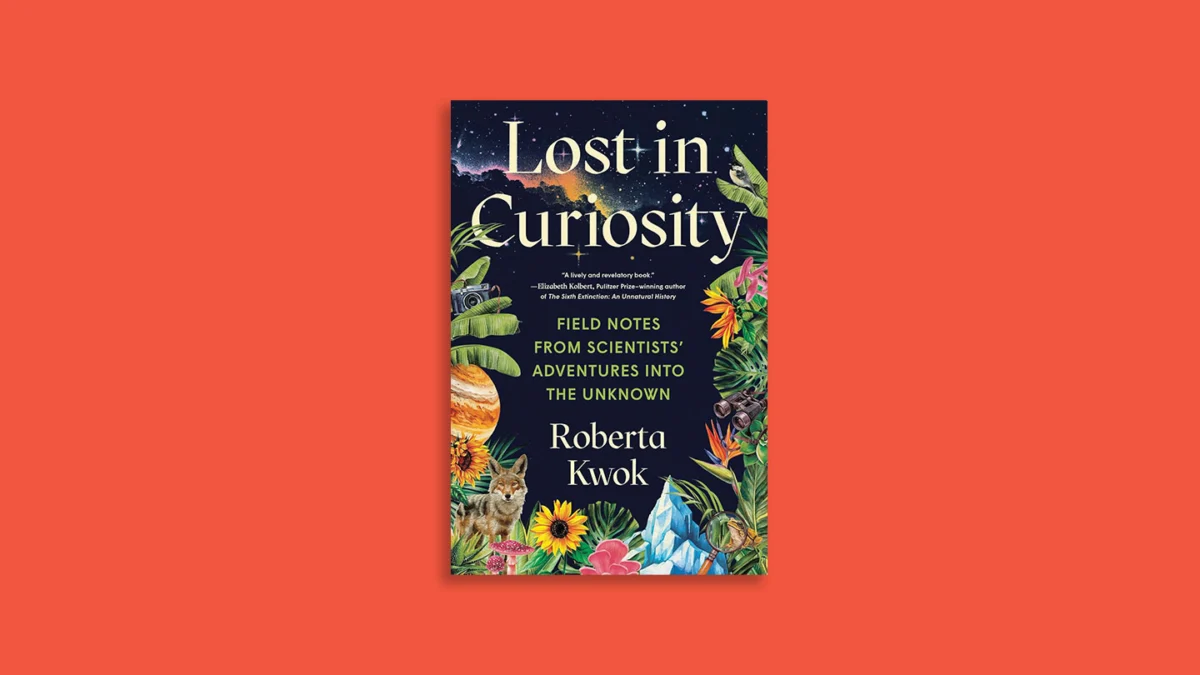
The pursuit of scientific discovery, often mythologized as a series of eureka moments and effortless leaps of genius, is in reality a gritty, arduous journey fraught with unforeseen obstacles, disheartening setbacks, and the persistent specter of failure. This less-heralded reality is meticulously unveiled in Roberta Kwok’s compelling debut book, Lost in Curiosity: Field Notes from Scientists’ Adventures into the Unknown. Far from a collection of triumphant pronouncements, Kwok’s work delves into the often-unseen trenches of scientific endeavor, illuminating the resilience, ingenuity, and sheer perseverance required by researchers navigating the labyrinthine path toward knowledge.
Kwok, a seasoned science journalist, eschews the polished narratives of scientific breakthroughs to offer readers an intimate, unvarnished look at the messy, human process of doing science. The book is populated by a diverse cast of scientists, each grappling with unique challenges, from the logistical nightmares of fieldwork to the intellectual quagmires of data analysis. Their stories, as presented by Kwok, are a testament to the fact that scientific progress is rarely linear, but rather a winding road characterized by "whoopsie" moments, gut-wrenching frustrations, and the constant need to pivot when experiments falter or hypotheses prove stubbornly resistant to validation.
One of the central arguments woven throughout Lost in Curiosity is that the romanticized image of the solitary, brilliant scientist is largely a myth. Kwok underscores the deeply collaborative nature of modern scientific research, emphasizing that breakthroughs are typically the product of collective effort, shared expertise, and mutual support. The subtitle of the book, "Field Notes from Scientists’ Adventures into the Unknown," hints at the often-unpredictable and adventurous spirit that drives these individuals, yet it also subtly acknowledges the inherent uncertainty and occasional disorientation that can accompany such expeditions. Scientists, Kwok reveals, are not always charting a clear course; more often, they are navigating by the stars, adapting to changing conditions, and improvising solutions as they go.
The Unseen Labor of Scientific Exploration
The book opens with a vivid account of glaciologists embarking on a critical mission to study melting ice in Greenland. Their journey, intended to capture vital data on a rapidly changing climate, becomes a protracted saga of logistical hurdles and external disruptions. Over several years, the team faces a relentless barrage of misfortunes: inclement weather that grounds their aircraft, a clerical error that jeopardizes their helicopter reservations, and the unprecedented global disruption of the COVID-19 pandemic, which threatens to derail their entire research program and jeopardizes the integrity of their expensive, specialized equipment. These setbacks, as Kwok portrays them, are not merely minor inconveniences but significant threats to the scientific enterprise, highlighting the vulnerability of even the most meticulously planned research to forces beyond the scientists’ control. The narrative effectively conveys the emotional toll of such experiences, where moments of hope are interspersed with periods of profound anxiety, and the exhilaration of potential discovery is tempered by the ever-present risk of failure.
This pattern of challenges repeats across a spectrum of scientific disciplines featured in the book. Kwok introduces readers to researchers investigating the lingering effects of historical redlining on contemporary biodiversity, exploring the complex physics behind the seemingly simple act of crumpling materials, and participating in the exhilarating, yet demanding, race to identify the first exomoon. Each of these diverse pursuits, regardless of their scale or subject matter, is characterized by frequent failures, ambiguous findings, and logistical complexities that range from the mundane to the monumental. The book excels at showcasing the common threads of human endeavor that bind these disparate scientific communities together.
Beyond the Anecdote: A Call for Deeper Understanding
While Lost in Curiosity undeniably succeeds in bringing the personalities and the scientific endeavors of its subjects to life, and in fostering a sense of admiration for their dedication, the reviewer notes a perceived lack of a strong overarching thematic throughline. The book, in this view, presents a series of compelling, often poignant, individual anecdotes without explicitly drawing out overarching lessons or conclusions that a reader can easily synthesize. This can leave the reader to undertake the significant work of extracting meaning from each challenging narrative, potentially transforming the experience from an insightful expedition into a more generalized perusal of scientific struggles.
Furthermore, the book’s apolitical stance is highlighted as a notable omission, particularly in the current sociopolitical climate where scientific research is increasingly intertwined with political discourse and funding decisions. The reviewer points to a period marked by significant challenges to the scientific community in the United States, including substantial reductions in federal science funding, the erosion of institutional research independence, and a proliferation of misinformation that contradicts established scientific consensus. These political realities, the reviewer suggests, likely impose additional burdens on scientists, potentially leading to canceled grants, the erasure of critical federal data, and personnel layoffs. The absence of these broader political contexts within Lost in Curiosity is seen as a missed opportunity to fully capture the complex landscape in which contemporary science operates.
Resilience as a Cornerstone of Scientific Advancement
Despite these criticisms, the book’s enduring strength lies in its powerful depiction of the resilience of the scientific community. Kwok’s narrative consistently illustrates that passion, curiosity, and a deep-seated commitment to understanding the world are not easily extinguished by adversity. These individuals, described by Kwok as "Energizer Bunnies, the generational problem solvers, the justice seekers," possess an extraordinary capacity to persevere. This resilience, the reviewer posits, is not merely a personal attribute but a crucial element for the continued advancement of scientific knowledge, especially during periods of political or economic uncertainty.
The book offers a poignant illustration of this unwavering spirit through an exchange with a coastal engineer. When asked about the source of their optimism in the face of the daunting challenges posed by climate change, the engineer’s response is both pragmatic and profoundly hopeful: "I don’t think we’re completely screwed yet," they state. "I think if we start thinking that we’re too late, then we have lost." This sentiment encapsulates the core ethos that Kwok highlights: the belief that continued effort and dedication, even in the face of overwhelming odds, are essential to confronting and ultimately overcoming complex global issues. It is this tenacious spirit, the reviewer concludes, that offers hope that scientists can and will continue to make vital contributions, even amidst the most challenging political and environmental landscapes.
Lost in Curiosity serves as a vital corrective to the often-oversimplified and glamorized portrayals of scientific discovery. By shining a light on the inherent difficulties, the unexpected detours, and the sheer grit required, Roberta Kwok offers a more authentic and inspiring vision of scientific exploration—one that celebrates not only the moments of illumination but also the persistent, often arduous, journey that leads to them. The book ultimately provides a compelling argument for greater public appreciation of the immense dedication and resilience that underpin scientific progress, a resilience that is arguably more critical now than ever before.