The long-held scientific consensus regarding the tau protein, primarily characterized by its destructive role in Alzheimer’s disease and other forms of neurodegeneration, has been significantly expanded by new research identifying its fundamental necessity in the creation of long-lasting memories. A multi-institutional study led by Flinders University, in collaboration with the University of New South Wales and Macquarie University, has demonstrated that tau is not merely a marker of pathology but a vital architect of the brain’s memory-storage architecture. Published in the journal Nature Communications, the findings provide a paradigm-shifting look at how healthy brains organize information and offer a potential roadmap for future dementia interventions.
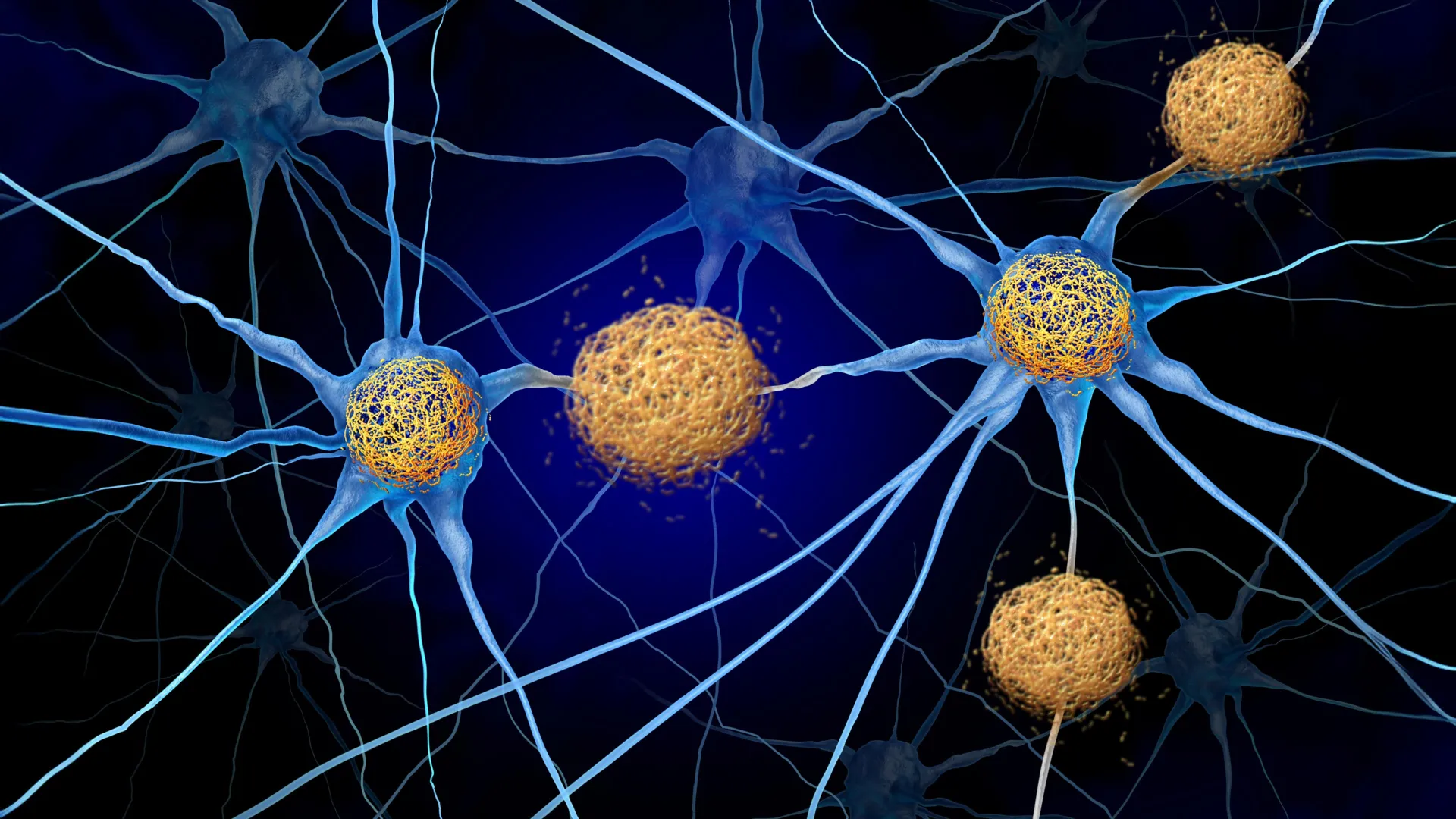
For decades, tau has been viewed through a negative lens. In the brains of those suffering from Alzheimer’s, tau proteins misfold and aggregate into "neurofibrillary tangles," which disrupt nutrient transport and eventually lead to cell death. However, this new research suggests that in its healthy, controlled state, tau performs a critical regulatory function. By studying the neurological processes of mice, the research team discovered that tau is the key coordinator for "remote memory"—the type of memory that allows an individual to recall events days, weeks, or years after they occur.
The Architecture of Memory: The Role of Engram Cells
To understand the significance of the study, it is necessary to examine how the brain physically stores information. When a new experience occurs, the brain does not store it in a single location like a computer hard drive. Instead, it activates a specific, sparse population of neurons known as "engram cells." These cells undergo physical and chemical changes to create a "memory trace."
The research team focused on how these engram cells are selected and stabilized. They found that tau is active during the critical window of memory formation. It acts as a biological filter or organizer, determining which specific neurons are recruited into an engram. Without the presence of tau, the brain’s ability to select the correct cells is compromised.
"Why some memories last while others fade has long puzzled scientists, and our study shows that tau plays a key role in how the brain forms long-lasting memories," said Associate Professor Arne Ittner, a senior author of the study and neuroscientist at Flinders University’s College of Medicine and Public Health. "Without it, memories can still form in the moment, but they are weaker and fail to transition into a durable state."
This finding explains a common clinical observation in early-stage dementia: patients may be able to learn a new name or a list of items (short-term acquisition) but find themselves unable to recall that same information 24 hours later. The "encoding" happens, but the "stabilization," mediated by tau, fails.
Mechanistic Insights: Noise Reduction and Phosphorylation
One of the study’s most significant contributions is the identification of how tau physically manages the brain’s "noise." During the formation of a memory, the brain is flooded with electrical activity. For a memory to be clear and retrievable, the brain must suppress unnecessary background activity—neural noise—so that only the relevant engram cells are activated.
The researchers discovered that tau facilitates this by limiting the activity of non-essential neurons. By narrowing the focus of neural activation, tau ensures that the memory trace is sharp and stable. When tau was removed or inhibited in the test subjects, the "noise" increased, leading to a fragmented and weak memory trace that could not be sustained over time.
Furthermore, the study illuminated the role of a chemical process called phosphorylation. In the context of Alzheimer’s disease, "hyperphosphorylation" is a toxic state where too many phosphate groups attach to tau, causing it to clump. However, the Flinders-led team found that a low, controlled level of phosphorylation is actually a healthy and necessary signaling mechanism. During learning, tau undergoes subtle phosphorylation to coordinate engram cell activity. This suggests that the goal of future dementia treatments should not be the total elimination of tau phosphorylation, but rather the restoration of its healthy, balanced state.
Experimental Methodology and the Discovery of Hidden Memories
The research was conducted using advanced optogenetic and chemogenetic tools in mouse models. The team tested "remote memory" by exposing mice to specific stimuli and testing their recall weeks later. While mice lacking tau appeared to "forget" the stimuli faster than their healthy counterparts, the researchers made a startling discovery: the memories were not actually gone.
By using direct light stimulation to bypass natural cues and activate the engram cells directly, the researchers were able to "recover" the memories in tau-deficient mice. This indicates that tau is not required for the storage of the memory itself, but rather for the "indexing" or "retrieval" system. Tau helps the brain connect natural environmental cues—such as a specific sight, sound, or smell—to the stored memory.
Renée Kosonen, a lead author of the study and researcher at Flinders’ Neuroscience and Dementia Research, noted the importance of this distinction. "Our findings show that tau helps determine which cells are selected to store a memory, shaping how an experience forms a lasting memory trace," she explained. The absence of tau essentially leaves the brain with a library of books but no catalog system to find them.
Chronology of Tau Research and Contextual Background
The scientific understanding of tau has evolved significantly since the protein was first identified in the mid-1970s. For much of the 20th century, the "Amyloid Hypothesis" dominated Alzheimer’s research, suggesting that beta-amyloid plaques were the primary cause of the disease. However, as numerous amyloid-clearing drugs failed in clinical trials, the focus shifted toward tau.
- 1906: Alois Alzheimer first describes "tangles" in the brain of a deceased patient.
- 1975: Tau protein is discovered and identified as a microtubule-associated protein that stabilizes the "skeletons" of neurons.
- 1986: Researchers confirm that tau is the primary component of neurofibrillary tangles in Alzheimer’s disease.
- 2010s: Studies begin to show that tau pathology correlates more closely with cognitive decline than amyloid plaques do.
- 2024: The current study reveals tau’s fundamental role in healthy memory formation, moving beyond its reputation as a purely pathological protein.
This timeline illustrates a shift from viewing tau as a structural "glue" to recognizing it as a dynamic signaling protein essential for cognitive function.
Implications for Alzheimer’s Disease and Dementia Treatment
The study’s findings provide a new lens through which to view the progression of Alzheimer’s disease. The researchers observed that when disease-associated, toxic forms of tau were introduced into the brain during the learning phase, they actively prevented the formation of new memory traces. When these toxic forms were introduced after a memory had already been formed, they blocked the brain’s ability to access that memory.
This suggests a two-pronged failure in dementia:
- Formation Failure: Toxic tau prevents the brain from recruiting the correct engram cells, making new learning impossible.
- Access Failure: Toxic tau disrupts the retrieval pathways, making old memories inaccessible even if the physical "record" remains in the brain.
This distinction is crucial for the pharmaceutical industry. Current drug development often focuses on removing tau aggregates. However, if the underlying issue is a disruption of tau’s healthy role in engram organization, then simply removing the "clumps" might not be enough to restore memory function. Treatments may need to focus on restoring the normal phosphorylation patterns that allow tau to act as a memory organizer.
Analysis of Broader Impact and Future Directions
While the study was conducted in mice, the biological mechanisms involved—specifically the function of engram cells and the biochemical properties of tau—are highly conserved across mammalian species, including humans. However, the researchers are careful to note that human memory is vastly more complex, involving intricate layers of language, emotion, and abstract thought that are not present in rodent models.
The next phase of research will likely involve "translational" studies, attempting to observe these same tau-mediated processes in human brain tissue or through advanced neuroimaging. If the role of tau as a "noise reducer" and "engram organizer" holds true in humans, it could lead to the development of biomarkers that can detect the very earliest stages of memory stabilization failure—long before the physical symptoms of dementia appear.
Furthermore, this research opens the door to "neuromodulation" therapies. If memories are "hidden" rather than "lost" in the early stages of tauopathy, technologies like Deep Brain Stimulation (DBS) or Transcranial Magnetic Stimulation (TMS) might eventually be tuned to help "jumpstart" the retrieval of these inaccessible memory traces.
"Knowing how tau supports the formation and recall of memory could help us better understand what goes wrong in memory loss," Associate Professor Ittner concluded. "Future research will hopefully be able to confirm concepts developed in our study in human memory and show their implication in dementia."
Ultimately, this study reframes the tau protein from a passive marker of disease into a primary regulator of the brain’s ability to retain its history. By understanding the "healthy" life of tau, scientists are better positioned to intervene when that life goes awry, offering hope for more effective strategies in the fight against neurodegenerative diseases.