Mast cells occupy a complex and dual role within the human immune system. As long-lived, tissue-resident sentinel cells shaped by their anatomical niches, they serve a vital protective function in host defense against specific bacterial infections and environmental toxins. Yet, they are frequently characterized as a double-edged sword. When their rapid activation pathways are triggered via specialized cell-surface receptors, they release copious amounts of pro-inflammatory mediators, including histamine, leukotrienes, prostaglandins, and proteases. This unregulated or hyper-reactive degranulation underpins a spectrum of severe human pathologies, ranging from immediate allergic manifestations such as food allergies, asthma, and systemic anaphylaxis to chronic conditions including chronic urticaria, irritable bowel syndrome, mastocytosis, and various inflammatory skin disorders.
Because these immune sentinels are central to so many high-prevalence and debilitating diseases, they have become a primary focus of intense pharmaceutical research and therapeutic development. However, a fundamental methodological challenge has persistently hindered drug discovery pipelines: are researchers utilizing the appropriate experimental models to study mast cell biology? According to Nicolas Gaudenzio, Research Director at Inserm and Chief Scientific Officer at Genoskin, and Chenyan Wu, Head of the Mast Cell Platform at Genoskin, the answer requires a nuanced, fit-for-purpose evaluation of available preclinical systems.
The Heterogeneity Challenge in Mast Cell Biology
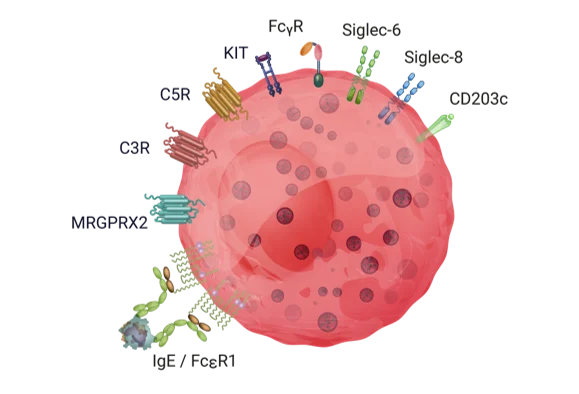
To understand why model selection is critical, one must first examine the inherent biological complexity of mast cells. These cells express a multitude of surface receptors, with three specific targets receiving immense scrutiny in recent therapeutic programs: KIT, FcεRI, and MRGPRX2. These receptors act as critical switches for cell survival, allergic activation, and pseudo-allergic pathways. However, they are not homogeneously expressed across all mast cell populations.
In vivo, mast cells exhibit profound functional and phenotypic differences dictated by their precise anatomical locations. Traditionally classified into connective tissue-type and mucosal-type mast cells, modern transcriptomic studies reveal a vast spectrum of heterogeneity across different organs. Furthermore, transcriptomic profiles diverge significantly between ex vivo primary cells, cultured progenitors, and immortalized cell lines. Consequently, data generated using a single, simplified model often fails to translate when applied to a different tissue context or clinical setting.

Mapping the Preclinical Landscape: Strengths and Limitations
The scientific community currently relies on a diverse array of models to investigate mast cell biology, each carrying distinct advantages and technical trade-offs.
Established human mast cell lines, such as HMC-1 and LAD-2, offer high reproducibility, scalability, and ease of manipulation. These attributes make them ideal for early-stage mechanistic studies, pathway screening, and high-throughput assay development. Nevertheless, they frequently fail to fully recapitulate the complex phenotype and functional responses of primary human mast cells under physiologically relevant conditions.
In contrast, mouse models have historically provided extensive literature, genetic tractability, and accessibility for in vivo mechanism studies. Yet, profound species-specific differences severely limit their direct translation to human mast cell biology.
To bridge this species gap, researchers increasingly turn to human primary mast cells derived from blood or tissue progenitors, as well as tissue-isolated human primary cells. These models preserve relevant receptor expression and offer a direct window into human biology, effectively capturing inter-donor variability. The primary limitations include restricted cell yield, limited lifespan, technical demands, and the necessity of utilizing multiple human donors to ensure statistical and experimental robustness.
More advanced platforms, such as stem-cell or induced pluripotent stem cell (iPSC)-derived mast cells, provide scalability and genetic manipulation capabilities, though their maturation state can vary depending on protocol specifics. Finally, complex ex vivo human tissue models—such as human skin explants—maintain native tissue architecture and multicellular context, including epithelial, stromal, neural, vascular, and surrounding immune cells. While resource-intensive and experimentally lower in throughput, these tissue-isolated systems serve as the ultimate translational bridge for final proof-of-concept validation before clinical trials.

Determining the Necessity of Mast Cell Models
A central thesis advanced by translational immunologists is that mast cell models are not universally required for every therapeutic program. Building a credible and efficient experimental strategy demands understanding precisely when these models add value.
According to Gaudenzio and Wu, mast cell models are most critical when a therapeutic candidate directly interacts with mast cell biology. This includes programs where a drug’s mechanism intentionally or unintentionally targets mast cell receptors—such as biologics, monoclonal antibodies, small molecules, or peptides capable of triggering pseudo-allergic activation. Furthermore, these models are indispensable when a therapeutic intervention impacts tissues heavily populated by mast cells or aims to modulate the release of mast cell-derived mediators like tryptase, chymase, and specific chemokines.
The Imperative of Tissue Context in Translational Research
The necessity of preserving tissue context becomes strikingly apparent when examining advanced therapeutic strategies, such as targeted mast-cell depletion for severe inflammatory diseases.
A prominent example of this approach is antibody-mediated depletion designed to reduce mast cell burdens in diseased tissues. Therapeutic monoclonal antibodies like Barzolvolimab—an engineered anti-KIT antibody that blocks stem cell factor-dependent KIT signaling—rely heavily on precise receptor engagement and downstream effector mechanisms. Depending on the design of the antibody’s Fc region, depletion can occur via ligand blockade, receptor internalization, inhibitory receptor engagement, or the recruitment of immune effector cells through antibody-dependent cellular cytotoxicity (ADCC).

In ADCC-mediated depletion, therapeutic antibodies bind to specific surface antigens on mast cells, allowing effector cells such as natural killer (NK) cells to engage the antibody via the CD16 receptor and trigger targeted cell lysis. Simplified, isolated cell assays cannot accurately evaluate these complex interactions. Because mast cell survival requirements, activation thresholds, and functional responses are continuously shaped by local microenvironmental signals from surrounding stromal and immune cells, physiological accuracy demands intact tissue architectures. Human skin models, for instance, retain resident effector cells and native tissue architecture, providing an optimal environment to evaluate donor variability, receptor engagement, and immune interplay prior to human clinical trials.
Strategic Implications for Modern Drug Discovery
As pharmaceutical pipelines increasingly target complex immunological pathways, the approach to preclinical testing must evolve. The future of mast cell research does not lie in discovering a single, universally superior model, but rather in establishing a rational, step-by-step experimental framework.
Researchers are advised to adopt a fit-for-purpose methodology: beginning with high-throughput, scalable models (such as cell lines) for initial pathway screening, and progressively transitioning to more complex, physiologically relevant systems (such as progenitor-derived primary cells and ex vivo human tissue models) as validation requirements advance. Model complexity should only be scaled up to answer specific biological questions that simpler systems cannot resolve.
By aligning experimental models with defined objectives and respecting the profound heterogeneity of mast cell biology, translational scientists can successfully bridge the gap between basic immunological discovery and successful clinical translation.