The global crisis of plastic pollution has long defied simple solutions, particularly regarding polyvinyl chloride, widely known as PVC. Unlike other common polymers that yield easily to conventional mechanical and thermal reprocessing, PVC presents severe chemical hurdles that routinely consign millions of tons of waste to landfills and incinerators. However, a multidisciplinary team of chemists and chemical engineers at Virginia Tech has engineered a transformative chemical pathway that converts discarded PVC directly into polyalphaolefins, the foundational ingredients utilized in high-performance industrial lubricants and motor oils.
Led by Guoliang "Greg" Liu, an associate professor of chemistry and a affiliated faculty member in chemical engineering at Virginia Tech, the research group published their findings in the journal Nature. This breakthrough addresses two distinct environmental and industrial challenges simultaneously: the chronic inability to efficiently recycle PVC on a mass scale, and the heavy environmental footprint associated with manufacturing high-grade synthetic lubricants from virgin fossil fuels. By closing the loop on a material previously considered a dead-end waste stream, the Virginia Tech methodology establishes a viable economic bridge between municipal plastic disposal and heavy industrial manufacturing.
The scale of the underlying plastic problem cannot be overstated. Modern society relies heavily on PVC due to its durability, chemical resistance, and low cost. It forms the structural backbone of household plumbing pipes, vinyl window frames, electrical wire insulation, medical tubing, flooring materials, and consumer credit cards. Yet these same advantageous traits make PVC exceptionally difficult to reprocess. The polymer chain is saturated with chlorine atoms, accounting for roughly 57 percent of its mass by weight. Furthermore, manufacturers routinely blend PVC with a diverse cocktail of chemical plasticizers, stabilizers, and heavy-metal additives to achieve specific physical properties ranging from rigid construction panels to flexible medical devices.
When subjected to traditional thermal recycling processes, the chlorine within PVC degrades into corrosive hydrochloric acid, which damages machinery, ruins batches of recycled plastic, and releases toxic emissions unless captured by expensive scrubbing systems. Consequently, the vast majority of post-consumer and industrial PVC waste bypasses traditional recycling streams entirely. While polyethylene and polyethylene terephthalate enjoy robust, albeit imperfect, global recycling markets, PVC remains an intractable orphan of the polymer economy.
Simultaneously, global demand for synthetic lubricants, engine oils, and greases continues to climb across multiple economic sectors. From residential lawn equipment and commercial transport fleets to heavy industrial machinery, hydraulic systems, and commercial aviation jet engines, complex moving parts require constant lubrication to mitigate friction, prevent thermal degradation, and extend operating lifespans. The traditional production of polyalphaolefins relies on the oligomerization of alpha-olefins derived directly from petroleum refining—a process that carries significant carbon emissions and resource extraction costs. The Virginia Tech discovery upends this paradigm by substituting virgin petrochemical inputs with post-consumer plastic waste.
The Chronology and Evolution of Plastic Upcycling at Virginia Tech
The journey toward transforming PVC into a high-performance lubricant was not an isolated stroke of luck, but rather the culmination of years of methodical research into polymer upcycling led by Liu’s laboratory. The foundational concepts underpinning the current Nature publication evolved across several years of rigorous experimentation, building upon previous successes in converting other problematic commodity plastics into valuable chemical surfactants.
In earlier research projects published in prominent academic journals including Science and Nature Sustainability, Liu and his collaborators demonstrated that polyethylene and polypropylene—the materials commonly found in single-use plastic bags, packaging films, and food containers—could be chemically disassembled and converted into fatty acids and surfactants. These surfactants serve as the core chemical components in commercial soaps, laundry detergents, and emulsifiers.
Buoyed by the success of transforming packaging polymers into household cleaning agents, Liu turned his intellectual focus toward the much more formidable challenge of PVC. In the early stages of the project, Liu assembled a dedicated core team of graduate student researchers whom he affectionately dubbed his "three musketeers." The team was led by Eric Munyaneza Nuwayo, a doctoral candidate in the final stages of his graduate program who brought extensive organic chemistry expertise to the operational execution of the experiments.
They were joined by Connor S. Thompson, a chemistry graduate student who was initially engaged in an entirely unrelated research initiative within the department. When Liu proposed shifting focus to the intractable problem of PVC degradation, Thompson accepted the challenge, adapting his analytical skills to monitor the structural changes occurring within the polymer backbone. Shortly thereafter, Abby Civiello, a first-year graduate student, joined the cohort and quickly integrated herself into the daily experimental workflow, contributing crucial data points during the optimization phase.
The initial phase of the research, which commenced several years prior to the recent publication, relied on a conceptually simple hypothesis. Because PVC represents one of the most chemically activated forms of polyethylene—owing to the electronegative pull of its chlorine substituents—the researchers initially believed they could easily modify the polymer by substituting the chlorine atoms with alternative functional groups, thereby converting the rigid plastic into entirely different, functionalized macromolecules.
However, empirical reality proved stubborn. The early chemical transformations yielded materials that were soft, gooey, and structurally indeterminate. These intermediate compounds failed to possess the mechanical strength required for structural applications, nor did they exhibit the refined properties necessary for commercial utility. The experiments seemed to have hit a classic scientific dead end, producing sticky residues that lacked clear economic value.
The Critical Turning Point: Embracing the Goo
The breakthrough occurred during a critical juncture when Liu reevaluated the physical characteristics of the sluggish, gooey byproducts being generated in the flasks. Rather than viewing the softness of the material as a failure of substitution, Liu recognized it as a clue regarding polymer chain length.
"One day I realized—if this polymer is so gooey and so soft, why don’t I just keep breaking the polymer chains down to smaller segments?" Liu recalled.
This conceptual pivot fundamentally altered the trajectory of the investigation. Instead of attempting to preserve the long-chain polymeric integrity of the original PVC while merely swapping out side groups, the team pivoted toward a strategy of controlled catalytic degradation. By systematically cleaving the carbon-carbon backbone of the PVC molecules, the researchers could reduce the high-molecular-weight polymer into much smaller, precisely controlled hydrocarbon segments.
The resulting experimental protocol, now documented in scientific literature, is both operationally straightforward and chemically sophisticated. The process begins with raw or waste PVC—material chemically identical to that found in residential plumbing pipes, window profiles, or discarded credit cards. The researchers submerge the plastic waste into a specialized solvent system. Next, they introduce precise quantities of aluminum trichloride, acting as a Lewis acid catalyst, alongside alpha-olefins.
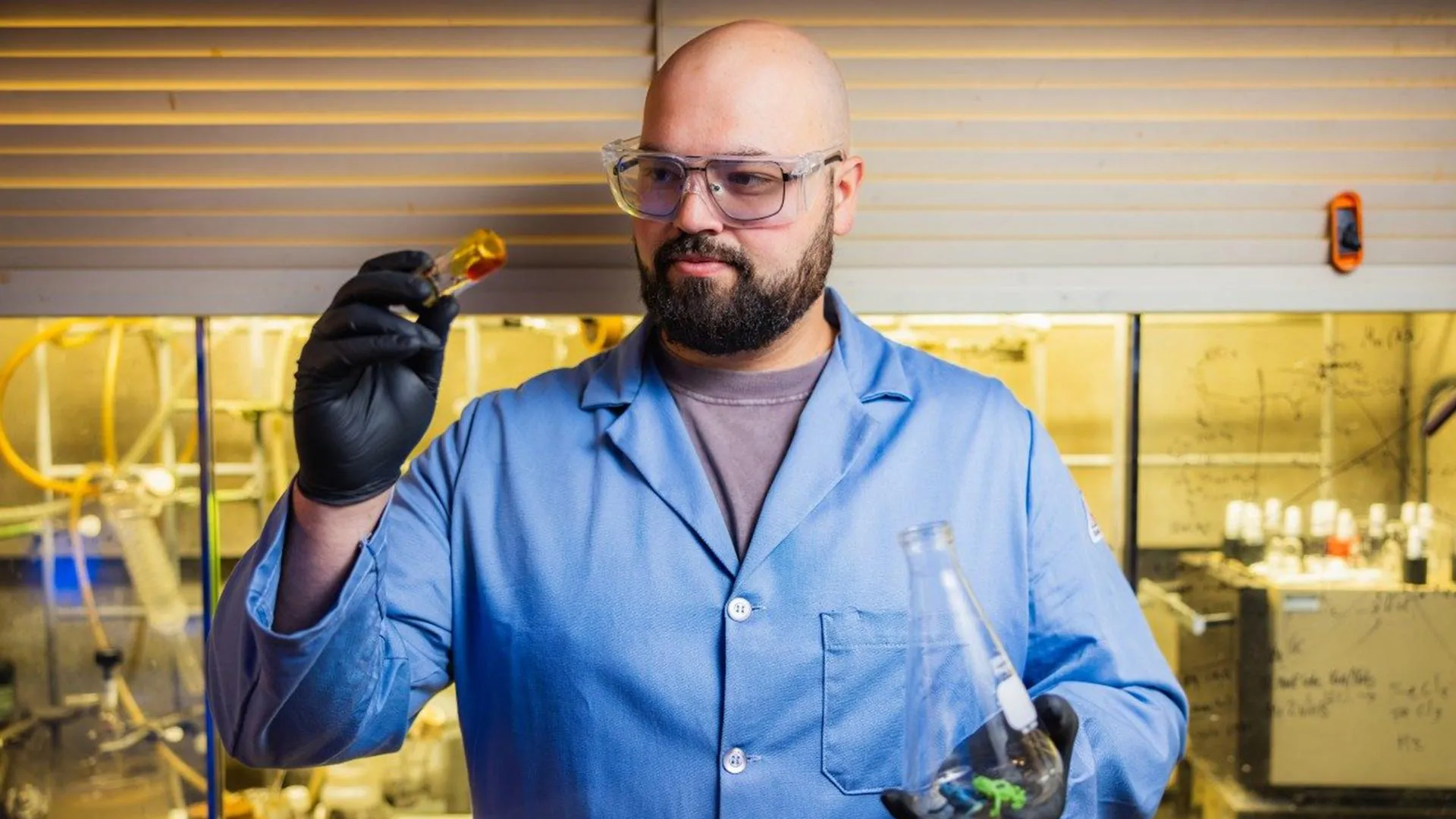
The entire mixture is then heated to a moderate temperature of approximately 158 degrees Fahrenheit (70 degrees Celsius) for a duration of three hours. Throughout this controlled reaction window, the aluminum trichloride catalyzes the breakdown of the rigid PVC chains while concurrently alkylating and oligomerizing the fragments with the introduced alpha-olefins. Upon completion of the reaction cycle, the researchers extract a relatively thick, amber-colored oil from the solvent layer. Subsequent physical and chemical testing revealed that this extracted oil functions exceptionally well as a synthetic lubricant, matching the baseline specifications of commercial polyalphaolefins.
Cross-Disciplinary Testing and Collaborative Validation
To rigorously evaluate the commercial viability and performance metrics of the newly synthesized lubricant, Liu recognized the necessity of broad scientific collaboration. Synthesizing an oil from plastic waste is a significant chemical milestone, but proving its efficacy under high-stress mechanical conditions requires specialized tribological engineering.
The research team dispatched samples of the upcycled oil to Ali Erdemir, a distinguished professor and materials scientist at Texas A&M University globally renowned for his expertise in tribology, friction, and lubrication. Erdemir’s laboratory subjected the material to rigorous mechanical testing to measure its viscosity index, load-bearing capacity, anti-wear properties, and thermal stability under simulated engine operating conditions. The results confirmed that the plastic-derived oil performed on par with conventional commercial lubricants utilized in automotive and industrial applications.
Concurrently, Liu partnered with William Goddard, a prominent computational chemist at the California Institute of Technology (Caltech). Goddard’s research group utilized advanced quantum mechanical calculations and molecular dynamics simulations to model the exact chemical mechanisms occurring at the atomic level during the catalytic breakdown and recombination of the PVC and alpha-olefin mixture. These computational insights provided a theoretical framework explaining why the specific combination of aluminum trichloride, thermal input, and solvent environment yielded precisely structured polyalphaolefins rather than random, unusable tar.
To bridge the gap between benchtop chemistry and industrial reality, the Virginia Tech team also enlisted the expertise of departmental colleague Xi Chen. Chen conducted a comprehensive techno-economic analysis and production lifecycle model. By evaluating the material inputs, energy requirements, solvent recovery rates, and projected capital expenditures, Chen’s economic model assessed how the synthesis process could theoretically be scaled up from laboratory glass flasks to continuous-flow industrial pilot plants.
The economic analysis indicated that while capital investments in specialized reactor vessels and catalyst recovery systems would be required, the ability to utilize low-cost or negative-cost feedstock (plastic waste that would otherwise incur landfill tipping fees) provides a powerful economic incentive for commercial adoption.
Broader Implications for Industrial Sustainability and Circular Economy
The implications of the Virginia Tech discovery extend far beyond the confines of academic chemistry laboratories, offering tangible pathways toward a more circular industrial economy. Lubricants are frequently described by engineers as the silent heroes of modern infrastructure. They remain hidden deep within internal combustion engines, industrial gearboxes, compressors, and turbine housings, quietly reducing friction, preventing catastrophic metal-on-metal wear, and maximizing energy efficiency.
Because lubricants degrade over time due to thermal stress, oxidation, and particulate contamination, industries consume vast quantities of engine oil and industrial fluids annually. The baseline requirement for steady supplies of these materials has traditionally tied lubricant manufacturing directly to petroleum extraction and fossil fuel refining. By proving that municipal and industrial plastic waste can serve as a viable, high-performance precursor for lubricant production, the Virginia Tech team has outlined a mechanism to decouple high-grade industrial chemical manufacturing from virgin fossil resources.
Furthermore, the technology directly targets the Achilles’ heel of plastic waste management. Landfilling PVC represents not only a permanent loss of petrochemical resources but also long-term environmental hazards, as plasticizers leach into soil and groundwater over decades. Incinerating PVC, conversely, releases hazardous chlorine compounds unless strictly controlled by advanced flue-gas treatment facilities. Chemical upcycling offers an environmentally preferable alternative by transforming a hazardous liability into a high-value commodity.
Industry Observers and Environmental Analysts Weigh In
While the commercialization of laboratory-scale chemical upcycling processes invariably faces hurdles related to scaling, catalyst recovery, and regulatory approval, external industrial chemists and sustainability analysts have expressed cautious optimism regarding the Virginia Tech breakthrough.
Chemical recycling advocates point out that the greatest barrier to scaling up plastic-to-chemical technologies has historically been economic parity with virgin materials. However, because polyalphaolefins command a significantly higher market value than raw commodity plastics, upcycling PVC directly into synthetic lubricants offers a much more favorable economic margin than attempting to reform PVC back into generic plastic pellets.
Moreover, regulatory pressures are mounting globally. Governments across North America, the European Union, and Asia are implementing stringent extended producer responsibility laws, carbon taxes, and mandatory recycled-content quotas for industrial and automotive products. Lubricant manufacturers and automotive original equipment manufacturers are actively seeking certified green components to satisfy corporate sustainability disclosures and reduce their Scope 3 greenhouse gas emissions.
Addressing Future Challenges and Scaling the Technology
Despite the success demonstrated in the Nature publication, the research team is under no illusions regarding the work that remains before commercial implementation becomes a reality. Scaling the reaction from a three-hour benchtop flask synthesis to multi-ton industrial batch or continuous processing requires solving several engineering challenges.
Key areas of ongoing research include optimizing the recovery and reuse of the aluminum trichloride catalyst, minimizing solvent consumption, and testing the tolerance of the reaction to the various chemical additives—such as heavy-metal stabilizers and plasticizers—commonly found in post-consumer PVC waste streams. While the initial experiments utilized clean, representative PVC samples, real-world municipal waste streams frequently contain complex mixtures of polymers and additives that could potentially foul catalysts or alter reaction kinetics.
To address these variables, Liu and his colleagues are continuing their collaborative efforts with their partners at Texas A&M and Caltech, while actively seeking partnerships with chemical corporations and petroleum refiners equipped with the pilot-plant infrastructure necessary to test the process at scale.
"Lubricants are the silent hero out there. We often don’t recognize they exist, but they are out there working quietly. We want to be able to produce the oil on a larger scale to reach more people in the world," Liu reflected, summarizing the overarching ambition of the project.
As regulatory frameworks tighten and the global accumulation of recalcitrant plastic waste continues to mount, innovations bridging the gap between waste remediation and high-performance chemical manufacturing will play an increasingly pivotal role. By turning a stubborn environmental liability into an essential fluid that keeps modern machinery moving, the Virginia Tech research team has charted a promising course toward a more sustainable industrial future.